电感

Search documents
年赚10亿,分红率63%,电感“一哥”顺络电子发钱了!
市值风云· 2026-03-12 10:14
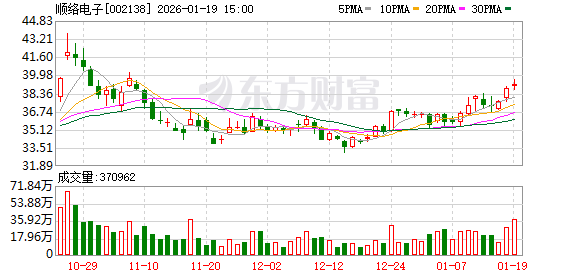
Core Viewpoint - The article highlights the transformation of Shunluo Electronics from a follower to a leader in the electronic components industry, showcasing its significant growth in revenue and profit, particularly in the automotive and data center sectors [4][5][7]. Group 1: Company Performance - In 2025, Shunluo Electronics achieved a revenue of 6.745 billion yuan, a year-on-year increase of 14.39%, and a net profit of 1.021 billion yuan, up 22.71% from the previous year [6]. - The company has established itself as a leader in the production of chip inductors, ranking first in China and among the top three globally, particularly excelling in high-end products [5][8]. Group 2: Market Segments - The automotive electronics segment showed remarkable growth, with revenue reaching 1.525 billion yuan in 2025, accounting for 22.6% of total revenue and growing by 38.1% year-on-year [8][9]. - The data center business is emerging as another growth driver, with revenue from power management reaching 2.322 billion yuan, a nearly 20% increase, driven by rising demand for AI servers [10]. Group 3: Financial Health - The company reported a significant improvement in cash flow, generating 1.7 billion yuan in net cash flow from operating activities, an 18.71% increase year-on-year [12]. - The free cash flow reached 970 million yuan in 2025, marking a nearly 60% increase compared to the previous year, indicating enhanced financial stability [12][13].


AI需求拉动 被动元器件全面涨价即将到来
Shang Hai Zheng Quan Bao· 2026-02-25 17:32
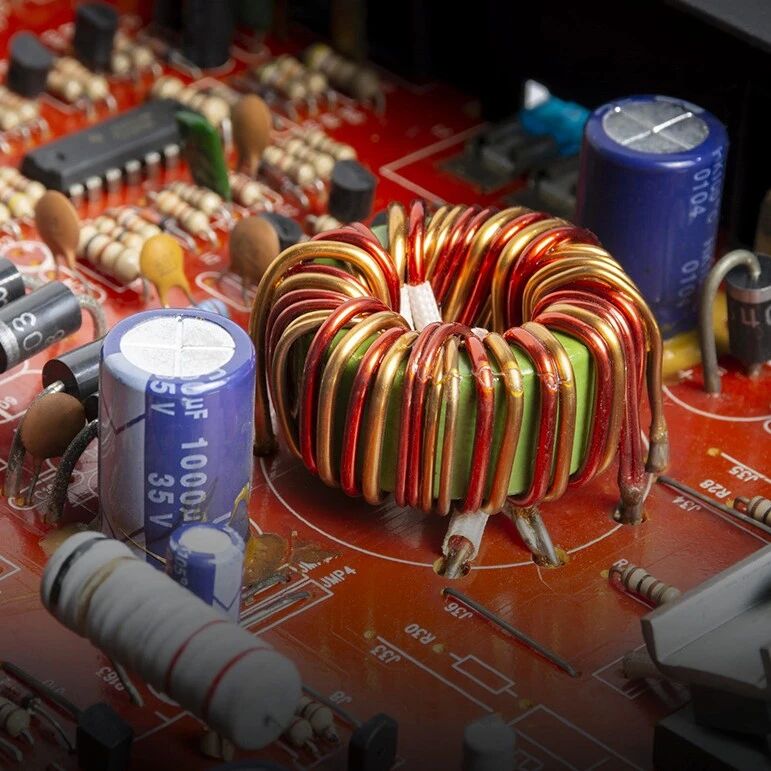
Group 1 - The core viewpoint of the articles indicates that the demand for passive components, particularly MLCCs, is set to increase significantly due to the rapid development of AI technology, leading to a confirmed price increase across the industry [2][3][5] - Murata, the largest MLCC supplier, is initiating discussions on price increases for MLCCs, with expectations to complete assessments of AI-driven demand by the end of Q1 2025 [3][5] - The price increase for passive components, including MLCCs, resistors, inductors, tantalum capacitors, and magnetic beads, is projected to range from 5% to 30% due to rising raw material costs and increased demand from AI and automotive sectors [2][5][6] Group 2 - The demand for high-end MLCCs is expected to grow significantly, with Murata's president stating that current orders for high-end MLCCs are double the company's production capacity, indicating a supply shortage that may persist for the next two years [3][4] - The passive components industry is entering a phase of multiple price increases across various regions and product categories, with several companies already announcing price hikes [5][6] - Analysts predict that the rapid advancement of AI technology will have a profound impact on the passive components industry, driving growth in high-end MLCCs and related materials [6]
MLCC专家交流
2026-02-25 04:13
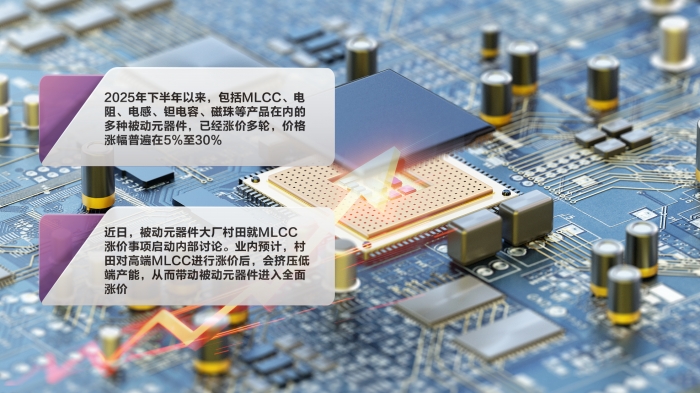
Summary of the Conference Call on MLCC Industry Industry Overview - The conference focused on the MLCC (Multi-layer Ceramic Capacitor) industry, particularly the impact of AI and inflation on pricing and demand dynamics in the sector [2][3]. Key Points and Arguments 1. **Price Changes in MLCC Market**: - There was a notable shift in pricing from late last year to the Spring Festival, with major manufacturers like Murata and Samsung Electro-Mechanics indicating a change in their pricing stance [2][3]. - The current market has seen a price increase of 15-20% in the spot market for MLCCs, driven by supply chain disruptions due to natural disasters affecting production in Thailand, the Philippines, and Malaysia [3][4]. 2. **Impact of AI Demand**: - The demand for high-end MLCCs, particularly for AI applications, remains robust throughout the year, which is expected to squeeze the supply of mid to low-end products [2][3][11]. - AI-related applications, including high-performance servers and autonomous driving technologies, are significantly increasing the demand for high-capacity MLCCs [12][18]. 3. **Manufacturers' Pricing Strategies**: - Major manufacturers are expected to announce price increases through formal communications to distributors and direct customers, with anticipated increases of 20-30% for high-end products and 15-20% for mid-range products [9][10]. - Taiwanese manufacturers have expressed a strong desire to raise prices, influenced by rising raw material costs and increased demand for high-capacity products [11][12]. 4. **Market Dynamics and Competition**: - The competitive landscape includes major players like Samsung Electro-Mechanics, Murata, and TDK, with TDK expanding its production capacity for high-end MLCCs [23][24]. - Domestic manufacturers in China, such as Sanan Optoelectronics and Wuxi Huada, are also increasing their production of high-capacity MLCCs to meet rising demand [24][42]. 5. **Production Challenges**: - Transitioning production lines from mid to high-end MLCCs involves significant challenges, including the need for specialized equipment and materials, which are often tightly controlled by leading manufacturers [28][29]. - The production of high-capacity MLCCs requires advanced technology and materials with high purity levels, which are not easily accessible to all manufacturers [28][30]. 6. **Future Outlook**: - The current pricing trend is expected to persist for one to two years due to the slow pace of capacity expansion among manufacturers [39]. - The demand for high-capacity MLCCs is projected to grow, driven by advancements in AI applications and the increasing complexity of electronic devices [56][57]. Other Important Insights - The integration of AI in various sectors, including healthcare and automotive, is anticipated to further drive the demand for MLCCs, with projections indicating that over 50% of PCs may utilize AI technology by next year [55][56]. - The relationship between the pricing of resistors and MLCCs suggests that as resistor prices rise, there may be a corresponding increase in MLCC demand as manufacturers bundle purchases [49][50]. This summary encapsulates the key discussions and insights from the conference call regarding the MLCC industry, highlighting the interplay between pricing, demand, and technological advancements.
中国银河证券:存储价格延续上涨 预计本轮涨价周期将延续至2026年中
智通财经网· 2026-02-10 07:55
Group 1 - The core viewpoint of the report indicates a significant price increase in memory chips, with NAND flash prices rising over 100% and DRAM prices increasing by 60%-70% in Q1, driven by surging demand from AI servers and data center capital expenditures [1] - The current memory chip price increase is expected to continue until mid-2026, marking a new cycle in the storage chip sector, with strong growth in AI server demand and domestic substitution creating investment opportunities in related listed companies [1] - The price hikes in memory chips are impacting downstream industries, with consumer electronics manufacturers facing cost pressures, leading to potential adjustments in product structure and pricing strategies [1] Group 2 - TSMC reported a record high revenue of $33.73 billion in Q4 2025, a year-on-year increase of 25.5%, exceeding previous guidance, with a net profit of approximately $16.3 billion, reflecting a 35% year-on-year growth [2] - The gross margin reached 62.3%, marking a 3.3 percentage point increase year-on-year, while the operating profit margin was 54%, and the net profit margin was 48.3%, all significantly surpassing market expectations [2] - Advanced process revenue accounted for 77% of total revenue, with 3nm process contributing 28%, indicating a strong growth engine for revenue [2] Group 3 - The passive components market is experiencing a new wave of price increases, with major manufacturers raising prices by 5%-30%, driven by rising raw material costs and increased demand from high-end sectors like AI servers and electric vehicles [3] - Price increases in passive components such as MLCCs, inductors, and resistors are expected to transmit to various downstream applications, influenced by rising wafer processing costs and strong demand in automotive and industrial sectors [3] Group 4 - Companies to watch include IC design firms such as Zhaoyi Innovation, Puran, Dongxin, Beijing Junzheng, and Lanke Technology, as well as storage module manufacturers like Demingli and Shannon Chip Creation [4] - AI-related PCB companies such as Shenghong Technology, Hudian Co., Jingwang Electronics, and Kexiang Technology are also recommended for attention [4]

电子元器件,涨声一片!
是说芯语· 2026-01-29 06:47
Price Increases in Semiconductor and Electronic Components Industry - Resonac announced a price increase of 30% for copper-clad laminates and adhesive films starting March 1, 2026, due to tight supply and rising costs of raw materials and labor [3] - Nanya Plastics will raise prices for all CCL products and PP by 8% starting November 20, 2025, citing increases in international copper prices and raw material costs [7] - TrendForce predicts that the average capacity utilization rate of global 8-inch wafer foundries will rise to 85%-90% in 2026, leading to price increases of 5%-20% for wafer foundry services across the board [8] - TSMC plans to increase prices for advanced technology nodes (5nm, 4nm, 3nm, 2nm) by 8%-10%, with a 50% increase for 2nm wafers starting in 2026 [10] - SMIC has implemented a price increase of approximately 10% for certain capacities [11] - Several packaging and testing companies have begun raising prices, with increases nearing 30% due to high demand and full capacity utilization [13] Memory Chip Price Increases - Samsung has raised NAND flash prices by over 100% and plans to increase server DRAM prices by 60%-70% in Q1 2026 [15] - SK Hynix is also raising server DRAM prices by 60%-70% and has negotiated significant price increases for LPDDR memory used in iPhones, approaching 100% [16] - Micron has announced a general price increase of approximately 20% across its product lines [17] - NAND flash wafer prices increased by over 10% in December 2025, with SSD prices rising by 15%-20% [24] Passive Components Price Adjustments - Various passive component manufacturers, including Yageo and Panasonic, have announced price increases for capacitors and resistors ranging from 8% to 30% [26][31] - ROHM Semiconductor has raised prices for thick film resistors by 8%-20% [38] - Multiple manufacturers are adjusting prices due to rising raw material costs and supply chain pressures [47] Power Devices and Other Electronics - Huazhong Microelectronics confirmed price increases for certain IGBT products due to rising copper and raw material costs [48] - Several semiconductor companies, including Jiangxi Tianyi and Wuxi Zongxiang Technology, have raised prices for specific products by 10%-20% [82][83] CPU and GPU Price Trends - AMD and Intel are planning to increase server CPU prices by up to 15% due to high demand from large enterprises [62] - NVIDIA and AMD are expected to raise GPU prices in early 2026, with multiple price adjustments anticipated throughout the year [79]


顺络电子:数据中心(AI服务器)是公司战略布局新兴战略市场之一
Zheng Quan Ri Bao Wang· 2026-01-28 10:40
Core Viewpoint - The company, Sunlord Electronics, is strategically positioning itself in the emerging market of data centers (AI servers) by leveraging its advantages in miniaturization, high precision, and high power density technology [1] Group 1: Product Solutions - The company provides a comprehensive product solution for server power supply architecture, including primary, secondary, and tertiary power supplies [1] - Primary power supply focuses on large power devices for AC/DC conversion and high/low voltage conversion applications [1] - Secondary power supply involves 48V to 12V DC power supply, addressing power supply challenges with various inductors and transformer products [1] - Tertiary power supply includes components for xPU chips (CPU, GPU, ASIC), network cards, memory, and SSDs, featuring new AI inductors and tantalum capacitors among other products [1] Group 2: Market Trends - The AI server business is experiencing a sustained increase in demand both domestically and internationally [1] - The company's related business is benefiting from the industry's favorable conditions and an increase in market share, showing a trend of rapid growth [1]
国巨、厚声加入被动元件涨价潮,市场啥情况?
芯世相· 2026-01-27 07:37
Core Viewpoint - The article discusses the recent price increases in passive components, particularly focusing on Taiwanese resistor manufacturers joining the trend, driven by rising raw material costs and increased demand from AI applications [3][4][13][15]. Group 1: Price Increases from Taiwanese Manufacturers - Taiwanese passive component manufacturers, including Yageo, Thick Sound, and Walsin, have announced price hikes for various resistor products, with increases ranging from 15% to 25% [5][6][7]. - Yageo's price adjustments will take effect from February 1, covering specific resistor products like RC0402, RC0603, and others [5]. - Thick Sound and Walsin have also issued price increase notifications, indicating a collective movement among Taiwanese manufacturers to raise prices due to rising material costs [6][7]. Group 2: Market Reactions and Trends - Following the announcements, the passive component market experienced a temporary halt in quotations and price increases, but most channels have since returned to normal pricing [9][10]. - The overall price of resistors has increased by approximately 10-20% since the New Year, particularly for sizes 0201 to 1206, with fluctuations stabilizing after initial increases [10][11]. - Distributors have noted that the initial price hikes did not significantly impact the market, as many customers had already begun stockpiling components prior to the announcements [11]. Group 3: Underlying Causes of Price Increases - The primary reasons for the price hikes include rising raw material costs, particularly for metals like silver, palladium, and others, which have seen significant price increases [13][14]. - Additionally, the surge in demand driven by AI applications has contributed to the rising prices of passive components, with projections indicating a substantial increase in demand for components like MLCCs in AI servers [15][16].

如何看待本轮被动元器件涨价行情
2026-01-26 02:49
Summary of Conference Call on Passive Component Price Trends Industry Overview - The passive components market is experiencing price increases across nearly all categories, including capacitors, resistors, diodes, inductors, and ferrite beads, driven primarily by raw material inflation [1][2][3] - The current price increase is characterized by a more rational market behavior compared to the previous cycle from 2017 to 2022, where speculative hoarding was prevalent [1][6] Key Points and Arguments - **Price Transmission**: Price increases are transmitted in layers; small and medium-sized end customers face price hikes of 30%-40%, while large customers with long-term contracts experience increases of less than 10% [4][2] - **MLCC Market Dynamics**: Although MLCC (Multi-layer Ceramic Capacitors) prices have not officially increased, high-capacity products have seen price rises. Manufacturers are cautious to avoid past mistakes of rapid price hikes [7][8] - **Market Share Concentration**: The MLCC market is dominated by four major players: Murata, Samsung, Yageo, and Sanhua, which together hold 80% of the market share. Strategies include reducing production and increasing agent thresholds [9] - **Domestic Brand Growth**: Domestic brands like Chaozhou Sanhua are gaining market share as customers shift from foreign brands to more cost-effective local options [10][12] - **Future Price Trends**: The trajectory of component prices will largely depend on raw material costs, with increases in silver and copper prices likely to push costs higher [13] Additional Important Insights - **Inventory Management**: Unlike the panic buying seen in previous years, current stakeholders are managing inventory more rationally, purchasing based on actual orders rather than speculation [5] - **Historical Context**: The last significant price surge occurred from July 2017 to the end of 2022, driven largely by human factors and market manipulation, whereas the current situation is primarily influenced by raw material costs [6][14] - **Cautious Market Sentiment**: Despite expectations of price increases, companies are hesitant to expand production capacity significantly, reflecting a cautious approach to market dynamics [11] - **Emerging Demand Areas**: While AI servers and storage are currently stable, the AI glasses sector may emerge as a new growth point in the future [18][16] Conclusion The passive components market is currently undergoing a price increase driven by raw material inflation, with a more rational market response compared to previous cycles. The focus on domestic brands and cautious inventory management reflects a significant shift in market dynamics. Future price trends will depend heavily on raw material costs and the evolving demand landscape, particularly in emerging technologies.

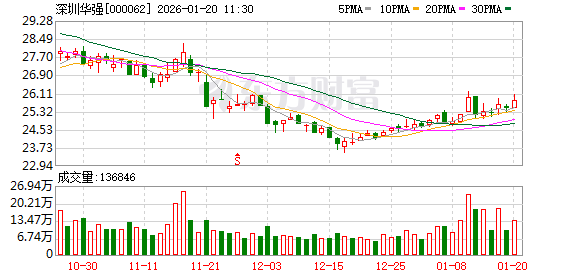
深圳华强:公司授权分销的被动元器件主要包含MLCC、硅电容、钽电容等电容产品
Mei Ri Jing Ji Xin Wen· 2026-01-20 04:27
Group 1 - The core viewpoint of the article is that Shenzhen Huaqiang is a leading distributor of passive components globally, including products like MLCC, silicon capacitors, tantalum capacitors, inductors, resistors, filters, connectors, and transformers, covering the entire category of passive components [2]. Group 2 - The company confirmed its involvement in the recent price increases of passive components, specifically mentioning MLCC and other related products [2].

顺络电子:公司产品在AI眼镜中的应用广泛
Zheng Quan Ri Bao· 2026-01-19 13:13
Core Viewpoint - The company, Shunluo Electronics, is actively involved in the application of its products in AI glasses, indicating a strong market presence and potential for growth in the consumer electronics sector driven by AI advancements [2] Group 1: Company Products and Applications - Shunluo Electronics' products, including various inductors, LTCC, and antennas, are widely used in AI glasses [2] - The company has established a supply relationship with leading clients in the relevant fields, ensuring continuous product supply [2] Group 2: Market Trends and Implications - The rapid development of AI and related applications is expected to increase the demand for consumer electronics with AI functionalities, leading to higher computational and integration needs [2] - The growing demand for superior performance components will directly boost the company's related business operations [2]