AI需求增长

Search documents
存储涨价风暴来袭,中国手机行业走向十字路口
第一财经· 2026-03-10 02:34
Core Viewpoint - Price increases have become a hot topic in the current smartphone market, with major brands like OPPO and OnePlus announcing price hikes starting March 16, 2026, to allow consumers a buffer period for purchases at original prices [1][4]. Price Adjustments - Samsung's new Galaxy S26 series saw a price increase of 1,000 yuan compared to the previous generation, and multiple manufacturers are expected to raise prices starting March 15, 2026, with Honor initiating its price increase by the end of the month [4]. - The smartphone market may experience multiple rounds of price adjustments in 2026 due to rising upstream costs, with the second or third rounds potentially occurring in the second half of the year [4]. Cost Structure Changes - The key variable driving changes in the global smartphone market is no longer just AI capabilities or chip iterations, but rather the rising prices of storage components [5]. - The global memory chip industry has entered a rare period of price increases since the second half of 2025, with DRAM contract prices expected to rise by 90% to 95% in Q1 2026, and NAND Flash prices projected to increase by 55% to 60% [6]. - The cost of memory semiconductors in smartphone BOM has risen from 10%-15% to over 20%, indicating a shift in pricing logic within the industry [6]. Market Dynamics - The pressure to raise prices is rapidly being transmitted from upstream suppliers to end consumers, leading to a potential comprehensive price increase in the Chinese smartphone industry, marking the largest collective price adjustment in five years [6]. - The logic of waiting for better prices is becoming obsolete, as the new reality indicates that prices will continue to rise [7]. Supply Chain and Production - The demand for storage due to AI applications is significantly higher than for regular servers, leading manufacturers to prioritize high-margin products, which reduces the supply of LPDDR for smartphones [11]. - The tightening supply and rapid inventory turnover have made price increases inevitable, with some clients already discussing supply contracts for 2027 [12]. Competitive Landscape - In response to rising costs, manufacturers are reducing SKUs and focusing on higher-margin products, indicating a structural shift rather than simple price increases [14]. - The competition is evolving from price wars to emphasizing product value and brand capabilities, with companies forming strategic partnerships to enhance differentiation [14]. - The understanding of "premium" is shifting to include stronger product performance, longer-lasting user experience, and better supply chain management [15]. Consumer Implications - As smartphone prices are expected to continue rising, consumers may find it more rational to purchase sooner rather than wait for potential price drops [17]. - The new market rule suggests that delaying purchases may lead to higher costs in the future [18].

新宙邦(300037):氟锂双击,前景光明
Hua Yuan Zheng Quan· 2026-03-06 05:48
Investment Rating - The report assigns a "Buy" rating for the company, indicating a positive outlook based on its growth potential in the lithium battery materials sector [5]. Core Insights - The company is expected to benefit from a significant increase in demand for lithium battery materials, driven by the rapid growth in the electric vehicle and energy storage markets. The report highlights a projected revenue growth of 55.23% in 2026, with a corresponding net profit growth of 105.59% [7]. - The report emphasizes the company's strategic acquisitions, which enhance its supply chain and market position, particularly in the lithium hexafluorophosphate segment [7]. - The demand for fluorinated liquids is anticipated to accelerate, especially with the closure of competing products by major players, positioning the company favorably in the market [7]. Financial Performance and Projections - The company reported a revenue of 9.639 billion yuan for 2025, with a year-on-year growth rate of 22.84%. The net profit for the same year is projected to be 1.098 billion yuan, reflecting a growth rate of 16.56% [6]. - For 2026, the revenue is expected to reach 14.963 billion yuan, with a net profit forecast of 2.257 billion yuan, indicating a substantial increase in profitability [6]. - The report outlines a significant improvement in the company's financial metrics, including a projected return on equity (ROE) of 18.78% in 2026 and a price-to-earnings (P/E) ratio of 18.36 [6][8].

MLCC涨价潮叠加稀土管制 国产替代趁势而起
Ju Chao Zi Xun· 2026-02-25 08:27
Core Viewpoint - The MLCC (Multi-Layer Ceramic Capacitor) market is experiencing a significant shift, driven by a surge in AI demand and supply chain restructuring, particularly due to restrictions on Japanese suppliers like TDK, which opens opportunities for Chinese manufacturers [2][6][12]. Group 1: Market Dynamics - The passive component sector, particularly MLCC, has seen a price increase of nearly 20% due to rising demand from AI applications, with major players like Murata considering price hikes [2][3]. - AI servers require significantly more MLCCs compared to traditional servers, with demand for AI servers reaching approximately 20,000 MLCCs per unit, compared to 2,200 for general servers [3]. - The high-end MLCC market is characterized by a supply shortage, with major manufacturers operating at over 80% capacity, and Murata's production levels reaching 90-95% [4][5]. Group 2: Supply Chain Changes - TDK's inclusion on a watch list by the Chinese Ministry of Commerce indicates stricter controls on rare earth materials, potentially disrupting its production capabilities and creating a supply gap in the high-end MLCC market [2][6]. - The restrictions on TDK could lead to a "shortage crisis" in the automotive and industrial supply chains, especially as demand for high-end MLCCs continues to rise [6]. Group 3: Opportunities for Chinese Manufacturers - Chinese MLCC manufacturers are positioned to fill the market gap left by TDK, leveraging their access to local resources and established supply chains [8][9]. - Companies like Fenghua Advanced Technology and Sanhui Group have made significant technological advancements, enabling them to produce high-end MLCCs that meet international standards [9][10]. - The market for MLCCs is projected to grow significantly, with estimates suggesting a global market size of 140.8 billion yuan by 2028, with Chinese market share exceeding 50% [12]. Group 4: Competitive Landscape - The competitive landscape is shifting, with Chinese firms transitioning from being alternative suppliers to primary providers, driven by the need for supply chain stability among clients [11][12]. - Major Chinese manufacturers are expanding their production capacities and entering global supply chains, with Fenghua Advanced Technology and Micro Capacitor Technology achieving significant market penetration [12][13]. - The technological advancements and increased production capabilities of Chinese firms are expected to enhance their market share in the high-end MLCC sector, challenging the dominance of Japanese manufacturers [9][13].


国巨又双叒涨价了!什么情况?
芯世相· 2026-01-04 06:03
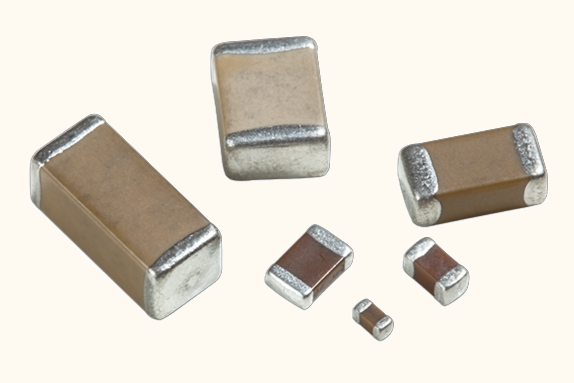
Core Viewpoint - The passive component industry is experiencing a new wave of price increases driven by rising raw material costs, particularly silver, and increased demand from sectors like AI and automotive applications [3][5][12]. Group 1: Price Increase Details - Yageo's brand PULSE announced a price adjustment for certain ferrite bead products effective January 1, 2026, due to high silver prices and the need to maintain product quality and supply stability [3][4]. - The price increase is applicable to ferrite beads of metric size 1608 and above, while confirmed contracts and ongoing projects remain unaffected [4][6]. - Yageo's magnetic components account for approximately 27%-28% of its revenue, making it the largest product category for the company [8]. Group 2: Industry-Wide Price Trends - Multiple passive component manufacturers have issued price increase notices, covering tantalum capacitors, resistors, and inductors, indicating a broader trend in the industry [11][12]. - The reasons for these price increases include rising costs of raw materials such as silver, tin, copper, and cobalt, as well as surging demand driven by AI applications [12][13]. - Companies like Kyocera and Panasonic have also announced price hikes for tantalum capacitors due to increased tantalum costs, with some models seeing increases of 15%-30% [14][15]. Group 3: Market Reactions and Future Outlook - The price adjustments have led to a stabilization of passive component prices after a period of decline, with reports of urgent orders from manufacturers as they prepare for the upcoming year [20]. - The market is closely monitoring supply and demand dynamics for passive components, especially in light of recent price hikes from major players like Windfall and Sunlord [20].

中芯国际(981.HK):供应链国产替代需求增长强劲 消费电子市场需求回暖
Ge Long Hui· 2025-11-20 11:55
Core Insights - The company reported Q3 2025 revenue of $2.38 billion, a year-on-year increase of 9.7% and a quarter-on-quarter increase of 7.8%, aligning closely with the consensus estimate of $2.35 billion [1] - The company’s production capacity increased by 32,000 wafers to 1.023 million equivalent 8-inch wafers, with a capacity utilization rate of 95.8%, up 3.3 percentage points from the previous quarter [1] - The average selling price (ASP) of wafers reached $913, down 5.5% year-on-year but up 4.4% quarter-on-quarter [1] Financial Performance - The gross margin for the quarter was 22.0%, an increase of 1.6 percentage points from the previous quarter [1] - Net profit attributable to shareholders grew by 28.9% year-on-year to $190 million, with earnings per share of $0.02 [1] - The company guided for Q4 2025 revenue growth of 0%-2%, projecting revenue between $2.38 billion and $2.43 billion, with a gross margin expected to be between 18%-20% [1] Market Demand and Trends - The consumer electronics market is showing signs of recovery, with AI demand expected to grow over 10% in FY 2025 [1] - Revenue from 8-inch and 12-inch wafers increased by 2.7% and 8.9% quarter-on-quarter, respectively, with total wafer shipments rising by 4.6% to 2.499 million wafers [1] - Consumer electronics revenue increased by 19.4% quarter-on-quarter, driven by increased market share from domestic customers and rising export demand [1] Capital Expenditure and Future Outlook - Q3 capital expenditure rose by 27.0% quarter-on-quarter to $2.39 billion, primarily due to the recovery of equipment shipments affected by geopolitical factors [2] - The company plans to gradually expand production capacity, adding an average of 50,000 pieces of 12-inch wafer monthly capacity each year, with demand driven by AI, automotive, and AloT products [2] - The target price is set at HKD 90.00, with a buy rating, reflecting a projected 21.63% upside from the current stock price [2]

TOP4芯片分销商最新业绩:艾睿和安富利也开始好起来了!
芯世相· 2025-08-07 08:06
Core Viewpoint - The global semiconductor distribution market is showing signs of recovery, with the top four distributors reporting growth in their second-quarter earnings, indicating a positive trend for the industry moving forward [3][23]. Group 1: Performance of Top Distributors - The top four semiconductor distributors by revenue for the first half of 2025 are: 1. WPG Holdings with NT$506.93 billion (approximately $16.93 billion), a year-on-year increase of 16.19% [3][6]. 2. WPG's second-quarter revenue reached NT$259.5 billion (approximately $8.7 billion), with a quarter-on-quarter increase of 5% and a year-on-year increase of 7% [5][6]. 3. Daewoo's second-quarter revenue was NT$250.45 billion (approximately $8.4 billion), a year-on-year increase of 20.4% [6]. 4. Arrow Electronics reported second-quarter revenue of $7.6 billion, a year-on-year increase of 10% [8]. 5. Avnet's second-quarter revenue was $5.62 billion, showing a modest year-on-year increase of 1% [10]. Group 2: Market Trends and Future Outlook - The semiconductor market is experiencing a recovery, with global semiconductor sales reaching $179.7 billion in the second quarter of 2025, a quarter-on-quarter increase of 7.8% and a year-on-year increase of nearly 20% [23]. - WPG anticipates a strong demand for AI-related products, which is expected to drive growth in the second half of the year [6]. - Daewoo's strong performance is attributed to increased sales in memory products and AI server components, while WPG has faced challenges due to losing the ADI agency [17][18]. Group 3: Regional Performance - Arrow's component sales in the Americas increased by 9% year-on-year, while sales in Europe, the Middle East, and Africa (EMEA) decreased by 1% [14]. - Avnet's Asian market showed significant growth, with a year-on-year increase of 18%, while EMEA sales dropped by 17% [14][16]. - The recovery pace varies by region, with Asia showing particularly strong momentum compared to other regions [11][12].