
芯片电阻

Search documents
被动元件,涨涨涨
3 6 Ke· 2026-02-09 01:13
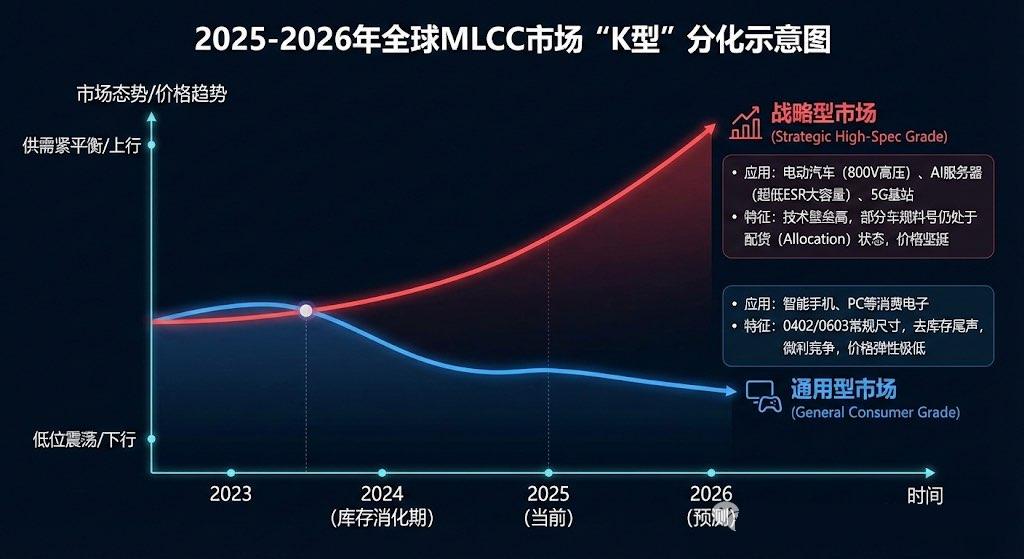
Core Viewpoint - The recent price hikes in passive components, led by major players like Yageo and Walsin, indicate a significant shift in the market driven by supply-demand imbalances and rising raw material costs, particularly in high-end sectors like AI and electric vehicles [1][4][19]. Group 1: Price Adjustments - Yageo announced a price increase of 15%-20% for certain resistor products starting February 1, marking its third price adjustment in a short period [1]. - Walsin and Panasonic also announced price hikes of around 20% and 15%-30% respectively for various passive components, reflecting a broader trend among major manufacturers [1][2]. - Smaller manufacturers in China, such as Fenghua Advanced Technology and Shunluo Electronics, have also followed suit with price adjustments ranging from 5%-30% across multiple product categories [2][3]. Group 2: Supply Chain Dynamics - The passive component market is experiencing supply tightness, with lead times extending and some distributors pausing quotes due to uncertainty in price adjustments [3][4]. - Rising costs of raw materials, particularly precious metals like silver and palladium, have significantly increased production costs for passive components, with estimates suggesting a 20%-30% rise in production costs [5][6]. - Capacity constraints are exacerbated by major manufacturers shifting focus to high-end products, leading to a structural shortage in the mid-range market [7][8]. Group 3: Demand Drivers - The demand for passive components is being driven by the rapid growth of AI and electric vehicles, with AI servers requiring significantly more MLCCs than traditional servers [10][11]. - The automotive sector is also a major growth area, with electric vehicles using up to three times more passive components compared to traditional vehicles, creating a favorable environment for price increases [11][12]. - The overall market for passive components in China is projected to grow from 1237.65 billion yuan in 2023 to 2583.59 billion yuan by 2030, with a compound annual growth rate of 11.09% [13]. Group 4: Market Structure Changes - The current price hikes reflect a structural change in the passive components market, with high-end products experiencing significant demand while traditional consumer electronics face challenges [15][19]. - Domestic manufacturers in China are beginning to capture more market share, particularly in high-end segments, as they improve their technology and production capabilities [19][20]. - The geopolitical landscape and supply chain diversification are providing opportunities for Chinese manufacturers to enter high-end markets, as global players face capacity and delivery challenges [19][24]. Group 5: Future Outlook - The passive components market is expected to continue evolving, with AI and automotive electronics driving demand for high-value products [25][26]. - Companies need to focus on high-capacity, miniaturized, and reliable products to meet the changing market demands and maintain competitiveness [25][26]. - Collaboration across the supply chain will be crucial for manufacturers to overcome technical challenges and align with market needs [25][26].


MLCC 现货价飙升 20%
是说芯语· 2026-02-05 01:09
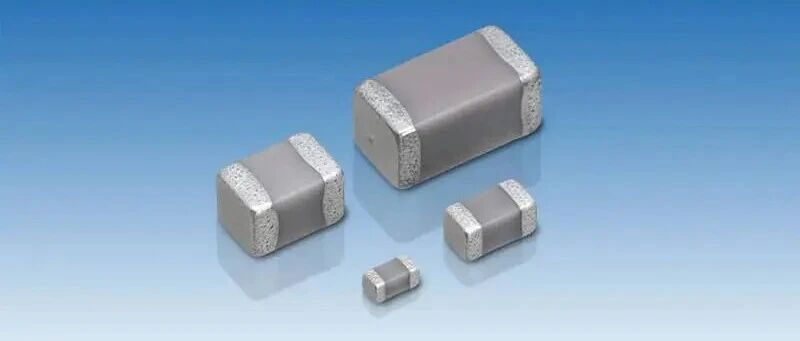
Core Viewpoint - The passive components industry is experiencing a price increase, particularly in multilayer ceramic capacitors (MLCC), with some distributors in mainland China raising spot prices by up to 20% [2][3]. Group 1: Price Trends - The price increase trend includes tantalum capacitors, chip resistors, magnetic beads, and MLCC, with industry expectations for improved performance from related manufacturers [3]. - Tantalum capacitors have seen price hikes of 20% to 30% due to high demand from AI server applications, leading to a supply-demand imbalance [3]. - MLCC is expected to follow suit in price increases, supported by a significant rise in demand as system designs adapt to include more MLCCs [4]. Group 2: Market Dynamics - The dependency on tantalum capacitors in AI devices has led to a design shift towards using a combination of tantalum capacitors and MLCCs to mitigate supply risks and control costs [4]. - The demand for MLCC is no longer just a reactive response to price increases but is now driven by structural demand expansion, particularly in AI applications [4]. - For the company Yageo, tantalum capacitors account for approximately 18% to 22% of revenue, while MLCC contributes about 18% to 20% [4].
这些芯片,继续涨价
半导体行业观察· 2026-02-04 01:38
Group 1: Memory Market Insights - The general manager of Winbond, Chen Peiming, announced that prices are expected to continue rising, with contract prices for this and next season maintaining similar increases as Q4 of last year [2] - Despite rising prices, demand remains strong, with customers eager to secure production capacity, leading to full bookings for both existing and new capacities through 2027 [2] - The memory market is described as "very good," with Winbond planning to increase prices quarterly while customers are willing to accept these increases [2] Group 2: DRAM and Flash Memory Production - Winbond is expanding production capacity at its Kaohsiung facility, with DRAM installations expected to begin in mid-June, while Flash memory installations will start even earlier [2] - There is a significant supply shortage in DDR4, prompting some customers to downgrade to DDR3, but Winbond aims to maximize output, particularly focusing on the growth potential of LPDDR4 [2] Group 3: Passive Components Price Trends - Passive components, including MLCCs, are experiencing price increases, with recent adjustments in the Chinese market showing price hikes of up to 20% [3] - Major Taiwanese manufacturers like Yageo and Walsin are expected to follow suit with price increases in their contract prices due to the overall upward trend in passive component pricing [3][4] Group 4: Market Dynamics for Passive Components - The demand for tantalum capacitors has surged due to their adoption in high-end AI servers, leading to significant price increases of 20-30% for large-sized polymer tantalum capacitors [4][5] - The increasing use of MLCCs is attributed to their small size and reliability, making them essential in high-density AI server applications [4] Group 5: Financial Outlook for Key Players - Yageo's revenue from tantalum capacitors is approximately 18-22%, with MLCCs contributing 18-20% to its revenue, indicating a diversified product line benefiting from current market trends [5] - Japanese companies Murata and TDK have also reported positive financial forecasts, with Murata's order-to-shipment ratio exceeding 1 for five consecutive quarters, indicating strong demand [5][6]
晚报 | 1月23日主题前瞻
Xuan Gu Bao· 2026-01-22 14:55
Aerospace - Beijing Chuanqiu Space Technology Co., Ltd. held a global launch event for space tourism, showcasing the first commercial manned spacecraft "Chuanqiu No. 1 (CYZ1)" with over 20 space tourists already booked, aiming for its first manned flight in 2028 [1] - SpaceX plans to launch its second-generation Starlink system in 2027, which is expected to provide internet services with over 100 times the capacity and more than 20 times the throughput compared to the first generation [1] - The aerospace sector is transitioning from a "cost center" driven by national will to a "growth engine" driven by commercial demand, with significant growth potential in the trillion-dollar market [1] Solid-State Batteries - A123 announced a product launch event for its new series of semi-solid state energy storage products, including the "Xingchen" series semi-solid state cells and "Xinghe" series energy storage systems, scheduled for January 23, 2026 [2] - The new semi-solid state batteries significantly enhance safety and environmental adaptability, achieving excellent safety performance in extreme conditions, which could reduce the risk of electric vehicle fires [2] Retail Pharmacy - The Ministry of Commerce and nine other departments released opinions to promote high-quality development in the retail pharmacy industry, supporting mergers and acquisitions among retail pharmacies [3] - The retail pharmacy sector is expected to accelerate consolidation by 2025, with a projected decrease in the total number of pharmacies, concentrating customer traffic towards leading players [3] Passive Components - Passive component manufacturer Huaxinke announced a price increase for all chip resistor products starting February 1, with expected price hikes of around 20% [4] - The passive components industry is experiencing a price surge, with structural price increases observed across various products, driven by high demand from AI servers [4] Prepared Dishes - The State Council's Food Safety Office is drafting national standards for prepared dishes and will solicit public opinions soon, aiming to enhance consumer rights and promote industry development [5] - Prepared dishes are gaining popularity, especially among younger consumers, due to their convenience and ability to meet diverse culinary needs, leading to significant growth opportunities in the market [5] AI Chips - Alibaba Group plans to support its chip company Pingtouge for independent listing, reflecting its strategic focus on the semiconductor sector [6] - Pingtouge has made significant advancements in AI processing technology, with its products already integrated into major data centers, indicating its growing commercial value [6] General Industry News - The Chinese government is set to build a computing power scale of around 200,000 P by 2027, indicating a significant investment in computing infrastructure [8] - The domestic satellite constellation applications are expected to peak in the next decade, with China planning to launch over 20,300 satellites [8]
被动元件,继续涨价
半导体行业观察· 2026-01-22 04:05
Core Viewpoint - The passive component market is experiencing a price increase, with HwaSeong Technology announcing a price hike for all chip resistor products starting February 1, with expected increases of up to 20% [1][2]. Group 1: Price Adjustment Details - HwaSeong Technology has officially notified customers about the price adjustment for chip resistors ranging from sizes 0201 to 1206, covering all resistance values, with specific adjustments based on product specifications and types to be communicated further [1]. - The price increase is a response to rising costs in labor, electricity, and raw materials, particularly core metals like silver, palladium, nickel, tin, and copper, which have seen significant market fluctuations [1][2]. Group 2: Market Context and Implications - The price adjustment by HwaSeong follows similar announcements from industry leaders like Yageo and Thick Sound, indicating a broader trend of price increases in the passive component sector [2]. - The industry has seen a shift from a surplus supply of passive components to a more balanced inventory level, driven by demand from AI servers and data centers, which is expected to offset weaknesses in consumer electronics [2].

国巨,又收购了
半导体行业观察· 2025-09-12 01:14
Core Viewpoint - Kinsus Interconnect Technology Corp. (国巨集团) is making a strategic move to acquire 28.5% of the shares of Maoda Electronics (茂达电子) at a price of NT$229.8 per share, representing a 20% premium, indicating strong intent and attractiveness of the offer [1][2]. Group 1: Acquisition Details - The acquisition is set to be filed with the Financial Supervisory Commission and will take place from September 12, 2025, to October 1, 2025, with a maximum purchase of 21,277,245 shares, which is approximately 28.5% of Maoda's total issued common shares [1]. - The minimum purchase requirement is set at 3,733,000 shares, or about 5% of Maoda's total issued common shares, with the condition that the acquisition must meet this minimum threshold [1]. Group 2: Maoda Electronics Overview - Maoda Electronics specializes in power integrated circuits (Power IC), focusing on mixed-signal power chips and sensors, with key product lines including fan motor driver ICs and power management ICs, applicable in various electronic devices [1][2]. - The company has shown strong operational performance, with August revenue reaching NT$649 million, marking a record high for the same period, and cumulative revenue for the first eight months of the year at NT$4.886 billion, a year-on-year increase of 21.2% [2]. Group 3: Strategic Rationale - Kinsus aims to leverage Maoda's stable profitability and operational performance for long-term investment returns and to establish a collaborative foundation with Maoda's management [2]. - The acquisition is expected to enhance Kinsus's competitive advantage by maximizing synergies through Maoda's existing product lines and Kinsus's global distribution channels [2]. Group 4: Market Performance and Growth - Maoda's performance is anticipated to continue growing, with expectations of double-digit growth in Q3 and potential for annual earnings exceeding one share capital if external economic conditions remain stable [2]. - The growth momentum is driven by the demand for fan motor driver ICs and power management ICs, with increasing orders in multi-fan applications and strong performance in power management ICs across various sectors [3].

全球第二大无源电子元件供应商国巨拟本月 16 日开始协商收购芝浦
Sou Hu Cai Jing· 2025-06-07 23:49
Group 1 - Yageo, the world's second-largest passive electronic component supplier, announced the acquisition of Shibaura Electronics, aiming for a "win-win" situation for both parties [1] - Yageo's chairman, Chen Taiming, stated that discussions regarding potential cooperation will take place in Tokyo on June 16, emphasizing that advanced technology will remain in Japan with stricter controls to prevent leakage [1] - Yageo's revenue last year was approximately $4 billion, and the company plans to expand its market presence, particularly in AI and automotive sectors through this acquisition [1] Group 2 - Yageo, established in 1977, is the largest manufacturer of chip resistors and tantalum capacitors, and the third-largest manufacturer of multilayer ceramic capacitors (MLCC) and inductors, with over 40,000 employees and annual revenue exceeding $4 billion [2] - Shibaura Electronics, founded in 1953, has become a major player in the thermistor market, employing over 4,800 people and generating annual revenue exceeding 32 billion yen [2]