
认知升维

Search documents
破解“富不过三代”困境:中领国际“代代幸福”模型重构中国高净值家庭财富传承逻辑
Di Yi Cai Jing· 2026-01-20 01:05
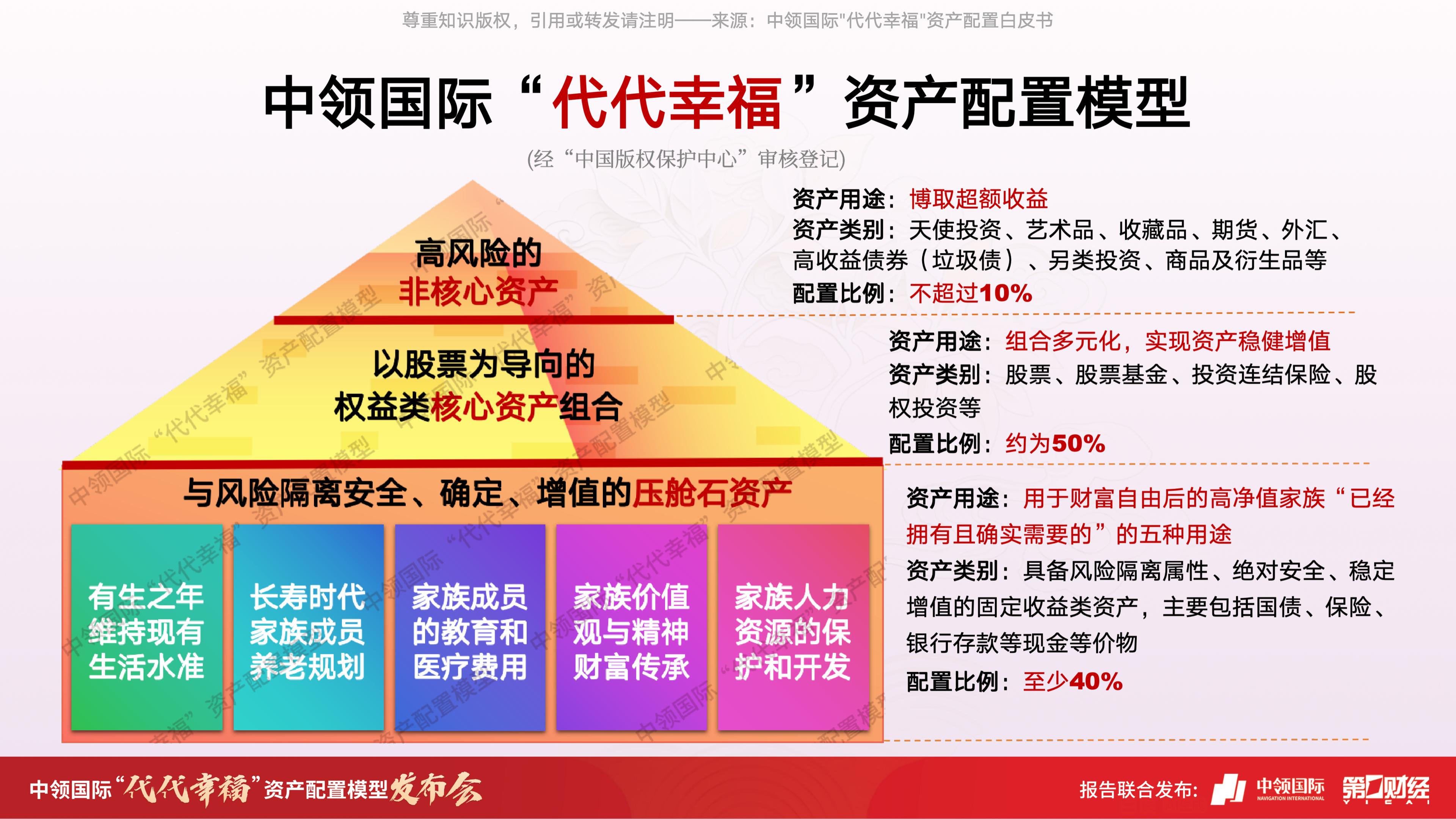
Core Insights - The article discusses the challenges faced by China's first-generation wealth creators in achieving effective intergenerational wealth transfer, highlighting that only 3%-5% of families globally can successfully pass wealth across three generations [1][2] - The "Generational Happiness" asset allocation model proposed by Zhongling International aims to provide a new pathway for wealth transfer among high-net-worth families in China, moving beyond traditional financial models focused solely on value appreciation [1][5] Group 1: Wealth Transfer Challenges - Wealth transfer is a complex, strategic, and long-term process that requires building an ecological system rather than merely creating a will or trust [2][4] - Factors such as the experience gap in wealth creation and transfer, declining birth rates, and economic fluctuations complicate the wealth transfer process for Chinese families [2][3] Group 2: Cognitive and Value-Based Insights - The sustainability of family wealth is fundamentally linked to the continuity of cognitive abilities, emphasizing that understanding the risks and diversifying assets is crucial for high-net-worth families [3][4] - The essence of wealth transfer lies in human behavioral aspects, where the growth mindset, shared values, and family cohesion are more critical than the initial wealth amount [4][6] Group 3: "Generational Happiness" Model - The "Generational Happiness" model integrates material wealth, values, and human capital into a cohesive framework for wealth transfer, aiming for a multi-generational approach [5][11] - The model identifies three foundational elements for successful wealth transfer: values, human capital, and material wealth, advocating for a balanced approach that prioritizes both financial and non-financial aspects [5][11] Group 4: Asset Allocation Strategy - The model proposes a three-tier asset structure: "ballast assets" (at least 40%), "core equity assets" (around 50%), and "high-risk non-core assets" (no more than 10%), ensuring a dynamic balance between safety, growth, and risk-taking [7][13] - The focus on "ballast assets" includes government bonds and large insurance policies to secure cash flow for essential family needs, while core equity assets are aimed at wealth appreciation [7][12] Group 5: Implementation and Operationalization - The model emphasizes actionable principles, including a "double bottom line" for ballast asset allocation and a focus on long-term, core investments to ensure family needs are met without compromising existing resources [12][13] - Successful wealth transfer requires institutional frameworks, such as family charters and committees, to solidify decision-making processes and adapt to changing family and market conditions [14]

财富破局,认知先突围
Sou Hu Cai Jing· 2025-12-13 02:33
Core Insights - The essence of wealth lies in cognitive evolution and strategic frameworks for wealth growth, rather than mere hard work [1] Group 1: Misconceptions about Wealth - Hard work alone does not guarantee wealth; understanding the right strategies is crucial [3] - Many fall into the "time-for-money" trap, while wealth experts focus on making time and money work for them [3] - Wealth should be viewed as a multi-dimensional system, requiring skills in earning, saving, and investing [3] Group 2: Leveraging Knowledge and Time - Cognitive leverage through knowledge can help overcome blind spots in wealth growth [3] - The power of compound interest can lead to significant wealth accumulation over time [3] - Capital leverage, when used wisely, can enhance returns without excessive risk [3] Group 3: Building a Diverse Income System - Relying solely on a salary is risky; a diversified income system enhances financial resilience [4] - Establishing passive income streams is essential for financial freedom [4] - Preparing for unexpected events with safety nets like insurance and emergency funds is crucial [4] Group 4: Psychological Aspects of Wealth - Delayed gratification is key to overcoming consumer impulses driven by social media [4] - Maintaining emotional discipline during market fluctuations is vital for investment success [4] - Embracing a long-term perspective is essential for sustainable wealth growth [4] Group 5: Actionable Steps for Wealth Accumulation - Starting with small, manageable financial goals can lead to significant wealth over time [4] - Leveraging government policies and platforms can provide additional advantages [4] - Positive reinforcement through small achievements can motivate continued progress [4] Conclusion - Wealth creation is a journey of cognitive awakening, leveraging resources, building systems, and cultivating the right mindset [5]

以认知升维打开发展思路(评论员观察)
Ren Min Ri Bao· 2025-08-17 22:01
Group 1 - The article emphasizes the importance of cognitive elevation in developing new growth strategies, allowing regions to break free from seasonal limitations and utilize resources year-round [1][3] - The transformation of ski resorts into year-round tourist destinations illustrates how innovative thinking can convert idle periods into opportunities for development [1] - Cultural empowerment is highlighted as a means to revitalize old industrial sites, turning them into new cultural and recreational spaces, as seen in Hengyang's transformation of the old diesel engine factory [1][2] Group 2 - The article discusses the potential for cultural empowerment in various forms, such as converting abandoned mining areas into geological parks and revitalizing old neighborhoods with nostalgic themes [2] - Technological innovations are presented as a way to redefine resource utilization, exemplified by the conversion of waste cooking oil into bio-jet fuel and advancements in waste-to-energy technologies [2] - The establishment of a national circular economy demonstration base in Jieshou, Anhui, showcases the successful implementation of resource recycling and the transition from waste to valuable resources [2] Group 3 - The article references Xi Jinping's "sweet potato economy" theory, advocating for a broader perspective in regional development by leveraging external resources and markets [3] - The construction of a unified national market is reshaping traditional regional advantages, allowing remote areas to access global markets and resources [3] - The need for a shift in mindset is emphasized, encouraging stakeholders to adopt a higher-dimensional view to identify new opportunities for economic growth [3]
工作,凡事要高看一线
3 6 Ke· 2025-06-04 06:15
Core Viewpoint - The article emphasizes the importance of adopting a higher perspective in the workplace, referred to as "looking up to the front line," which involves shifting one's mindset to a managerial or executive level to enhance performance and career advancement [2][21]. Group 1: Understanding the Concept - "Looking up to the front line" means viewing work from a broader perspective, focusing on key metrics like customer conversion rates and market analysis rather than just individual sales figures [2]. - This mindset shift can unlock potential capabilities and create opportunities for promotion by developing managerial thinking [2]. Group 2: Achieving Higher Perspective - The first step to "looking up to the front line" is cognitive elevation, which involves understanding the essence behind tasks rather than merely executing orders [3][4]. - Systemic thinking is crucial for cognitive elevation, encompassing three dimensions: 1. From phenomenon to essence, understanding the underlying reasons for actions [5]. 2. From local to global, recognizing the broader system and the interconnectedness of decisions [5]. 3. From present to future, maintaining a forward-looking perspective to identify trends and opportunities [5]. Group 3: Execution and Problem Solving - Cognitive elevation must be complemented by effective execution, which requires a focus on identifying core issues through first principles thinking [7][8]. - High efficiency in execution is essential, which can be achieved by prioritizing key tasks and eliminating less important ones [9][11][12]. - Quick action is necessary once direction is established, creating a feedback loop for continuous improvement [14][20]. Group 4: Conclusion - The article concludes that "looking up to the front line" involves both cognitive elevation through systemic thinking and enhanced execution capabilities to achieve results [21].