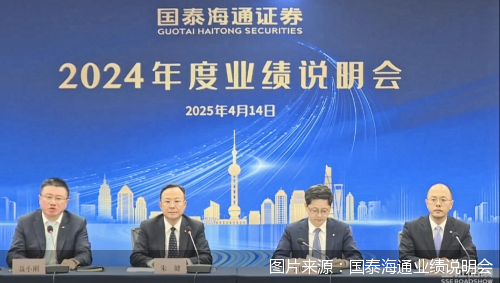
负商誉

Search documents
险企“长股投”增厚利润惹争议
2 1 Shi Ji Jing Ji Bao Dao· 2025-11-10 23:10
Core Viewpoint - The insurance industry is increasingly turning to long-term equity investments, particularly in undervalued bank stocks, to achieve asset-liability matching and stable returns amid a low-interest-rate environment and asset scarcity [1][11]. Summary by Sections Long-term Equity Investment Strategy - Insurance companies are seeking stable, long-term returns through long-term equity investments, which are seen as a strategic choice to smooth out volatility and achieve stable ROE and dividend returns [1][11]. - However, this strategy has sparked controversy, as some companies may misuse it as a financial engineering tool to quickly create profits and net assets, masking operational pressures [1][2]. Accounting Practices and Implications - Long-term equity investments are intended to reflect a long-term holding and stable return logic, but they can transform into a "reporting magic" under specific accounting rules, especially when investing in undervalued stocks [3][4]. - The new accounting standards allow insurance companies to classify investments as long-term equity investments if they have "significant influence," enabling them to use the equity method for accounting [6][9]. Financial Engineering Concerns - The equity method allows for initial measurement based on the higher of the payment amount or the share of the investee's net assets, which can lead to significant one-time profits being recognized on the income statement [7][9]. - This practice can create a disconnect between reported profits and actual cash flows, raising concerns about the sustainability of such financial engineering [17]. Market and Regulatory Pressures - The low-interest-rate environment and asset scarcity have intensified pressure on insurance companies, particularly smaller firms, to seek quick fixes for profitability and solvency metrics [11][12]. - Regulatory scrutiny is increasing as the misuse of long-term equity investments for short-term financial gains becomes more apparent, leading to calls for clearer standards and stricter oversight [20][21]. Recommendations for Improvement - To mitigate risks associated with long-term equity investments, it is suggested that insurance companies enhance internal controls, focus on sustainable cash flows, and separate short-term profits from long-term investment strategies [21][22]. - Expanding into alternative assets that align with long-term liabilities, such as infrastructure REITs and policy bonds, is recommended to reduce reliance on equity market fluctuations [21][22].

险企“长期股权投资”增厚利润惹争议 报表魔术有风险
2 1 Shi Ji Jing Ji Bao Dao· 2025-11-10 08:48
Core Viewpoint - The insurance industry is facing asset-liability matching pressures due to declining interest rates and an "asset shortage," prompting companies to seek long-term equity investments, particularly in undervalued bank stocks, to achieve stable returns and balance sheet improvements [1][3][12]. Group 1: Long-term Equity Investment Strategy - Insurance companies are increasingly turning to long-term equity investments as a strategy to achieve stable returns and match their liabilities [3][12]. - This strategy has sparked controversy, as it is seen as a means to smooth out volatility and achieve stable return on equity (ROE) and dividend returns, but some companies misuse it as a financial engineering tool to mask operational pressures [3][4][15]. - The shift to long-term equity investments is driven by the need for stable, high returns in a low-interest-rate environment, where traditional fixed-income assets are yielding insufficient returns [12][13]. Group 2: Accounting Practices and Implications - The accounting treatment of long-term equity investments allows insurance companies to recognize significant profits through accounting adjustments, particularly when investing in undervalued stocks [5][9]. - By applying the equity method of accounting, companies can report initial investment costs based on the fair value of the net assets of the investee, leading to inflated profits on their financial statements [7][10]. - This practice can create a disconnect between reported profits and actual cash flows, raising concerns about the sustainability of these earnings [11][19]. Group 3: Risks and Challenges - The reliance on long-term equity investments as a financial strategy can lead to systemic distortions in profit, net assets, and risk disclosures, potentially masking underlying financial health issues [4][20]. - Companies face pressures from regulatory requirements and internal assessments of solvency and profitability, which may drive them to prioritize short-term financial reporting over long-term strategic investments [14][15]. - The misuse of long-term equity investments can result in significant risks, including mismatches in capital and liquidity, potential valuation declines, and loss of market trust [20][21]. Group 4: Recommendations for Improvement - To mitigate the risks associated with long-term equity investments, regulatory bodies should establish clearer standards for recognizing significant influence and tighten rules around accounting for goodwill and fair value assessments [21][22]. - Insurance companies should enhance internal controls and focus on sustainable cash flow as a primary measure of investment success, rather than relying on one-time accounting gains [22]. - Expanding investment opportunities into infrastructure REITs, preferred stocks, and other long-term assets can help reduce dependence on equity investments and improve asset-liability matching [22].


国泰海通(601211):整合后协同效应已显现,迈入行业第一梯队
Western Securities· 2025-10-31 13:22
Investment Rating - The report maintains a "Buy" rating for Guotai Junan Securities [6][10] Core Insights - Guotai Junan Securities reported a revenue of 458.92 billion yuan and a net profit attributable to shareholders of 220.74 billion yuan for the first three quarters of 2025, representing year-on-year increases of 12.6% and 101.6% respectively [1][6] - The integration with Haitong Securities has led to significant synergies, enhancing the company's competitive position in the industry [2][3] - The company achieved a non-GAAP net profit of 90.25 billion yuan in Q3, with a total non-GAAP net profit of 163.04 billion yuan for the first three quarters, reflecting an 80.46% year-on-year growth [1][3] Revenue and Profitability - For the first three quarters of 2025, the net income from brokerage, investment banking, and asset management was 108.14 billion yuan, 26.29 billion yuan, and 42.73 billion yuan respectively, with year-on-year growth rates of 142.8%, 46.2%, and 49.3% [2] - The company's interest income and investment income for the first three quarters were 52.08 billion yuan and 209.36 billion yuan, showing increases of 232.3% and 91.0% year-on-year [3] Market Position and Future Outlook - The company ranks fourth in the industry for IPO financing with 10 billion yuan completed in the first three quarters [2] - The report projects a net profit attributable to shareholders of 298.22 billion yuan for 2025, representing a year-on-year increase of 129.0% [3][10] - The price-to-book (PB) ratio is expected to be 0.99 times based on the closing price on October 31 [3][10]

国泰海通(601211):公司各项业务表现强劲 Q1业绩实现高增
Xin Lang Cai Jing· 2025-05-11 00:29
Core Viewpoint - Company achieved significant growth in revenue and net profit in Q1 2025, driven by strong performance across various business lines and the impact of the merger with Haitong Securities [1][2]. Financial Performance - In Q1 2025, the company reported revenue of 11.773 billion yuan, a year-on-year increase of 47.5%, and a net profit attributable to shareholders of 12.242 billion yuan, up 391.8% year-on-year [1][2]. - The weighted average return on equity (ROE) increased by 4.91 percentage points to 6.46% [1][2]. - The company's leverage ratio, excluding client funds, was 3.85x, a decrease of 16.8% year-on-year [2]. Business Line Performance - Revenue from brokerage, investment banking, asset management, interest, and proprietary trading reached 2.652 billion, 708 million, 1.168 billion, 694 million, and 4.115 billion yuan respectively, with year-on-year growth rates of 77.0%, 10.3%, 27.2%, 97.9%, and 70.4% [2]. - The increase in net interest income was attributed to the expanded business scope following the merger [2]. Market Position - The company's market share in credit business increased year-on-year, with brokerage revenue growing faster than the market average [2]. - The average daily trading volume for stocks was 1.74646 trillion yuan, up 71% year-on-year, indicating a strong performance in the brokerage segment [2]. Underwriting and Asset Management - In Q1 2025, the company's market share for loaned funds was 9.89%, an increase of 4.10 percentage points year-on-year [3]. - The company experienced a decline in equity underwriting market share, with a total equity scale of 1.498 billion yuan, down 73% year-on-year [3]. - The asset management business reported a net income of 1.168 billion yuan, a year-on-year increase of 27.2% [3]. Long-term Outlook - The company is expected to continue expanding its institutional brokerage and trading business, with a focus on developing derivatives and related services [4]. - Projected net profits for 2025 and 2026 are 22.221 billion and 22.638 billion yuan respectively, with corresponding price-to-earnings (PE) ratios of 13.70 and 13.45 [4].
国泰海通合并后首份财报披露→
Jin Rong Shi Bao· 2025-05-02 03:28
Core Viewpoint - Guotai Haitong's Q1 2025 financial report shows significant growth in revenue and net profit, driven by the absorption of Haitong Securities and the resulting "negative goodwill" [1][2] Financial Performance - In Q1 2025, Guotai Haitong achieved operating revenue of 11.773 billion yuan, a year-on-year increase of 47.48% [1] - The net profit attributable to shareholders reached 12.242 billion yuan, a remarkable year-on-year increase of 391.78%, setting a record for quarterly performance in the securities industry [1] - Excluding non-recurring gains and losses, the net profit was 3.293 billion yuan, up 60.65% year-on-year, ranking third in the industry [1] Negative Goodwill - The substantial increase in net profit is attributed to "negative goodwill" from the merger with Haitong Securities, amounting to 8.547 billion yuan [1][2] - Non-recurring gains and losses for the quarter totaled 8.949 billion yuan, with negative goodwill being a significant contributor [1] Business Segments - Revenue from brokerage, investment banking, asset management, and proprietary trading was 2.652 billion yuan, 708 million yuan, 1.168 billion yuan, and 4.01 billion yuan, respectively [2] - The proprietary trading and brokerage segments saw the most significant year-on-year growth, at 77% and 68.7%, respectively, due to increased investment income and trading volume [2] Market Position - As of the end of Q1, Guotai Haitong's total assets reached 1.69 trillion yuan, a year-on-year increase of 61.58%, although it still trails behind CITIC Securities by over 96 billion yuan [2] - Guotai Haitong's net assets of 321.695 billion yuan positioned it as the leader in the industry, surpassing CITIC Securities' 302.438 billion yuan [2] Industry Outlook - Analysts suggest that ongoing capital market reforms and macroeconomic recovery will benefit leading securities firms, enhancing their risk management capabilities and allowing them to capitalize on policy advantages [3]
国泰海通Q1净利润破110亿元:约80亿属于会计数字“账面富贵” 2025年能否蝉联A类投行?
Xin Lang Zheng Quan· 2025-04-27 03:51
Core Viewpoint - Guotai Haitong is expected to report a significant increase in net profit for Q1 2025, primarily due to negative goodwill from the merger with Haitong Securities, but the underlying operational performance remains comparable to peers [1][3][6]. Financial Performance - Guotai Haitong anticipates a net profit of 11.201 billion to 12.445 billion yuan for Q1 2025, representing a year-on-year increase of 350% to 400% [1][3]. - The adjusted net profit (扣非归母净利润) is projected to be between 2.973 billion and 3.383 billion yuan, reflecting a year-on-year growth of 45% to 65% [1][3][6]. - The substantial increase in net profit is attributed to approximately 8 billion to 9 billion yuan in non-recurring gains from negative goodwill, which lacks operational and cash flow support [6][7]. Merger and Goodwill Analysis - The negative goodwill arises because the acquisition cost of Haitong Securities was lower than the fair value of its identifiable net assets, indicating a "bargain purchase" [5][7]. - The share exchange ratio for the merger was set at 1:0.62, leading to concerns among some minority shareholders about a potential dilution of their equity [7][8]. Regulatory and Compliance Issues - In 2024, both Guotai Junan and Haitong Securities were rated as A-class investment banks based on their 2023 performance, but the upcoming rating for 2025 will depend on 2024 performance [2][9]. - Haitong Securities faced a doubling of penalties related to its investment banking operations in 2024, raising concerns about its future ratings [2][9][10]. - The former head of investment banking at Haitong, Jiang Chengjun, is under investigation for alleged misconduct, further complicating the firm's regulatory standing [9][11].
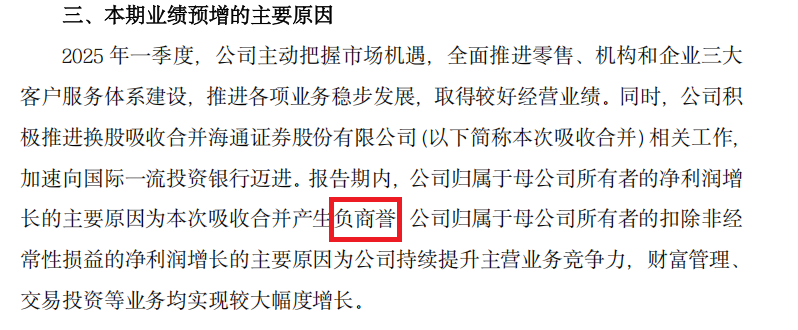
你好,国泰海通!首个业绩说明会公布新蓝图,这些合并难点待解
Bei Jing Shang Bao· 2025-04-15 01:45
Core Viewpoint - The merger of Guotai Junan Securities and Haitong Securities has officially completed, resulting in the establishment of Guotai Haitong Securities, which aims to enhance its market position and operational efficiency through integration and strategic planning [1][3]. Group 1: Merger Completion and Initial Performance - Guotai Haitong Securities has officially launched on the Shanghai Stock Exchange, marking the completion of the merger process [1]. - The company reported an expected net profit attributable to shareholders of 11.2 billion to 12.4 billion yuan for Q1 2025, representing a year-on-year growth of 350% to 400% [3]. - The significant profit increase is attributed to negative goodwill from the merger, indicating that the acquisition cost was lower than the net assets acquired [3]. Group 2: Business Integration Challenges - The merger involves complex integration tasks, including the migration of business systems, corporate structure adjustments, and the consolidation of management practices [3][4]. - The company faces challenges in achieving a seamless integration of overlapping business areas, particularly in investment banking and research sectors [13][14]. - The integration process is expected to lead to personnel changes and potential restructuring within the organization [5][6]. Group 3: Personnel Changes and Management Structure - The new leadership team of Guotai Haitong consists of 14 members, with significant representation from both merging entities [5][6]. - Key personnel from both Guotai Junan and Haitong Securities have been appointed to leadership roles, indicating a blend of the two firms' management [6]. - The merger has led to notable personnel turnover, with several high-profile departures from both firms' research and analysis teams [7][8]. Group 4: Operational Scale and Market Position - Guotai Haitong Securities has become the largest brokerage firm in China by employee count, with a total of 18,971 employees, surpassing its nearest competitor, CITIC Securities [7]. - The combined entity operates 641 branches, reflecting a significant operational scale, although adjustments to branch locations are still ongoing [8][10]. - The firm aims to leverage its extensive network to enhance service delivery while navigating the challenges of digital transformation in the brokerage industry [11][12]. Group 5: Future Strategic Directions - Guotai Haitong plans to focus on international expansion, with a commitment to allocate up to 30 billion yuan for international business development [14]. - The company is set to develop a comprehensive integration plan for its subsidiaries within a year, addressing potential conflicts and ensuring smooth operations [15][16]. - The leadership emphasizes the importance of establishing a unified corporate culture and operational framework to support long-term growth and stability [17][18].