
负担能力

Search documents
中期选举交易主题浮现:金融科技与房屋建筑商领跑华尔街押注
智通财经网· 2026-02-03 13:29
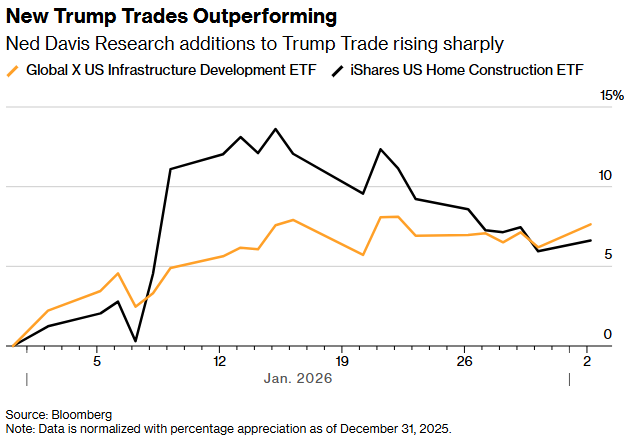
Group 1 - The core focus is on the upcoming U.S. midterm elections and the impact on consumer sentiment, which is currently low according to recent surveys [1] - Investors are particularly interested in financial companies that may benefit from the Trump administration's efforts to lower living costs, including tax reforms and policies aimed at increasing demand [1] - The Trump administration is attempting to lower housing borrowing costs by ordering the purchase of mortgage-backed securities (MBS) [1] Group 2 - Citigroup has launched a "tactical" basket of stocks focusing on fintech companies that cater to low- and middle-income consumers, such as Klarna, Block, and Intuit, which may benefit from policies making credit more accessible [4] - Consumer confidence has dropped to its lowest level since 2014, raising concerns on Wall Street about potential declines in spending, despite actual spending remaining high [4] - The consumer sector has seen a rise in essential goods by 9.2% and discretionary goods by 2.4%, outperforming the S&P 500 index's increase of 1.9% [5] Group 3 - The focus on "affordability" has shifted strategies in trading, moving away from previous focuses like cryptocurrency deregulation [5] - The Ned Davis Research Company has adjusted its trading strategy to include housing construction stocks, infrastructure companies, and a fund betting on a weaker dollar, as economic growth, affordability, and national security are expected to be key themes [5] - Concerns have been raised about the overall market as consumer confidence declines and income growth slows, indicating potential issues ahead [6]

特朗普周二将就负担能力问题发表讲话
Xin Lang Cai Jing· 2026-01-26 18:59
Group 1 - The core focus of Trump's upcoming speech in Des Moines, Iowa, will be on affordability and economic issues [1][2] - Trump is scheduled to visit a local business and meet with lawmakers during his trip [2]
活不起了,美国人开始“逃”向中西部
Xin Lang Cai Jing· 2026-01-03 13:05
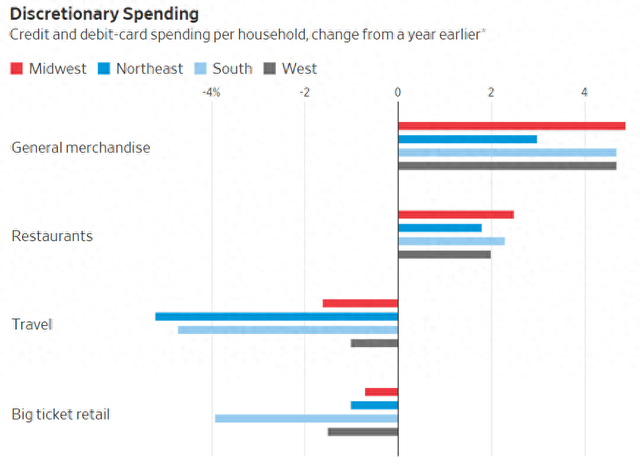
Group 1 - The term "affordability" has gained prominence in the U.S. as many Americans express dissatisfaction with rising living costs, including housing, groceries, and childcare, which are pushing them out of their communities [1][2] - The competitive election campaigns across the U.S. have made "affordability" a central issue, with notable political shifts, such as the election of a self-identified democratic socialist as mayor of New York City [1][2] - A new trend of "escaping to the Midwest" is emerging, as individuals from high-cost coastal cities seek more affordable living conditions in the Midwest [1][4] Group 2 - The Midwest, defined by Bank of America, includes states like Indiana, Iowa, and Michigan, and has the lowest median home prices in the U.S., with a median price of $319,400 compared to the national average of $409,200 [4] - The Midwest has historically had lower living costs, and recent data shows that wage growth in the region has been more stable and robust compared to other areas, leading to increased consumer spending on non-essential items [5] - For example, in Wisconsin, certain areas have seen a population growth of 3% from 2019 to 2024, which is higher than the state average of 2%, indicating a positive economic trend despite lower housing prices [5] Group 3 - Many individuals who previously lived in high-cost areas are returning to their hometowns in the Midwest, finding significantly lower housing costs and living expenses [6][7] - For instance, a couple moved from Los Angeles to Wisconsin, purchasing a larger home for $360,000, which is more than double the size of their previous home sold for a higher price [6] - However, rising competition for homes in the Midwest is driving up prices, creating concerns for local residents about affordability and economic balance [7] Group 4 - Recent comments from political figures, including former President Trump, highlight the ongoing debate about economic performance and affordability, with claims of addressing the affordability crisis and reducing prices [8] - The disconnect between political rhetoric and the lived experiences of ordinary Americans is evident, as many feel that their financial situations have not improved despite claims of economic prosperity [8]
贝森特“剧透”:美国今年实际GDP增速将达到3%
Hua Er Jie Jian Wen· 2025-12-08 00:43
Group 1 - The core viewpoint is that despite a prolonged government shutdown, the U.S. is expected to achieve a 3% real GDP growth this year, reflecting optimism from the White House regarding the economic outlook [1][2] - The holiday shopping season is reported to be "very strong," indicating better-than-expected economic conditions [1] - The consumer confidence index from the University of Michigan for December is at 53.3, which is a 28% decline compared to the same period last year, highlighting a disparity between economic growth and consumer sentiment [1][3] Group 2 - The U.S. economy has shown resilience with several quarters achieving 4% GDP growth, and the Atlanta Federal Reserve's latest forecast indicates a 3.5% annualized GDP growth for the third quarter [2] - Consumer spending, which accounts for nearly 70% of U.S. GDP, remains low despite the economic growth, as indicated by the consumer confidence index [3] - Recent inflation data shows a 3% year-over-year increase in consumer prices, with household food costs rising by 3.1%, further impacting consumer sentiment [3][4] Group 3 - Treasury Secretary Becerra attributes consumer concerns about affordability to media reports and emphasizes that the government is addressing inflation issues left by the previous administration [4] - Becerra expresses confidence that the U.S. will "move towards prosperity" in the coming year, despite current challenges [4]