财富复利

Search documents
视频|但斌、吴伟志、徐书楠、舒泰峰等私募大佬新春齐贺:投资顺利 马到功成 业绩长红!
Xin Lang Cai Jing· 2026-02-14 03:54
Group 1 - The year 2026 is anticipated to be a breakthrough year for AI applications, with competition among top tech giants driving unprecedented technological advancements that will impact various industries and benefit the general public [1][5] - Investment strategies should focus on companies with strong competitive advantages and long-term potential, emphasizing a global perspective and a commitment to long-termism [1][5] - The overall market trend is expected to remain upward, entering a phase driven by fundamentals, with sectors showing sustained growth likely to continue performing well [2][5] Group 2 - Investors are advised to adopt a more discerning approach, focusing on hard assets and moving away from beta-driven thinking, with recommendations to utilize ETFs or professional fund managers to mitigate risks [2][5] - The emphasis on long-term stability and the integration of AI capabilities into research and investment strategies is highlighted, aiming to provide investors with sustainable returns [3][5] - The investment philosophy includes the importance of patience, skepticism, caution, and maintaining original intentions, which aligns with a long-term investment mindset [3][6]
财富大时代,一本书讲透财富与人生的复利魔方︱重阳荐文
重阳投资· 2025-11-24 07:33
Core Viewpoint - The article discusses the challenges and opportunities in the investment landscape during the "VUCA" (Volatility, Uncertainty, Complexity, Ambiguity) era, emphasizing the need for rational decision-making amidst market fluctuations and cognitive biases [2][3]. Summary by Sections Investment Landscape - The years 2021-2025 are characterized as a "post-pandemic" era with trade wars and rapid AI advancements disrupting traditional industries [2]. - Investor sentiment has been low due to significant market fluctuations over the past four years, revealing cognitive biases such as pessimism, anchoring effects, and loss aversion [3]. Book Overview - "Wealth is the Realization of Cognition" has received positive feedback since its release, helping readers navigate turbulent investment periods and achieve returns [4]. - The upgraded version of the book includes an additional 40,000 words of analysis, addressing key global shifts such as the AI equity revolution and the implications of trade policies [5]. Cognitive Traps and Solutions - The book identifies 12 cognitive traps that investors face, such as overconfidence and loss aversion, and provides corresponding strategies to overcome them [13][14]. - Key strategies include using self-awareness to combat overconfidence and adopting long-term thinking to counteract the urge for quick gains [13][14]. Author's Background - The author, Shu Taifeng, combines a humanities background with extensive media experience to present investment philosophies in an accessible manner [25][28]. - The book integrates insights from historical figures like Buffett and Laozi, highlighting the timeless nature of investment wisdom [19][28]. Reader Engagement - The article encourages readers to engage with the book, offering discounts for bulk purchases and membership benefits [7][9].


静默的复利︱重阳来信2025年11月
重阳投资· 2025-11-03 07:41
Core Insights - Morgan Housel's new book "The Art of Money" continues the themes of wealth, human nature, and happiness found in his previous works, focusing on the secrets of compounding wealth and life [2] - The concept of compounding is illustrated through a wealth experiment comparing immediate rewards versus exponential growth, emphasizing the importance of patience and long-term thinking [3][4] Group 1: The Difficulty of Compounding - Compounding can be slow and requires uninterrupted commitment; interruptions can derail the process [4][5] - Early-stage compounding yields minimal visible results, which can lead to discouragement and abandonment of the strategy [5][6] - Human cognition struggles to grasp "tail events," which are rare but impactful occurrences that significantly influence outcomes [6][7] Group 2: The Importance of Early Action - Starting early is crucial for wealth accumulation; even small investments can grow significantly over time [9] - Saving money is framed as a pathway to freedom, allowing individuals to make choices aligned with their true desires [10] - The narrative emphasizes that the true essence of wealth is not material possession but the ability to live life on one's own terms [10]

21书评丨由知识复利实现财富复利
2 1 Shi Ji Jing Ji Bao Dao· 2025-11-01 06:25
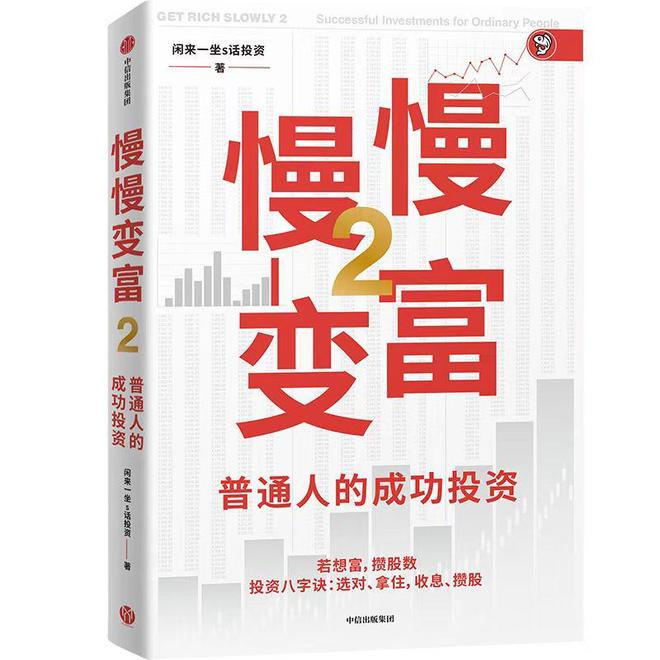
Core Insights - The article discusses the investment philosophy and strategies shared in the book "Slowly Becoming Rich 2," emphasizing the importance of practical experience in investing [2][3] - The author highlights the significance of value investing and the challenges associated with holding investments long-term, especially during market downturns [3][4] Investment Philosophy - The book draws inspiration from renowned investors like Graham, Buffett, Munger, and Fisher, but stresses that the core investment principles are developed through practical experience [2] - The author introduces an "eight-character mantra" for investing: select wisely, hold on, collect dividends, and accumulate shares, which encapsulates the essence of value investing [3] Investor Education - The book serves as a valuable resource for investor education, advocating for a deeper understanding of value investing to enhance market maturity [3] - It emphasizes the need for investors to have a solid knowledge base and analytical skills before entering the stock market, particularly in assessing company fundamentals such as cash flow and profitability [2][4] Personal Insights - The author shares personal reflections that encourage investors to approach investing with a mindset of continuous learning and rational analysis, treating losses as learning opportunities [4] - The narrative promotes a philosophy of lifelong learning and self-improvement, applicable not only in investing but also in various life scenarios [4]