
货币基金收益率下行

Search documents
87只货币基金收益率跌破1%
Xin Lang Cai Jing· 2025-12-25 23:21
Core Viewpoint - The yield of money market funds is rapidly declining, with over 87 funds now having a seven-day annualized yield below 1%, marking a historical low. Even leading products like Tianhong Yu'ebao have seen their yields drop to 1.04% [1][10][11]. Group 1: Current Yield Trends - As of December 24, 2023, 87 money market funds have reported a seven-day annualized yield below 1%, with some products like Minsheng Jia Yin Cash Growth B and others falling below 0.5% [2][10]. - Tianhong Yu'ebao, the largest money market fund, has seen its yield decline to 1.04%, having briefly dipped to 1.001% on December 4, 2023 [11][12]. Group 2: Factors Influencing Yield Decline - The continuous decline in money market fund yields is attributed to a systemic decrease in interest rates and abundant market liquidity. The central bank's loose monetary policy has led to lower short-term rates, affecting the yields of underlying assets like interbank certificates of deposit and short-term bonds [4][13]. - The phenomenon of "asset scarcity" has forced fund managers to shorten portfolio durations and reduce leverage to manage risk exposure, further suppressing yields [4][13]. Group 3: Management Fee Adjustments - Due to insufficient yields, many funds have triggered management fee adjustments, with 134 announcements made in December alone. For instance, the E Fund Cash Treasure Fund adjusted its management fee from 0.90% to 0.25% when yields fell below a certain threshold [6][14]. - The trend of fee reductions has become common in the industry, with Tianhong Yu'ebao recently lowering its management fee for the first time in over a decade [15][16]. Group 4: Fund Size and Market Dynamics - Despite declining yields, the total size of money market funds has not decreased, with a reported total of 15.05 trillion units by the end of October 2023, reflecting an increase of over 38 million units since September [16]. - Analysts predict that the trend of expanding money market fund sizes will continue, supported by the maturity of high-yield fixed deposits and the attractiveness of liquidity advantages in the current market environment [17].

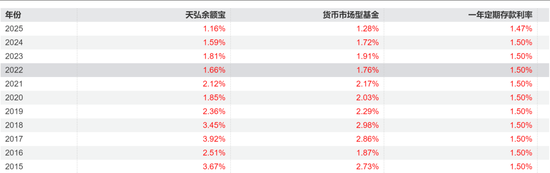
87只货币基金收益率跌破1%
21世纪经济报道· 2025-12-25 16:08
Core Viewpoint - The yield of money market funds is rapidly declining, with a significant number of funds now yielding below 1%, indicating a historical low in the market [1][3]. Group 1: Current Yield Trends - As of December 24, 2023, 87 money market funds have seen their seven-day annualized yields drop below 1%, with some funds like Minsheng Jia Yin Cash Growth B and others falling below 0.5% [3]. - Tianhong Yu'ebao, the largest money market fund, has a current yield of 1.04%, having briefly dipped to 1.001% on December 4, 2023 [3][4]. Group 2: Factors Influencing Yield Decline - The continuous decline in money market fund yields is attributed to a systemic decrease in interest rates and abundant market liquidity, leading to a phenomenon of "asset scarcity" [5]. - The central bank's maintenance of a loose monetary policy has driven down short-term interest rates, affecting the yields of underlying assets such as interbank certificates of deposit and short-term bonds [5]. Group 3: Management Fee Adjustments - Due to insufficient yields, many funds have triggered management fee adjustments, with 134 announcements made in December alone regarding fee changes [7]. - For example, the Guangda Baodexin Sunshine Cash Treasure Fund adjusted its management fee down to 0.25% when its yield fell below a certain threshold, only to revert back to the original rate shortly after [7]. Group 4: Fund Size and Market Dynamics - Despite the declining yields, the total share of money market funds reached 15.05 trillion units by the end of October 2023, showing a growth of over 38 million units compared to September [9]. - Analysts predict that the trend of expanding money market fund sizes will continue into the fourth quarter, supported by the maturity of high-yield fixed deposits and the liquidity advantages of money market funds [9].

货币基金收益承压,月内触发百余次管理费下调
2 1 Shi Ji Jing Ji Bao Dao· 2025-12-25 11:31
Core Viewpoint - The yield of money market funds is rapidly declining, with over 87 funds reporting a seven-day annualized yield below 1%, indicating a historical low in the market [1][2]. Group 1: Yield Decline - As of December 24, 2023, 87 money market funds have seen their seven-day annualized yields drop below 1%, with some products like Minsheng Jia Yin Cash Growth B and others falling below 0.5% [2]. - Tianhong Yu'ebao, the largest money market fund, has a yield of only 1.04%, having briefly dipped to 1.001% on December 4, 2023 [2]. - The decline in yields is attributed to a combination of systemic interest rate reductions and abundant market liquidity, leading to a "asset shortage" phenomenon [3]. Group 2: Management Fee Adjustments - Due to insufficient yields, 134 announcements have been made regarding management fee adjustments since December, with some funds lowering fees multiple times [1][5]. - For instance, the Guangda Baodexin Sunshine Cash Treasure Fund adjusted its management fee from 0.90% to 0.25% when yields fell below a certain threshold, only to revert back shortly after [5]. - The trend of fee reductions has become common in the industry, with Tianhong Yu'ebao recently lowering its custody fee for the first time in over a decade [6]. Group 3: Fund Size Trends - Despite declining yields, the total share of money market funds has increased, reaching 15.05 trillion shares by the end of October 2023, up by over 38 million shares from September [6]. - The size of money market funds is expected to continue expanding in the fourth quarter, supported by the maturity of high-interest fixed deposits and the liquidity advantages highlighted by new fund sales fee regulations [7].

“破1”潮下,货币基金规模逆势增超万亿
第一财经· 2025-12-24 01:43
Core Viewpoint - The decline in money market fund yields has raised questions about their value, yet their total scale continues to grow, indicating their ongoing importance as a cash management tool [3][10]. Group 1: Yield Trends - The average 7-day annualized yield of money market funds has dropped to 1.24%, down from 1.6% a year ago, and significantly lower than 2.18% in 2023, marking a decline of over 40% [5]. - No money market fund currently exceeds a 7-day annualized yield of 2%, with the highest yield being 1.86% for a specific fund, compared to 57 funds exceeding 2% last year [5]. - The number of funds with yields below 1% has increased 2.4 times year-on-year, with 93 funds currently in this category [5]. Group 2: Fund Management Fees - The decline in yields has triggered several funds to activate fee reduction clauses, with some adjusting management fees from 0.7% to 0.3% when yields fall below certain thresholds [6][8]. - A total of 17 funds have experienced similar fee adjustments in the past month, indicating a trend among funds with higher management fees [8]. Group 3: Market Position and Growth - Despite declining yields, the total scale of money market funds has surpassed 15.05 trillion yuan, accounting for 40.73% of the market, with an increase of 1.44 trillion yuan since the beginning of the year [10]. - The number of accounts holding money market funds has exceeded 2 billion, with an increase of nearly 7 million accounts in the first half of the year [10]. Group 4: Investment Value - Industry experts assert that money market funds remain essential for cash management, especially for novice investors or those with low risk tolerance, serving as a foundational investment product [11][12]. - For more experienced investors, money market funds provide liquidity and flexibility in asset allocation, while for institutional investors, they are crucial for cash management [12]. - The core reason for the growth of money market funds, despite yield declines, is their unchanged role as cash management tools, with a significant likelihood of continued stability in scale [12]. Group 5: Consumer Behavior and Product Integration - Many money market products are deeply integrated with consumer scenarios, enhancing user habits and solidifying their role as essential financial infrastructure [13]. - Fund companies are encouraged to deepen integration with market demands and improve user retention through fee reductions and enhanced service offerings [13].

收益率“破1”进行时 货基规模为何能逆势创高
Sou Hu Cai Jing· 2025-12-23 17:07
Core Insights - The average 7-day annualized yield of money market funds has dropped to 1.24%, with nearly 100 products yielding below 1%, raising questions about their investment value [1][5] - Despite declining yields, the scale of money market funds has surpassed 15 trillion yuan, increasing by over 1 trillion yuan since the beginning of the year, indicating continued investor interest [1][5] - The number of accounts holding money market funds has exceeded 2 billion, with an increase of nearly 70 million accounts in the past six months, reflecting their ongoing appeal [1][5] Yield Trends - The overall yield of money market funds has shown a downward trend, with the average 7-day annualized yield falling from 1.6% last year to 1.24% this year, a decrease of 0.36 percentage points [1][2] - Currently, no money market fund has a yield exceeding 2%, with the highest being 1.86%, compared to 57 funds exceeding 2% last year [2] - A significant number of funds, 93, have yields below 1%, a 2.4-fold increase year-on-year [2] Fee Adjustments - Several funds have adjusted their management fees in response to declining yields, with some reducing fees to 0.3% when yields fall below certain thresholds [3][4] - A total of 17 funds have implemented similar fee adjustments recently, indicating a trend among funds transitioning from asset management products to money market funds [3][4] - High management fees have been noted in some funds, with 21 funds having fees exceeding 0.5%, which is relatively high compared to the average [3][4] Value Proposition of Money Market Funds - Industry experts assert that despite lower yields, money market funds remain essential for cash management, providing liquidity and stability for investors [5][6] - Money market funds are viewed as a foundational asset for both novice and experienced investors, offering a safe entry point into investment [6][7] - The integration of money market funds with consumer payment scenarios has solidified their role as a fundamental financial infrastructure, making them less replaceable [7]
多只“宝宝类”货基 7日年化收益跌破“1”
Shen Zhen Shang Bao· 2025-12-22 18:27
Core Viewpoint - The yield of money market funds has been continuously declining this year, with several "baby" products showing a 7-day annualized yield below 1% [1] Group 1: Yield Trends - The average yield of money market funds this year is 1.29%, significantly lower than the average yields of 3.13% and 5.15% over the past two and three years, respectively [1] - As of December 22, the 7-day annualized yield of money market funds has dropped below 1%, with 163 funds yielding between 1% and 1.2% [1] - Last year, only 12 funds had a 7-day annualized yield below 1%, indicating a significant increase in the number of low-yield funds this year [1] Group 2: Fund Scale Growth - Despite the declining yields, the total scale of money market funds in China has increased, reaching approximately 15.05 trillion yuan by the end of October, which is an increase of 1.43 trillion yuan compared to the end of last year [1]
超70只“宝宝类”货基收益破“1” 货币基金规模不降反升
Sou Hu Cai Jing· 2025-12-22 11:12
Group 1 - The core viewpoint of the articles indicates that despite a continuous decline in money market fund yields, the overall scale of these funds has increased significantly this year, with a growth of over 1.4 trillion yuan in the first ten months [1][2] - As of December 22, 2023, at least 70 money market products have a 7-day annualized yield below 1%, with 163 funds yielding between 1% and 1.2%, highlighting a notable decrease in yields compared to previous years [1][2] - The total scale of money market funds in China reached approximately 15.05 trillion yuan by the end of October 2023, an increase of 1.43 trillion yuan from the end of the previous year [1] Group 2 - Several money market funds have implemented purchase limits to prevent large inflows of capital, which could dilute existing holders' returns [2] - Analysts predict that the trend of increasing liabilities for money market funds may continue, supported by the maturity of high-interest fixed deposits and the strengthening of liquidity advantages due to new fund sales fee regulations [2] - The future outlook suggests that money market fund yields may continue to decline, and the growth rate of fund scales may slow down due to the positive correlation between fund scale growth and the interest rate spread compared to deposits [2][3] Group 3 - The fixed income investment manager at Taiping Fund notes that the trend of declining bank deposit rates since 2020 has led to a gradual decrease in money market fund yields, yet the scale of these funds continues to grow steadily [3] - The development of China's money market funds may align more closely with the U.S. model, featuring high liquidity and low yield volatility, while remaining valuable for both individuals and institutions [3] - Industry experts recommend that investors reassess the positioning of money market funds in a low-interest-rate environment, suggesting low-fee funds for short-term idle cash and considering higher-yield alternatives for medium to long-term investments [3]
逾百只货基7日年化收益率跌破1%
Shang Hai Zheng Quan Bao· 2025-12-21 18:20
Core Insights - The yield of money market funds has been declining, with over 100 products having a seven-day annualized yield below 1% as of December 17, indicating a significant shift in the market [1][2] - Despite the low yields, the core value of money market funds as liquidity management tools remains unchanged, catering to investors who prioritize safety and liquidity [2][3] Group 1: Yield Trends - As of December 17, the average seven-day annualized yield for all money market funds is 1.22%, with 102 funds (over 10%) yielding below 1% [1] - The number of funds yielding between 1% and 1.2% has reached 469, making up nearly half of the market [1] - The average yield has decreased from 1.5% at the end of Q1 to 1.25% by the end of Q3, with the number of funds yielding below 1% increasing significantly [1] Group 2: High Yield Anomalies - Some funds, such as Pengyang Tongli Money B and Taiping Daily Gold Money B, have temporarily high yields exceeding 2%, but these are not indicative of normal operations [2][3] - The fluctuations in yields are often due to the realization of floating profits and large redemptions, which are not sustainable over the long term [3] - The seven-day annualized yield is a lagging indicator, and spikes in yield are typically followed by a return to normal levels [3]
102只货币基金收益率跌破1%
21世纪经济报道· 2025-12-17 11:44
Group 1 - The yield of "baby" funds has been declining throughout the year, with the median seven-day annualized yield of 941 money market funds at 1.24% as of December 16, and 102 funds falling below 1% [1] - Tianhong Yu'ebao, the largest money market fund, maintained a yield above 1%, at 1.014% as of December 16, despite a previous drop to 1.001% [1] - The fund manager indicated that the phenomenon of deposit migration has impacted banks' management of funds, increasing friction in fund flow and leading to a decrease in the supply of base currency in the money market, which has heightened volatility in interest rates [1] Group 2 - Despite the long-term downward trend in money market fund yields, the total share of money market funds increased to 15.05 trillion units by the end of October, up over 38 million units from the end of September [2] - Key reasons for the changes in money market fund yields include a downward shift in the risk-free interest rate, which has caused yields on bank deposits and bond repos to decline, and a liquidity surplus leading to an asset shortage [2] - Funds have had to control risks by reducing leverage and shortening duration, further dragging down yield performance [2]

多只“宝宝类”基金收益率跌破1%,余额宝基金仍坚守
Sou Hu Cai Jing· 2025-12-17 11:24
Core Insights - The yield of "baby" funds has been continuously declining this year, with the median seven-day annualized yield of 941 money market funds at 1.24% as of December 16 [1] - A total of 102 money market funds have seen their seven-day annualized yields drop below 1%, while over 300 funds are in the range of 1% to 1.2% [1] - Despite the overall downward trend in money market fund yields, the largest fund, Tianhong Yu'ebao, has maintained a yield above 1%, recorded at 1.014% as of December 16, showing a slight recovery from a previous low of 1.001% [1] - The total share of money market funds has increased, reaching 15.05 trillion shares by the end of October, which is an increase of over 38 million shares compared to the end of September [1]