货币基金

Search documents
世道不太平,投资者还有什么方向可以搞?
集思录· 2026-03-30 13:26
Group 1 - The current market sentiment indicates a lack of clear direction, with precious metals not performing as expected despite global turmoil, suggesting it may not be the right time to invest [1] - Oil positions have been cleared due to uncertainty surrounding U.S. actions and geopolitical tensions, leading to a cautious approach in re-entering the market [1] - The U.S. stock market is undergoing a significant adjustment, and the A-share market is also viewed as unfavorable, with no clear opportunities arising from military spending announcements [1] Group 2 - There is speculation that agricultural products may see price increases, indicating potential investment opportunities in this sector [1] - Some analysts suggest investing in chemical products and raw materials as a strategy to capitalize on expected price hikes [4] - The overall sentiment in the capital markets reflects a lack of confidence in the analysis of the ongoing war, with many traders feeling uninformed about the potential outcomes [9]


国泰海通 · 宏观聚焦|大变局:“信任”的重定价
国泰海通证券研究· 2026-03-27 09:17
Group 1 - The core argument of the article is that the decline of "trust" among nations is reshaping the global economic and monetary systems, leading to a re-evaluation of asset pricing frameworks [2][3][4] - The article emphasizes that the foundation of the globalization system has been mutual trust among countries, which has been eroded due to geopolitical tensions and trade frictions since 2018 [8][9] - The ongoing geopolitical conflicts, such as the situation in Iran, are seen as part of a larger trend of global order restructuring, which will increase the demand for "security" and accelerate the reconfiguration of the global economic and monetary systems [5][6] Group 2 - The article discusses the trend of restructuring the global economic system, which began in 2018, highlighting that the previous model based on cost efficiency is now being replaced by considerations of "security" [8][9] - It notes that the U.S.-China trade tensions and the recent geopolitical events have intensified distrust among nations, leading to a re-pricing of core resources and technologies [9][10] - The future of global supply chains is expected to be characterized by differentiation, with stable relationships between countries strengthening trade links, while unstable relationships will see a decline in direct trade [10] Group 3 - The article outlines the restructuring of the global monetary system, which has been significantly influenced by the decline of trust, particularly following the freezing of Russia's foreign reserves in 2022 [12][15] - It argues that the U.S. dollar's status as the world's primary reserve currency is being challenged, as countries reassess their reliance on the dollar based on their relationships with the U.S. [14][15] - The article suggests that while the dollar's credit may decline, it is unlikely to collapse entirely, as it remains the most trusted currency in times of geopolitical uncertainty [16][17] Group 4 - The article highlights the rising price of gold as a reflection of declining trust among nations, with central banks increasing their gold reserves as a hedge against geopolitical risks [18][19] - It points out that gold's pricing has shifted from being influenced primarily by economic factors to being driven by non-economic factors, such as trust and security concerns [19][20] - The article predicts a long-term bull market for gold, driven by increasing demand from countries seeking to reduce their dependence on the dollar and other currencies [20] Group 5 - The article discusses the redefinition of "good assets" in the context of the changing global economic landscape, emphasizing the importance of security in investment decisions [22][23] - It notes that the criteria for evaluating companies and assets have shifted from purely economic performance to include considerations of safety and geopolitical stability [22][23] - The article concludes that the ongoing restructuring of the global economic and monetary systems necessitates a new perspective on asset performance and investment strategies [23]


国泰海通 · 宏观聚焦|广义视角:存款搬家是个“伪命题”—— “居民财富何处流”研究三
国泰海通证券研究· 2026-03-26 14:00
Core Insights - The article discusses the historical migration of Chinese household wealth, indicating that a third significant migration began around 2023 under low interest and inflation conditions, with a focus on "deposits +" as the main direction [2] - It highlights that the period from 2024 to 2025 will see an average net inflow of nearly 7 trillion yuan into wealth management, insurance, and money market funds, which will serve as the main support for the outflow of deposits [2][8] - The article emphasizes that the stock market's performance in 2025 is driven more by leveraged funds rather than direct household investments, with a significant contribution from insurance funds [3][27] Group 1: Wealth Migration Characteristics - The third historical migration of wealth is characterized by a shift towards low-risk products like wealth management and insurance, while the underlying asset allocation structure has changed, allowing for indirect penetration into equity markets [2][14] - By the end of 2025, the proportion of insurance funds allocated to stocks increased from 7.5% to 10.1%, driven by policy support and market performance [14][16] - The article notes that the net inflow of funds into various asset management products, excluding valuation effects, is expected to be approximately 2.6 trillion yuan for bank wealth management, 2.7 trillion yuan for insurance, and 1.9 trillion yuan for money market funds during 2024-2025 [8][19] Group 2: Market Dynamics and Fund Flows - The stock market's rally in 2025 was primarily led by leveraged funds, with margin trading reaching a historical high of 2.5 trillion yuan, indicating a strong correlation with high-risk preference sectors like AI and semiconductors [24][26] - The article predicts that the reallocation of 8-10 trillion yuan in maturing deposits in 2026 will depend on inflation expectations, with potential for a smooth transition of "sleeping" funds into the stock market if inflation expectations rise [3][26] - The observed outflow of deposits is more about internal rebalancing within the financial system rather than a large-scale exit, with non-bank asset management products absorbing the outflow [26][27]

11连涨!公募基金规模首破38万亿!
券商中国· 2026-03-25 14:54
Core Viewpoint - The public fund market in China has reached a total scale of 38.61 trillion yuan as of February 2026, marking a historic high and reflecting a continuous growth trend driven by a shift in wealth allocation from traditional savings to investment funds [1][3]. Fund Types Summary Money Market Funds - As of February, the scale of money market funds increased by 5.79 billion yuan, reaching 15.85 trillion yuan, with a growth rate of 3.80% [3][4]. - The average annualized yield for money market funds has dropped to approximately 1.14%, with some funds nearing a yield of 1% [3]. Bond Funds - Bond funds saw an increase of 2.17 billion yuan in February, bringing their total scale to 10.75 trillion yuan, with a growth rate of 2.06% [4]. - The increase in bond fund scale is attributed to the need for stable returns amid market volatility [4]. Mixed Funds - Mixed funds experienced a growth of over 900 million yuan in February, reflecting a shift in investor preference towards more balanced investment strategies [7]. FOF (Fund of Funds) - FOFs contributed an increase of 345.36 million yuan in February, with significant interest from investors leading to the issuance of several high-demand products [5][6]. - The FOF market is benefiting from banks' retail channels, which have accelerated the distribution of these products [6]. Stock Funds - Stock funds experienced a decline of approximately 790 million yuan in February, primarily due to a reduction in ETF market size [7]. - The decrease in stock fund scale is linked to market volatility and a shift in investor focus towards defensive assets [7][8].

居民财富何处流研究三:广义视角:存款搬家是个伪命题
GUOTAI HAITONG SECURITIES· 2026-03-25 14:24
Group 1: Deposit Migration Insights - The current deposit migration phenomenon is more about internal rebalancing within the financial system rather than a large-scale outflow of funds from low-risk systems[8] - The concept of "Deposit+" is emerging as a primary direction for wealth allocation, indicating a shift towards more flexible, low-risk assets[5] - From 2024 to 2025, the average net inflow into wealth management, insurance, and money market funds is estimated to be nearly 7 trillion yuan, serving as the main support for deposit outflows[14] Group 2: Market Dynamics and Investment Behavior - In 2025, the stock and mixed fund shares increased by 331.3 billion units, indicating a cautious recovery in risk appetite among residents[20] - The insurance sector has seen a significant increase in stock allocation, rising from 7.5% at the end of 2024 to 10.1% by the end of 2025, driven by policy support and market conditions[22] - The total net inflow of resident funds into the market in 2025 is estimated at approximately 1.6 trillion yuan, primarily contributed by insurance funds, reflecting a passive rather than active risk-taking behavior[36] Group 3: Economic Outlook and Risks - The reallocation direction of 8-10 trillion yuan in maturing deposits in 2026 will depend on the evolution of inflation expectations; a significant rebound in inflation could lead to a smoother transition of "sleeping" funds into the stock market[39] - The report highlights that the current "deposit migration" is fundamentally an internal shift in financial savings rather than a systemic outflow from the financial system[39] - Risks include potential deviations in data assumptions, slower-than-expected macroeconomic recovery, and market volatility due to leveraged funds[40]
必看,保险大佬们的最新十大观点
表舅是养基大户· 2026-03-04 13:33
Core Viewpoint - The article emphasizes the importance of a long-term perspective in investment strategies, particularly in the context of the insurance asset management industry and its outlook for 2026 [1]. Group 1: Interest Rate Projections - The forecast for 10-year government bonds is between 1.8% and 1.9%, while 30-year bonds are expected to yield between 2.2% and 2.4% [6][9]. - Approximately 70-80% of institutions predict that 10-year bonds will remain below 2%, with a significant portion expecting 30-year bonds to stay within the 2.2%-2.4% range [9]. - The yield on AAA-rated credit bonds is projected to be between 2% and 2.5%, influencing the actual risk-free rate for residents [12]. Group 2: Asset Allocation Trends - A significant trend is the shift from non-standard to standardized assets, with a notable increase in allocations towards bonds and equities, while deposits and other non-standard investments are being reduced [13][15]. - The majority of institutions (over 70%) plan to increase their allocations to stocks, indicating a strong preference for equity investments [15]. Group 3: Insurance Liability and Product Trends - The reform in insurance liabilities is leading to a rise in the popularity of participating insurance products, which in turn reduces the demand for long-duration bonds [19][21]. - The shift towards participating insurance products is resulting in a higher allocation to equities compared to traditional insurance products [21]. Group 4: Factors Influencing A-Share Market - Three main factors are identified as influencing the A-share market in 2026: corporate profit recovery, liquidity environment, and industrial policy along with technological growth [22][26]. - 90% of institutions believe that corporate profit recovery is the most critical factor affecting market performance [26]. Group 5: Preferred Investment Indices - The most favored indices among insurance asset management institutions are the Sci-Tech 50, CSI 300, and A500, with 80%, 60%, and nearly 50% of institutions respectively selecting them [29][33]. - The preference for these indices is partly due to regulatory changes that have adjusted risk factors for insurance companies investing in stocks [33]. Group 6: Industry Focus Areas - The consensus among institutions highlights several key industry sectors: non-ferrous metals, electronics, computers, power equipment, telecommunications, chemicals, pharmaceuticals, and military industry [34][39]. - The intersection of preferences from both insurance asset management and insurance companies reveals a strong interest in semiconductor, AI computing, and defense sectors [39]. Group 7: Investment Vehicles - Secondary bond funds are becoming a primary vehicle for insurance capital entering the market, with a notable increase in their allocation among insurance companies [41]. - The demand for overseas investments, particularly in Hong Kong stocks, remains high, while the interest in US dollar bonds has significantly decreased [45][49].

瞄准年终奖、压岁钱!银行理财迎“黄金窗口期”
Guo Ji Jin Rong Bao· 2026-02-26 14:46
Core Viewpoint - The banking wealth management sector is actively launching "work resumption wealth management" products to cater to the post-holiday investment needs of clients, with a focus on low-volatility and stable products to enhance customer loyalty and meet diverse risk preferences [1][2][4]. Group 1: Market Trends - Over 10 banks have introduced "work resumption wealth management" strategies as of February 26, with a significant emphasis on low-volatility and stable investment products [1]. - The post-Spring Festival period has become a crucial window for banks to recommend new products, aiming to capture the influx of idle funds from year-end bonuses and other sources [2][4]. - The current market is viewed as a "golden window period" for fund allocation, with expectations of continued recovery in the wealth management market [8]. Group 2: Product Offerings - Banks are offering a variety of products tailored to different investor needs, including short-term, medium-term, and long-term investment options, with annualized returns exceeding 2% for many products [3]. - The recommended products predominantly fall into low-risk (R1) and medium-low risk (R2) categories, with annualized returns typically ranging from 1.5% to 3.5% [5]. - A notable trend is the introduction of products with significantly lower investment thresholds, such as those starting at 1 yuan, contrasting with previous higher minimums [6]. Group 3: Competitive Landscape - Banks are competing for high-quality liabilities, such as year-end bonuses and long-term retained funds, to stabilize their funding structures amid declining deposit rates [4][6]. - The marketing strategies around wealth management products are designed not only to attract customers but also to address the banks' operational pressures related to performance assessments [4]. Group 4: Economic Context - The People's Bank of China has increased medium-term liquidity injections, indicating a stable funding environment that supports the wealth management sector [7]. - The current economic backdrop, characterized by low interest rates and a focus on liquidity, is driving investor demand for flexible and stable wealth management products [6][8].
存银行不如买理财!2025年理财规模暴增11%,这波操作你看懂了吗
Sou Hu Cai Jing· 2026-02-26 01:58
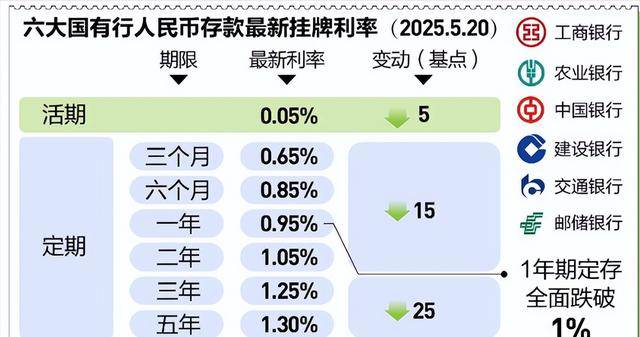
Core Viewpoint - The decline in deposit interest rates below 1% is a significant trend affecting both large state-owned banks and smaller banks, indicating a broader issue within the banking sector [1][3]. Group 1: Deposit Rate Trends - Major state-owned banks have reduced their large-denomination time deposit rates to 0.9% for 1-month and 3-month terms, with smaller banks following suit, leading to rates dropping into the single digits [1]. - By 2025, the average net interest margin for commercial banks is projected to fall to 1.42%, with state-owned banks potentially dropping to 1.31%, nearing regulatory limits [3]. Group 2: Shift in Investment Behavior - The banking wealth management market is expected to exceed 33.29 trillion yuan by the end of 2025, marking an 11.15% increase from the beginning of the year, indicating a shift from traditional savings to wealth management products [5]. - Approximately 17.69 million new individual investors have transitioned from bank deposits to wealth management products within a year, reflecting a significant behavioral change among the public [5]. Group 3: Investment Strategies - Given the low interest rate environment, individuals are advised to adopt a diversified investment strategy, including maintaining emergency funds and spreading investments across different time deposits [8]. - For those willing to take on some risk, a mix of low-risk assets like government bonds and higher-risk growth assets in sectors like technology is recommended, emphasizing the need for a restructured asset allocation approach [8]. Group 4: Future Outlook - The cessation of 5-year large-denomination time deposits by major banks signals a fundamental shift in banking practices, with a move towards shorter and more structured deposit products [8]. - The current low interest rate environment is expected to persist, necessitating a reevaluation of traditional savings strategies and encouraging individuals to enhance their financial literacy [9][10].
国泰海通 · 宏观聚焦|中国居民财富:第三次历史“大迁徙”——“居民财富何处流”研究二
国泰海通证券研究· 2026-02-25 14:22
Core Viewpoint - Chinese residents' wealth has undergone two historical migrations, with the third migration currently underway, characterized by a shift towards "savings+" as the main trend, influenced by low interest rates and inflation expectations [2][6]. Group 1: First Historical Migration: "Savings Move" (1998–2018) - The period from 1990 to 1998 marked the initial stage of wealth accumulation and allocation, primarily through savings, with low exposure to risk assets [3][8]. - The housing reform in 1998 initiated the first migration, directing savings towards real estate and related assets, establishing real estate as a core component of residents' asset allocation [10][11]. - This migration can be divided into two phases: 1. From 1998 to 2008, real estate gained central importance in residents' balance sheets, driven by price appreciation expectations and the rise of related financial products [11][12]. 2. From 2008 to 2018, the rapid expansion of the asset management industry accelerated the flow of funds into real estate and related financial assets [3][12]. Group 2: Second Historical Migration: "Savings Return Home" (2018–2023) - The second migration began in 2018 as the real estate market entered a downturn, leading to a return of wealth from real estate and related financial products back to savings [4][17]. - During this period, annual new savings averaged approximately 12 trillion yuan, significantly higher than the previous norm of 4-5 trillion yuan [17]. - The decline in real estate prices and regulatory changes in the asset management sector contributed to the increased attractiveness of savings over real estate investments [18][17]. Group 3: Third Historical Migration: "Savings+" Era (Since 2023) - Since 2023, the growth of new savings has noticeably declined, with new savings dropping to 16.7 trillion yuan, indicating a loosening of the concentration in savings allocation [23][27]. - The driving factors include a relative decline in the attractiveness of savings rates and improvements in the relative returns of other risk assets, such as bonds and equities [26][27]. - The current migration reflects a structural rebalancing around actual returns, with "savings+" representing a broader wealth allocation concept that emphasizes stable returns while controlling for capital loss [27][28].

存款不香了,房产还能买吗?低利率时代资产配置逻辑全变了!
Sou Hu Cai Jing· 2026-02-25 13:49
Core Viewpoint - The current low interest rate environment has diminished the appeal of traditional savings methods, prompting individuals to seek alternative investment options that balance low risk with better expected returns [1] Group 1: Money Market Funds - Money market funds, represented by platforms like Yu'ebao and WeChat's "Lingqian Tong," are considered the best alternative to traditional savings accounts, offering higher liquidity and returns of 1%-1.5% compared to the negligible interest of 0.05% from bank accounts [3] - Establishing a liquidity fund pool equivalent to 3-6 months of living expenses is recommended, focusing on safety and flexibility rather than high returns [3] - When selecting funds, factors such as fund size, stability, and fees should be considered, with larger and more established funds generally exhibiting stronger risk resistance and lower yield volatility [3] Group 2: Alternatives to Time Deposits - Time deposits have lost their attractiveness in a low interest rate environment, as their returns often fail to outpace inflation, leading investors to explore options like "fixed income plus" funds and dividend funds [5] - "Fixed income plus" funds combine bonds with a small allocation to equities to enhance returns while maintaining lower volatility, serving as a transitional strategy for risk-averse investors [5] - Dividend funds invest in stable, high-dividend companies, which become more appealing in a low interest rate context, with dividend yields often ranging from 3%-5% or higher [5] Group 3: Gold as an Asset - Gold has gained significant value in recent years, serving as a stabilizer and insurance in asset allocation, particularly when real interest rates are low or negative [6] - Gold's appeal increases when other asset yields decline, making it a valuable component in a diversified portfolio, with a recommended allocation of 5%-10% of assets [6] - Investment in gold can be achieved through physical gold, accumulation gold, or gold ETFs, with a suggestion to adopt a monthly investment strategy similar to that of the People's Bank of China [6] Group 4: Real Estate Investment Logic - The investment appeal of real estate has diminished, necessitating a more nuanced approach to property investment in a low interest rate environment [9] - Key considerations include the rental yield, where properties with net rental yields consistently above long-term deposit rates may still hold investment value [9] - Caution is advised regarding rental yields in second and third-tier cities, which may face risks such as population outflow and long vacancy periods [9] Group 5: Long-term Investment Tools - In a low interest rate environment, long-term planning and detailed management become crucial, with commercial insurance and retirement funds serving as effective tools [10] - Products like increasing whole life insurance and annuities lock in long-term rates, providing certainty against market fluctuations [10] - Retirement target funds encourage early investment and long-term holding, leveraging compounding and smoothing market volatility [10] Group 6: Wealth Management Transition - The low interest rate environment necessitates a shift in wealth management thinking from a "savings era" to a "allocation era," emphasizing a diversified portfolio that includes cash management, stable alternatives, inflation protection, tangible assets, and long-term security [11] - The optimal asset mix will vary based on individual factors such as age, income, risk tolerance, and life goals [11]