
贸易保障措施

Search documents
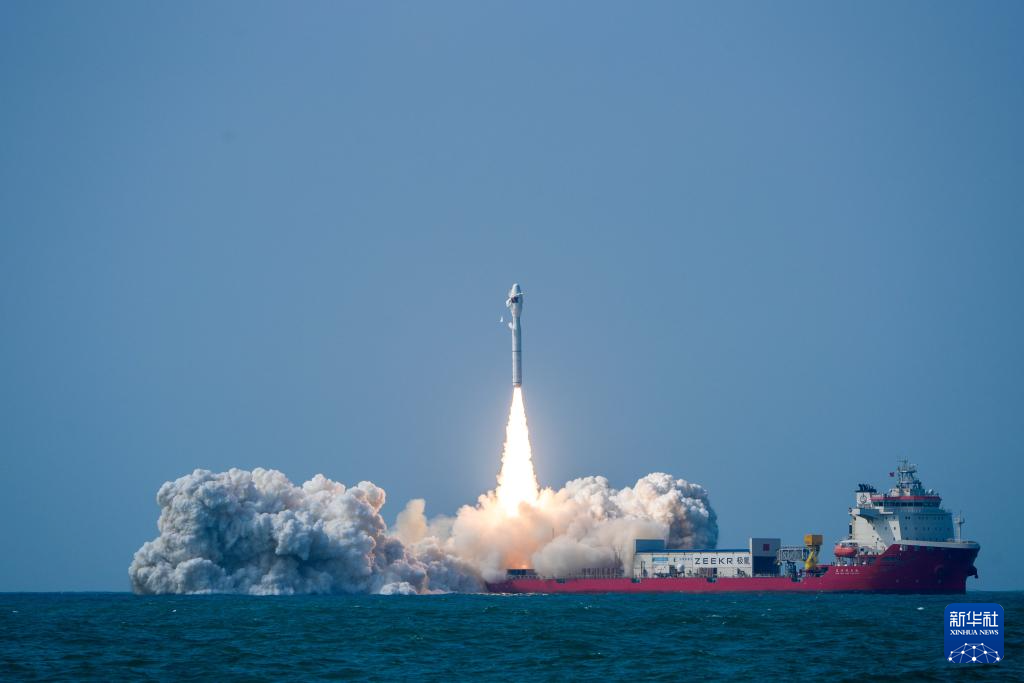
巴基斯坦卫星搭乘中国火箭,“又一里程碑”
Huan Qiu Wang· 2026-02-13 23:52
Core Viewpoint - Pakistan successfully launched its second domestically developed Earth observation satellite, PRSC-EO2, aboard China's Jielong-3 rocket, marking a significant milestone in Pakistan's space endeavors and enhancing its Earth observation capabilities [1][3][11]. Group 1: Launch Details - The PRSC-EO2 satellite was launched on February 12, 2023, from the Guangdong Yangjiang sea area, alongside six other satellites, making it the only foreign satellite on this mission [1][3]. - The satellite was developed by the Pakistan Space and Upper Atmosphere Research Commission and is designed to provide high-resolution imaging for natural resource management, environmental monitoring, and national development planning [3][11]. Group 2: Political and Strategic Implications - Pakistan's Prime Minister, Shehbaz Sharif, described the launch as a "milestone" in the country's space program, reflecting advancements in Pakistan's aerospace technology and the enduring strategic partnership with China, which is now expanding into space cooperation [3][12]. - The successful launch has sparked widespread discussion in Pakistan, with media highlighting the importance of this achievement for national pride and technological progress [4][11]. Group 3: Future Collaborations - A cooperation agreement signed between China and Pakistan last year aims to train Pakistani astronauts, with the potential for Pakistani astronauts to become the first foreign crew members on the Chinese space station in the coming years [12]. - The ongoing collaboration in space technology signifies a deeper integration of high-tech sectors between the two nations, which is viewed positively by the Pakistani public [4][12].

我国对进口牛肉实施保障措施,释放哪些信号?
Xin Hua Wang· 2025-12-31 10:07
Core Viewpoint - China has decided to implement safeguard measures on imported beef for three years, from January 1, 2026, to December 31, 2028, due to significant damage to the domestic industry caused by increased imports [1][5]. Group 1: Impact on Domestic Industry - The average retail price of beef in 36 major cities dropped to 36.82 yuan per pound by March 19, 2025, marking a six-year low, which has severely impacted domestic beef producers [1]. - Domestic beef producers are facing financial strain, with reports indicating that some farms have reduced their cattle inventory from over 7,000 to just a few hundred due to low prices [2]. - The market share of imported beef has increased from 20% in 2019 to approximately 30% in the first half of 2024, contributing to a drastic decline in domestic prices and widespread losses in the industry [3]. Group 2: Safeguard Measures and Their Rationale - The safeguard measures are a response to the significant increase in beef imports, which have surged by 73.2% from 2019 to 2024, leading to a collapse in domestic prices [3][5]. - The measures are designed to provide a temporary relief to the domestic industry rather than to restrict normal beef trade, indicating a balanced approach to trade relations [6][7]. - The implementation of these measures is in accordance with World Trade Organization (WTO) rules, allowing for protective actions when domestic industries face serious harm from increased imports [5][7]. Group 3: Future Outlook and Industry Development - The Chinese government aims to promote sustainable development in the beef industry through technological advancements and improved production practices, ensuring a complementary relationship between domestic production and imported beef [8][9]. - It is anticipated that the combination of supportive policies and safeguard measures will lead to a reduction in beef imports and an increase in domestic consumption, potentially stabilizing beef prices in the future [9].
我国2026年起对进口牛肉采取为期3年的保障措施
Xin Lang Cai Jing· 2025-12-31 08:41
Core Viewpoint - The Ministry of Commerce of China has decided to implement safeguard measures on imported beef due to significant damage to the domestic industry, with a causal relationship established between the two [1][2][3] Group 1: Safeguard Measures - The safeguard measures will take the form of "country-specific quotas and additional tariffs" and will be effective from January 1, 2026, for a duration of three years, with annual increases in quota amounts [1][2] - The purpose of these measures is to assist the domestic industry in overcoming current difficulties rather than to restrict normal trade [3] Group 2: Implementation Details - If the import quantity does not meet the annual quota, the current tariff rates will apply; however, if the quota is met, additional tariffs will be imposed starting from the third day of reaching the quota [2][3] - Unused quota amounts from the previous year will not carry over to the next year, and relevant authorities will issue notifications when import quantities reach 50% and 80% of the annual quota [2][3] Group 3: Trade Relations - The spokesperson emphasized that the Chinese market remains open, and there is significant potential for cooperation in beef trade with trading partners [2][3]
商务部新闻发言人就对进口牛肉采取保障措施答记者问
Xin Hua Wang· 2025-12-31 07:29
Core Viewpoint - The Ministry of Commerce of China has announced safeguard measures on imported beef, citing significant damage to the domestic industry and a causal relationship between increased imports and this damage [1] Group 1: Safeguard Measures - The Ministry of Commerce initiated an investigation into imported beef on December 27, 2024, following a request from the domestic industry [1] - On December 31, 2025, the Ministry concluded that the increase in imported beef quantities has severely harmed the domestic industry, leading to the decision to implement safeguard measures in the form of "country-specific quotas and additional tariffs" for a period of three years [1] - The country-specific quota will increase annually during the implementation period [1] Group 2: Purpose and Trade Relations - The safeguard measures aim to provide temporary support to the domestic industry rather than restrict normal beef trade [1] - The Chinese market remains open, and there is significant potential for cooperation in beef trade with trading partners [1] - China expresses a willingness to work with all parties to maintain a healthy and stable international trade environment [1]
“进口牛肉保障措施案”接近尾声,行业呼吁保障措施尽快出台
Xin Lang Cai Jing· 2025-12-28 07:00
Core Viewpoint - The Chinese Ministry of Commerce has extended the investigation period for the "import beef safeguard measures case" until January 26, 2026, indicating that the investigation is nearing completion and highlighting the significant increase in beef imports impacting the domestic cattle industry [1] Group 1: Import Impact on Domestic Industry - China's beef imports surged from 1.66 million tons in 2019 to 2.87 million tons in 2024, a growth of 73.2%, with a 2.8% year-on-year increase in the first ten months of 2025 [1] - The Chinese cattle farming industry is facing prolonged losses starting in 2024 due to the impact of imports, leading to the slaughter of many breeding cows [2] - The continuous influx of imported beef is affecting the entire supply chain, including feed, veterinary products, and downstream beef processing [2] Group 2: Need for Safeguard Measures - Experts emphasize the urgency of implementing safeguard measures to stabilize the domestic beef industry and mitigate the adverse effects of excessive imports [3] - Safeguard measures are seen as essential to prevent the decline of foundational breeding cow numbers, which could take 4 to 5 years to recover if lost [3] - The measures are expected to stabilize market prices, reduce losses for farming and slaughtering enterprises, and help break the cycle of losses and abandonment in cattle farming [3] Group 3: Recommendations for Industry Development - Recommendations include stabilizing breeding cow capacity, enhancing financial support through loans and insurance, and promoting innovative financial products tailored to cattle farming [4] - Emphasis on technological innovation and standardization within the industry to improve efficiency and value addition, including the promotion of quality breeds and smart farming techniques [4] - The need to establish and revise beef quality grading standards and cultivate domestic beef brands to extend the value chain is highlighted [4]
印度在WTO提议就汽车关税问题对美国征收报复性关税
news flash· 2025-07-04 12:46
Core Viewpoint - India has proposed retaliatory tariffs against the United States in response to the U.S. imposing tariffs on the Indian automotive industry under the guise of safeguard measures [1] Group 1: Proposal Details - India has notified the World Trade Organization (WTO) about its intention to suspend tariff concessions and other obligations on specific products originating from the U.S. [1] - The notification is a direct response to the U.S. extending safeguard measures on automotive parts imported from India [1] Group 2: U.S. Tariff Actions - On March 26, the U.S. implemented a 25% tariff on passenger cars, light trucks, and certain automotive parts imported from India [1] - The U.S. did not inform the WTO about these measures, which India argues are essentially safeguard measures [1] Group 3: Legal Context - India contends that the U.S. actions violate the General Agreement on Tariffs and Trade (GATT) of 1994 and the Safeguards Agreement [1]