
贸易顺差收窄

Search documents
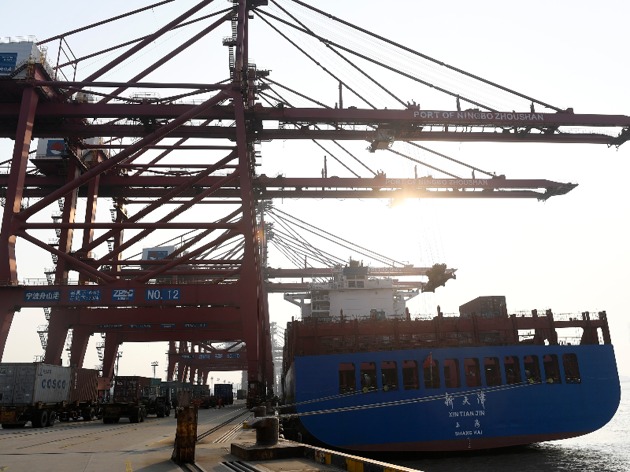
上半年我国进口额同比升11.5% 贸易顺差连续8个季度收窄
Mei Ri Jing Ji Xin Wen· 2025-11-24 04:09
Core Insights - China's foreign trade showed steady growth in the first half of 2018, with total import and export value reaching 14.12 trillion yuan, a 7.9% increase year-on-year [2] - Exports amounted to 7.51 trillion yuan, growing by 4.9%, while imports reached 6.61 trillion yuan, increasing by 11.5%, resulting in a trade surplus of 901.3 billion yuan, which narrowed by 26.7% [2] - Trade with the United States also saw slight growth, with total trade value of 1.93 trillion yuan, a 5.2% increase year-on-year [2] Trade Performance - In June, exports grew by 11.3% year-on-year, exceeding expectations, while imports grew by 14.1%, falling short of forecasts [3][5] - The trade surplus for June was significantly higher than expected at 41.61 billion USD [3] - The decline in import growth was attributed to a high base effect from the previous year and a rise in commodity prices [5][6] Import and Export Dynamics - The import growth rate outpaced export growth by 6.6 percentage points in the first half of the year, indicating a shift towards increased imports [7] - The government has emphasized policies to expand imports, which have been reflected in the data, with a continuous narrowing of trade surplus since Q3 2016 [7][9] - The recent policy measures include lowering import tariffs on consumer goods and expanding import channels [9] Future Outlook - The first half of 2018 laid a solid foundation for stable foreign trade growth for the year, despite potential challenges from international uncertainties and trade protectionism [9] - Experts predict that while export growth may slow down in the second half of the year, import growth is expected to remain robust [9]

机构:印尼盾年底前料将持续承压
Sou Hu Cai Jing· 2025-11-12 00:48
Core Viewpoint - The Indonesian Rupiah is expected to remain under pressure until the end of the year due to a narrowing trade surplus and increased domestic demand leading to higher imports [1] Group 1: Trade and Economic Factors - Indonesia's trade surplus is projected to narrow as a result of declining commodity prices, which are causing a slowdown in exports [1] - Increased domestic demand is contributing to a rise in imports, further impacting the trade balance [1] Group 2: Financial Market Dynamics - There is an ongoing outflow of funds from the financial sector as policy uncertainty drives investors to sell Indonesian bonds [1] - The divergence in monetary policy between the Indonesian central bank and the Federal Reserve is widening, adding pressure to the Rupiah [1] Group 3: Central Bank Policies - The Federal Reserve's stance has shifted away from being accommodative due to the U.S. government shutdown, while the Indonesian central bank maintains a relatively accommodative position [1]