费托合成技术

Search documents
宝丰能源20260106
2026-01-07 03:05
Summary of Baofeng Energy Conference Call Industry Overview - The fourth quarter of 2024 saw a decline in tin ingot prices, primarily due to the expected increase in domestic polyethylene and polypropylene production capacity by approximately 10.1 million tons in 2025, leading to a total capacity growth of about 13%, which exceeds the apparent consumption growth of around 10% [2][3] - Global olefin production capacity is expected to be predominantly oil-based, which will increase average costs. China is projected to reach a peak in ethylene and propylene production capacity in 2026, with an estimated increase of around 10 million tons, putting pressure on the market. However, demand from emerging industries such as new energy may provide a turning point, with a potential industry shift expected around 2027 [2][5] Company Financials - The company's financing cost remains below 4,000 yuan, typically between 3,780 and 3,890 yuan. The cost of coal is approximately 400 yuan per ton, leading to a total cost of around 3,700 yuan, fluctuating between 3,600 and 3,900 yuan depending on market conditions [2][6] - The company has maintained normal production and sales levels since the fourth quarter, with inventory levels remaining stable. There has been a slight decrease in imports due to increased domestic production, while exports of olefin products, particularly polypropylene, have been steadily rising [3][4] Market Dynamics - The recent rise in coal prices and decline in oil prices are viewed as temporary phenomena, with a strong correlation between oil and coal prices due to their substitutive nature. The gross profit margins in Inner Mongolia were close to 3,000 yuan, while in Ningdong, they ranged between 2,300 and 2,400 yuan, showing a 500 yuan difference [4][11] - The international oil price has dropped to between 55 and 60 USD, which is close to the cost line for most oil extraction companies. If prices remain below this range, it could lead to losses for global oil companies, providing a price support mechanism [7][8] Future Projections - The outlook for the global and Chinese olefin industry indicates that new projects will primarily be concentrated in Russia and Iran, with limited growth in gas-based systems due to peak shale gas production in the U.S. and minimal increases in gas-based systems in the Middle East. This suggests that future global capacity additions will be oil-based, raising average costs [5] - The company is currently focused on the Ningdong Phase IV project, expected to be operational by December 2026, with efforts to expedite completion to November. The Xinjiang project is still awaiting approval, with no clear progress reported [12][13] Technological Considerations - The Fischer-Tropsch synthesis technology is viewed positively, as its industrial application could significantly reduce CO2 emissions and coal consumption. This may influence the direction of existing coal-to-olefin processes. If the Inner Mongolia project is not approved, the company plans to increase dividend payouts [13] Conclusion - The company is navigating a challenging market environment with fluctuating costs and production capacities. The anticipated increase in production capacity in 2025 poses risks to pricing, but emerging demand from new industries may offer opportunities for growth. The company's strategic focus on project development and cost management will be crucial in maintaining competitiveness in the evolving market landscape.

吉电股份(000875.SZ):公司绿色甲醇工艺不涉及费托合成技术
Ge Long Hui· 2025-11-27 06:23
格隆汇11月27日丨吉电股份(000875.SZ)在互动平台表示,公司绿色甲醇工艺不涉及费托合成技术。 ...

吉电股份在互动平台表示,公司绿色甲醇工艺不涉及费托合成技术。
Xin Lang Cai Jing· 2025-11-27 04:57
Group 1 - The company stated that its green methanol process does not involve Fischer-Tropsch synthesis technology [1]
自研费托合成制取SAF工艺,「绿碳合成能源」完成近亿元Pre-A轮融资|36氪首发
3 6 Ke· 2025-07-21 10:00
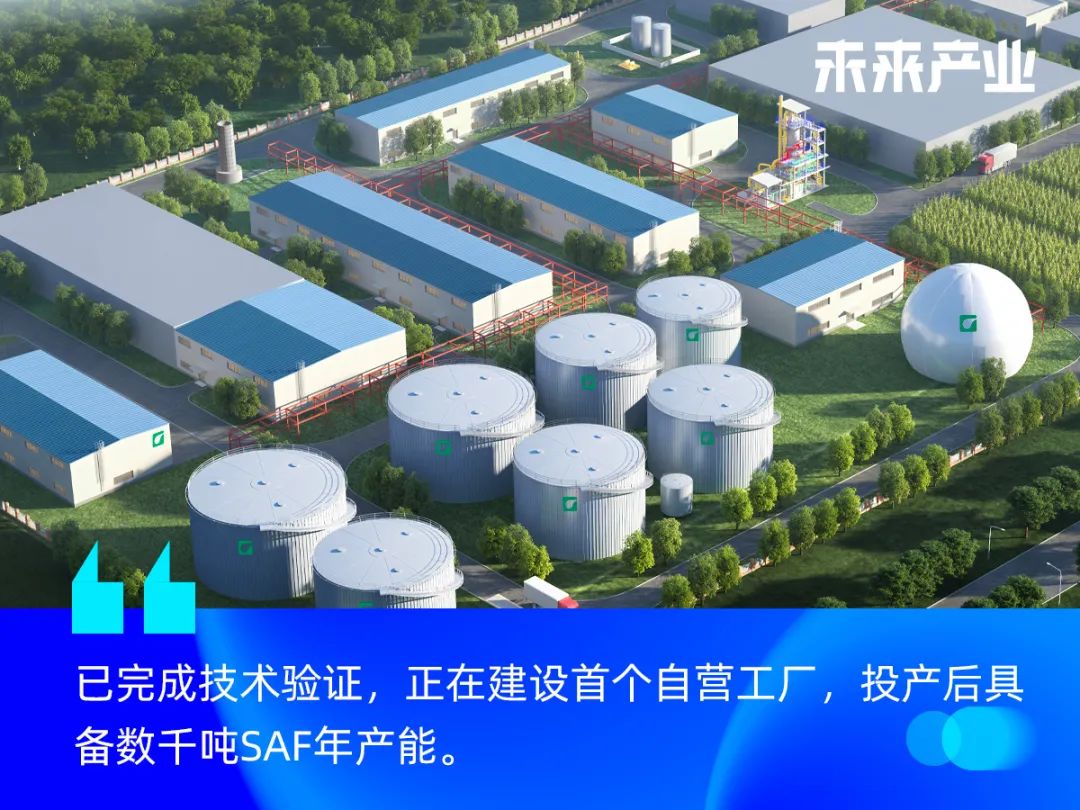
Core Insights - Green Carbon Synthesis Energy (GCE) has completed nearly 100 million yuan in Pre-A financing, led by Rongtuo Capital, to support the construction of its first self-operated factory and daily operational cash flow [2] - GCE focuses on producing sustainable aviation fuel (SAF) from agricultural and urban waste using self-developed Fischer-Tropsch synthesis technology [2][8] - The company aims to achieve an annual SAF production capacity of several thousand tons upon the completion of its factory [11] Company Overview - GCE was established in July 2023, with a team comprising members from top international nano-catalysis laboratories and leading domestic energy enterprises [2] - The founder, Dr. Xiao Lifeng, has a background in advanced nano-catalysis research and aims to leverage this expertise in the SAF market [2][9] Technology and Production - GCE has validated its core technology for SAF production and is currently constructing its first self-operated factory [2][11] - The company has optimized traditional Fischer-Tropsch technology, achieving a production yield 1.5 to 2 times higher than competitors [10] - The factory's location in Inner Mongolia allows for the utilization of abundant agricultural waste, further reducing production costs [11] Market Context - The global SAF market is projected to reach around 100 billion yuan by 2025, with current demand outpacing supply [11] - GCE's technology is positioned to address the supply-demand gap in the SAF market, especially as China initiates SAF application trials [11] Investment Perspective - Investors view GCE as a key player in the SAF sector, with its innovative catalyst technology and cost-effective biomass synthesis solutions [13][14] - The company is expected to lead the SAF technology innovation and contribute to global carbon reduction goals [13][14]