
资产型养老金体系

Search documents
《中国养老金发展报告2025》正式发布
Zheng Quan Ri Bao Wang· 2025-12-08 12:50
Core Viewpoint - The forum organized by Changjiang Pension Insurance Co., Ltd. and the Chinese Academy of Social Sciences focuses on the development of an asset-based pension system and wealth management in response to aging population challenges [1][2]. Group 1: Industry Insights - The 20th National Congress of the Communist Party of China emphasizes the need for a multi-tiered pension insurance system and the development of pension finance as a clear direction for the industry [1]. - Asset-based pensions are identified as a key force in addressing the challenges of an aging population, requiring collaborative efforts in policy, taxation, investment research, and product ecosystems for high-quality development [1]. Group 2: Report Highlights - The "China Pension Development Report 2025," led by Zheng Bingwen's team, has been published for 15 consecutive years, focusing this year on asset-based pension systems and wealth management [2]. - The report analyzes the practical challenges and breakthrough strategies for constructing an asset-based pension system, while also providing insights into China's wealth management experiences and potential [2]. - Changjiang Pension has participated in the report's compilation and publication for seven consecutive years, reflecting its deep involvement in the development of the pension finance industry [2].
如何发展长期耐心资本?专家热议资产型养老金体系建立
Mei Ri Jing Ji Xin Wen· 2025-12-06 11:03
Core Viewpoint - The development of pension and long-term insurance is crucial for addressing aging population challenges in China, leveraging financial investments to enhance both returns and services for the elderly [1][3]. Group 1: Pension and Long-term Insurance Development - The financial system in China is large and well-funded but lacks sufficient capital, making pensions and long-term insurance the only true long-term patient capital [1]. - There is a significant gap between China's pension asset scale and its GDP ratio compared to Western countries, necessitating a focus on expanding pension assets and establishing an asset-based pension system [3]. - The development of pension wealth management should adopt a long-term perspective, prioritizing value acquisition over short-term financial returns [3]. Group 2: Challenges and Solutions in Pension Coverage - The narrow coverage of enterprise annuities is attributed to high basic social insurance contribution rates, which primarily involve state-owned enterprises, leaving private and small enterprises underrepresented [4]. - High establishment thresholds, management costs, and inconvenient investment options hinder the attractiveness of enterprise annuities, suggesting a need for reforms such as lowering contribution burdens and promoting collective annuity plans for small businesses [4]. - The balance between government tax incentives and future financial burdens is essential for developing the second and third pillars of pension finance [3].

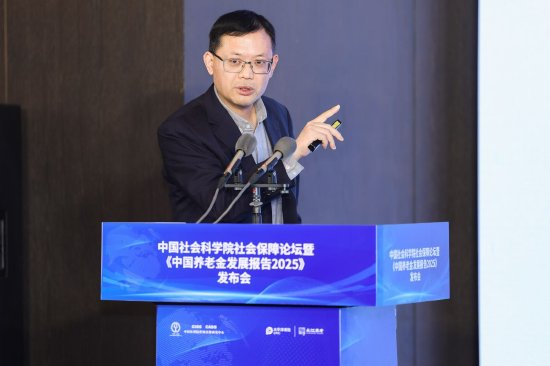
孙守纪谈资产型养老金体系中的国家责任与个人风险
Xin Lang Cai Jing· 2025-12-06 08:21
Core Insights - The forum discussed the responsibilities of the state and individual risks in the asset-based pension system, focusing on three stages: participation, investment, and withdrawal [2][4] Participation Stage - The main risk during the participation stage is low coverage rates, which can be improved by increasing the concentration of trusteeship and enhancing participation levels [2][4] Investment Stage - The investment stage faces issues related to the mismatch of long-term funds being invested in short-term assets. The government is responsible for improving governance structures, establishing a scientific investment management framework, and setting clear long-term investment goals. Regular publication of actuarial reports is essential for achieving these objectives [2][4] Withdrawal Stage - The core risk in the withdrawal stage is longevity risk, with a low proportion of annuity uptake in China. The government should encourage the purchase of annuity products on the demand side and develop a variety of tools and infrastructure on the supply side to enrich product offerings [2][4]
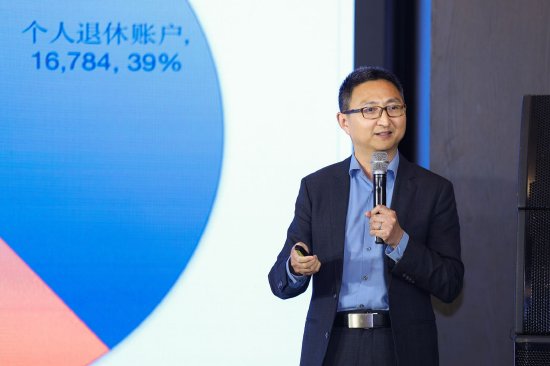
朱俊生:商保年金是构建资产型养老金体系的重要支柱
Xin Lang Cai Jing· 2025-12-06 08:13
Core Viewpoint - The forum highlighted the importance of commercial annuities as a crucial pillar in building an asset-based pension system in China, as emphasized by Zhu Junsheng, a professor from Tsinghua University [3][8]. Group 1: Commercial Annuities - Commercial annuities are positioned as an essential component of the national pension financial system, with specific focus on product structure, core functions, and product forms [3][8]. - The development of commercial annuities was initiated by the National Financial Regulatory Administration in October last year, in the context of personal pension development [3][8]. Group 2: Strategies for Pension System Improvement - The first strategy is to promote life annuitization to manage longevity risk, which is a certainty for society but uncertain for individuals. This requires enhancing infrastructure and accumulating high-quality longevity risk data [4][9]. - The second strategy involves expanding commercial pension pilot programs into regular practices to stimulate market vitality [5][10]. - The third strategy focuses on diversifying product offerings, addressing issues such as product structure uniformity and insufficient unique protections by developing competitive products like floating yield, cross-border investment, and health management integrated products [5][10]. - The fourth strategy aims to increase the yield of long-term pension funds to secure future pension goals, suggesting the relaxation of investment tools for domestic and foreign assets [5][10]. - The fifth strategy emphasizes the need to cultivate professional pension financial planning talent and enhance service capabilities, addressing the challenge of human nature's short-term focus in long-term pension planning [5][10].
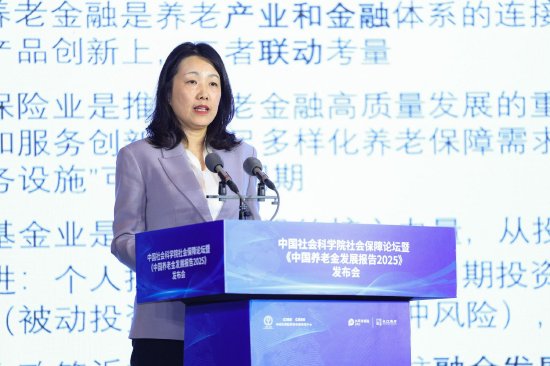
张盈华宣介 《中国养老金发展报告2025》
Xin Lang Cai Jing· 2025-12-06 03:59
Core Insights - The report titled "China Pension Development Report 2025" was introduced at the China Social Sciences Academy Social Security Forum, highlighting the urgent need for pension reform due to rapid aging and declining replacement rates of the first pillar pension system [1][3][4] Group 1: Background and Context - China's aging process is accelerating, transitioning from aging to deep aging and then to super aging within a span of just over a decade [3][4] - The replacement rate of the first pillar basic pension insurance has decreased from over 80% in the 1990s to approximately 50% currently, necessitating supplementary pension insurance to fill the gap [3][4][14] - The year 2025 marks a significant milestone for pension finance, coinciding with the 25th anniversary of the National Social Security Fund Council and the full implementation of the personal pension system [3][4][14] Group 2: Key Themes and Findings - The report emphasizes the transition from a pay-as-you-go system to a partially funded pension system, addressing the challenges posed by declining population growth and economic stability [5][15] - The concept of "value preservation and appreciation" was introduced in the 20th Central Committee's Fourth Plenary Session, highlighting the importance of pension wealth management [5][16] - The report consists of three main sections: theoretical, Chinese, and international, totaling 42 sub-reports and approximately 1 million words, covering various aspects of pension systems and wealth management [7][18] Group 3: Pension System Structure - The asset-based pension system is characterized by multi-pillar, account-based long-term accumulation and wealth management, emphasizing both state and individual responsibilities [7][18][21] - The report discusses the shift in welfare models, with countries like Germany moving from fully funded to partially funded or asset-based pension systems [19][20] - The integration of pension finance with the broader pension industry and the need for tax reforms to encourage participation in supplementary pension schemes are also highlighted [20][21] Group 4: Future Directions - The total scale of the asset-based pension system is estimated to be around 25 trillion yuan, with expectations to exceed 20 trillion yuan this year [21] - The report calls for continued research and policy advocacy to advance the development of the pension system, with a focus on high-quality growth in asset-based pension systems [21][22]
郑秉文:仅计算三支柱+全国社保,预计今年底同口径基金余额将超过20万亿,占GDP比重将超过14%
Xin Lang Cai Jing· 2025-12-06 02:16
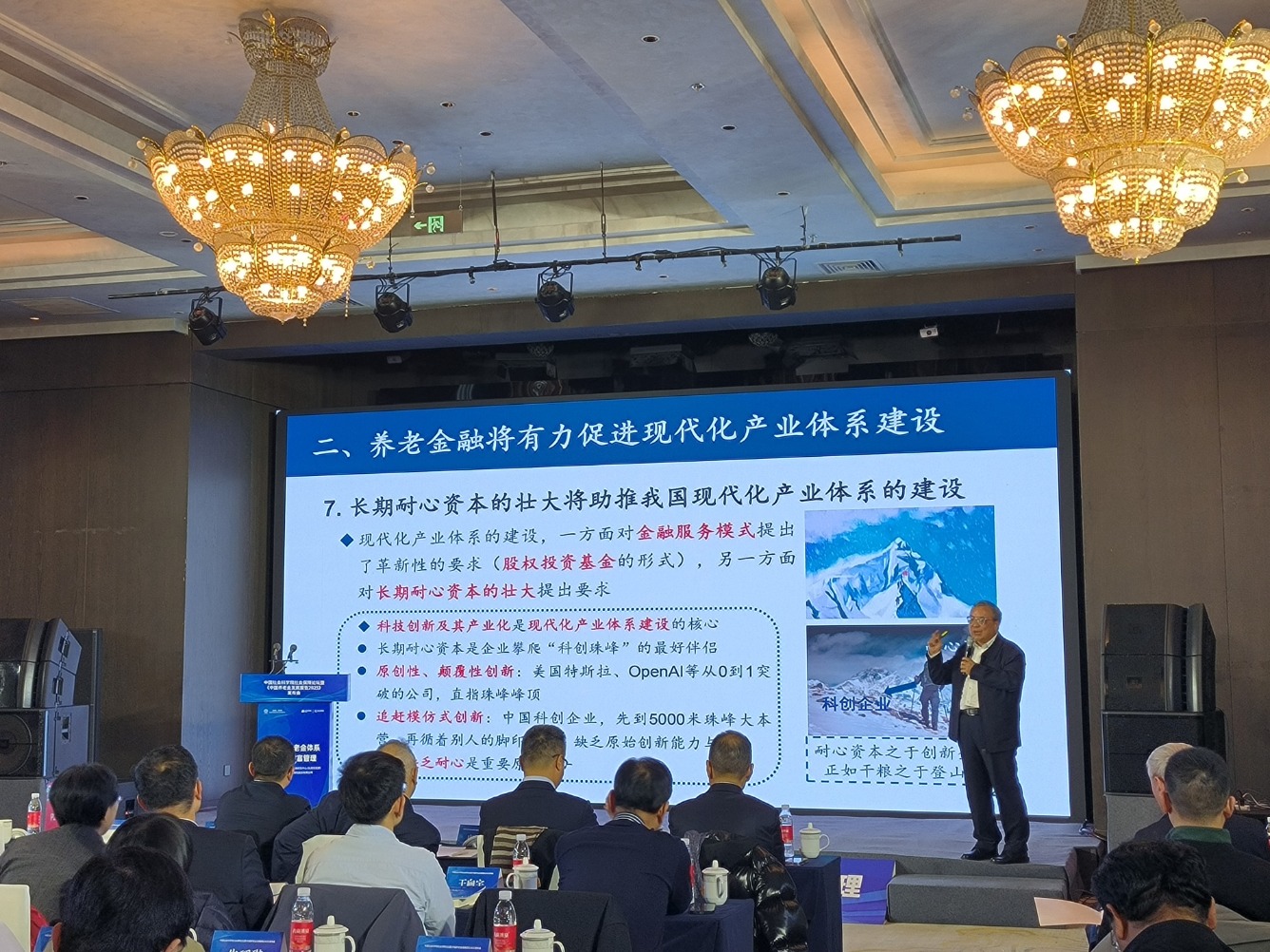
Core Viewpoint - The report highlights significant growth in China's social pension reserves during the "14th Five-Year Plan" period, with a notable development in the asset-based pension system [3][7]. Group 1: Pension Fund Growth - By the end of 2020, the fund balance, excluding "commercial insurance annuities," was 12.15 trillion yuan, accounting for 12.0% of GDP [3][7]. - The fund balance is projected to increase to 18.4 trillion yuan by the end of 2024, raising its GDP share to 13.7% [3][7]. - It is expected that by the end of this year, the fund balance will exceed 20 trillion yuan, with its GDP share surpassing 14% [3][7]. Group 2: Advantages of Asset-Based Pension System - China possesses unique advantages in addressing the challenges of an aging population, such as having a sovereign pension fund, which many developed countries lack [3][7]. - The insurance market in China ranks second globally, indicating significant potential for "commercial insurance annuities" [3][7]. - The coverage of the third pillar of the pension system has exceeded 10% within three years of nationwide implementation, outperforming many developed and transitioning countries that have taken over twenty years to achieve lower coverage rates [3][7]. Group 3: Challenges in Pension System Reform - The rapid pace of population aging presents a significant challenge [4][8]. - The current low-interest-rate environment poses additional difficulties for the pension system [4][8]. - Despite having the world's largest social security system, China's pension asset reserve is significantly lower than that of developed countries, which average over 50% of GDP, with some exceeding 100% or even 200% [4][8].
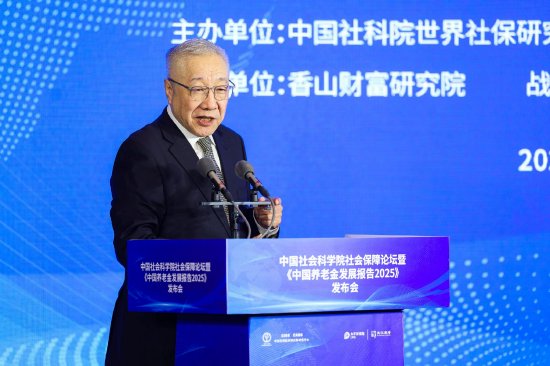
郑秉文:做好养老财富管理是构建资产型养老金体系的重要条件,也是中央提出养老金融的题中应有之义
Xin Lang Cai Jing· 2025-12-06 02:16
Core Viewpoint - The forum on social security and the release of the "China Pension Development Report 2025" emphasizes the importance of developing an asset-based pension system and effective pension wealth management as crucial for addressing aging population challenges and promoting economic development [3][6]. Group 1: Policy and Economic Context - The Central Political Bureau meeting in July 2023 highlighted the need to "activate capital markets and boost investor confidence," leading to a series of policy documents aimed at addressing the bottlenecks in long-term funding [3][6]. - The development of an asset-based pension system and commercial insurance annuities are identified as significant sources of long-term capital [3][6]. Group 2: Pension Wealth Management - Effective pension wealth management is deemed essential for constructing an asset-based pension system and aligns with the central government's objectives for pension finance [3][6]. - The discussion underscores that pension funds are not only vital for the welfare of the elderly but also play a critical role in economic development, positioning pensions as a key production factor, particularly in the context of China's current development stage [3][6].