商保年金

Search documents
朱俊生:商保年金是构建资产型养老金体系的重要支柱
Xin Lang Cai Jing· 2025-12-06 08:13
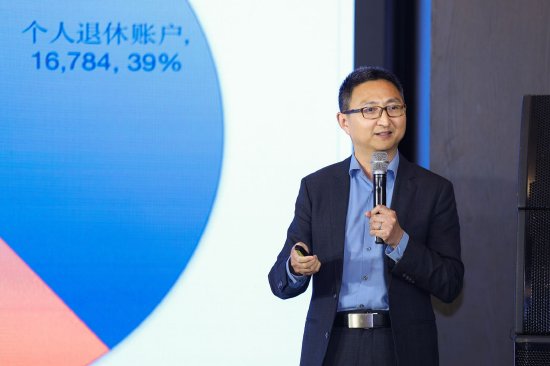
Core Viewpoint - The forum highlighted the importance of commercial annuities as a crucial pillar in building an asset-based pension system in China, as emphasized by Zhu Junsheng, a professor from Tsinghua University [3][8]. Group 1: Commercial Annuities - Commercial annuities are positioned as an essential component of the national pension financial system, with specific focus on product structure, core functions, and product forms [3][8]. - The development of commercial annuities was initiated by the National Financial Regulatory Administration in October last year, in the context of personal pension development [3][8]. Group 2: Strategies for Pension System Improvement - The first strategy is to promote life annuitization to manage longevity risk, which is a certainty for society but uncertain for individuals. This requires enhancing infrastructure and accumulating high-quality longevity risk data [4][9]. - The second strategy involves expanding commercial pension pilot programs into regular practices to stimulate market vitality [5][10]. - The third strategy focuses on diversifying product offerings, addressing issues such as product structure uniformity and insufficient unique protections by developing competitive products like floating yield, cross-border investment, and health management integrated products [5][10]. - The fourth strategy aims to increase the yield of long-term pension funds to secure future pension goals, suggesting the relaxation of investment tools for domestic and foreign assets [5][10]. - The fifth strategy emphasizes the need to cultivate professional pension financial planning talent and enhance service capabilities, addressing the challenge of human nature's short-term focus in long-term pension planning [5][10].

郑秉文:仅计算三支柱+全国社保,预计今年底同口径基金余额将超过20万亿,占GDP比重将超过14%
Xin Lang Cai Jing· 2025-12-06 02:16
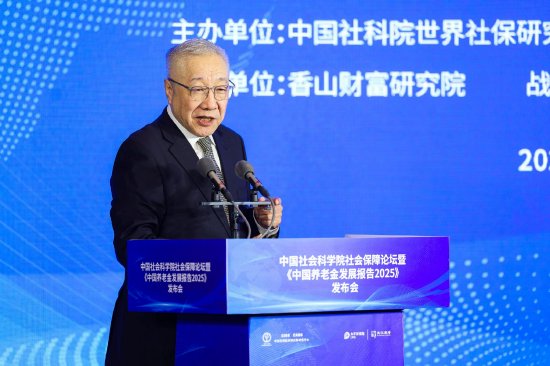
Core Viewpoint - The report highlights significant growth in China's social pension reserves during the "14th Five-Year Plan" period, with a notable development in the asset-based pension system [3][7]. Group 1: Pension Fund Growth - By the end of 2020, the fund balance, excluding "commercial insurance annuities," was 12.15 trillion yuan, accounting for 12.0% of GDP [3][7]. - The fund balance is projected to increase to 18.4 trillion yuan by the end of 2024, raising its GDP share to 13.7% [3][7]. - It is expected that by the end of this year, the fund balance will exceed 20 trillion yuan, with its GDP share surpassing 14% [3][7]. Group 2: Advantages of Asset-Based Pension System - China possesses unique advantages in addressing the challenges of an aging population, such as having a sovereign pension fund, which many developed countries lack [3][7]. - The insurance market in China ranks second globally, indicating significant potential for "commercial insurance annuities" [3][7]. - The coverage of the third pillar of the pension system has exceeded 10% within three years of nationwide implementation, outperforming many developed and transitioning countries that have taken over twenty years to achieve lower coverage rates [3][7]. Group 3: Challenges in Pension System Reform - The rapid pace of population aging presents a significant challenge [4][8]. - The current low-interest-rate environment poses additional difficulties for the pension system [4][8]. - Despite having the world's largest social security system, China's pension asset reserve is significantly lower than that of developed countries, which average over 50% of GDP, with some exceeding 100% or even 200% [4][8].
中保协发布《中国保险业社会责任报告(2024)》
Zheng Quan Ri Bao Wang· 2025-11-19 09:49
Core Insights - The China Insurance Industry Association (CIIA) has released the "2024 China Insurance Industry Social Responsibility Report," marking the sixth consecutive year of such reports, highlighting the industry's commitment to social responsibility [1] Group 1: Service to National Strategy - The insurance industry is focused on supporting national strategies and key sectors, acting as an economic stabilizer and social stabilizer. In 2024, the industry provided approximately 9 trillion yuan in technology insurance coverage [1] - By the end of 2024, the insurance sector invested 680 billion yuan in strategic emerging industries, a 17% year-on-year increase, and supported 880 billion yuan in self-reliant technology funding, a 107% increase [1] Group 2: Enhancing People's Welfare - The industry has expanded health insurance coverage and developed inclusive insurance products. In 2024, 44.89 million new long-term health insurance policies were issued, with a total insurance amount of 150.3 trillion yuan and claims paid amounting to 11.88 billion yuan, reflecting a 3.07% year-on-year growth [2] - The enterprise annuity management scale exceeded 2.5 trillion yuan by the end of 2024, a 16% increase, and 130 elderly community projects were established, a 38% increase [2] - The industry provided personal insurance coverage for over 760 million elderly individuals, a 55% increase, and risk coverage for over 43 million small and micro enterprises, a 114% increase [2] Group 3: Social Governance and Disaster Risk Management - The insurance sector is leveraging its risk management expertise to enhance disaster prevention and response. In 2024, new regulations on catastrophe insurance were introduced, doubling the basic insurance amount for natural disasters such as typhoons and floods [2] - The urban and rural residential catastrophe insurance community provided 22.36 trillion yuan in catastrophe risk coverage for 64.39 million households [2] - Liability insurance offered a total insurance amount of 70.53 trillion yuan, with claims paid amounting to 7.4955 billion yuan, reflecting a 12.34% year-on-year increase [2]
深耕细分领域发展养老金融
Jing Ji Ri Bao· 2025-09-15 22:02
Core Insights - Financial institutions are increasing investments in the elderly finance sector, focusing on the integration of pension finance, elderly service finance, and elderly industry finance [1] - The People's Bank of China and nine other departments issued guidelines to support high-quality development of elderly services and the silver economy, proposing 16 key measures [1] Group 1: Product Development and Demand - Commercial banks are developing pension wealth management and savings products while managing corporate annuities and occupational annuities [2] - Agricultural Bank reported a significant increase in elderly clients, with 3 billion clients aged 55 and above, and over 1,100 pension financial products offered [2] - Insurance companies are focusing on developing various insurance products to meet the diverse needs of the elderly population [3][4] Group 2: Health Insurance and Elderly Care - Health insurance is becoming increasingly important in addressing the aging population and enhancing the multi-tiered medical security system [4] - The demand for long-term care insurance is expected to grow rapidly due to the aging population, with new products being developed to meet these needs [4] Group 3: Ecosystem Development - Financial institutions are building comprehensive health and elderly service ecosystems, with banks utilizing physical branches and mobile banking to serve the elderly [5] - Agricultural Bank reported a 94.6% increase in elderly industry loans, with a focus on creating a diverse and open elderly financial ecosystem [5][6] Group 4: Strategic Initiatives and Future Outlook - The banking and insurance sectors are expected to establish a distinctive elderly finance system in the next five years, focusing on quality improvement [8] - Companies are enhancing their services for elderly clients, with initiatives to improve service efficiency and accessibility [8][9] - The integration of financial services with healthcare and elderly care is seen as a significant growth area, with companies like Ping An leading in this space [10]


行业点评:银保重要性凸显,太保25H1业绩稳健
Ping An Securities· 2025-08-29 03:08
Investment Rating - The industry investment rating is "Outperform the Market" [7] Core Insights - The importance of bancassurance is highlighted, with China Pacific Insurance (CPIC) showing stable performance in H1 2025, outperforming the market [1] - The report indicates that the non-bank financial sector is experiencing a high-quality development phase, leading to a revaluation of value, with leading companies demonstrating greater resilience [3] - The report emphasizes the steady growth in new insurance policies driven by bancassurance, with a notable increase in new business value (NBV) [5] Summary by Sections Financial Performance - In H1 2025, CPIC reported insurance service revenue of CNY 141.82 billion (YoY +3.5%), net profit attributable to shareholders of CNY 27.89 billion (YoY +11.0%), and operating profit of CNY 19.91 billion (YoY +7.1%) [4] Life Insurance - Bancassurance has driven new policy growth, with new premium income from life insurance reaching CNY 129.09 billion (YoY +6.7%) and NBV at CNY 9.54 billion (YoY +5.6%, comparable basis +32.3%) [5] - The new premium scale from bancassurance has surpassed that of individual insurance, with bancassurance new premium income at CNY 29.04 billion (YoY +95.6%) [5][6] Property Insurance - Property insurance premium income was CNY 112.76 billion (YoY +0.9%), with a combined operating ratio (COR) of 96.3% (YoY -0.8pct) [6] - The report notes a 2.8% increase in auto insurance premium income, with new energy vehicle insurance accounting for 19.8% of the total [6] Investment Performance - The report indicates a decline in the fair value of fixed-income assets, leading to a decrease in investment returns, with net, total, and comprehensive investment returns at 1.7%, 2.3%, and 2.4%, respectively [6] Investment Recommendations - The report suggests that the optimization of business structure will help maintain stable performance in life insurance liabilities for 2025, with leading property insurance companies expected to outperform the industry [6]

整体经营稳中向好,中国太保上半年归母净利润增长11%
Zhong Guo Jin Rong Xin Xi Wang· 2025-08-28 14:05
Core Viewpoint - China Pacific Insurance (CPIC) demonstrates resilience and steady growth in its mid-2025 performance, focusing on high-quality development amidst external uncertainties [1] Financial Performance - CPIC achieved a total revenue of CNY 200.5 billion, a year-on-year increase of 3.0% [1] - Insurance service revenue reached CNY 141.8 billion, growing by 3.5% [1] - The net profit attributable to shareholders was CNY 27.9 billion, reflecting an 11.0% increase [1] - Operating profit attributable to shareholders was CNY 19.9 billion, up by 7.1% [1] - Embedded value increased to CNY 588.9 billion, a growth of 4.7% from the previous year [1] - Total managed assets rose to CNY 3.77 trillion, marking a 6.5% increase [1] Business Structure Optimization - CPIC's life insurance segment is enhancing its "2+N" channel system, with new business value growing rapidly; individual insurance and bank insurance channels contributed 60% and 37.8% respectively [4] - The property insurance segment is optimizing cost structures and reducing high-risk business, leading to improved underwriting profits and record net cash flow [4] Development and Service Enhancement - CPIC is focusing on financial "five major articles" to optimize its insurance supply system, serving 75,000 technology enterprises with a technology investment balance of CNY 119.7 billion [5] - The company is expanding its green finance products, with over 5.3 million vehicles covered under new energy vehicle insurance [5] - CPIC is enhancing its elderly care services, with over 2,000 residents in its "Taibao Home" communities and the launch of a rehabilitation hospital [5] Technological Innovation - The application of AI models is significantly improving insurance processes and operational efficiency, with AI coverage in customer service reaching nearly 50% [6] - The automation rate for health insurance claims has reached 16%, with a 99% accuracy rate in liability recognition [6] Organizational Optimization - CPIC is refining its organizational structure to enhance decision-making efficiency and strengthen talent development [7] - The company has distributed over CNY 10.3 billion in cash dividends for the 2024 fiscal year, maintaining a stable dividend level [7] Future Outlook - CPIC aims to focus on its core responsibilities, implementing strategies in health and elderly care, internationalization, and AI integration to build new competitive advantages [8]

新华保险前7个月保费1378亿元 三大维度诠释高质量发展
Sou Hu Cai Jing· 2025-08-27 07:52
Core Insights - Xinhua Insurance achieved a cumulative original insurance premium income of 137.8 billion yuan in the first seven months of 2025, representing a year-on-year growth of 23%, continuing its steady growth trend this year [1] Group 1: High-Quality Development - The company emphasizes high-quality development as the core driving force, integrating into the national development strategy and focusing on customer-centric, professional, market-oriented, and systematic reforms [1] - Xinhua Insurance has enriched its product offerings with over 100 products available, focusing on the second and third pillar business opportunities, particularly in the aging economy [2] - The company aims to enhance customer satisfaction through improved claims experiences, achieving a total of 2.41 million claims with a payout amount of 7.3 billion yuan in the first half of 2025, with an average claim processing time of just 0.72 days [2] Group 2: Serving National Strategy - Xinhua Insurance supports the real economy with investments exceeding one trillion yuan, aligning its operations with national strategies [3] - The company has provided risk protection for over 30,000 corporate clients, amounting to approximately 14.5 trillion yuan, and has undertaken 20 public welfare insurance projects [3] - Investments in key national areas have increased by nearly 60% year-on-year, focusing on technology innovation, industrial upgrades, and low-carbon development [3] Group 3: Reform and Innovation - The company is committed to deepening its reforms across products, services, teams, and institutional construction to build multiple core advantages [4] - Xinhua Insurance is enhancing its product framework to offer comprehensive insurance coverage and is actively transforming its dividend insurance products to meet customer wealth preservation needs [4] - The company is also upgrading its service capabilities and expanding its service offerings across various domains, including healthcare and legal services [4] Group 4: Industry Outlook - The insurance industry is entering a golden opportunity period for high-quality development, supported by national policies and regulatory guidance [5] - Xinhua Insurance aims to implement the new national guidelines, focusing on large-scale products, markets, services, and investments to enhance its development capabilities [5]

划重点!多家险企下半年这么干
Zhong Guo Zheng Quan Bao· 2025-08-08 07:05
Core Insights - Multiple insurance companies in China, including China Life, China Taiping, and China Pacific, have reported growth in asset scale and premium income for the first half of 2025, while outlining key focuses for the second half of the year [1][2] Performance Indicators - China Pacific reported an insurance liability amount of 178 trillion yuan and total assets exceeding 4 trillion yuan, marking an 11.3% increase from the beginning of the year [2] - China Taiping's total assets reached 1.7 trillion yuan, a 6.4% increase, with total premium income at 155.67 billion yuan [2] - China Life Group's total assets surpassed 8 trillion yuan (excluding Guangfa Bank), with a consolidated revenue growth of 8.4% and insurance payouts of 237.2 billion yuan [2] - New China Life reported a 23% year-on-year increase in premium income, totaling 121.26 billion yuan [2] Strategic Focus for H2 2025 - Companies emphasized enhancing financial services to the real economy, strengthening asset-liability linkage, and accelerating digital transformation as key priorities for the second half of 2025 [3] - China Pacific aims to improve service quality for national priorities and enhance operational efficiency [3] - China Life Group plans to increase insurance coverage in key areas affecting national welfare and support the stability of capital markets [3] - Zhejiang Merchants Insurance intends to capitalize on opportunities in the auto insurance sector and enhance investment returns [3] - Everbright Sun Life focuses on product system improvement and risk management to stabilize solvency [4]



泰康养老偿付能力五连涨至 254% 低利率时代下如何“稳”字当头?
Huan Qiu Wang· 2025-08-04 05:48
Core Viewpoint - The insurance industry in China is facing dual pressure from declining long-term interest rates and regulatory constraints, leading to a heightened focus on solvency as a key indicator of financial health and operational stability [1][2]. Group 1: Regulatory Environment - The implementation of the "Second Generation Solvency II" rules has made solvency ratios and risk comprehensive ratings the "gold standard" for assessing insurance companies' risk management capabilities [2]. - Insurance companies are encouraged to enhance solvency through internal governance optimization, risk management strengthening, and business structure adjustments rather than relying solely on external financing [1]. Group 2: Company Performance - TaiKang Pension achieved a comprehensive solvency adequacy ratio of 254.20% and a core solvency adequacy ratio of 156.55% by Q2 2025, both indicators showing continuous growth over five consecutive quarters [1]. - As of Q1 2025, the average solvency adequacy ratio for life insurance companies was 196.6%, with a core solvency adequacy ratio of 132.8%, indicating that TaiKang Pension is performing above regulatory benchmarks [1]. Group 3: Financial Metrics - In H1 2025, TaiKang Pension's total assets exceeded 140 billion, with a net profit of 422 million, reflecting significant year-on-year growth [2]. - The new business value of commercial annuities increased to 67.90%, while standard premium income accounted for 76.10%, with future policy surplus growing by 10.5% year-on-year [2]. Group 4: Claims and Service Efficiency - TaiKang Pension served 1.108 million claim clients in H1 2025, with total claims amounting to 4.25 billion, achieving a daily average payout of 25.58 million and a claim approval rate of 99.9% [2]. - The average claim processing time was 1.6 days, with 87.2% of claims processed through self-service, demonstrating the effectiveness of digital and intelligent systems in enhancing service efficiency [3]. Group 5: Industry Insights - Analysts note that TaiKang Pension's experience in optimizing business structure, strengthening asset-liability matching, and improving investment efficiency serves as a reference model for the industry amid low interest rates and stringent regulations [3]. - The ongoing challenge for the insurance industry will be to balance risk management with business expansion while enhancing long-term investment returns [3].
泰康养老拟增资20亿元,发力养老金融
Sou Hu Cai Jing· 2025-06-06 10:42
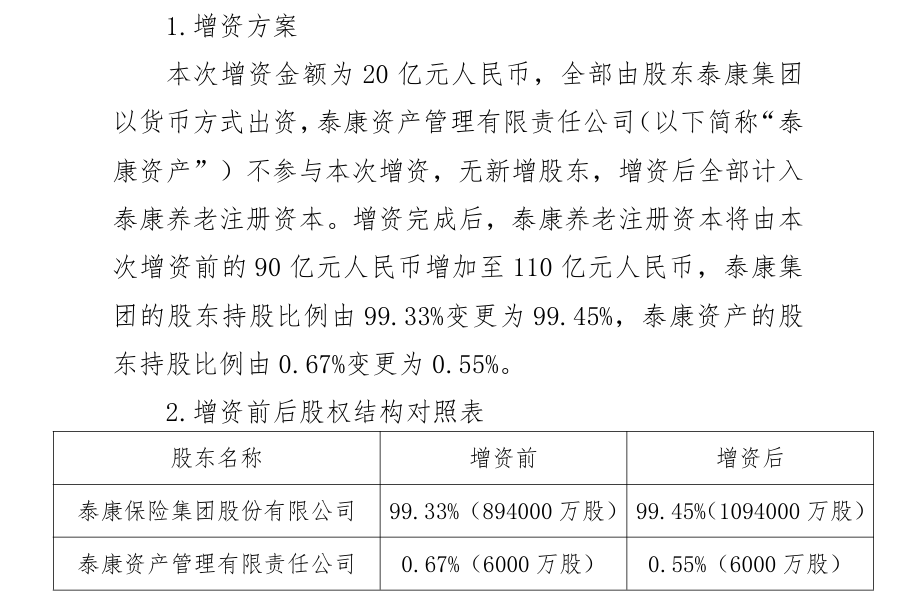
Group 1 - The core point of the announcement is that Taikang Group plans to increase the registered capital of Taikang Pension by 2 billion yuan, raising its total registered capital from 9 billion yuan to 11 billion yuan, thus entering the ranks of insurance companies with over 10 billion yuan in registered capital [1] - This capital increase reflects Taikang Group's strategic commitment to the pension finance sector and aims to enhance internal synergy within the group, promoting the implementation of the "Longevity Era Taikang Plan" [1] - The capital injection is expected to provide strong support for Taikang Pension to expand its second and third pillar businesses in the pension sector [1] Group 2 - As of May 2025, Taikang Pension has managed pension assets totaling 600 billion yuan and serves over 200,000 individual pension clients [5] - The company's total assets reached 132.5 billion yuan, with a net profit of 346 million yuan in the first quarter of 2025, indicating a significant recovery in profitability [5] - Taikang Pension's comprehensive solvency adequacy ratio is 239.81%, and the core solvency adequacy ratio is 142.41%, which are above the industry averages of 196.6% and 132.8% respectively [5]