
资本形成总额

Search documents
2025年我国国内生产总值同比增长5.0%
Bei Jing Shang Bao· 2026-02-28 02:05
分季度看,一季度国内生产总值同比增长5.4%,二季度增长5.2%,三季度增长4.8%,四季度增长 4.5%。全年人均国内生产总值99665元,比上年增长5.1%。国民总收入1393700亿元,比上年增长 5.1%。全员劳动生产率为184413元/人,比上年提高6.1%。 北京商报讯(记者 和岳)2月28日,国家统计局发布《2025年国民经济和社会发展统计公报》。据悉, 初步核算,全年国内生产总值1401879亿元,比上年增长5.0%。其中,第一产业增加值93347亿元,比 上年增长3.9%;第二产业增加值499653亿元,增长4.5%;第三产业增加值808879亿元,增长5.4%。第 一产业增加值占国内生产总值比重为6.7%,第二产业增加值比重为35.6%,第三产业增加值比重为 57.7%。最终消费支出拉动国内生产总值增长2.6个百分点,资本形成总额拉动国内生产总值增长0.8个 百分点,货物和服务净出口拉动国内生产总值增长1.6个百分点。 ...
沈建光:中国投资真的失速了吗?
Sou Hu Cai Jing· 2025-11-25 04:12
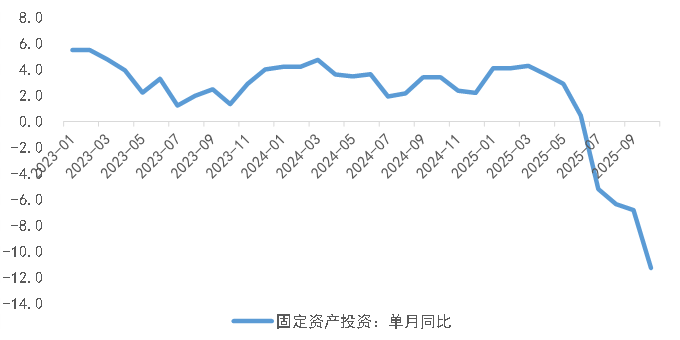
Core Viewpoint - Concerns about "China's investment slowdown" have arisen due to a significant decline in fixed asset investment (FAI) growth, which fell to -1.7% from January to October, with October alone dropping to -11.2%. However, the actual contribution of capital formation to GDP has only slightly decreased from 1.3% to 0.9%, indicating that investment is not as severely impacted as FAI suggests [2][3][15]. Group 1: Fixed Asset Investment Trends - The cumulative year-on-year growth rate of fixed asset investment has dropped significantly, from 2.8% in the first half of the year to -0.5% in the first nine months, and further down to -1.7% by October [4][6]. - The decline in FAI is attributed to a sharp decrease in land acquisition costs, which fell by 17.9% in the third quarter, negatively impacting nominal FAI but not affecting actual output and income [11][13]. - Despite the decline in FAI, the actual capital formation, which includes intangible assets like software, has shown resilience, with the growth rate of the software and information technology services sector rising to 13% [14][15]. Group 2: Economic Indicators and Capital Formation - The contribution of capital formation to GDP in the third quarter was 0.9%, only slightly down from 1.3% in the second quarter, indicating that investment growth has not significantly slowed [9][10]. - Key physical output indicators, such as crude steel and cement production, have not shown significant deterioration, with crude steel production improving from -6.2% in the second quarter to -2.7% in the third quarter [10]. - The stability in industrial output and electricity consumption suggests that the overall investment growth has not drastically declined, countering the narrative of an investment slowdown [10][12]. Group 3: Statistical Discrepancies - The differences in statistical methodologies between FAI and capital formation are significant, with FAI reflecting nominal values and capital formation reflecting real values, leading to discrepancies in growth rates [11][12]. - Inventory changes and the treatment of intangible assets contribute to the differences between FAI and capital formation, with the latter being less affected by the decline in land acquisition costs [12][13]. - The decline in land acquisition costs has been a major factor in the recent drop in FAI, while capital formation remains relatively stable as it excludes this factor [13][14].

谁撑住了一季度的固定资产投资
Jing Ji Guan Cha Bao· 2025-05-09 11:42
Group 1: Investment Trends - In Q1 2025, private investment grew by 0.4%, marking the fourth consecutive year of minimal growth since 2022, primarily impacted by a decline in real estate development investment, which fell by 9.9% [1][7] - Excluding real estate development, private investment increased by 6.0% in Q1 2025, while national fixed asset investment reached 103,174 billion yuan, growing by 4.2% year-on-year [1][3] - The share of private investment in national fixed asset investment dropped to below 50% for the first time since 2012, with a recorded share of 50.1% in 2024 [1][7] Group 2: Sector Performance - Manufacturing sector private investment rose by 9.7%, continuing a trend of high growth since 2021, driven by factors such as export growth and supportive policies [1][7] - Infrastructure private investment also saw a significant increase of 9.3%, contrasting with a decline in private investment in the tertiary sector, which fell by 7.7% [1][6] - The first industry investment grew by 16.0%, while the second industry investment increased by 11.9%, indicating robust performance in these sectors [5][6] Group 3: Economic Contributions - Net exports contributed significantly to economic growth, increasing by 50.4% and accounting for nearly 40% of GDP growth, despite a 6.0% decline in imports [2][4] - The "old-for-new" consumption policy supported a 4.6% growth in retail sales of consumer goods, highlighting the potential for further consumption growth [2][3] - State-owned investment grew by 6.5%, helping to stabilize overall investment growth amid declining private investment and real estate development [2][5] Group 4: Legislative Support - The newly passed Private Economy Promotion Law aims to enhance private investment by encouraging participation in national strategies and major projects, effective from May 20, 2025 [2][7] - The law is expected to support a rebound in private investment as the real estate market stabilizes [2][7]