
资本流动性

Search documents
思考当下楼市的各种价值说法
Sou Hu Cai Jing· 2026-02-23 07:38
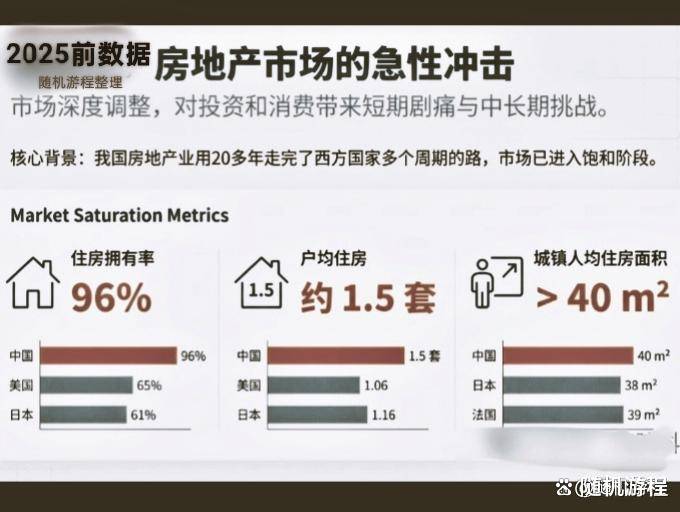
Core Viewpoint - The article discusses the declining liquidity in the real estate market in China, emphasizing the need to reassess the intrinsic value of properties amidst changing economic conditions and consumer behavior [1][3]. Group 1: Real Estate Market Dynamics - The liquidity of the real estate market has worsened due to falling property prices, leading to challenges in determining property value [1]. - A significant 96% of urban households own homes, with 31% owning two properties, indicating a saturation in the housing market [1]. - The strategy of renting out properties to mitigate losses from falling prices is becoming ineffective as many people already own homes [1][3]. Group 2: Investment Considerations - Properties are viewed as consumer goods, and potential buyers should consider their income expectations over the next three to five years to cover actual housing costs [5]. - The rental yield on properties is low; for example, a property worth 1 million yuan generating 1,000 yuan per month results in a mere 1.2% annual return, which may not cover future costs like property taxes and maintenance [3]. - The risk of properties becoming "negative assets" is highlighted, where owners may face losses due to high maintenance costs and low demand [3][5]. Group 3: Economic Outlook and Consumer Behavior - The current economic downturn is leading to uncertainty in job security, making it crucial for individuals to be cautious about purchasing homes [7]. - Many urban residents are living in older properties that, despite their external condition, can be comfortable with proper interior decoration [7]. - Emphasizing cash liquidity during economic hardships is recommended as a prudent financial strategy [7].

钮文新:研究好资本流动性,是股市长治久安的重要核心
Xin Lang Cai Jing· 2026-01-15 12:46
Core Viewpoint - The importance of understanding capital liquidity is emphasized as a core element for the long-term stability of the stock market [1][3] Group 1: Capital Liquidity - The current state of capital liquidity is insufficient, which poses a significant problem for the market [1][3] - There is a lack of clarity regarding which types of money should enter the stock market [1][3] - Authorities have begun to recognize the issue of capital liquidity, but the measures taken so far are considered inadequate [1][3] Group 2: Market Stability - Increasing the long-term capital liquidity available to the market could lead to more stable trading conditions [1][3]

2025全球最富城市榜出炉 加拿大6大城市上榜
Sou Hu Cai Jing· 2025-11-16 06:12
Core Insights - The report by CEOWORLD ranks Toronto as the wealthiest city in Canada, placing it 22nd globally with a GDP of $917.49 billion [3][5] - The ranking includes six Canadian cities, highlighting their economic significance and contribution to global GDP [1][5] - The report emphasizes that wealth in cities is not solely based on population or infrastructure but also on innovation, institutional strength, and capital mobility [1][10] Summary by Categories City Rankings - Toronto is the highest-ranked Canadian city at 22nd globally with a GDP of $917.49 billion [3] - Montreal ranks second among Canadian cities at 76th globally with a GDP of $556.36 billion [5] - Vancouver is ranked 107th with a GDP of $460.21 billion, Calgary at 159th with $321.85 billion, Edmonton at 190th with $254.01 billion, and Ottawa at 195th with $243.82 billion [5] Global Context - Tokyo is ranked first globally with a GDP of $2.55369 trillion, followed by New York and Los Angeles [5] - The report notes that cities like Tokyo balance tradition and progress, contributing to sustained economic vitality despite demographic challenges [5] Future City Characteristics - The report suggests that future wealthy cities will be those investing in human capital and digital infrastructure today [10] - It highlights the importance of adaptability in cities defined by AI, automation, and climate urgency [7][10]

印度创下一个历史新低 这块短板藏不住了
Zhong Guo Xin Wen Wang· 2025-08-05 06:41
Group 1 - The core issue in India's foreign direct investment (FDI) landscape is not a lack of investment but rather a rapid withdrawal of capital, with net FDI dropping to $3.53 billion in the 2024-2025 fiscal year, a 96.5% decrease from nearly $10 billion in the previous year [1] - Despite a 13.7% year-on-year increase in gross FDI to $81 billion, the outflow of foreign capital and profit repatriation has surged, leading to a near-zero net value [1][2] - The acceleration of capital withdrawal is attributed to a significant cash-out trend following popular IPOs, with total private equity and venture capital exits reaching $26.7 billion in the 2025 fiscal year [2] Group 2 - Indian companies are increasingly investing abroad, with outbound direct investment rising from $17 billion to $29 billion, reflecting a shift towards global market diversification [2] - The Indian central bank's stance is that the growth in gross FDI indicates market attractiveness, while high withdrawal rates suggest increased liquidity, although this perspective is contested [2][3] - Concerns about regulatory uncertainty and institutional risks are driving foreign investors to exit quickly, contrasting with the more stable foreign investment environments in countries like Vietnam and Indonesia [3] Group 3 - The Indian government is reportedly planning to tighten regulations on foreign investments, which could significantly impact sectors such as e-commerce and pharmaceuticals [4] - Despite India's large population, rapid GDP growth, and active consumer potential, the sustainability of attracting foreign capital hinges on the ability to retain investors long-term [4] - A stable institutional framework is essential for transforming India from a temporary investment stopover to a long-term investment destination [4]