
资源安全战略

Search documents
西部矿业迎喜讯 子公司取得采矿许可证
Zheng Quan Ri Bao· 2025-12-19 22:31
Core Viewpoint - The acquisition of a mining license by Western Mining Co., Ltd. for its wholly-owned subsidiary is a significant step towards sustainable development in the iron resource sector, enhancing the company's resource reserves and market competitiveness [1][2]. Group 1: License Acquisition - Western Mining's subsidiary, Golmud West Mining Resources Co., Ltd., has obtained a mining license from the Qinghai Provincial Natural Resources Department for a multi-metallic mine in the Itwen Chahan West C5 anomaly area [1]. - The mining license is valid from November 26, 2025, to November 25, 2044, covering iron, sulfur, copper, zinc, lead, and gold [1]. - The mine has a resource volume of 20.07 million tons of iron, with an average grade of 31.59% iron, and contains associated metals including 76,100 tons of copper, 60,400 tons of zinc, and 2.86 tons of gold [1]. Group 2: Strategic Importance - The acquisition is part of Western Mining's strategy to strengthen its iron resource sector, which is crucial for the company's long-term development and risk management [2]. - The company currently holds or controls 14 mines, including 7 iron and multi-metallic mines, with a total iron ore reserve of 282.45 million tons [2]. - The high dependence on imported iron ore in China highlights the importance of domestic resource development, positioning Western Mining as a key supplier and resource integrator [2]. Group 3: Broader Resource Strategy - The new mining rights acquisition is part of a systematic resource strategy, with ongoing efforts to accelerate resource reserve expansion [3]. - Western Mining has established resource expansion project teams in Lhasa and Golmud, focusing on mineral resources in Tibet, Sichuan, Xinjiang, Qinghai, and Gansu [3]. - Earlier in the year, the company secured a mining license for a lead-zinc mine in Sichuan with a capacity of 600,000 tons per year and a resource volume of 6.792 million tons [3]. - In October, the company’s subsidiary won exploration rights for a copper multi-metallic mine in Anhui, with significant copper and gold reserves [3].

特朗普失算!中国狂买美豆背后,藏着一盘大棋,美国财政先亮红灯
Sou Hu Cai Jing· 2025-11-03 05:42
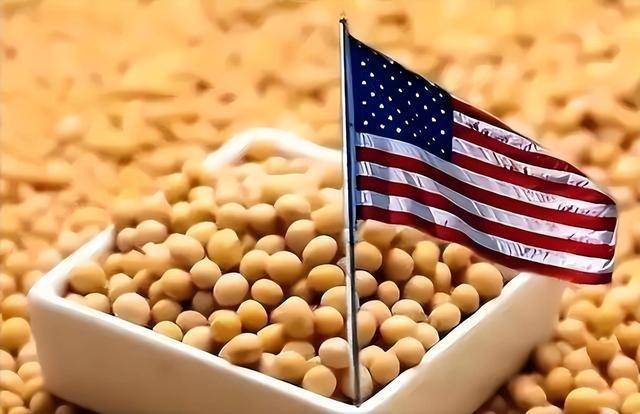
Core Insights - The recent U.S.-China trade negotiations have highlighted the strategic importance of soybean imports, with China signing a significant order for U.S. soybeans shortly after the talks concluded, indicating a complex interplay of trade dynamics and resource management [3][5][20] Group 1: Trade Dynamics - China signed a total of 1.2 million tons of U.S. soybean purchase orders within 48 hours post-negotiation, with delivery scheduled between December 2025 and January 2026, interpreted as a concession by China [3] - In the first nine months of 2025, China's imports of U.S. soybeans plummeted by 62% year-on-year, with September marking a historic low of zero imports, reflecting a significant shift in sourcing strategies [3][5] - The recent orders are subject to "price trigger clauses," allowing China to suspend deliveries if soybean prices exceed $14 per bushel, showcasing a cautious approach to procurement [3] Group 2: Supply Chain Diversification - China's soybean imports from Brazil and Argentina have increased, with Brazil supplying 63.7 million tons (up 2.4%) and Argentina 2.9 million tons (up 31.8%) in 2025, indicating a shift towards a diversified supply chain [5] - China has also established procurement agreements with Russia and South Africa, further reducing reliance on U.S. soybeans and enhancing supply chain resilience [5][15] Group 3: Impact on U.S. Agriculture - The decline in Chinese soybean orders has led to a significant increase in U.S. soybean inventories, which reached 18.9 million tons by mid-October 2025, a 47% increase from the previous year [6] - The financial strain on U.S. farmers is evident, with bankruptcy filings in the agricultural sector nearly doubling in the first quarter of 2025 compared to the previous year, particularly affecting major soybean-producing states [6][11] Group 4: Economic Pressures - Rising costs due to trade disputes have exacerbated the financial challenges for U.S. farmers, with fertilizer prices increasing by 40% and agricultural equipment costs rising by 12% [9][11] - The U.S. government's agricultural subsidy expenditures have surged to $38 billion in fiscal year 2025, a 52% increase from the previous year, with soybean-specific subsidies comprising 45% of this total [11][13] Group 5: Strategic Resource Management - China's soybean procurement strategy reflects a broader resource security initiative, aiming to reduce dependency on single markets and enhance domestic production through innovative agricultural practices [15][20] - Investments in infrastructure in South America, such as the Santos Port grain terminal in Brazil, are part of China's strategy to secure stable supply chains and strengthen partnerships with resource-rich countries [17][18] Group 6: Global Trade Governance - China's approach to trade negotiations emphasizes cooperation over confrontation, as evidenced by its measured response to U.S. tariffs and its commitment to maintaining stable trade relations [18][20] - The ongoing trade dynamics illustrate the challenges of unilateral trade policies, with the need for a balanced and diversified approach to achieve mutual benefits in global trade [20]

上证指数创44个月以来盘中新高
Zheng Quan Ri Bao· 2025-08-13 23:11
Group 1 - A-shares continue to rise, with daily trading volume exceeding 2 trillion yuan and the Shanghai Composite Index reaching a 44-month high of 3688.63 points on August 13 [1] - The total market capitalization of A-shares reached 98.48 trillion yuan, reflecting a 14.7% increase from the end of last year, with banking, electronics, and pharmaceutical industries leading in market value [1] - Seven industries, including non-ferrous metals, defense, machinery, electronics, pharmaceuticals, communications, and basic chemicals, saw market capitalization growth exceeding 20% since the end of last year, with non-ferrous metals and defense industries exceeding 30% growth at 37.51% and 30.76% respectively [1] Group 2 - The current A-share market rally is supported by three core factors: increased attention from decision-makers towards the capital market, continuous improvement in micro liquidity, and ongoing market hotspots [2] - As of August 13, 295 stocks have seen price increases exceeding 100% this year, with only 6 stocks having a market capitalization over 1 billion yuan, and 113 stocks over 100 million yuan [2] - The majority of the 295 stocks belong to the pharmaceutical and machinery sectors, with 53 and 52 stocks respectively, and 68.47% classified as strategic emerging industries [2] Group 3 - The 295 stocks exhibit three main characteristics: high industry concentration with machinery and pharmaceuticals accounting for over 35%, significant theme-driven performance, and dominance of small-cap stocks with about 60% having market capitalizations below 100 million yuan [3] - The median return on equity (ROE) for these stocks is only 3.46%, with 46 stocks exceeding 10% ROE and 87 stocks reporting negative ROE [3] - The performance of these stocks is largely driven by event catalysts, expectations reversal, and low base rebounds, indicating a reliance on valuation expansion and sensitivity to marginal information and trading sentiment [3]