大豆种植与贸易

Search documents
1200万吨大豆刚交货,美财长就坐地起价?中国转头就签下巴西大单
Sou Hu Cai Jing· 2026-02-12 06:41
Core Viewpoint - A significant shift is occurring in China's soybean import strategy, with Chinese importers quietly securing orders for Brazilian soybeans, indicating a preference for Brazil over the U.S. despite U.S. government efforts to increase soybean exports to China [2][4]. Group 1: U.S. Political Context - U.S. Treasury Secretary Janet Yellen's call for China to purchase 25 million tons of U.S. soybeans is influenced by the upcoming midterm elections, aiming to support U.S. farmers in key agricultural states [3]. - The U.S. government is attempting to politicize soybean trade to secure votes from farmers, which China perceives as an attempt to use trade as a political tool [4]. Group 2: Brazilian Soybean Advantages - Brazilian soybeans are significantly cheaper, with a price advantage of $50 to $80 per ton compared to U.S. soybeans, potentially saving China billions in import costs [5]. - Brazil has invested in supply chain improvements tailored to Chinese buyers, enhancing its competitiveness against U.S. soybeans, which face issues like supply instability and high prices [7]. Group 3: Global Soybean Market Dynamics - The global soybean market is shifting, with Brazil now leading in exports due to increased planting and technological advancements, diminishing the U.S.'s historical dominance [7]. - China is diversifying its soybean imports, exploring options from Argentina, Canada, and other agricultural nations, indicating a move away from reliance on U.S. soybeans [9][11]. Group 4: U.S. Soybean Challenges - The decline in U.S. soybean imports by China is attributed to the U.S. government's short-sighted trade policies and tariffs, which have eroded trust and market share [15]. - U.S. agricultural policies favoring large agribusinesses have squeezed smaller farmers, while aging infrastructure and high production costs further reduce competitiveness [15]. Group 5: China's Import Strategy - China is committed to a diversified import strategy to mitigate risks associated with relying on a single country for soybeans, emphasizing the importance of product quality, price, and supplier reliability [11][18]. - The Chinese market remains open to all competitive partners, but it will not accept coercive trade practices, signaling a firm stance against U.S. political pressure linked to soybean purchases [18].


游戏结束!中国减持外汇资产,纳瓦罗气急败坏:美国一粒大豆也不出售
Sou Hu Cai Jing· 2026-01-21 03:36
Core Viewpoint - The economic interaction between China and the U.S. is currently in a delicate and tense balance, highlighted by China's strategic reduction of U.S. Treasury holdings amidst a rising global demand for U.S. debt [1][4]. Group 1: China's Strategy - China reduced its U.S. Treasury holdings by $6.1 billion in November 2025, bringing the total to $682.6 billion, while global U.S. debt holdings reached a record high of $9.36 trillion [1]. - This reduction is a calculated adjustment rather than a blind sell-off, reflecting China's recognition of systemic risks associated with the U.S. debt model due to increasing fiscal deficits [1][4]. - China aims to diversify its foreign exchange reserves by reducing reliance on a single asset, thus enhancing its asset safety and value growth objectives [3][4]. Group 2: U.S. Response - The U.S. has shown emotional anxiety in its economic interactions with China, particularly in the agricultural sector, as evidenced by aggressive statements from U.S. trade representatives [3][5]. - The proposal to halt soybean exports to China, which accounts for nearly 60% of U.S. soybean exports, could devastate the U.S. agricultural sector and disrupt political stability in key Republican states [5]. - The emotional responses from U.S. politicians contrast sharply with China's rational asset management approach, highlighting differing underlying logics in addressing economic challenges [5][6]. Group 3: Future Outlook - The ability of China and the U.S. to find a new balance between cooperation and confrontation will be a critical issue for the global economy [6]. - Acknowledging mutual dependencies and managing differences with a pragmatic attitude is essential for both countries to maintain stability in the unpredictable international financial landscape [6].

主动权易主?中国800万吨美豆回购,期价回落背后的粮食安全布局
Sou Hu Cai Jing· 2026-01-02 08:41
Core Insights - China placed an order for 8 million tons of U.S. soybeans, yet prices at the Chicago Mercantile Exchange fell nearly 7%, marking the worst monthly performance in five months, indicating a paradox where increased buying led to lower prices [1] Group 1: Historical Context - The trade dynamics shifted in 2018 when the Trump administration imposed tariffs on U.S. soybeans, prompting Chinese buyers to turn to South America, particularly Brazil, which saw a 16% year-on-year increase in soybean exports to China by 2025 [3] - Brazil's market share in China's soybean imports surged from approximately 2% thirty years ago to about 71% by 2025, effectively replacing the U.S. in this market [3] Group 2: Recent Developments - In the fall of 2025, Chinese commercial buyers returned to the U.S. market, with stable and continuous orders starting in October, including a commitment to purchase 12 million tons of soybeans before January 2026 [6] - The first shipments of U.S. soybeans to China since May 2025 began on November 24, 2025, signaling a recovery in trade flows [6] Group 3: Market Reactions - Despite the renewed orders, soybean futures prices in Chicago dropped about 7% in December 2025 due to market concerns over the lack of a formal long-term agreement and uncertainties regarding the fulfillment of existing purchase commitments [8] - Increased soybean production expectations from Brazil, along with Argentina's temporary removal of export tariffs on soybean meal and oil, added downward pressure on global prices [8] Group 4: Strategic Shifts - China has diversified its soybean supply sources, reducing reliance on any single supplier, which allows for more flexible purchasing strategies based on bilateral relations [8] - A report from Goldman Sachs indicated that China aims to enhance its food self-sufficiency and reduce its dependence on soybean imports from about 90% to below 30% over the next decade [10] Group 5: Domestic Implications - U.S. farmers expressed mixed feelings about the orders from China, as falling futures prices overshadowed the positive news of increased orders [10] - The Chinese government emphasized its commitment to open cooperation in agricultural trade, highlighting the importance of specific buying operations [10] Group 6: Demand Management - From 2021 to 2024, China's annual soybean consumption decreased by approximately 15 million tons due to policies promoting lower protein feed formulations, which reduced the rigid demand for imported soybeans [12] - The return of Chinese buyers to the U.S. market for 8 million tons of soybeans reflects a complex backdrop of abundant global soybean supply and changing domestic demand structures in China [12]
美国大豆产业面临产量和出口双降
Xin Lang Cai Jing· 2025-12-25 01:00
Group 1 - The core viewpoint of the article indicates that the U.S. soybean market is expected to face declining production and exports by 2026 due to ongoing U.S.-China trade uncertainties, while Brazil is likely to benefit from increased demand from China [1][2] - The U.S. soybean production for the 2025/26 season is projected to be 115.75 million tons, a decrease of 2.8% year-on-year, with export volumes expected to drop by 13.1% to 44.5 million tons [1][2] - The U.S. soybean export forecast reflects the complex trade realities, with actual trade volumes not recovering to previous levels despite some resumption of purchases by China [1][2] Group 2 - The U.S. government announced a $12 billion aid plan to alleviate farmer pressure, but traders believe this will only provide limited relief, with subsidies of about $31 per acre failing to address fundamental issues [2] - In contrast, Brazil is projected to achieve record soybean production of 177.1 million tons for the 2025/26 season, benefiting from expanded planting areas and favorable weather conditions [2][3] - Brazil's soybean exports are expected to reach a record 112 million tons in 2026, a 4.7% increase year-on-year, further solidifying its position as a key supplier to China [2][3] Group 3 - China's soybean import strategy is reshaping global trade dynamics, maintaining a differentiated tariff structure that favors Brazilian soybeans over U.S. soybeans [3][4] - As of mid-December, China had only purchased 3.25 million tons of U.S. soybeans for the 2025/26 season, indicating a cautious approach to replenishing U.S. soybean stocks [4] - The article suggests that the global soybean trade may undergo structural changes by 2026, with the U.S. facing challenges while Brazil consolidates its position as China's largest supplier [4]

美媒:美国盟友都不服,但特朗普只认中国第一,因为中国说话算话
Sou Hu Cai Jing· 2025-12-16 10:12
Group 1 - After Trump's strong trade policies towards China, the U.S. soybean market faced significant turmoil, with prices dropping and farmers in the Midwest under pressure due to China's halt in soybean purchases [1] - China shifted its soybean purchases to South America, leading to a sharp decline in U.S. soybean exports, while the EU and Japan criticized China's trade practices and sought to persuade the U.S. for multilateral sanctions [1] - A temporary agreement was reached in late October, where China committed to purchasing 12 million tons of U.S. soybeans, and the U.S. temporarily suspended some tariffs [3] Group 2 - By November, China began placing large orders, resulting in a recovery of U.S. soybean exports, and Trump extended tariff exemptions in exchange for further soybean purchases from China [5] - Despite dissatisfaction from allies regarding unilateral actions, the U.S. maintained that China's reliability as a major commodity buyer was crucial for global supply chains [5] - By early December, China's procurement had reached half of the agreed target, stabilizing the U.S. soybean market and leading to a slight price increase [6]

终于低下高贵头颅,美国公开表态:若中国买大豆,希望先找美国
Sou Hu Cai Jing· 2025-11-18 12:09
Core Viewpoint - The U.S. soybean industry is facing significant challenges due to a decline in exports to China, which has shifted its sourcing to South America, particularly Brazil, resulting in economic distress for American farmers [3][6][14]. Group 1: Export Dynamics - In 2024, U.S. soybean export value reached $24.58 billion, with China accounting for over half of the imports at nearly 27 million tons, valued at $12.64 billion [3]. - By 2025, U.S. soybean exports to China are projected to drop significantly, with potential orders of 14 to 16 million tons lost, leading to a 55% increase in farm bankruptcies across the U.S. [3][4]. - The share of U.S. soybeans in the Chinese market has plummeted from 40% in 2016 to 18% in 2024, with Brazil becoming the primary supplier [6][14]. Group 2: Supply Chain Changes - In the first half of 2025, U.S. soybean exports to China were only 5.9 million tons, with exports halting completely after May [4]. - Brazil's soybean production is expected to exceed 170 million tons in 2025, with 79.9% of its exports directed to China [6]. - China's investments in Brazilian infrastructure have reduced logistics costs by 15% and improved efficiency by 20% [8]. Group 3: Domestic Impact and Policy Response - The U.S. agricultural sector is experiencing a crisis, with 94% of family farms facing financial strain and agricultural debt projected to surpass $562 billion [3][11]. - The U.S. government has proposed a $10 to $14 billion aid plan, but actual direct subsidies are limited to $35 million, which is insufficient compared to the estimated $45 billion in agricultural losses [11]. - The shift in trade settlement methods, with over 60% of soybean trade between China and Brazil now conducted in local currencies, undermines the traditional dominance of the U.S. dollar in agricultural trade [11]. Group 4: Market Sentiment and Future Outlook - American farmers are increasingly anxious about their sales prospects, with rising discontent reflected in letters to the White House and potential political repercussions for the current administration [12][14]. - Despite a recent agreement between U.S. and Chinese leaders to expand agricultural trade, Chinese buyers remain cautious, particularly due to quality concerns that have led to import suspensions [14][16]. - The diversification of China's soybean import strategy, including increased domestic production and reduced reliance on single sources, indicates a structural shift in the market [9][14].
美国大豆滞销背后,是中国20年的绝地反击!
Sou Hu Cai Jing· 2025-11-09 11:44
Core Viewpoint - The article discusses the transformation of China's soybean industry over the past two decades, highlighting the shift from heavy reliance on U.S. imports to a more diversified and self-sufficient supply chain, resulting in increased domestic production and reduced dependency on foreign sources [2][26]. Group 1: Historical Context - Twenty years ago, China's soybean industry was heavily dependent on imports, with U.S. exports accounting for a significant portion of its supply [4][6]. - By 2017, China imported over 70% of the world's soybeans, primarily from the U.S., leading to a vulnerable position in the global market [6][10]. Group 2: Shift in Supply Sources - Following the U.S.-China trade war in 2018, China imposed a 25% tariff on U.S. soybeans, prompting a strategic pivot to South American suppliers, particularly Brazil, which saw imports surge to 58 million tons [8][10]. - In the 2023-2024 marketing year, China's total soybean imports reached 102 million tons, with only 25 million tons from the U.S. and 63 million tons from Brazil [8][10]. Group 3: Domestic Production Growth - China's domestic soybean planting area increased from over 10 million acres to 16 million acres in the past decade, with production rising from 16 million tons to 23 million tons [10][12]. - The government has implemented subsidies and agricultural technology advancements, leading to improved yields and reduced reliance on imports [12][20]. Group 4: Future Projections - By 2025, it is projected that domestic soybean production will exceed 25 million tons, with a significant reduction in the use of imported soybean meal in livestock feed [20][22]. - The diversification of supply sources and increased domestic production have strengthened China's position in the global soybean market, allowing for better negotiation power and reduced price volatility [16][26]. Group 5: Industry Dynamics - The article notes that the U.S. soybean industry is facing challenges, with a projected 20% decrease in exports to China, leading to high inventory levels and financial losses for American farmers [22][24]. - China's strategic moves in the soybean market reflect a broader trend of enhancing food security and reducing vulnerability to international market fluctuations [26][28].
重新购买美国大豆!美国发现时代变了,中国已是平起平坐的对手
Sou Hu Cai Jing· 2025-11-09 06:18
Group 1 - China has decided to restore the export qualifications of three American soybean companies, indicating that U.S. soybeans will re-enter China's procurement range [1] - The U.S. has been using trade as a weapon, frequently imposing sanctions on other countries through methods such as raising tariffs and setting trade barriers [1][3] - The U.S. has historically been seen as a proponent of free trade, but it now operates under rules that primarily benefit itself, leveraging its position as the largest consumer market [3] Group 2 - The rise of emerging economies like China is challenging the existing trade rules that were established under U.S. dominance in international institutions [3][5] - The U.S. has reacted to this challenge by employing aggressive tactics, often disregarding international laws and rules to suppress the development of other economies [5] - China's response to U.S. tariffs included halting soybean purchases, which significantly impacted U.S. industries and led to domestic and international criticism of the U.S. government [5] Group 3 - The military capabilities of China have been enhanced, as indicated by the commissioning of the Fujian aircraft carrier, which signifies a new level of military strength [5] - The ongoing tensions and confrontations between the U.S. and China highlight that China has become a formidable opponent that the U.S. can no longer underestimate [5][7] - The intensifying struggle between the two nations suggests that China is growing stronger in the face of U.S. challenges [7]
中国重启美豆进口,美国豆农为何笑不出来?问题出在美方
Sou Hu Cai Jing· 2025-11-08 11:11
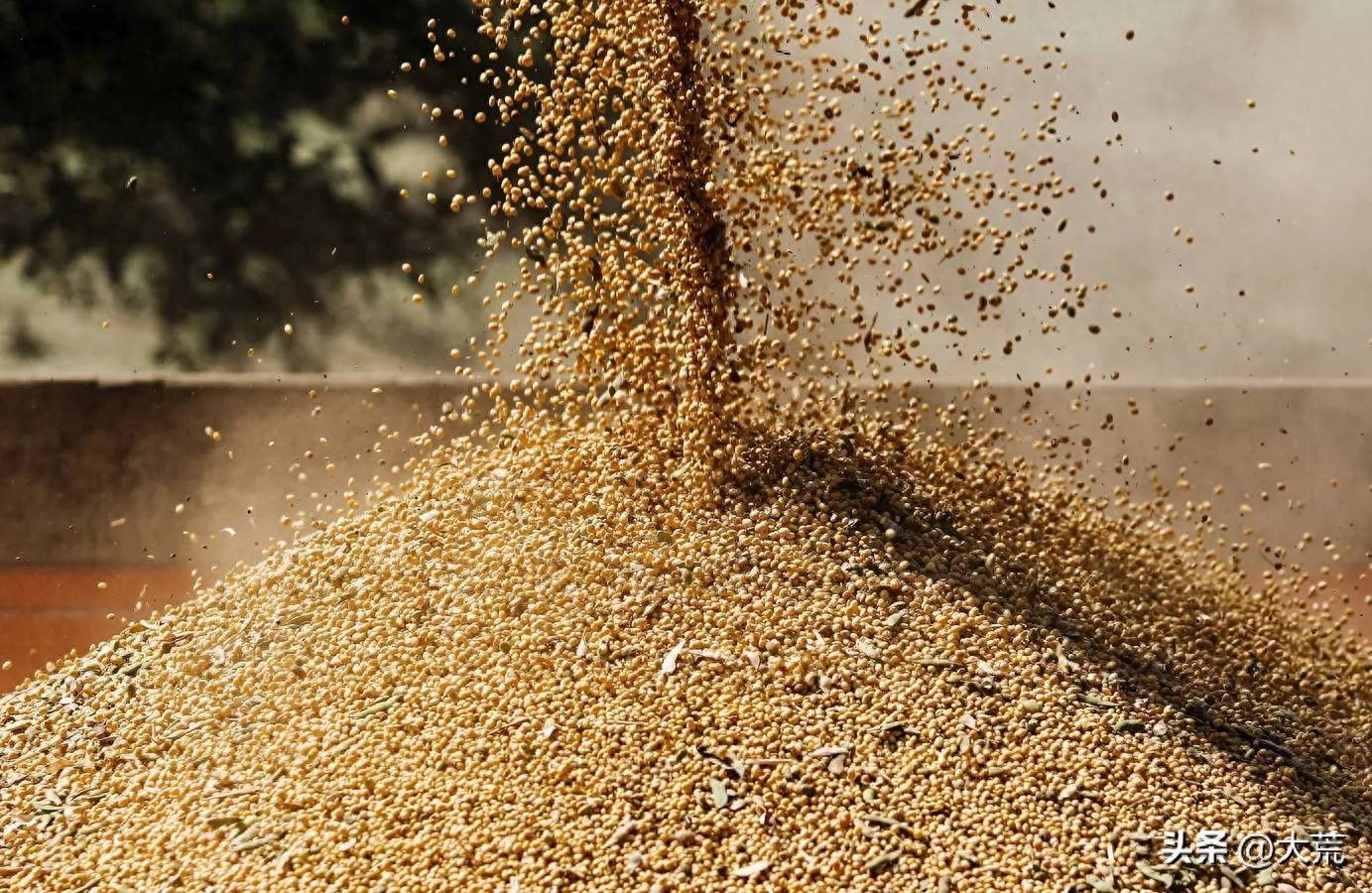
Core Viewpoint - China's decision to resume imports of U.S. soybeans is influenced by market demand and supply chain security, rather than being a simple trade restart [1][5] Group 1: Import Dynamics - China has agreed to import 12 million tons of U.S. soybeans by the end of 2025, reflecting its reliance on soybean imports [1] - The U.S. soybean's advantages include lower costs, higher oil yield, and stable supply compared to Brazilian soybeans, which face seasonal supply fluctuations [1][3] - The recent El Niño phenomenon has reduced Brazilian soybean production, causing prices to rise approximately 15% above U.S. soybean prices, prompting Chinese importers to shift to U.S. soybeans [1] Group 2: Trade Agreements - In exchange for resuming soybean imports, the U.S. has agreed to reduce tariffs on Chinese imports by 10 percentage points starting November 10, 2025, and suspend high tariffs until November 10, 2026 [5] - The agreement aims to establish a long-term stable "soybean backup" mechanism to mitigate supply chain risks for China [3] Group 3: Economic Implications - The halt in U.S. soybean imports previously led to significant challenges for U.S. soybean farmers, including price drops and storage issues, with 70% of North Dakota's soybean warehouses full and at least 3 million tons without storage [5] - The trade disruption has resulted in job losses across related industries, including truck drivers and port workers, with tens of thousands of manufacturing jobs lost [5] Group 4: Strategic Considerations - China's higher production costs and lower yields in soybean farming compared to the U.S. and Brazil necessitate reliance on imports to ensure food security [7] - The ongoing trade tensions and U.S. tariff policies reflect a conflict between economic rationality and hegemonic thinking, with the trade war illustrating the pitfalls of using tariffs as leverage [7] Group 5: Future Outlook - Despite the resumption of soybean imports, U.S. trade representatives continue to pursue investigations against China, indicating potential future tensions [10] - The U.S. government's inconsistent trade policies may create uncertainty for U.S. soybean farmers, who are left to navigate a volatile trade environment [11]
特朗普失算!中国狂买美豆背后,藏着一盘大棋,美国财政先亮红灯
Sou Hu Cai Jing· 2025-11-03 05:42
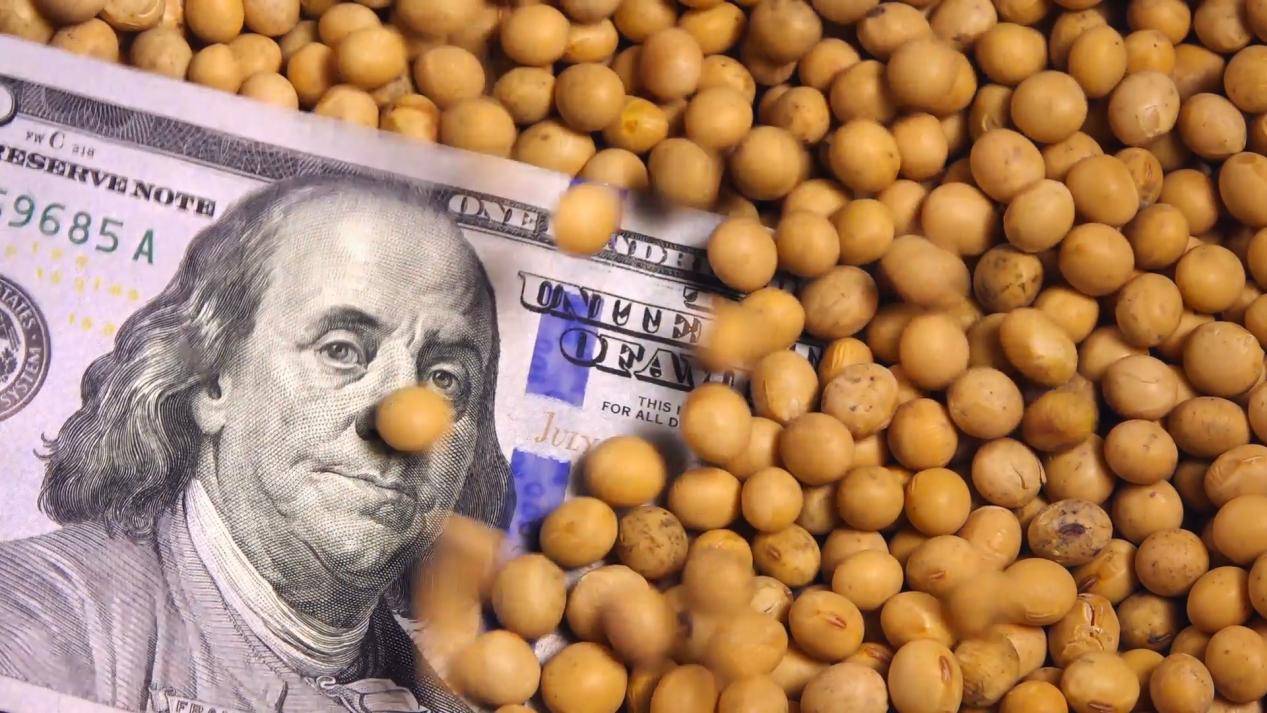
Core Insights - The recent U.S.-China trade negotiations have highlighted the strategic importance of soybean imports, with China signing a significant order for U.S. soybeans shortly after the talks concluded, indicating a complex interplay of trade dynamics and resource management [3][5][20] Group 1: Trade Dynamics - China signed a total of 1.2 million tons of U.S. soybean purchase orders within 48 hours post-negotiation, with delivery scheduled between December 2025 and January 2026, interpreted as a concession by China [3] - In the first nine months of 2025, China's imports of U.S. soybeans plummeted by 62% year-on-year, with September marking a historic low of zero imports, reflecting a significant shift in sourcing strategies [3][5] - The recent orders are subject to "price trigger clauses," allowing China to suspend deliveries if soybean prices exceed $14 per bushel, showcasing a cautious approach to procurement [3] Group 2: Supply Chain Diversification - China's soybean imports from Brazil and Argentina have increased, with Brazil supplying 63.7 million tons (up 2.4%) and Argentina 2.9 million tons (up 31.8%) in 2025, indicating a shift towards a diversified supply chain [5] - China has also established procurement agreements with Russia and South Africa, further reducing reliance on U.S. soybeans and enhancing supply chain resilience [5][15] Group 3: Impact on U.S. Agriculture - The decline in Chinese soybean orders has led to a significant increase in U.S. soybean inventories, which reached 18.9 million tons by mid-October 2025, a 47% increase from the previous year [6] - The financial strain on U.S. farmers is evident, with bankruptcy filings in the agricultural sector nearly doubling in the first quarter of 2025 compared to the previous year, particularly affecting major soybean-producing states [6][11] Group 4: Economic Pressures - Rising costs due to trade disputes have exacerbated the financial challenges for U.S. farmers, with fertilizer prices increasing by 40% and agricultural equipment costs rising by 12% [9][11] - The U.S. government's agricultural subsidy expenditures have surged to $38 billion in fiscal year 2025, a 52% increase from the previous year, with soybean-specific subsidies comprising 45% of this total [11][13] Group 5: Strategic Resource Management - China's soybean procurement strategy reflects a broader resource security initiative, aiming to reduce dependency on single markets and enhance domestic production through innovative agricultural practices [15][20] - Investments in infrastructure in South America, such as the Santos Port grain terminal in Brazil, are part of China's strategy to secure stable supply chains and strengthen partnerships with resource-rich countries [17][18] Group 6: Global Trade Governance - China's approach to trade negotiations emphasizes cooperation over confrontation, as evidenced by its measured response to U.S. tariffs and its commitment to maintaining stable trade relations [18][20] - The ongoing trade dynamics illustrate the challenges of unilateral trade policies, with the need for a balanced and diversified approach to achieve mutual benefits in global trade [20]