
资源控制权

Search documents
锂业巨头杀红眼 2026无矿者出局
经济观察报· 2026-02-08 12:53
Core Viewpoint - The ongoing lithium resource battle at the beginning of 2026 will see winners not only among the largest players with the most mines but also among those who can transform resource endowments into sustainable competitive advantages through excellent operations, technological breakthroughs, and strategic collaboration [1] Group 1: Capital Operations and Mergers - In early 2026, major lithium companies initiated a series of capital operations focused on resource control, with Tianqi Lithium announcing a fundraising and asset disposal plan to raise approximately 71 billion yuan [2][6] - Morgan Stanley's report indicated that Tianqi Lithium's fundraising could significantly increase the likelihood of subsequent mergers and acquisitions, despite potential dilution risks exceeding 6% [2] - Shengxin Lithium completed the acquisition of the remaining equity in Huirong Mining for 1.26 billion yuan, fully integrating the Sichuan Muroong lithium mine into its portfolio [3][8] Group 2: Strategic Resource Acquisition - Salt Lake Co. announced the acquisition of a 51% stake in Wenkang Salt Lake for 4.605 billion yuan, enhancing its core resource layout in lithium extraction [3][9] - Shengxin Lithium and Zhongxin Innovation signed a framework agreement for deep cooperation, committing to purchase 200,000 tons of lithium salt products from Shengxin Lithium between 2026 and 2030 [9] Group 3: Market Dynamics and Strategic Logic - The series of financing and acquisition actions reflect a common logic: betting on the "certainty" of resource supply amid the uncertainties of fluctuating lithium prices and geopolitical risks [4] - Tianqi Lithium's strategy emphasizes securing resources to stabilize operations during price downturns and capitalize during peaks, moving away from reliance on price speculation [11][12] - The pursuit of low-cost, high-grade resources is seen as a stabilizing factor during market cycles, with Tianqi Lithium's operations achieving significantly lower cash costs compared to industry averages [12] Group 4: Challenges and Risks - Concerns regarding development costs and efficiency arise as mining depths increase, potentially affecting ore grades and recovery rates [17] - The pressure of rising costs due to stricter environmental regulations and labor costs poses significant challenges to resource development [17] - The complexity of overseas operations, including regulatory and community relationship risks, presents additional uncertainties for companies aiming for global expansion [19]



锂业开年抢矿大战:巨头死磕“确定性”
Jing Ji Guan Cha Wang· 2026-02-08 11:56
Core Viewpoint - The lithium industry is witnessing a series of strategic capital operations by major players to secure resource control amid fluctuating lithium prices and geopolitical risks, indicating a shift towards prioritizing resource certainty for future profitability [2][3][10]. Group 1: Capital Operations and Financing - Tianqi Lithium announced a fundraising and asset disposal plan on February 4, 2026, aiming to raise HKD 58.6 billion (approximately RMB 5.2 billion) through a combination of H-share placement and convertible bonds, alongside the potential disposal of shares in SQM and Zhongxin Innovation, which could yield around RMB 1.9 billion, totaling approximately RMB 7.1 billion [2][5]. - Morgan Stanley's report highlighted that after completing the fundraising, Tianqi Lithium's potential for subsequent mergers and acquisitions would significantly increase, although it also warned of a potential dilution risk exceeding 6% [2][3]. - The capital raised by Tianqi Lithium is intended for project development, optimizing capital expenditures, and acquiring quality lithium assets, particularly during a low point in the industry cycle [5][12]. Group 2: Mergers and Acquisitions - On February 4, 2026, Shengxin Lithium announced the completion of a RMB 1.26 billion acquisition of the remaining stake in Huirong Mining, fully integrating the Sichuan Muro Lithium Mine into its portfolio, which is recognized as one of Asia's largest hard rock lithium deposits [7][8]. - Salt Lake Co. announced on December 30, 2025, its acquisition of a 51% stake in Wenkou Salt Lake for RMB 4.605 billion, enhancing its control over lithium resources and positioning itself among the top domestic lithium salt producers [3][7]. - Shengxin Lithium and Zhongxin Innovation signed a framework agreement for deep cooperation, committing to the procurement of 200,000 tons of lithium salt products from Shengxin Lithium between 2026 and 2030, indicating a strategic alignment in the supply chain [3][8]. Group 3: Industry Trends and Strategic Logic - The current actions of lithium industry leaders reflect a proactive approach to securing resources, as they aim to mitigate uncertainties associated with price fluctuations and geopolitical risks by locking in resource supply [3][10][14]. - The pursuit of high-quality, low-cost lithium resources is seen as essential for maintaining stability during market downturns and capitalizing during peaks, as highlighted by Tianqi Lithium's operational strategies [11][12]. - The overarching strategy among these companies is to convert the uncertainties of resource acquisition into tangible, controllable assets through capital investments, thereby ensuring future profitability [10][14].
从稀土到白银中国亮出王牌,美军F35战机为何陷入停工危机?
Sou Hu Cai Jing· 2026-01-10 04:48
Group 1 - The new silver export policy implemented on New Year's Day signals a significant shift in China's control over the global silver trade, allowing only large enterprises with an annual production of over 80 tons to participate [1] - Silver is increasingly recognized as a strategic resource, essential not only for jewelry and investment but also for high-end weapons and advanced technology [1] Group 2 - The previous rare earth export restrictions have highlighted the dependency of U.S. high-tech and defense industries on Chinese materials, with significant implications for supply chains [3] - China controls 83% of tungsten, 98% of gallium, and 70% of rare earth elements globally, showcasing its dominance in these critical materials [5] - The price of tungsten has more than doubled over the past year, reflecting the growing demand for high-end manufacturing applications [5] Group 3 - The changing economic landscape has led to a shift in currency dynamics, with an increasing number of central banks expressing interest in holding RMB assets, surpassing $600 billion in foreign purchases of RMB bonds [7] - China's control over core resources is becoming increasingly recognized, contributing to a stronger economic position [7] Group 4 - The competition for resources is intensifying, with the U.S. seeking to secure mineral resources while China is strategically managing the export of materials like gallium and graphite for military purposes [9] - The global supply-demand gap for silver and copper is widening, leading to rising prices, supported by a robust domestic market [10] - The management of strategic materials is crucial for reclaiming China's voice in international negotiations and facilitating the internationalization of the RMB [10]
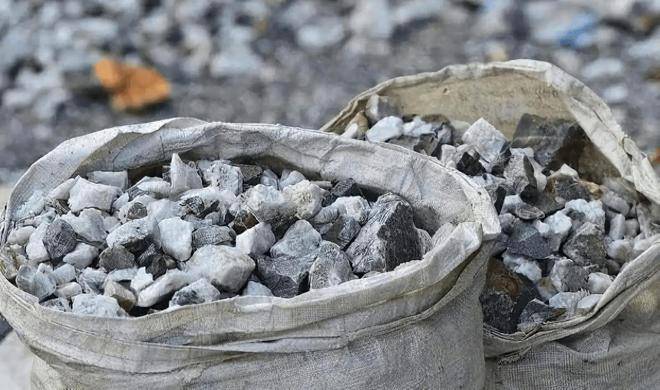
乌总理:乌克兰就与美国资源协议将保留对所有资源的控制权
news flash· 2025-04-30 16:58
Core Viewpoint - Ukraine's Prime Minister Shmyhal stated that Ukraine will retain control over all resources under the draft resource agreement with the United States, indicating that minerals, infrastructure, and natural resources are not subject to the fund or the agreement's jurisdiction [1] Group 1 - Ukraine will maintain control over all resources, including minerals and natural resources, as per the agreement with the United States [1] - The agreement explicitly states that the resources do not fall under the jurisdiction of the fund or the agreement [1]