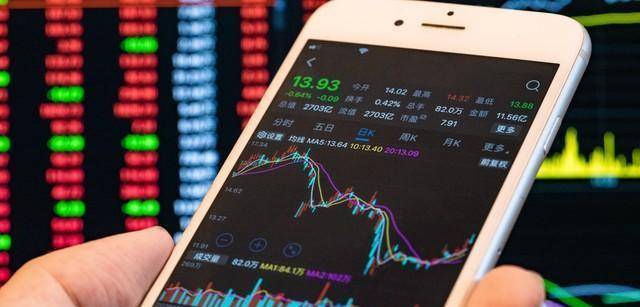
赌徒心理

Search documents
两个方法,彻底摆脱“越亏越扛”的赌徒心理
3 6 Ke· 2025-12-18 23:47
Group 1 - The article discusses the "gambler's fallacy," where individuals believe that past independent events influence future outcomes, leading to irrational betting behavior [1][2][8] - It explains the difference between "independent event probability" and "mean reversion," emphasizing that while individual events are independent, over a large number of trials, probabilities will converge to expected values [2][3] - The concept of "infinite" is introduced, indicating that past outcomes have negligible impact on future results, reinforcing the idea that gamblers often misinterpret random sequences as patterns [3][4][6] Group 2 - The article highlights the psychological phenomenon known as the "Zeigarnik effect," which explains why individuals struggle to abandon ongoing tasks or investments, as they feel a psychological tension until the task is completed [19][22] - It suggests that the perception of time influences decision-making, where continuous events are misinterpreted as connected, leading to flawed reasoning in gambling and investing [11][15] - The article provides two recommendations to mitigate the gambler's mindset: resetting time to create a psychological break and pre-setting stop-loss mechanisms to manage risk effectively [27][29]


我国6千万人炒股,90%投资者亏损,普通人为何仍热衷股市投资
Sou Hu Cai Jing· 2025-10-05 07:20
Core Insights - The article highlights the increasing participation of individual investors in the A-share market, with over 61 million personal investors recorded by the end of February 2025, indicating that nearly one in every 23 Chinese citizens is involved in stock trading [3][5] - Despite the risks and previous losses in the market, new investors continue to enter, driven by a desire for quick profits and the belief that they can be among the few who succeed [5][10] - The phenomenon of "follow the leader" trading has gained popularity, where inexperienced investors mimic the trades of perceived successful investors, often without understanding the underlying fundamentals [12][14] Investor Behavior - Many investors exhibit a gambling mentality, believing they can achieve quick wealth despite the high probability of losses, with a common saying in the market being "seven lose, two break even, one makes a profit" [6][14] - Emotional factors play a significant role in trading decisions, with investors often ignoring risks and continuing to invest even after experiencing losses, driven by the hope of a market rebound [10][16] - The allure of potential quick gains leads to a cycle of repeated investment, where individuals fail to recognize the risks involved, akin to the behavior of gamblers [14][16] Market Dynamics - The stock market is compared to a casino, where only a small percentage of participants make consistent profits, while the majority face losses [3][5] - The current economic environment, characterized by low savings interest rates and high financial pressure, has led many individuals to liquidate assets, such as real estate, to invest in stocks [8][10] - The rise of social media and short video platforms has facilitated the spread of stock trading advice, often leading to uninformed trading decisions among new investors [12][14]