
股票

Search documents
Stocks, bonds and commodities: How global markets have traded the Iran war
CNBC· 2026-03-31 13:07
Core Viewpoint - The ongoing U.S.-Iran war has led to significant volatility across various asset classes, resulting in major losses and bearish sentiment in the markets [1][2]. Equities - Global equities have experienced a severe sell-off during the five weeks of the U.S.-Iran war, with all three major U.S. indices expected to end the month in negative territory [2] - The war's impact on energy and inflation has particularly affected markets in Europe and Asia, with South Korea's Kospi index falling nearly 20% in March due to its vulnerability to energy price shocks [3] - Goldman Sachs has indicated that the "balance of risks has worsened" for equity markets, with an increased probability of stagflation, which historically leads to poor equity performance [4][5] Bonds - Government borrowing costs have risen amid a broad sell-off of developed-market sovereign debt, with bond yields increasing as investors adjust expectations for central bank rate hikes [7][8] - The U.S. and European breakeven curves have surged as markets reprice inflation expectations, with some European bond yields reaching multi-decade highs [10] Currencies - The foreign exchange market has been volatile, with the U.S. dollar index projected to gain around 3% in March, supported by energy-driven stagflation risks [11] - Asian and European currencies are struggling due to higher commodity prices, while Latin American currencies are preferred within the emerging market context [11] Metals - The metals market has seen significant volatility, with gold on track for its worst monthly performance since 2008, influenced by a stronger dollar and rising interest rate expectations [12] - Despite the current decline, there is a bullish outlook for gold, with forecasts suggesting a rebound to USD 6,200 per ounce by the end of June [13] - Aluminum prices are under pressure due to geopolitical tensions affecting supply, while copper markets are influenced by economic pessimism [13] Energy - The energy market is at the center of market volatility, with the Iran war disrupting oil and gas supplies, leading to skyrocketing prices [14] - Euro zone inflation has risen above the European Central Bank's target, with energy inflation expected to hit 4.9% in March, up from a contraction the previous month [14][15] - The rapid increase in oil prices poses a risk of rising living costs for consumers, potentially leading to reduced consumption until clarity on price stability is achieved [15]


利率迅速上升的影响波及全球金融市场
日经中文网· 2026-03-31 02:50
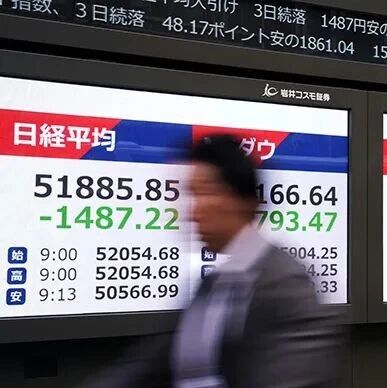
Group 1 - The core issue driving stock market declines is the instability of long-term interest rates, which have reached new highs in the UK, Germany, and Japan due to rising oil prices and inflation concerns [2][4]. - Japan's 10-year government bond yield rose to 2.39% on March 30, marking a 0.275% increase for March, the largest since April 2008 [4]. - The UK and Germany also saw significant increases in bond yields, with the UK's rising by 0.73% and Germany's by 0.44%, both reflecting heightened inflation fears linked to oil price increases [4]. Group 2 - South Korea's 10-year bond yield reached 3.9%, the highest since November 2023, prompting the government to announce a 5 trillion won bond repurchase to curb rising rates [6]. - The European Central Bank is expected to raise interest rates 2-3 times within the year, while the U.S. Federal Reserve's rate cut expectations have diminished significantly [6]. - Short-term interest rates are also rising, with the U.S. 2-year Treasury yield surpassing 4%, indicating a tightening monetary policy outlook [6]. Group 3 - There is growing concern over the risks of financial market turmoil, particularly regarding the trends in private credit from non-bank financial institutions [7]. - High-interest loans to lower-rated small and medium-sized enterprises may lead to increased bankruptcies, impacting financial institutions that provide funding [9]. - The rising interest rates are causing significant bond accounting losses, with estimates suggesting that local banks in Japan could see a 2 trillion yen increase in losses by February 2026 [9]. Group 4 - The Nikkei index fell over 2800 points on March 30, closing at 51,885 points, a 3% drop, as financial institutions began to sell profitable stocks to offset losses [9][10]. - Local banks in Japan are expected to gradually implement strategies to offset losses by selling profitable assets before the fiscal year-end [10].
投资时钟:赢在周期
泽平宏观· 2026-03-31 01:57
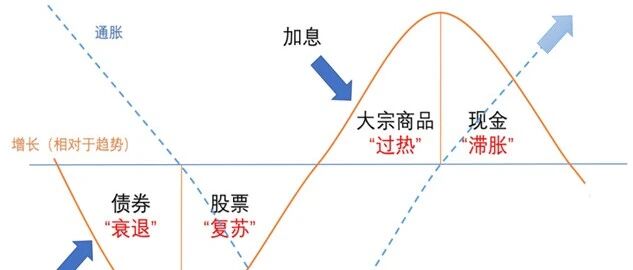
Core Viewpoint - The article introduces the "Investment Clock" as a classic asset allocation method that aligns with economic cycles, emphasizing its effectiveness in identifying optimal asset classes during different phases of the economic cycle [2][5]. Economic Cycle Overview - The economic cycle consists of four phases: recession, recovery, overheating, and stagflation, driven by the "animal spirits" of investors and businesses, which oscillate between greed and fear [3][4]. - Key indicators for determining the economic cycle include GDP growth and CPI inflation, which help classify the economy into the four phases [4]. Investment Clock Theory - The Investment Clock concept, initially proposed by Merrill Lynch, suggests that different asset classes perform variably across the economic cycle, with bonds leading during recession, stocks during recovery, commodities during overheating, and cash during stagflation [5][6]. - Historical data from the U.S. (1970-2020) and China (2001-2020) supports the effectiveness of the Investment Clock framework in guiding asset allocation [8][13]. Asset Allocation Strategies Recovery Phase - In the recovery phase, the recommended asset allocation is: stocks > commodities > bonds > cash, as stocks tend to outperform due to improving corporate earnings and declining interest rates [20][21]. - Key indicators of recovery include a shift to accommodative policies, improvement in leading economic indicators, and a warming market sentiment [19][20]. Overheating Phase - During the overheating phase, the optimal allocation shifts to: commodities > stocks > cash/bonds, as commodity prices rise due to strong demand and inflationary pressures [26][28]. - Characteristics of this phase include strong economic data, rising inflation, and a shift in policy towards tightening [24][25]. Stagflation Phase - In the stagflation phase, the focus should be on cash > bonds > commodities/stocks, as economic growth slows while inflation remains high, necessitating a defensive investment strategy [36][37]. - Key indicators include slowing economic growth, rising inflation, and a challenging policy environment [33][34]. Recession Phase - The recession phase favors bonds > cash > stocks > commodities, as bonds typically provide the best returns during economic downturns due to falling interest rates and increased demand for safe assets [39][44]. - Indicators of recession include declining GDP growth and inflation, rising unemployment, and a shift towards accommodative monetary policy [41][42]. Summary of Investment Clock - The Investment Clock serves as a strategic framework for asset allocation, suggesting that investors should buy bonds during recessions, stocks during recoveries, commodities during overheating, and hold cash during stagflation to achieve superior returns [49][50].
类滞胀-将进一步发酵-勿低估美元流动性紧缩
2026-03-30 05:15
Summary of Key Points from Conference Call Records Industry Overview - The current market is experiencing a "stagflation-like" environment, characterized by rising inflation and stagnant economic growth, primarily driven by increasing oil prices and tightening dollar liquidity [1][2][3]. Core Insights and Arguments - **Market Performance**: The U.S. stock market has entered a correction phase, with the Nasdaq index down over 10% from its January peak, and the Dow Jones Industrial Average also falling more than 10% [2][3]. - **Oil Price Impact**: Oil prices have surged past $83 per barrel, reaching $100, negating the effects of fiscal tax cuts and significantly impacting consumer purchasing power [3][4]. - **Macroeconomic Data**: Recent macroeconomic indicators, including a decline in the composite PMI and rising import price indices, suggest a slowdown in economic growth, with Q1 GDP growth projected at only 1% [4][5]. - **Tightening Dollar Liquidity**: There are signs of tightening dollar liquidity, as evidenced by the overnight repo rates consistently exceeding excess reserve rates, indicating a shift towards a more restrictive monetary environment [1][6][7]. - **Credit Market Conditions**: High-yield bond spreads have widened, and there are emerging restrictions in private credit markets, indicating a tightening of credit conditions [7][8]. Additional Important Content - **Consumer Confidence**: The University of Michigan's consumer confidence index has been revised downwards, reflecting consumer concerns over rising inflation and economic uncertainty [4][5]. - **Comparison with Historical Context**: The current stagflation risks differ from the 1970s due to reduced reliance on imported energy and improved energy efficiency, but the impact is expected to be more severe than during the 2022 Ukraine crisis due to a lack of substantial policy support [5][9]. - **Asset Performance**: Traditional safe-haven assets like gold have underperformed, with the market now favoring the dollar and oil as primary safe assets [8][9]. - **Investment Strategy for 2026**: Given the current economic and market conditions, a defensive investment strategy is recommended, focusing on risk reduction and waiting for more stable market conditions before making significant investment decisions [9].
宏观与大类资产周报:即将进入关键4月-20260329
CMS· 2026-03-29 13:02
Domestic Economic Indicators - March PPI is expected to be around 0.6% month-on-month, with a year-on-year PPI of approximately 0.1%, potentially ending a 41-month streak of negative PPI[5] - From January to February, industrial profits increased by 15.2% year-on-year, with significant contributions from high-tech manufacturing and related raw material industries[5] Global Economic Risks - Two of the four major global economic pressures have emerged: oil prices exceeding $100 could lead to an early recession in the U.S.; the dollar index breaking 100 may pressure non-U.S. liquidity[5] - The 10-year U.S. Treasury yield surpassing 5% could burden U.S. fiscal health, while the S&P 500 index may adjust by 20% if it reaches its peak, as indicated by historical patterns[5] Market Trends - Oil prices are fluctuating around $100 per barrel, prompting significant political responses, while the dollar index has reached 100, leading to gold sell-offs by central banks in Poland and Turkey[5] - If the U.S. maintains control over the situation, a critical point may be reached in mid to late April, potentially improving global risk appetite[5] Monetary Policy and Liquidity - The central bank has continued net liquidity injections, with a total net injection of 281.9 billion yuan during the week of March 23-27[21] - The average rates for R001, DR001, R007, and DR007 were 1.3871%, 1.3179%, 1.5069%, and 1.4398%, respectively, showing minor fluctuations compared to the previous week[22] Government Debt Financing - Local government debt net financing was 1305.97 billion yuan, and national debt net financing was 948.10 billion yuan, totaling approximately 2254.07 billion yuan for the week[23] - Upcoming local government debt issuance is planned at 1184.24 billion yuan, with net financing expected to be 399.68 billion yuan[23] Stock Market Performance - Major indices in the A-share market experienced declines, with the ChiNext index showing the largest drop of 1.68%[39] - The U.S. stock market also faced downward pressure, with the Nasdaq index leading the decline at 3.23%[39]
全球股债金三杀!“这是最糟的局面,投资者无处可躲”
华尔街见闻· 2026-03-28 03:42
Core Viewpoint - The energy shock triggered by the Iran conflict is pushing global financial markets into a rare synchronized decline across multiple asset classes, with stocks, bonds, and gold all experiencing significant drops in March, leading to one of the most severe risk-off environments in recent years [2][5]. Group 1: Market Performance - The MSCI Global Index tracking developed and emerging market stocks fell approximately 9% in March, while the S&P 500 Index recorded its longest losing streak since 2022, declining for five consecutive weeks [2][5]. - The composite indicators for global government and corporate bonds dropped over 3%, marking the worst monthly performance for the traditional "60-40" stock-bond portfolio since September 2022 [2][5]. - Gold prices plummeted 15% in March, as investors were forced to liquidate previously profitable long positions due to liquidity pressures [2][5]. Group 2: Market Sentiment and Reactions - The core fear in the market is stagflation risk, as the sharp rise in energy prices following the Middle East conflict raises concerns about a simultaneous slowdown in economic growth and rising inflation, prompting central banks to reconsider their interest rate paths [2][5]. - Trump's extension of the deadline for attacks on Iranian energy infrastructure failed to calm investor sentiment, leading to a 1.7% drop in the S&P 500 on a single day, marking the largest two-day decline since the tariff crisis last year [6]. - Market reactions to statements from U.S. officials have shown signs of distrust, with investors increasingly focusing on the reality of energy shortages rather than verbal reassurances from the government [7]. Group 3: Investment Strategies and Challenges - The current sell-off is notable for the simultaneous decline of stocks, bonds, and gold, challenging the effectiveness of multi-asset diversification strategies [5][8]. - Research indicates that the probability of bonds and gold rising on days when stocks fall has dropped to about 43%, significantly lower than over 60% a decade ago [8]. - Some market participants believe that the failure of fixed income diversification may be temporary, anticipating a return to a rate-cutting logic in the bond market once tensions ease [10]. Group 4: Structural Changes in the Market - The market environment has undergone a deeper structural shift, moving from demand-side shocks to supply-side shocks, necessitating a revision of traditional investment narratives [11][12]. - The concept of safe-haven assets is increasingly being challenged, as the dynamics of the global economy and financial markets evolve [12].

Stocks Swing, Oil Surges, Gold Slumps. How the Iran War Has Moved Markets.
Barrons· 2026-03-27 14:21
Core Viewpoint - Oil prices have surged while stocks have fallen since the onset of the Iran conflict, indicating a shift in market dynamics and investor sentiment [1] Group 1: Oil Market - Oil prices have experienced a significant increase following the escalation of the Iran conflict [1] Group 2: Stock Market - Stock prices have declined in response to the geopolitical tensions arising from the Iran conflict [1] Group 3: Gold Market - Contrary to expectations, gold prices have unexpectedly declined as market rate expectations have shifted [1]

中远海控(01919.HK)3月26日耗资3326.13万港元回购220万股
Ge Long Hui· 2026-03-26 09:56
Group 1 - China COSCO Shipping Holdings Co., Ltd. (01919.HK) announced a share buyback on March 26, 2026, spending HKD 33.2613 million to repurchase 2.2 million shares at a price range of HKD 14.95 to 15.34 per share [1] - On March 25, 2026, the company also repurchased 2.2 million shares for HKD 32.914 million [1]
寻找共识系列三:如何利用期权助力投资交易?
ZHESHANG SECURITIES· 2026-03-25 14:06
1. Report Industry Investment Rating The report does not provide an overall investment rating for the options market. However, it offers rating criteria for different types of bonds: - **Interest - rate bonds**: Based on the net price change of interest - rate bonds within 3 months after the report date. Ratings include "Overweight" (interest risk decreases, net price has upward potential), "Neutral" (interest risk is stable, net price has minor fluctuations), and "Underweight" (interest risk increases, net price has downward potential) [93]. - **Credit bonds**: Based on the net price change of credit bonds within 3 months after the report date. Ratings include "Overweight" (credit risk decreases, net price has upward potential), "Neutral" (credit risk is stable, net price has minor fluctuations), and "Underweight" (credit risk increases, net price has downward potential) [94]. - **Convertible bonds**: Based on the price change of convertible bonds relative to the CSI Convertible Bond Index within 3 months after the report date. Ratings include "Overweight" (convertible bonds outperform the CSI Convertible Bond Index), "Neutral" (convertible bonds perform in line with the CSI Convertible Bond Index), and "Underweight" (convertible bonds underperform the CSI Convertible Bond Index) [95]. 2. Core View of the Report In a volatile market environment, options, with the natural advantage of separating rights and obligations, can provide opportunities to seek excess returns while controlling risks. Attention should be paid to the effect of expanding the investment boundary brought by options and related investment portfolios [1]. 3. Summary by Relevant Catalogs 3.1 Option Overview - **Option Definition and Key Elements**: An option contract is a standardized or non - standardized contract that allows the buyer the right to buy or sell an agreed underlying asset (including futures contracts) at a specific price in the future. Key elements include the underlying asset, right type, exercise price, and expiration date. Options are "right" certificates rather than "ownership" certificates, and the transaction is the transfer of rights and obligations, not the transfer of real - asset ownership [1][19]. - **Classification of Domestic Options**: Chinese options can be divided into on - exchange options and over - the - counter (OTC) options. OTC options are mostly non - standardized and are usually customized between institutional investors, and individual investors generally cannot participate. On - exchange options can be further divided into two categories: ETF options based on securities accounts with ETFs as underlying assets, mainly listed on the Shanghai and Shenzhen Stock Exchanges; and options based on futures accounts, including stock index options listed on the China Financial Futures Exchange and commodity options listed on various commodity exchanges [1][24]. - **Advantages and Disadvantages of Option Investment**: Advantages include the separation of rights and obligations, which can improve capital use efficiency; the separation of risk and return, which can prevent extreme price - fluctuation risks; and the ability to combine with basic products to enrich investment strategies. Disadvantages include the potential for the time value of options to be wasted, the influence of volatility on option value, and the requirement for both correct direction and timing in option investment [2][3] 3.2 Option Pricing and Greek Values - **BS Formula for Option Pricing**: The Black - Scholes (BS) model is the theoretical basis for pricing European options globally. In reality, since the volatility of the underlying asset in the future cannot be observed, the concept of implied volatility is introduced, which is a core factor affecting option prices [32][33]. - **Delta**: Measures the change in option price caused by a 1 - unit change in the price of the underlying asset. It reflects the linear sensitivity of the option price to the price of the underlying asset. It is mainly used to linearly reflect the impact of small - scale price changes of the underlying asset on the option price and can be used to construct investment portfolios to hedge risks [34][36]. - **Gamma**: The second - order partial derivative of the option price with respect to the price of the underlying asset. It measures the change in Delta caused by a 1 - unit change in the price of the underlying asset. It is mainly used to prevent extreme price - fluctuation risks [38][39]. - **Theta**: Measures the change in option price caused by a 1 - unit reduction in the remaining time. The time value of an option is constantly decreasing, so Theta is always negative. It represents the cost for the buyer and the income for the seller [41][42]. - **Vega**: Measures the relationship between a 1 - unit change in the volatility of the underlying asset and the change in option price. Vega is always positive, indicating a positive correlation between option price and volatility. Implied volatility can be used as a warning indicator of potential risks [43][50]. - **Rho**: Measures the change in option price caused by a 1 - unit change in the risk - free interest rate. In the ideal conditions defined by the BS formula, the Rho of a call option is positive, and that of a put option is negative. However, for commodity options, the situation may be different [55]. 3.3 Option Trading Strategy Analysis - **Single - Option Trading Strategy**: Buying a call/put option indicates a bullish/bearish view, while selling a call/put option indicates a non - bullish/non - bearish view. Buying options can control risks while building positions. Options may have a higher leverage ratio than futures, showing both safety and risk. For investment, options close to at - the - money should be selected; for speculation, relatively out - of - the - money options are preferred. Option investment is more suitable for short - term trading [7][68]. - **Multi - Option Portfolio Strategy**: By using two or more options to construct an investment portfolio, investors can qualitatively express bullish/bearish views and quantitatively describe the degree of bullishness/bearishness. For example, a bull call spread can express a moderately bullish view, and a bear put spread can express a moderately bearish view. For assets in a long - term sideways state, investors can construct volatility portfolios through double - opening (double - buying or double - selling) strategies. The timing of opening positions is the key to the profitability of double - opening strategies [74][86]. - **Option and Spot Portfolio Strategy**: Options can be combined with spot assets to control risk exposure and achieve conditional risk hedging. Buying spot and put options can form a protective put portfolio, and buying spot and selling call options can form a covered call portfolio. The choice of hedging ratio is crucial [87][90].
A股市场投资策略专题报告:语言重塑投资理念:从“炒股”到“股票投资”
BOHAI SECURITIES· 2026-03-25 07:26
Group 1 - The report emphasizes the shift in investment language from "speculating in stocks" to "stock investment," reflecting a broader change in investor mindset towards a more rational and long-term approach [1][7][9] - It discusses how the term "炒股" (speculating in stocks) has historically been associated with high volatility and short-term trading, which has shaped the investment culture in the A-share market [1][9][10] - The report highlights the influence of language on cognitive behavior, suggesting that the terminology used in investment can affect how investors perceive and engage with the market [10][13][15] Group 2 - The report outlines the theoretical foundations of language relativity, indicating that different linguistic structures can influence thought processes and worldviews, which is relevant to the investment language used in China [11][12][13] - It introduces the concept of language games from philosophical theory, asserting that language shapes thought rather than merely expressing pre-existing ideas, which is applicable to the understanding of investment behaviors [14][15] - The report notes a significant change in search trends, with "stock investment" gaining popularity over "speculating in stocks" since 2023, indicating a shift towards a more value-oriented investment perspective among investors [16][21] Group 3 - The report provides demographic insights into the search behavior for investment terms, revealing that male investors show higher interest in both "stock investment" and "speculating in stocks," with older age groups leaning more towards "stock investment" [21][24][25] - It discusses the impact of regulatory language on market perception, citing a shift from the term "stock disaster" to "abnormal market fluctuations" during market downturns, which helped mitigate panic and foster a more rational response [26][27] - The report concludes that the evolution of investment language is crucial for the long-term development of the capital market ecosystem, necessitating collaborative efforts from regulatory bodies, financial institutions, and media [27][28]