蔡格尼克效应

Search documents
一个人内心强大的标志:允许事情悬而未决
洞见· 2026-02-26 12:59
Core Viewpoint - The article emphasizes the importance of allowing time for processes to unfold naturally, rather than succumbing to anxiety over immediate results. It suggests that patience and acceptance of uncertainty can lead to better outcomes in various aspects of life [9][20][40]. Group 1 - Anxiety often stems from a desire for immediate results, leading to stress and irrational actions that can worsen situations [9][21]. - A real-life example illustrates how excessive pressure can negatively impact opportunities, as seen in the case of a candidate who was passed over due to his persistent follow-ups during the hiring process [17][18]. - The "bus effect" is highlighted, showing that when individuals are less focused on outcomes, they often achieve them more quickly [23][24]. Group 2 - The article shares a personal experience of the author, who initially sought quick success in content creation but learned to focus on the process instead, leading to eventual growth and success [28][33]. - It discusses the concept of allowing things to remain in a "gray area," which reflects a strong mindset and acceptance of uncontrollable factors [36][40]. - The story of author A Lai, who faced multiple rejections but remained confident in his work, illustrates the value of perseverance and belief in one's abilities [37][39].


专业投资者也会栽,陷入情绪化交易自救四步
3 6 Ke· 2026-01-30 00:31
Group 1 - Emotional trading is a significant risk for both amateur and professional investors, often leading to poor decision-making and financial losses [1][2] - The instinctual reactions of excitement and fear drive emotional trading, making it difficult to escape this behavior even for experienced investors [2][3] - Emotional responses can lead to impulsive actions, such as selling stocks during downturns or buying during upswings, which may not align with rational investment strategies [2][6] Group 2 - To prevent falling into emotional trading, investors should recognize when their decisions are being driven by emotions and pause their trading activities [4][8] - The process of pausing involves clearing the mind, stepping away from the decision-making environment, and listing potential choices without making immediate judgments [10][12] - A well-prepared investment strategy that anticipates potential downturns can help mitigate emotional reactions and lead to more rational decision-making [13][15] Group 3 - Identifying emotional dominance in trading decisions can be challenging, as physiological signals and extreme thoughts may indicate a loss of rationality [6][7] - Investors should utilize cognitive frameworks to broaden their decision-making options, recognizing that market downturns can present buying opportunities rather than solely risks [11][12] - A solid investment plan should incorporate worst-case scenarios, allowing investors to remain calm and make informed decisions when faced with market volatility [15][16]

朋友圈小游戏,靠什么赚大钱?
3 6 Ke· 2025-12-26 08:02
Core Viewpoint - The article discusses the rise of mini-games, particularly focusing on the game "Screw Tightening," highlighting their addictive nature and unique business model that leverages user engagement through social sharing and advertising revenue. Group 1: Mini-Game Characteristics - Mini-games have a very low entry barrier, allowing users to start playing almost instantly without downloads or complex setups [4][5] - The gameplay is designed to be simple yet challenging, creating a sense of frustration that encourages users to keep trying [7][11] - The psychological concept of the Zeigarnik effect is utilized, where unfinished tasks are more memorable and drive users to attempt them repeatedly [10] Group 2: Business Model and Revenue Generation - Mini-games primarily generate revenue through In-App Advertising (IAA), focusing on time spent rather than direct purchases [18][19] - The market for mini-games is projected to reach 61 billion RMB by 2025, a tenfold increase from seven years ago [22] - Development costs for mini-games are relatively low, with a skilled team able to create a game in under six months for 1 to 2 million RMB [23] Group 3: Market Dynamics and Challenges - The user base for mini-games is distinct from traditional mobile games, with only about 10% overlap, indicating a new market segment [16] - The cost of acquiring users has increased significantly, from 5 RMB per user in 2023 to 30 RMB by mid-2025 [27] - Regulatory changes are anticipated to raise compliance costs, as new rules will require mini-games to implement anti-addiction systems starting in 2024 [28]
如何合理止损?
3 6 Ke· 2025-12-23 00:00
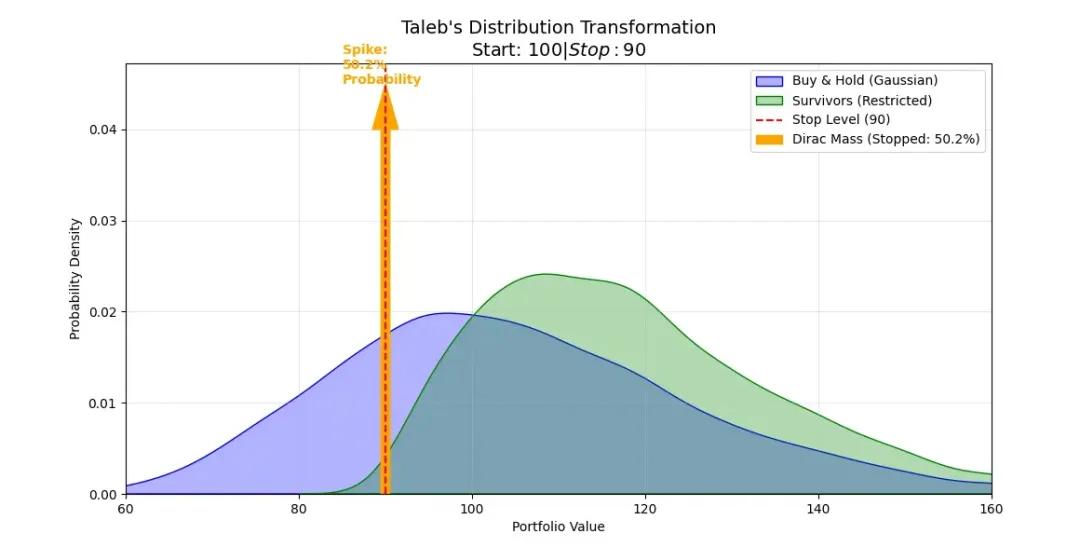
Core Viewpoint - The article discusses the controversial topic of "stop-loss" strategies in investing, highlighting a recent paper by Nassim Nicholas Taleb that quantifies the effects of stop-loss through Monte Carlo simulations, suggesting that stop-loss may lead to more losses rather than preventing them [1][2]. Group 1: Key Findings from the Paper - The paper presents a graph showing that without stop-loss, the return distribution follows a normal distribution, peaking at slight losses, while implementing a 10% stop-loss increases the probability of positive returns but also creates a peak of losses at the stop-loss threshold, termed "Dirac Mass" [5]. - In a market with an annualized volatility of 20-25%, there is a 50% probability of hitting the 10% stop-loss, which is higher than most investors expect. For A-shares, particularly small-cap and tech stocks, the probability can reach 85% [5]. - Stop-loss is likened to insurance against catastrophic losses but alters the probability distribution of returns, leading to several recommendations: fixed stop-loss percentages below 20% are ineffective against random noise, and stop-loss levels should consider market volatility [6][7]. Group 2: Practical Issues with Stop-Loss - The first issue is how to minimize the damage caused by stop-loss, which can be seen as an expensive insurance policy that does not save poorly thought-out investments [11]. - The second issue involves trading in a non-trending, volatile market, where even experienced traders can incur significant losses due to psychological pressures and frequent stop-loss triggers [12]. - The third issue is the impact of high leverage on stop-loss effectiveness, where the probability of permanent losses increases, making stop-loss strategies more critical but also more damaging [13]. Group 3: Perspectives on Stop-Loss for Different Investor Types - Value investors, like Warren Buffett, generally oppose stop-loss strategies, believing that price declines can represent buying opportunities rather than triggers for selling [17]. - Retail investors may benefit from stop-loss strategies due to their ability to quickly adjust positions, but they often struggle with emotional trading and information asymmetry, leading to frequent losses [20][21]. - The psychological barrier of not wanting to realize losses can be addressed through techniques like "mental stop-loss," which encourages investors to reassess their positions without the emotional burden of past decisions [26].
两个方法,彻底摆脱“越亏越扛”的赌徒心理
3 6 Ke· 2025-12-18 23:47
Group 1 - The article discusses the "gambler's fallacy," where individuals believe that past independent events influence future outcomes, leading to irrational betting behavior [1][2][8] - It explains the difference between "independent event probability" and "mean reversion," emphasizing that while individual events are independent, over a large number of trials, probabilities will converge to expected values [2][3] - The concept of "infinite" is introduced, indicating that past outcomes have negligible impact on future results, reinforcing the idea that gamblers often misinterpret random sequences as patterns [3][4][6] Group 2 - The article highlights the psychological phenomenon known as the "Zeigarnik effect," which explains why individuals struggle to abandon ongoing tasks or investments, as they feel a psychological tension until the task is completed [19][22] - It suggests that the perception of time influences decision-making, where continuous events are misinterpreted as connected, leading to flawed reasoning in gambling and investing [11][15] - The article provides two recommendations to mitigate the gambler's mindset: resetting time to create a psychological break and pre-setting stop-loss mechanisms to manage risk effectively [27][29]

人生建议:警惕10种认知陷阱
洞见· 2025-12-11 12:20
Group 1 - The article emphasizes the importance of self-reflection and recognizing personal accountability in the face of failure, rather than attributing failures to external factors [7] - It discusses the "Dunning-Kruger effect," where individuals with lower ability tend to overestimate their competence, while those with higher ability underestimate theirs [10][12] - The concept of "confirmation bias" is highlighted, illustrating how individuals seek information that reinforces their existing beliefs, leading to a narrow perspective [15] Group 2 - The "halo effect" is explained, where people make assumptions about someone's abilities based on their appearance, leading to cognitive biases [18] - The article introduces "availability heuristic," which suggests that people judge the frequency of events based on how easily examples come to mind, potentially distorting their perception of reality [22] - The "spotlight effect" is discussed, indicating that individuals often overestimate the attention others pay to them, which can lead to unnecessary anxiety [24] Group 3 - The article addresses "herd mentality," where individuals follow the crowd without independent thought, often resulting in poor decision-making [26] - It mentions the "Zeigarnik effect," which describes how unfinished tasks can lead to anxiety and distraction, emphasizing the need to manage uncertainty [30][31] - The concept of "black-and-white thinking" is presented, where individuals view situations in extremes, which can hinder personal growth and self-acceptance [36] Group 4 - The article concludes with the idea that most worries are unfounded, as demonstrated by a psychological experiment showing that over 90% of anticipated worries do not materialize [39] - It stresses the importance of recognizing and avoiding cognitive traps to enhance personal growth and decision-making [40][42]

一个人内心强大的标志:允许事情悬而未决
洞见· 2025-07-29 12:35
Core Viewpoint - The article emphasizes the importance of allowing time for processes to unfold rather than succumbing to anxiety over immediate results, advocating for a mindset that accepts uncertainty and focuses on the journey rather than the outcome [8][24][60]. Group 1 - The narrative illustrates that every endeavor requires time to mature, and rushing for results can lead to negative outcomes [7][12]. - A real-life example is provided where a candidate's anxiety and pressure during the hiring process led to his rejection, highlighting the detrimental effects of impatience [22][23]. - The concept of the "bus effect" is introduced, suggesting that detachment from outcomes can lead to better results, as seen in everyday experiences like waiting for a bus [30][31]. Group 2 - The article shares a personal story of a content creator who initially struggled with growth but learned to focus on the process, ultimately achieving success after several years [36][41]. - It discusses the importance of accepting the "gray area" in life, which reflects a mature mindset that can handle uncertainty and allows for personal growth [49][62]. - The "Zeigarnik effect" is mentioned, explaining how unfinished tasks can lead to anxiety, reinforcing the need to let go of the need for immediate closure [64][66].

全员都谈Labubu的时候,泡泡玛特该害怕了
Hu Xiu· 2025-06-15 12:55
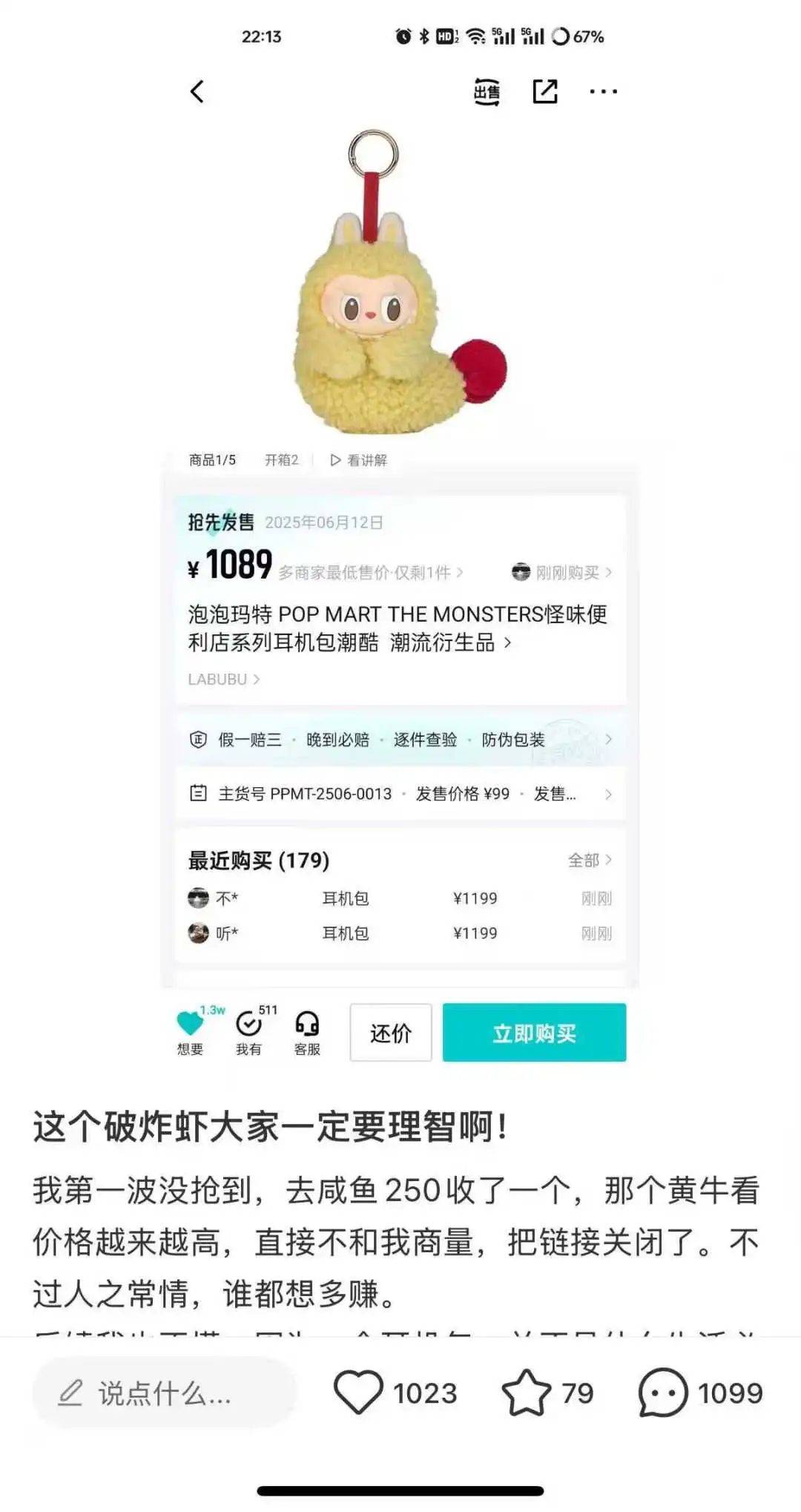
Core Viewpoint - The article discusses the rise of Labubu, a product from Pop Mart, highlighting its marketing strategies and the cultural phenomena surrounding it, while also drawing parallels to past trends in collectible items and the potential risks associated with its financialization. Group 1: Product and Marketing Success - Labubu's popularity surged due to endorsements from high-profile celebrities like Lisa from BLACKPINK, which resonated with the existing toy culture in Thailand and Southeast Asia [15][17] - The strategic placement of Pop Mart stores in prime locations, such as next to luxury brands like LV, enhanced Labubu's market presence and appeal [17] - The viral nature of unboxing videos on TikTok contributed significantly to Labubu's popularity, creating a compelling short video content that attracted more consumers [17] Group 2: Consumer Behavior and Psychological Factors - The success of Labubu can be attributed to the elements of uncertain rewards and the Zeigarnik effect, which drive consumer engagement and desire for completion [24][31] - The high social and emotional value associated with collectible items like Labubu enhances their appeal, making them more than just products but also status symbols [33][35] Group 3: Financialization and Market Risks - Labubu's high resale value in the secondary market has led to its perception as a financial product, raising concerns about the sustainability of its value [38][40] - The article warns that as Labubu transitions from a collectible to a financial asset, it may face similar pitfalls as past trends in collectibles, such as the君子兰 phenomenon, where initial hype led to significant market corrections [44][53] Group 4: Company Leadership and Vision - Wang Ning, the founder of Pop Mart, has seen significant personal financial success, with his wealth increasing over tenfold since March 2024, reflecting the company's stock performance [55] - His past experiences and responses to skepticism during the company's early days demonstrate a strong vision and commitment to building a brand in a competitive market [57]

薄荷色Labubu卖出108万,泡泡玛特一年疯狂收割130亿
3 6 Ke· 2025-06-11 07:48
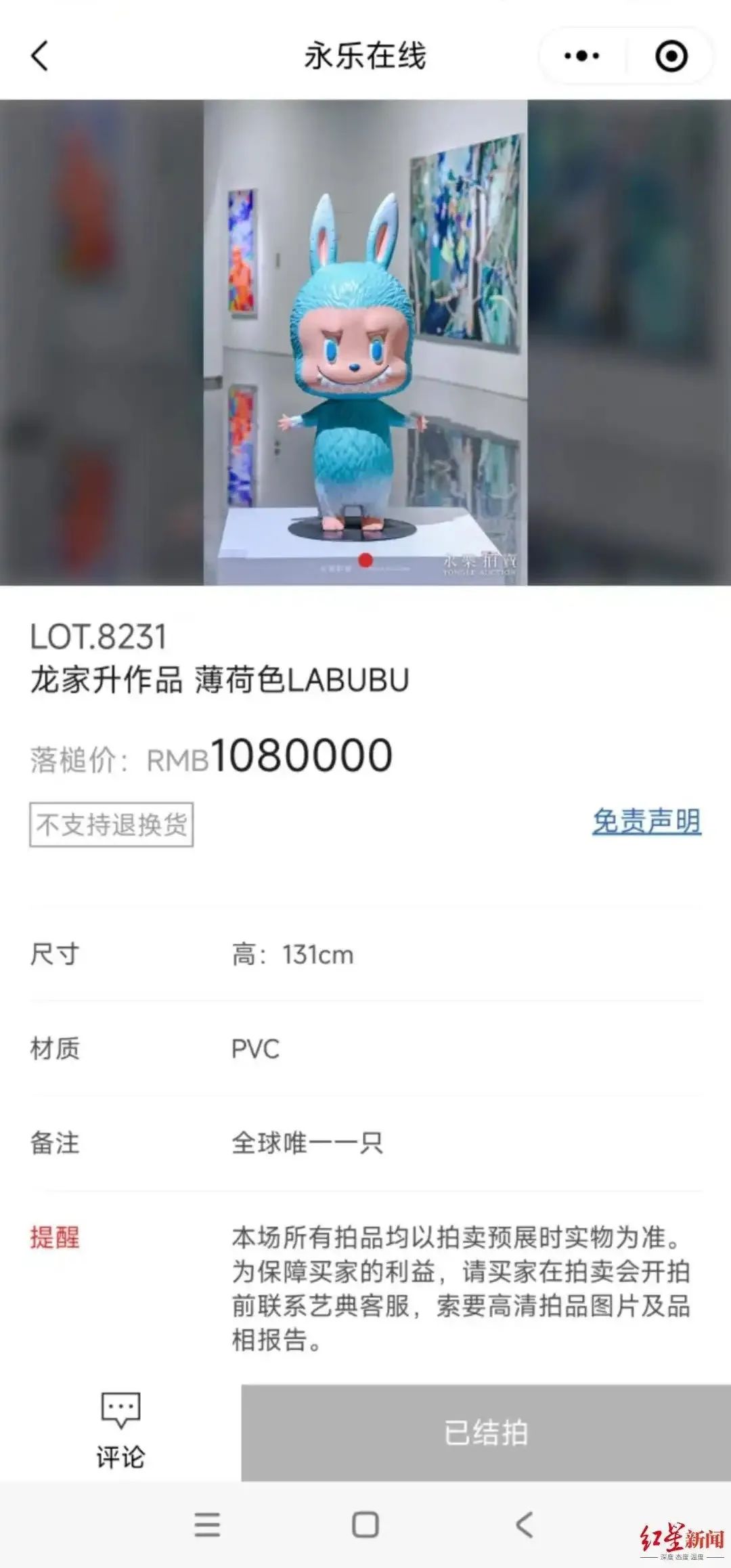
Core Insights - Labubu has become a phenomenon in the 2025 consumer market, with a unique mint-colored version recently auctioned for 1.08 million yuan, highlighting its global appeal [1][4] - The demand for Labubu has led to significant price increases in the secondary market, with limited editions selling for over 10,000 yuan in China [4] - The popularity of Labubu is driven by psychological factors such as dopamine-driven uncertainty rewards, collection urges, and social currency among consumers [11][16][18] Market Performance - In 2024, Pop Mart opened 38 new stores in mainland China, and its membership grew from 26 million in 2022 to over 46 million by the end of 2024, indicating strong consumer interest [9] - The THE MONSTERS series, featuring Labubu, generated revenue of 3.04 billion yuan in 2024, a staggering year-on-year growth of 726.6% [20][35] - Pop Mart's overall revenue reached 13.038 billion yuan in 2024, with overseas markets contributing 5.066 billion yuan, a 375.2% increase [35] Consumer Behavior - The appeal of Labubu is not solely based on aesthetics; many consumers find the design quirky and even unattractive, yet they are still drawn to the product [11][18] - The "uncertainty reward" mechanism, akin to gambling, encourages repeated purchases as consumers seek the thrill of obtaining rare items [13][14] - Labubu has become a form of social currency, with collectors showcasing their rare finds on social media, enhancing their social status [18][30] Marketing Strategies - Pop Mart employs scarcity marketing, with only 0.69% of hidden variants available, creating a sense of urgency and desire among consumers [31] - Collaborations with popular brands and events have amplified Labubu's visibility, leading to viral marketing successes [34] - The brand's international appeal is bolstered by a diverse team of designers, many of whom have global backgrounds, making Labubu attractive to a wide audience [34] Future Outlook - Despite its current success, there are concerns about the sustainability of Labubu's popularity, as consumer trends can shift rapidly [39] - Analysts predict that Pop Mart's revenue could reach 22.601 billion HKD in 2025, with a net profit of 6.5 billion HKD, reflecting continued growth [38] - The company faces challenges in maintaining its momentum and avoiding the pitfalls of market saturation and changing consumer preferences [39][42]
薄荷色Labubu卖出108万,泡泡玛特一年疯狂收割130亿
首席商业评论· 2025-06-11 03:56
Core Viewpoint - The article discusses the explosive popularity of Labubu, a character from Pop Mart, highlighting its unique appeal and the underlying psychological mechanisms driving consumer behavior, as well as the company's impressive financial performance and growth in the global market [4][12][48]. Group 1: Labubu's Popularity - Labubu has become a global phenomenon, with a unique design that has captivated consumers despite mixed aesthetic opinions [4][13]. - The character's success is attributed to a dopamine-driven "uncertainty reward" mechanism, similar to gambling, where consumers experience excitement from the unpredictability of blind box purchases [15][17]. - Collecting behavior and the Zeigarnik effect play significant roles in consumer engagement, as incomplete collections create a sense of discomfort that drives further purchases [18][21]. Group 2: Market Performance - In 2024, Pop Mart added 38 new stores in mainland China, with membership growing from 26 million in 2022 to over 46 million by the end of 2024 [12]. - The THE MONSTERS series, featuring Labubu, generated revenue of 30.4 billion yuan, a staggering year-on-year increase of 726.6% [49][26]. - Pop Mart's total revenue reached 130.38 billion yuan in 2024, with overseas markets contributing 50.66 billion yuan, a 375.2% increase [48][51]. Group 3: Marketing Strategies - Pop Mart employs scarcity marketing, creating a perception of high value for Labubu through limited availability of hidden variants, which enhances consumer desire [38][39]. - The brand has successfully utilized event marketing and collaborations with popular franchises to expand its reach and maintain consumer interest [41][43]. - The influence of social media and short video platforms like TikTok has significantly boosted Labubu's visibility and appeal among younger consumers [46]. Group 4: Future Outlook - Despite current success, there are concerns about the sustainability of Labubu's popularity, as consumer attention can shift rapidly in the face of new trends [54][55]. - The article suggests that the future of Pop Mart and Labubu will depend on the company's ability to innovate and create new appealing products [55][63].