车辆保险理赔

Search documents
便利出行藏风险 这些“坑”不要踩
Bei Jing Qing Nian Bao· 2025-12-15 00:09
Group 1 - The article discusses the increasing risks associated with transportation choices due to the rise of platform economy and vehicle ownership, highlighting issues such as modified electric bicycles and safety violations in taxis [1][5] - A case study illustrates that a cyclist was found to be primarily at fault for an accident due to riding a modified electric bicycle, which did not meet safety standards, leading to a court ruling that assigned 80% responsibility to the cyclist [2][3][4] - The article emphasizes the importance of adhering to safety regulations for electric bicycles and the legal implications of modifications, urging users to avoid such practices to mitigate risks [5] Group 2 - Another case highlights a passenger's failure to wear a seatbelt in a taxi during an accident, resulting in the court determining that the passenger bore 20% of the responsibility for their injuries [6][8][9] - The article stresses the legal requirement for passengers to wear seatbelts and the potential for reduced compensation if safety measures are not followed [9] Group 3 - A case involving a private car operating as a ride-hailing service reveals that the insurance company refused to cover damages beyond the mandatory insurance limit due to the vehicle's misrepresented usage [10][11][12] - The article advises vehicle owners to inform their insurance companies of any changes in vehicle use to avoid losing coverage in the event of an accident [12] Group 4 - A case regarding a worker injured in a traffic accident while commuting establishes that the worker's entitlement to compensation is not diminished by receiving workers' compensation benefits [14][15] - The article clarifies that individuals injured in work-related accidents can still claim damages from responsible parties, regardless of any insurance benefits received [15] Group 5 - A case involving an accident between two cyclists underscores the necessity of insurance for electric bicycles, as the uninsured party was held liable for significant damages after the accident [16][17][18] - The article calls for increased awareness and adoption of insurance among electric bicycle users to protect against financial risks associated with accidents [19]
洪水退去后,车子房子还能用吗?
Hu Xiu· 2025-08-07 13:03
Core Points - Recent heavy rainfall across multiple regions in China has led to severe flooding and natural disasters, affecting thousands of people and causing significant property damage [2][3]. Group 1: Impact of Flooding - Hebei Province experienced strong rainfall, with a 24-hour precipitation of 362.6 millimeters, nearly equivalent to the annual rainfall, resulting in mountain floods [2]. - Over 300,000 people were affected in Beijing due to continuous heavy rain, with 24,000 houses damaged [2]. - Guangdong Province faced the strongest rainfall of the year, leading to waterlogging in several cities [2]. - Zhengzhou in Henan Province saw multiple tunnel closures and nearly 100 bus routes suspended due to heavy rain and severe convective weather [2]. Group 2: Vehicle Safety Post-Flood - Vehicle owners are advised to assess their vehicles after flooding, particularly checking if the water level exceeded the vehicle's air intake [4][5]. - If the vehicle was submerged, it is crucial to avoid restarting the engine to minimize damage [10][12]. - For electric vehicles, the primary risk lies in the safety of electronic circuits and components after water exposure [11]. Group 3: Insurance and Claims Process - If water levels exceed the vehicle's floor, insurance claims should be initiated promptly, including reporting to the insurance company within 24 hours and documenting the damage with photographs [12][13]. - It is essential to have all relevant documents ready for the claims process, including identification and vehicle registration [13]. Group 4: Post-Disaster Home Safety - Homeowners should inspect their properties for safety before re-entering, particularly assessing the foundation and structural integrity [17][18]. - Visible cracks or tilting in buildings indicate potential danger, especially in brick and adobe structures [19][23]. - Electrical systems should be checked for water damage, with all power switches turned off before re-energizing the home [24][28].

驾车行驶过程中突遇冰雹如何避险?车损保险能赔吗?
Yang Shi Wang· 2025-05-14 18:37
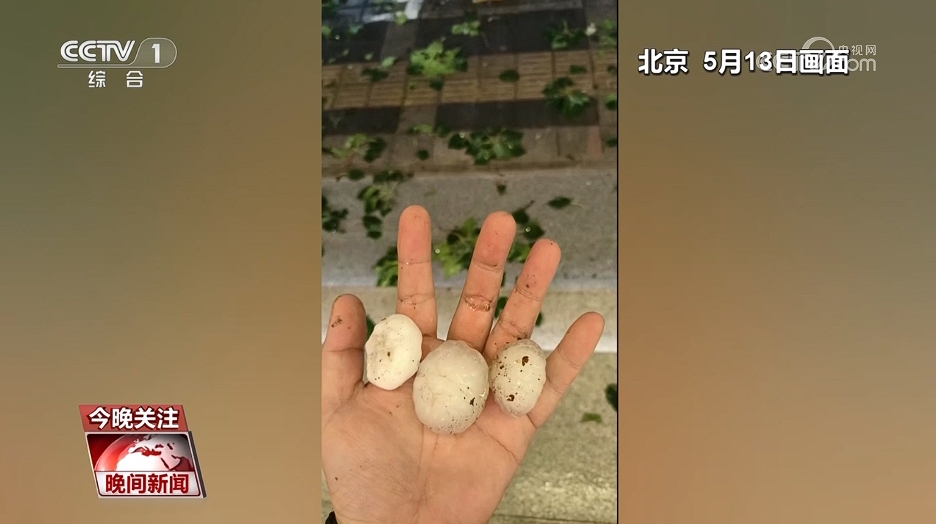
Core Points - Severe hailstorm occurred in Beijing on May 13, with hailstones reaching the size of eggs and causing damage to crops and vehicles [1][3][5] - Insurance companies reported receiving 28,200 claims related to hail damage, with estimated losses amounting to 193 million yuan [8] Group 1: Weather Impact - The hailstorm lasted approximately 10 minutes, with the largest hailstones being the size of ping pong balls [3] - The storm moved from west to east, affecting areas in Hebei such as Langfang and Baoding, which issued orange alerts for hail [2][3] - Agricultural departments are assessing crop damage and coordinating with insurance companies to expedite claims processing [5] Group 2: Insurance and Claims - Vehicle owners with comprehensive insurance can claim damages caused by hail, while those with only mandatory insurance cannot [8] - The claims process requires reporting to the insurance company within 48 hours after the hail stops, with many companies offering quick claim features [8] - Detailed documentation, including photos and videos of the damage, is necessary for the claims process [8] Group 3: Safety Measures - Drivers are advised to reduce speed and activate hazard lights during hailstorms to better control their vehicles [11] - Seeking shelter in indoor parking or covered areas is recommended to protect vehicles from hail damage [11] - If no shelter is available, positioning the vehicle to minimize direct impact from hail is suggested [11]