浪漫主义

Search documents
诵读赏析 |《梦天》
Xin Lang Cai Jing· 2026-02-07 15:36
Core Viewpoint - The poem "Dreaming of Heaven" by Li He reflects on the transient nature of life and the impermanence of worldly affairs through the imagery of a dream journey to the moon palace, contrasting the serene celestial realm with the fleeting human experience [6]. Summary by Sections - The first four lines depict the sights within the moon palace, while the latter four lines express the poet's feelings when observing the human world from above [6]. - The poet's intention is not merely to yearn for the celestial paradise but to critically reflect on reality from a non-realistic perspective, revealing the brevity of life and the unpredictability of worldly matters [6]. - The poem showcases rich imagination and unique construction, employing innovative metaphors that highlight Li He's artistic style characterized by fantastical and whimsical elements [6]. - The romanticism in the poem is evident through its extraordinary imagination, as the poet dreams of ascending to the heavens and gazing down at the human realm, possibly reflecting personal experiences or purely romantic constructs [6]. - Through the dream of visiting the moon palace, the poet illustrates a tranquil life among celestial beings, while simultaneously expressing profound sentiments about the transience of time and the insignificance of space, embodying a detached perspective on reality [6].

我们与上海不可分割
Xin Lang Cai Jing· 2026-01-17 07:28
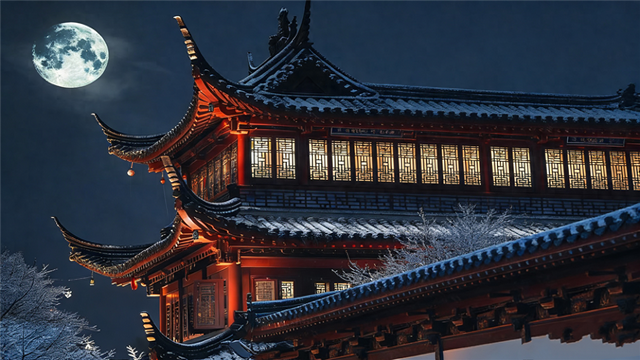
Core Viewpoint - The article discusses the complexities of urban renewal in Shanghai, emphasizing the need for a deeper understanding of the city's cultural and social fabric rather than merely focusing on technical metrics and superficial upgrades [10][11][12]. Group 1: Urban Renewal Challenges - Urban renewal has become a frequently discussed public issue, often associated with progress and prosperity, but it may not always lead to improved living conditions for residents [11]. - Many urban renewal projects prioritize technical indicators like building density and investment returns, potentially overlooking the fundamental question of who benefits from these updates [11][12]. - The article questions whether Shanghai's urban renewal should follow the same path as other cities, suggesting that a one-size-fits-all approach may not be effective [11][12]. Group 2: Shanghai's Unique Characteristics - Shanghai is characterized by a complex blend of traditional and modern elements, making it difficult to apply urban renewal models from other cities directly [11][12]. - The city's unique structure includes a mix of alleyways, apartments, and skyscrapers, which reflects its diverse cultural and economic landscape [11][12]. Group 3: Practical Insights from Experience - The author shares insights from nearly a decade of urban micro-renewal practice, highlighting that understanding the city's cultural structure and social psychology is crucial for effective renewal [12]. - The article emphasizes that urban renewal efforts often fail to resonate with residents if they do not consider their lived experiences and historical context [12]. Group 4: Spatial Design and Human Experience - The author reflects on childhood experiences in a small living space, illustrating how spatial arrangements can shape emotions and relationships [13]. - A proposed spatial prototype, the 9-square-meter home, encapsulates the practical and aesthetic needs of Shanghai residents, showcasing their utilitarian approach to living spaces [14][15]. Group 5: Emotional and Cultural Dimensions - Despite living in constrained spaces, Shanghai residents maintain a sense of optimism and aesthetic appreciation, as seen in their small personal touches like flowers and books [16][17]. - The article identifies four key attitudes of Shanghai residents towards urban renewal: practicality, rationality, optimism, and romanticism, which guide their expectations and experiences [18]. Group 6: Idealism and Realism in Urban Renewal - Shanghai residents exhibit a form of idealism grounded in daily practices rather than grand narratives, focusing on meaningful engagement with their environment [19]. - The article concludes that genuine urban renewal in Shanghai can only be achieved by those who understand the city's complexities and choose to remain committed to its development [20]. Group 7: Exhibition as a Methodology - The exhibition "I and Shanghai are Indivisible" serves as a spatial dissection of the city, exploring seven spatial prototypes that reflect the essence of Shanghai [21][22]. - This approach aims to inspire possibilities for urban renewal that are unique to Shanghai, rather than replicating existing templates from other cities [22].
佩斯,欧洲隐藏的咖啡圣地
3 6 Ke· 2025-12-30 03:19
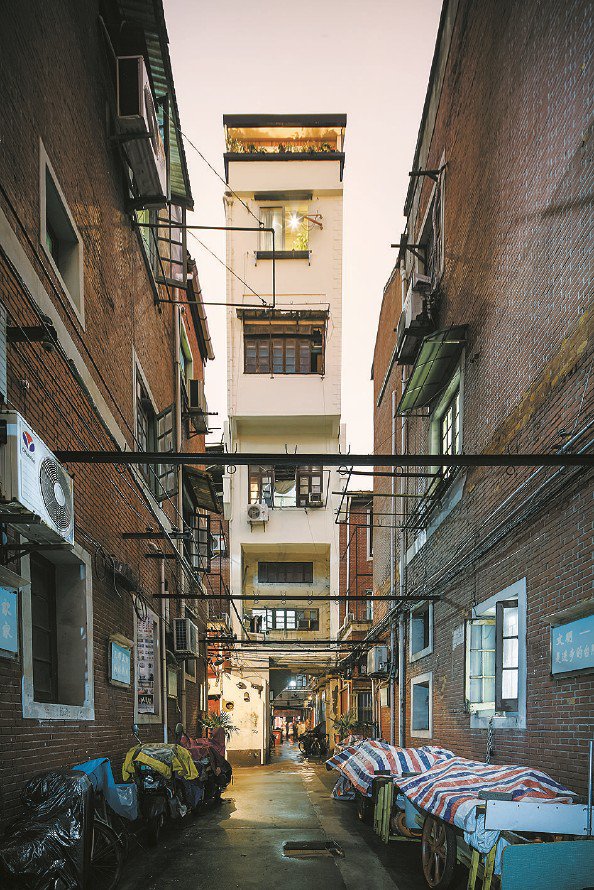
Core Viewpoint - Váci Street in Budapest is a vibrant commercial area showcasing a blend of historical architecture and modern retail, reflecting the city's commercial prosperity and cultural heritage [3][10]. Group 1: Historical Significance - Váci Street is part of Pest, which occupies one-third of Budapest's area and has a rich history dating back to Celtic settlements and Roman military camps [6]. - Pest became an independent city in the Middle Ages and was rebuilt after being destroyed by Mongol invasions in 1241, later merging with Buda and Óbuda to form Budapest in 1873 [6][10]. Group 2: Architectural Features - The architecture along Váci Street features a mix of Neoclassical and Eclectic styles, with unique facades adorned with sculptures and wrought iron railings [3][10]. - The Hungarian National Museum, established in 1802, is a prominent example of Neoclassical architecture in Pest, showcasing the city's elegant and grand architectural style [11][14]. Group 3: Cultural and Commercial Hub - Pest is characterized by its high urbanization and flat terrain, making it a bustling commercial district with a long-standing tradition of commerce [6][10]. - Váci Street is lined with various shops, restaurants, and cafes, reflecting the vibrant commercial atmosphere of Pest, which contrasts with the quieter Buda side of the city [3][10]. Group 4: Notable Cafés - The New York Café, opened in 1894, is renowned for its exquisite interior design and has been a cultural hub for writers and intellectuals [22]. - Gerbeaud Café, established in 1858, is famous for its coffee and classic cakes, offering a glimpse into the bustling life of Váci Street [27][31].
走访海德堡
Ren Min Ri Bao· 2025-09-11 22:02
Group 1 - Heidelberg is described as a serene gem along the Neckar River, known for its picturesque scenery and historical significance, including the famous castle and the Philosopher's Path [1][2] - The city has a rich literary history, being home to the Manesse Codex, the longest and most valuable medieval German poetry manuscript, and a center for German Romanticism in the early 19th century [2][3] - Heidelberg University, founded in 1386, is the oldest university in Germany and has produced 56 Nobel laureates, contributing significantly to various fields including physics, sociology, and philosophy [4][5] Group 2 - The university has notable alumni and faculty, including Hermann von Helmholtz and Max Weber, who have made significant contributions to their respective fields [4] - The philosophical contributions of Karl Jaspers, particularly his concept of the "Axial Age," highlight the intersection of various philosophical traditions and their impact on human thought [4][5] - The university emphasizes the integration of spirit and life, advocating for a research approach that is relevant to contemporary society and culture [5][6]
李白写诗,咋就那么顺溜?(访古知新)
Ren Min Ri Bao Hai Wai Ban· 2025-05-08 22:04
Core Viewpoint - The dialogue between Shen Fu and Chen Yun reflects the general perception of the poets Li Bai and Du Fu, highlighting the preference for Li Bai's lively style over Du Fu's strict formality in poetry [2]. Group 1: Poetic Preferences - Chen Yun expresses a desire to learn poetry, favoring Li Bai's lively and free-spirited style over Du Fu's structured approach [2]. - Shen Fu is surprised by Chen Yun's preference for Li Bai, as Du Fu is typically regarded as the more serious poet [2]. - Chen Yun appreciates the charm of Li Bai's poetry, which is characterized by its flowing and spontaneous nature [2]. Group 2: Li Bai's Perspective - Li Bai, in a simulated interview, emphasizes the connection between drinking and poetry, describing the drinking culture of his time as healthy and integrated with poetic expression [3]. - He believes that his romanticism is expressed through the act of drinking, which enhances the emotional impact of his poetry [3]. - Li Bai identifies himself as a commoner, valuing the qualities of a "布衣" (commoner) and expressing disdain for wealth and power [5][6]. Group 3: The Essence of Simplicity - Li Bai discusses the importance of simplicity in his poetry, stating that a naive heart is the source of imagination and creativity [10]. - He highlights that his poems often convey profound themes using simple language and imagery, making them accessible and relatable [9][10]. - The essence of his poetry lies in its ability to express complex emotions through straightforward expressions, which is a hallmark of Tang poetry [9][10]. Group 4: Poetic Forms - Li Bai prefers the seven-character ancient verse (七古) and rarely writes regulated verse due to its restrictive nature [12]. - He believes that the song-like quality of certain poetic forms aligns better with his spontaneous style, allowing for greater creative freedom [12]. - Li Bai acknowledges that while he can write in other forms, the seven-character ancient verse is his most representative style [12][13].