运动健康消费

Search documents
20%+连续增长六年,拉美电商蓝海,年轻消费者正用“分期”入场
3 6 Ke· 2025-12-19 09:19
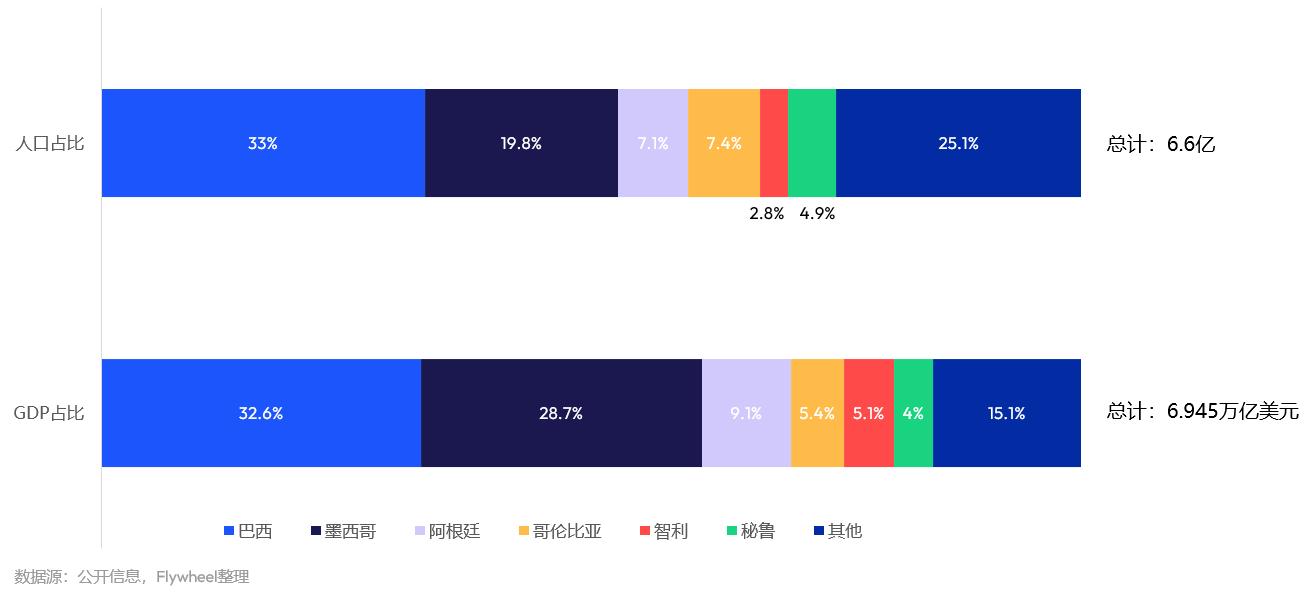
Core Insights - Latin America is emerging as a new growth market for e-commerce, with a total transaction value expected to reach $633 billion in 2024, showing a strong growth rate of over 20% from 2019 to 2024 [1] - The region's growth is supported by favorable demographics, with over 660 million people and a young population, as well as a GDP per capita exceeding $10,000, providing a solid economic foundation for e-commerce [1][3] - E-commerce penetration in Latin America is still low, accounting for only 12%-15% of total retail sales, indicating significant room for growth compared to China and mature markets [3] Demographics and Economic Overview - By 2024, the number of e-commerce users in Latin America is projected to exceed 310 million, representing about 47% of the region's total population, with a year-on-year growth rate of 31% [3] - Brazil and Mexico are the largest e-commerce markets in the region, contributing over 60% of the region's GDP and nearly two-thirds of its e-commerce market share [1] Young Consumer Characteristics - The young generation in Latin America is driving market growth, characterized by preferences for quality living, early enjoyment of products, diverse experimentation, and online purchasing [4][9][11][16] - Urbanization has led to a significant increase in the demand for high-quality, smart, and personalized products, with over 80% of the population living in urban areas [6][8] - High inflation has influenced young consumers to adopt installment payment methods, with nearly 60% of e-commerce transactions using this approach [9][11] Market Trends and Consumer Behavior - The e-commerce market is experiencing rapid growth in various product categories, including health and beauty, fashion, and home products, with annual growth rates ranging from 9% to 12% [14] - Major shopping events like Black Friday and local festivals are significantly boosting online sales, with a projected 31% year-on-year growth in online sales during Black Friday in 2024 [16] - Mobile devices are becoming the primary channel for e-commerce, accounting for approximately 70% of traffic since 2020 [16] Unique Market Characteristics - Latin America faces challenges such as high electricity costs and aging infrastructure, creating opportunities for energy-efficient appliances [20][22] - The region's diverse culinary culture necessitates adaptable kitchen appliances, with products like air fryers and multi-functional cooking devices gaining popularity [23][25] - A compact living environment drives demand for efficient cleaning appliances, with a projected growth rate of 4.2% in the cleaning appliance market by 2029 [28][29] Strategic Considerations for Market Entry - Companies looking to enter the Latin American market must understand local infrastructure, cultural nuances, and consumer preferences to tailor their product offerings and marketing strategies [18][30] - The complex political and economic landscape requires businesses to adopt localized strategies, including compliance with local regulations and establishing reliable logistics networks [30]

品牌运营:新中产万象:2025消费心智群像与品牌增长指南(高净值人群洞察
Sou Hu Cai Jing· 2025-12-09 01:48
Core Insights - The report "New Middle Class Phenomenon: 2025 Consumer Mindset and Brand Growth Guide" focuses on the consumption characteristics of China's new middle class and high-net-worth individuals, analyzing consumer trends and demographics using data from the Harmony ecosystem, which includes over 1 billion devices and 800,000+ developers [1][8] - The core values of the new middle class are centered around health (35%), family happiness (33%), and personal development (32%), with consumption decisions driven by both efficiency and emotional motivations [1][19] - The report identifies six consumer personas within the new middle class, with average monthly spending around 50,000 yuan for high-net-worth individuals, primarily located in first-tier and new first-tier cities [1][17] Consumer Trends - The Chinese consumer market has undergone significant changes, including the return of overseas consumption, the stratification of social media, and the reshaping of consumer values, leading to a complex and multi-dimensional consumer behavior [7][17] - The new middle class is characterized by a shift from material ownership to valuing experiences and services, with a focus on long-term value rather than immediate gratification [18][26] - The report highlights a growing trend towards experience-based consumption, with consumers willing to invest in travel, education, and health, reflecting a prioritization of quality and experience over mere possession [18][26] Brand Growth Strategies - Brands are encouraged to shift their growth logic from quantity expansion to quality competition, focusing on understanding, resonating with, and connecting to consumers [1][19] - The integration of technology and fashion is identified as a key competitive factor for high-end brands, which must align with the lifestyle and spiritual needs of the new middle class [1][19] - The Harmony ecosystem's capabilities allow brands to capture user behavior preferences accurately and provide timely services in appropriate contexts, enhancing brand loyalty and emotional connection [1][19] Consumer Personas - The report outlines six consumer personas, including "Global Pioneer Experience Seekers," "Ambitious Trendsetters," and "Elegant Enjoyers," each with distinct characteristics and consumption patterns [10][46] - These personas reflect varying degrees of consumption power, interests, and lifestyle choices, emphasizing the need for brands to tailor their strategies to meet the specific needs of each group [10][46] Investment in Long-term Value - The new middle class views consumption as a long-term investment, particularly in areas such as education, health, and technology, indicating a shift towards prioritizing products and services that offer sustained value [35][38] - This trend is supported by a growing willingness among consumers to allocate budgets for personal development and skill enhancement, further driving the demand for brands that can deliver on these expectations [35][38]