
适应气候变化

Search documents
过去三年为有记录以来最暖三年,全球变暖趋势持续
Xin Lang Cai Jing· 2026-01-07 09:58
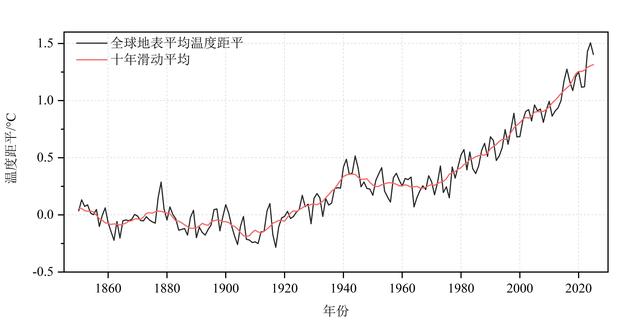
Group 1 - The global average surface temperature is projected to rise by 1.40℃ compared to pre-industrial levels (1850-1900) by 2025, making it one of the warmest years on record [1][2] - The past three years have been the warmest on record, indicating a persistent trend of global warming [1] - In January 2025, the global average surface temperature reached a historical high for that time of year, with significant temperature increases observed in various regions including Northeast and Southern Europe, Northeast East Asia, and parts of North America [2] Group 2 - The Third Pole region, centered around the Tibetan Plateau, is identified as a sensitive area for climate change, with average temperatures breaking historical records in 2025 and a consistent increase over the past four years [3] - The rate of warming in the Tibetan Plateau from 1961 to 2025 is significantly higher than the global average, with increased annual precipitation trends observed [3] - Extreme weather events such as high temperatures and heavy rainfall are becoming more frequent in the Tibetan Plateau region, leading to glacier retreat and permafrost degradation [3] Group 3 - Experts emphasize that accelerating global warming necessitates ongoing emission reduction efforts as a fundamental approach to climate governance [5] - The importance of adapting to climate change is highlighted, with a call for enhanced societal capacity to respond to extreme weather events such as heatwaves, floods, and typhoons [5]

过去三年为有记录以来最暖三年 全球变暖趋势持续
Yang Shi Xin Wen· 2026-01-07 09:34
Group 1 - The core viewpoint of the articles indicates that 2025 is projected to be one of the warmest years on record, with a global average surface temperature increase of 1.40°C compared to pre-industrial levels (1850-1900) and 0.52°C above the average annual value [1] - The last three years have been the warmest on record, highlighting a persistent trend of global climate warming [1] - Specific regions such as Northeast and Southern Europe, Northeast East Asia, much of Central Asia, Northern and Southwestern North America, and the Antarctic Peninsula are expected to experience record-high average annual temperatures in 2025 [1] Group 2 - The Arctic region's average temperature is projected to be 1.17°C above the average, ranking as the third highest in history [1] - The Third Pole region, centered around the Tibetan Plateau, is identified as a sensitive area for climate change, with average temperatures breaking historical records for four consecutive years [1] - The rate of warming in the Tibetan Plateau from 1961 to 2025 is significantly higher than the global average, with increased annual precipitation trends observed in the region [1] Group 3 - Experts emphasize that continuing to promote emission reductions is essential for global climate governance amid accelerating climate warming [2] - The importance of adapting to climate change is increasingly recognized, necessitating enhanced societal capabilities to respond to extreme weather events such as heatwaves, floods, and strong typhoons [2]
COP30“中国角”边会关注适应气候变化中国方案
Xin Hua She· 2025-11-15 15:24
Core Viewpoint - The 30th Conference of the Parties to the United Nations Framework Convention on Climate Change (COP30) is taking place in Belem, Brazil, focusing on climate change adaptation strategies, particularly from China [1] Group 1: Climate Change Adaptation - Over 150 domestic and international guests participated in the "China's Solutions for Climate Change Adaptation" themed side event, sharing advanced concepts and practical cases [1] - The head of the Chinese delegation, Vice Minister of Ecology and Environment Li Gao, emphasized that climate change is a severe challenge faced by humanity, and China maintains a dual focus on mitigation and adaptation [1] Group 2: China's Initiatives - China is implementing 39 pilot projects for climate-adaptive urban construction, establishing a collaborative framework of "national strategy + provincial implementation + urban demonstration" [1] - The Chinese side expressed willingness to work with all parties to enhance global capacity to respond to climate change challenges [1]
气候影响加速、资金却没跟上,联合国报告这样说
Di Yi Cai Jing· 2025-11-06 12:21
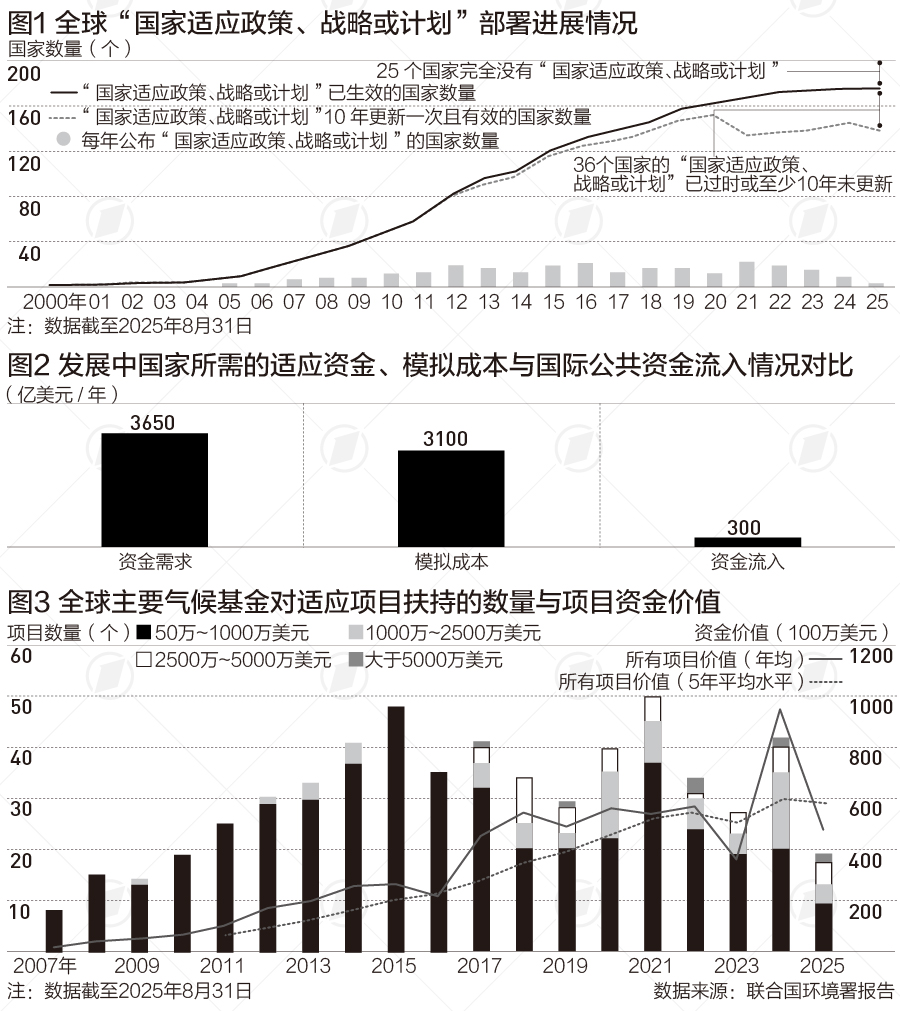
Core Insights - The report highlights a significant funding gap for climate adaptation in developing countries, projecting a need of over $310 billion annually by 2035, which is 12 times the current international public adaptation funding flow [1][2] - The upcoming COP30 in Brazil aims to address these funding challenges and set a target of raising $1.3 trillion by 2035 to support climate adaptation efforts [1][7] Funding Gap - By 2035, developing countries will require $310 billion annually for climate adaptation, potentially rising to $365 billion based on national contributions and plans, excluding inflation [2] - In 2023, international public adaptation funding to developing countries was only $26 billion, indicating an annual funding gap of $2.84 to $3.39 billion, which is 12 to 14 times the current funding flow [2][3] - The Glasgow Climate Pact's goal to double international public adaptation funding to approximately $40 billion by 2025 is unlikely to be met under current trends [2] Climate Financing Trends - Only 37 developing countries provided complete data on climate funding, with total funding rising from $537 million in 2021 to $712 million in 2022, averaging $632 million annually [3] - The COP29 established a new climate funding target for developed countries to provide at least $300 billion annually to developing nations by 2035, with a collective goal of reaching $1.3 trillion [3] Financing Roadmap - The "Roadmap from Baku to Belem" aims to achieve the $1.3 trillion funding target by 2035, emphasizing the need for careful implementation to avoid increasing vulnerability in developing countries [7] - The report stresses the importance of grants, concessional financing, and non-debt-creating financial instruments to prevent debt accumulation [7] - The Global Environment Facility and Green Climate Fund have increased support for new projects to nearly $920 million, an 86% increase from the previous five-year average [7] Adaptation Policies and Actions - Approximately 172 out of 192 countries have developed at least one national adaptation policy, strategy, or plan, although 36 of these policies are outdated [8] - Over 1,600 adaptation actions have been reported, primarily in biodiversity, agriculture, water resources, and infrastructure, but few countries have reported actual outcomes [8] - The need for increased adaptation funding from both public and private sources is emphasized, alongside the importance of not increasing the debt burden on vulnerable nations [8]
应对气候变化,提升适应能力迫在眉睫
Zhong Guo Huan Jing Bao· 2025-11-03 23:20
Core Viewpoint - The Chinese government has set a target for 2035 to establish a climate-adaptive society, emphasizing the importance of adapting to climate change as a key component of its strategy to address climate challenges [1][3]. Summary by Sections Importance of Climate Adaptation - The urgency of adapting to climate change has significantly increased, with the Chinese government recognizing it as a critical task since the 2007 national plan, which highlighted the need for both mitigation and adaptation [2]. - Previous national contributions have included proactive adaptation measures, and various strategies and guidelines have been developed to support climate adaptation efforts [2]. Goals and Strategies - The "National Climate Change Adaptation Strategy 2035" aims for significant progress by 2030 and the establishment of a climate-adaptive society by 2035 [3]. - Recent government documents reiterate the importance of enhancing climate adaptation capabilities as part of the broader goal of building a beautiful China [3]. Current Challenges - There are notable gaps in understanding the importance and necessity of climate adaptation, including insufficient localized research on climate impacts and risks [3][4]. - The focus on mitigation over adaptation remains prevalent, with a lack of awareness and education on the importance of adaptation strategies [3]. Policy and Action Gaps - The current policies and actions for climate adaptation are not sufficiently aligned with the increasing risks and impacts of climate change [4]. - The development of a comprehensive policy framework for climate adaptation is still in its early stages, with many regions lacking adequate policies and actions [4]. Recommendations for Improvement - The "14th Five-Year Plan" period is seen as a crucial time for advancing the climate-adaptive society, with recommendations to prioritize adaptation alongside mitigation [5]. - A systematic governance framework for climate adaptation should be established, focusing on key areas and populations to enhance resilience [5]. Organizational Structure - Strengthening the national coordination of climate adaptation efforts and developing a robust organizational framework is essential for effective implementation [6][7]. - Local governments should enhance their capacity to address climate adaptation, fostering a network of support institutions and trained professionals [7]. Risk Identification and Public Awareness - Accurate identification and communication of climate risks are fundamental for effective adaptation actions [7]. - Enhancing public awareness and understanding of climate change risks through education and media engagement is crucial [7]. Regional Adaptation Actions - Different regions should explore tailored adaptation strategies based on their unique risks and development stages [8]. - Coastal areas should focus on risks from sea-level rise and storms, while urban areas need to address heatwaves and flooding [8]. Resource Mobilization - There is a need to develop standards and evaluation systems for climate adaptation projects to attract more investment [9]. - Encouraging public and organizational participation in climate adaptation initiatives is vital for building a collaborative approach [9].
打通适应气候变化“最后一公里”难在哪里?
Zhong Guo Huan Jing Bao· 2025-08-05 23:25
Core Viewpoint - The article discusses the challenges and shortcomings in adapting to climate change in China, highlighting the need for improved awareness, tools, and public participation to effectively address extreme weather events and climate impacts [1][2][3][4][5] Group 1: Climate Change Awareness - There is a significant gap in public understanding of climate change, often described as a "boiling frog" phenomenon, where gradual temperature increases are not perceived as urgent [1][3] - The lack of localized climate data and tools contributes to insufficient public awareness and preparedness for extreme weather events [2][3] Group 2: Technical Challenges - Attribution detection of climate change impacts remains difficult due to limitations in spatial resolution, timeliness, and accuracy, hindering effective differentiation between normal climate patterns and those altered by human activity [2][4] - There is a need for research institutions to enhance attribution detection methods and develop user-friendly tools to improve the speed and reliability of climate impact assessments [4] Group 3: Policy and Strategic Framework - China has made strides in climate governance, having released national strategies and guidelines aimed at adapting to climate change, with a goal to establish a climate-adaptive society by 2035 [3] - The focus is shifting towards bridging the "last mile" in climate adaptation efforts, emphasizing the importance of local actions and community involvement [3][5] Group 4: Public Participation and Education - Engaging the public in climate adaptation efforts is crucial, with calls for educational institutions and organizations to promote awareness and knowledge about climate change [5] - Initiatives such as climate adaptation awards and the promotion of successful case studies are suggested to foster a supportive social environment for climate action [5]
ESG月刊 | 2025年6月
Xin Lang Cai Jing· 2025-07-28 08:39
Group 1: Domestic ESG Policy News - China's first national standard for green data centers, "Green Data Center Evaluation," was officially implemented on June 1, outlining requirements for energy efficiency, green design, procurement, operation, and services [2] - The Ministry of Ecology and Environment released the "China Climate Change Adaptation Progress Report (2024)" on June 25, reflecting the progress and effectiveness of climate change adaptation efforts in China [2] Group 2: International ESG Developments - The International Financial Reporting Standards (IFRS) S2 received equivalent recognition from the Global Reporting Initiative (GRI) 102 for greenhouse gas emissions disclosure, allowing companies to meet both standards simultaneously [4] Group 3: ESG Preferred Index Performance - The Dongfang Jincheng Credit - CSI 800 ESG Industry Preferred Index has a cumulative return of 30.88% and an annualized return of 4.41% since January 1, 2019, while the industry underperforming index has a cumulative return of -22.42% and an annualized return of -3.99% [6] - The preferred index underperformed the CSI 800 benchmark by 4.09%, while the underperforming index lagged by 57.40% [6] Group 4: Monthly Performance - The ESG industry preferred index showed a maximum monthly increase of 2.00% on June 24, with a monthly return of -3.64%, compared to a 2.45% return for the CSI 800 index [7] Group 5: ESG Risk Events - During the reporting period from June 1 to June 30, 18 ESG risk events were monitored among A-share listed companies, resulting in total penalties of RMB 278,235,160.04 [9] - The majority of ESG risk events occurred in heavy industry manufacturing, electronics, daily consumption, and finance, with heavy industry manufacturing incurring penalties exceeding RMB 200 million [9] - Regions with significant penalties included Tianjin, Guangdong, Guangxi, and Zhejiang, with Tianjin's penalties exceeding RMB 25 million [12][13]

生态环境部:39个试点城市积极探索深化气候适应型城市建设
仪器信息网· 2025-06-26 06:01
Group 1 - The Ministry of Ecology and Environment has launched a nationwide special action to combat illegal dumping of solid waste, aiming to curb the high incidence of illegal transfers and dumping over a three-year period [6][7] - The focus of the action includes illegal dumping of hazardous waste, industrial solid waste, construction waste, and the illegal dismantling of scrapped vehicles and electronic products, particularly in sensitive ecological areas [6][7] - By the end of 2025, the action aims to complete problem identification and corrective measures, with overall completion of problem rectification by the end of 2026, and a follow-up review by the end of 2027 [7] Group 2 - The progress report on the construction of China's product carbon footprint management system was released, highlighting significant advancements since 2024, including the publication of over 70 national standards and 100 group standards for product carbon footprint accounting [8] - The "China Adaptation to Climate Change Progress Report (2024)" indicates that 2024 was the hottest year on record, emphasizing the urgent need to enhance climate change adaptation capabilities across various sectors [9] - A joint initiative was launched to promote early warning systems for climate change adaptation, supporting other developing countries in improving their early warning and adaptation capabilities [9] Group 3 - The Ministry of Ecology and Environment, along with other departments, issued guidelines to strengthen ecological culture construction, focusing on research, dissemination, and practical application of ecological values [10][11] - Specific measures include promoting traditional ecological culture, enhancing public awareness of ecological civilization, and encouraging green, low-carbon lifestyles [10][11] Group 4 - The first batch of the "Beautiful China, Volunteers with Me" ecological environment volunteer service list was published, featuring 22 projects aimed at promoting environmental protection and community engagement [12] - The initiative aims to mobilize public participation in ecological volunteer services, with over 30,000 volunteer teams and more than 35 million volunteers already involved in various projects [12]

碳足迹“施工图”来了!生态环境部发布百项碳“标尺”
2 1 Shi Ji Jing Ji Bao Dao· 2025-06-25 14:09
Core Insights - The event on June 25, coinciding with "National Low Carbon Day," highlighted significant advancements in China's product carbon footprint management system, with over 70 national standards and 100 group standards established by the end of 2024 [1][2] Group 1: Product Carbon Footprint Management - The report outlines progress in establishing a product carbon footprint management system since 2024, focusing on management system development, work structure, international rule trust, and capacity building [2] - The publication of national standards such as the "Guidelines for the Compilation of Product Carbon Footprint Accounting Standards" and "Quantification Requirements and Guidelines for Greenhouse Gas Product Carbon Footprint" provides direction for the standard system [2] - A domestic electricity carbon footprint factor has been released to address urgent needs in product carbon footprint accounting across various industries [3] Group 2: Climate Change Adaptation - The "China Climate Change Adaptation Progress Report (2024)" indicates that 2024 is the hottest year on record, necessitating urgent improvements in climate change adaptation capabilities [3] - As of now, 30 provinces and regions, along with the Xinjiang Production and Construction Corps, have implemented provincial climate change action plans, and 39 pilot cities are exploring climate-adaptive urban development [4]