
逻辑思维

Search documents
2025,宝藏好书!
Xin Lang Cai Jing· 2026-01-07 16:10
Core Insights - The publishing industry is experiencing a significant transformation due to the impact of AI and changing consumer preferences, leading to a decline in traditional book sales while "healing economy" books are gaining popularity [1] - The year 2025 is marked by a paradox for publishers, with declining sales and rising book prices creating a complex landscape that cannot be easily categorized as positive or negative [1] - Readers in 2025 are benefiting from the re-release of many classic books and a shift towards deep reading, with a notable increase in the availability of collectible titles [1] Industry Trends - Online book sales are declining at a faster rate than offline sales, indicating a shift in consumer purchasing behavior [1] - The emergence of both new and established publishing brands reflects a commitment to value publishing, regardless of market fluctuations [1] - The market is seeing a resurgence of social science books, with philosophy titles also performing surprisingly well, suggesting a renewed interest in deeper intellectual engagement [1][22] Notable Publications - Several significant works have emerged in 2025, showcasing in-depth research and unique perspectives, such as Liu Chen's "Research on the Taiping Heavenly Kingdom" and Ma Zhao's "Abandoned Husbands: The Lives and Crimes of Lower-Class Women in Wartime Beijing" [9][11] - The trend of producing high-quality, specialized non-fiction continues, with a focus on historical narratives and cultural critiques that resonate with contemporary issues [16][28] Reader Engagement - The concept of "good books" is evolving, with a growing emphasis on the meaningfulness of content rather than mere marketability [3][4] - Readers are increasingly seeking books that challenge their perspectives and provide profound insights, leading to a longer "must-read" list for 2025 compared to previous years [29][32] - The publishing industry is encouraged to maintain a focus on quality and meaningful content to meet the demands of discerning readers [32]


AI时代的迷失:可怕的不是跟不上变化,而是用旧思维赶路
腾讯研究院· 2025-11-28 08:45
Core Viewpoint - The article emphasizes the importance of modern thinking in the age of AI, arguing that understanding and adapting to AI requires a shift from traditional authoritative thinking to a logic-based, evidence-driven approach [5][10][18]. Group 1: Understanding AI and Its Implications - AI's capabilities are rapidly expanding, leading to anxiety about job displacement and the need for humans to redefine their roles [6][10]. - The perception of AI often falls into the trap of overestimating its capabilities, mistaking technological advancement for a fundamental change in human cognition [8][10]. - The historical context shows that technological progress is not the sole driver of societal advancement; rather, it is the underlying thinking patterns that shape how technology is utilized [9][10]. Group 2: The Need for Modern Thinking - Modern thinking is characterized by evidence prioritization, logical reasoning, and an understanding of uncertainty, which are essential in navigating the complexities of the AI era [15][28]. - The current educational system perpetuates outdated thinking structures, focusing on rote memorization rather than critical thinking and problem-solving skills [12][50]. - A lack of modern thinking leads to cognitive confusion, especially when faced with new technologies like AI, which can be misinterpreted or overly feared [14][18]. Group 3: The Role of Logic - Logic serves as the foundational structure for modern thinking, enabling individuals to make reasoned judgments rather than being swayed by emotions or authority [24][27]. - Understanding logic is crucial for comprehending AI, as it helps differentiate between the capabilities of AI and human cognition [27][38]. - The absence of logical reasoning can result in misunderstanding AI's nature, leading to irrational fears and misconceptions [27][38]. Group 4: The Future of Work and AI - AI is expected to take over repetitive and rule-based tasks, while critical thinking and decision-making must remain human responsibilities [40][41]. - The distinction between tasks that can be automated and those requiring human judgment will define future job markets [40][41]. - The article suggests that individuals should focus on developing unique, non-replaceable skills that emphasize creativity and critical thinking [55][56]. Group 5: Advice for the Younger Generation - Education remains a vital pathway for upward mobility, but it should foster independent thinking rather than conformity [49][50]. - The rise of AI represents a third wave of knowledge democratization, providing unprecedented opportunities for those who can effectively utilize AI tools [50][51]. - Embracing uncertainty and focusing on the process rather than solely on outcomes will be crucial for navigating the complexities of the future [53][54].

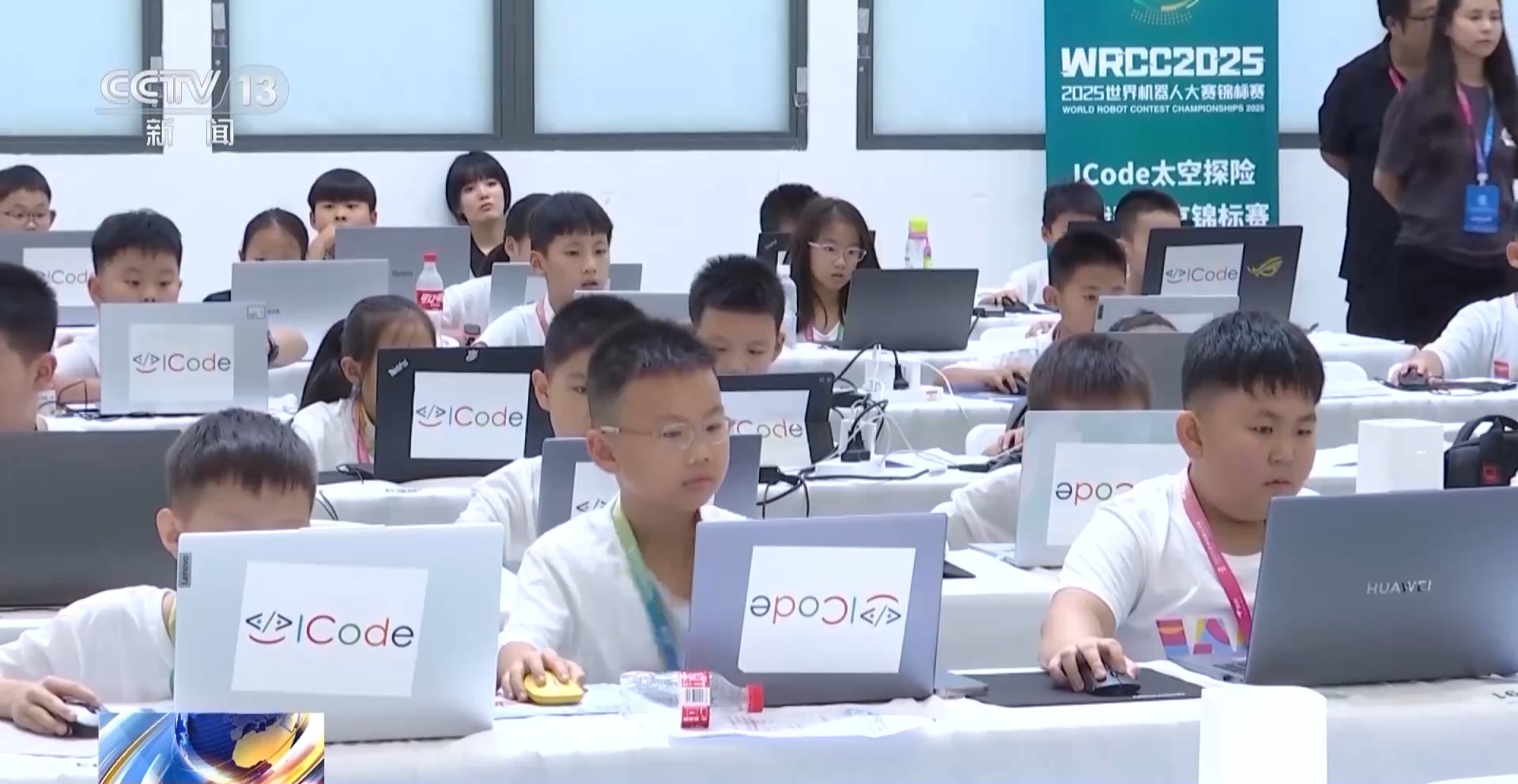
青少年机器人设计大赛:激发创新精神
Yang Shi Wang· 2025-08-12 01:41
Group 1 - The core event is the Youth Robot Design Competition, which is part of the 2025 World Robot Competition Beijing Championship, aimed at fostering teamwork, strategic division of labor, and hands-on skills among participants [1] - The competition features various categories including professional, challenge, and popular classes, with a total of 19 major events and 57 minor events, targeting participants aged 6 to 18 [1] - A specific programming competition is organized for elementary school students, utilizing graphical programming instead of traditional code, which helps develop logical thinking and responsiveness beneficial for future learning and work [3]

著名经济学家、国务院原参事陈全生:AI与教育的关系应明确“行为主体”
Zhong Guo Jing Ying Bao· 2025-04-14 07:02
Core Insights - The relationship between AI and education should be led by the education sector, emphasizing the importance of teachers in the integration of AI into educational practices [1][2] - AI can assist in creating personalized learning plans by analyzing student data, but the design and adjustment of AI systems must be teacher-driven [1] - Education should shift from "learning to learn" to "learning how to learn," with a focus on practical skills and methods [1] Group 1 - AI can replace routine tasks but non-routine aspects of education, such as emotional and cognitive development, still require human teachers [1] - The education industry should develop AI tools based on teachers' needs, such as using AI to support after-school learning or gamified teaching methods [1] - Skills training, particularly in vocational education, is emphasized as requiring practical experience, highlighting the need for hands-on learning [1] Group 2 - Education should prioritize abstract thinking, logical reasoning, and value formation, with subjects like mathematics and music playing a crucial role [2] - AI technology should enhance students' questioning abilities, fostering a culture of inquiry [2] - Language learning is viewed as a gateway to understanding cultural differences, and AI should be leveraged to optimize language education [2]