量化套利

Search documents
最赚钱对冲基金,要来A股了
华尔街见闻· 2026-01-21 10:37
Core Viewpoint - Citadel Advisors Singapore Pte. Limited, a subsidiary of Citadel, has received approval from the China Securities Regulatory Commission (CSRC) for Qualified Foreign Institutional Investor (QFII) status, marking a significant step in its strategy to re-enter the Chinese market, especially after a strong performance in the A-share market [3][22]. Group 1: Citadel's Performance and Strategy - Citadel has generated a total net profit of $83 billion (approximately 578.4 billion RMB) since its inception in 1990, making it the most profitable hedge fund in history [3][13]. - The flagship Wellington fund has achieved an average annual return of 19.2% since its inception, significantly outperforming the market average [5][9]. - Despite a challenging year in 2025 with a return of 10.2%, which is the worst since 2018, Citadel remains the second-best performing hedge fund globally [10][11]. Group 2: Expansion into the Chinese Market - Citadel's renewed focus on the Chinese market is driven by the potential for growth and the recent strong performance of the A-share market, which saw the Shanghai Composite Index rise for 17 consecutive trading days [3][14]. - The company plans to leverage its QFII status to access a broader range of investment opportunities in China, including the ability to participate in the STAR Market and engage in margin trading [24]. - Citadel's previous attempts to enter the Chinese market faced regulatory challenges, but recent developments indicate a more favorable environment for foreign investment [20][21]. Group 3: Market Context and Implications - The hedge fund industry in Asia, particularly in Singapore and Hong Kong, has seen significant growth, with Singapore's hedge fund assets increasing by 37% to reach 327 billion SGD (approximately 254 billion USD) by the end of 2024 [24]. - The influx of foreign capital, including Citadel's, is expected to enhance liquidity in the A-share market, benefiting overall market dynamics [25].


最赚钱对冲基金,要来A股了
投中网· 2026-01-17 07:03
Core Viewpoint - Citadel Advisors Singapore Pte. Limited, a subsidiary of Citadel, has received approval from the China Securities Regulatory Commission (CSRC) for qualified foreign institutional investor (QFII) status, marking a significant step in its re-entry into the Chinese market, which is seen as a crucial opportunity for growth [2][19]. Group 1: Citadel's Performance and Strategy - Citadel has generated a total of $83 billion (approximately 578.4 billion RMB) in net profits since its establishment in 1990, making it the most profitable hedge fund globally [2][12]. - The flagship Wellington fund has achieved an average annual return of 19.2% since inception, significantly outperforming the market average [5][11]. - Despite a challenging year in 2025, where Citadel reported its worst annual return since 2018 at 10.2%, it still ranked second among global hedge funds in absolute returns [10][11]. Group 2: Expansion into the Chinese Market - Citadel's renewed focus on China comes after a history of challenges in the market, including regulatory issues that led to a five-year operational pause [17][18]. - The approval for QFII status allows Citadel to invest in a broader range of assets, including all Sci-Tech Innovation Board stocks and domestic private equity funds, enhancing its operational capabilities in China [20]. - Citadel's strategy emphasizes the importance of the Chinese market, with executives stating that missing out on this opportunity is not an option, especially in light of the potential for significant returns [15][19]. Group 3: Market Context and Future Outlook - The A-share market has shown remarkable performance, with the Shanghai Composite Index recording 17 consecutive days of gains, and trading volume reaching a historical high of 3.6 trillion RMB on January 12 [2]. - Citadel's entry into the Chinese market is expected to improve liquidity and attract more foreign investment, which is beneficial for the overall market environment [20].

AI如何在多元市场中寻找套利机会?
Sou Hu Cai Jing· 2025-10-08 16:41
Core Insights - The global financial system is undergoing an unprecedented wave of intelligence, with AI widely applied in algorithmic trading and quantitative strategies, leading to a new quantitative arbitrage model based on "cross-market integration" [1] Group 1: Market Characteristics - Common characteristics across traditional and digital asset markets include high liquidity, high-frequency volatility, and information asymmetry, which provide fertile ground for AI to capture price discrepancies [3] - The foreign exchange market, being the largest and most mature trading system, has traditionally had limited arbitrage opportunities, but AI is now finding new solutions through extensive data and macro factor analysis [4] Group 2: AI in Different Markets - In the foreign exchange market, AI systems can read central bank decisions and economic indicators in real-time, executing high-frequency trades to achieve stable returns when exchange rates deviate from macro expectations [4] - In the U.S. stock market, AI utilizes natural language processing and sentiment analysis to make decisions within seconds of news releases, capitalizing on fleeting arbitrage opportunities [5] - The cryptocurrency market, characterized by 24/7 trading and high volatility, has become a vibrant arena for AI arbitrage, making intelligent arbitrage accessible to a broader range of investors [6] Group 3: Future of AI in Finance - The rise of platforms like Indira AI signifies a new financial paradigm that relies on data rather than emotions, prioritizes stability over risk, and acts as an intelligent coordinator across diverse markets [6] - Indira AI aims to expand its algorithmic matrix to connect various asset classes and markets, establishing a new order of global arbitrage between human financial logic and AI systems [6]

对话林义相:A股能到4000点,但是……
虎嗅APP· 2025-08-15 10:18
Core Viewpoint - The article discusses the recent surge in the A-share market, highlighting both the optimism and underlying vulnerabilities that could affect its sustainability [4][5][9]. Market Performance - On August 13, the A-share market saw a trading volume exceeding 2 trillion, with the Shanghai Composite Index surpassing the previous year's high of 924 points, reaching a nearly four-year high [4]. - Despite this surge, there are signs of weak confidence among retail investors, as evidenced by 245 companies announcing share reductions in August alone [5]. Regulatory Environment - Since July 2023, the central government has implemented measures to stabilize the capital market, including adjusting IPO schedules, tightening quantitative trading, and addressing illegal share reductions [6][9]. - Lin Yixiang, a respected figure in the market, emphasizes the need for systemic reforms to address market vulnerabilities and restore investor confidence [6][9]. Future Market Outlook - Lin Yixiang believes that the current market is not at its peak and that with continued supportive policies, the index could reach 4000 points, indicating a potential 50% increase from current levels [8][18]. - He notes that the average price-to-earnings ratio in the market supports this projection, suggesting that the fundamentals are in place for further growth [18]. Challenges and Recommendations - The article identifies several challenges, including the need for reforms in IPO and share reduction mechanisms, which should not rely solely on administrative orders [23]. - Lin Yixiang advocates for a transparent and independent market stabilization fund to ensure long-term market health, emphasizing that funds should remain invested in the market [27][28].
对话林义相:隐忧未解,牛市难稳
Hu Xiu· 2025-08-14 12:12
Group 1 - The core viewpoint of the article is that while the A-share market has shown signs of recovery, investor confidence remains fragile due to ongoing issues such as insider trading and unclear reduction rules [2][3][8] - The A-share market has seen significant trading volume, with a daily turnover exceeding 2 trillion yuan and the Shanghai Composite Index reaching a nearly four-year high [1][2] - There is a concern regarding the number of companies announcing share reductions, with 245 companies making such announcements in August alone, indicating potential risks for retail investors [2][3] Group 2 - The government has implemented a series of regulatory measures aimed at stabilizing the market, including adjusting IPO schedules and tightening rules on illegal reductions and insider trading [2][3][6] - Lin Yixiang, a respected figure in the market, emphasizes the need for systemic reforms to address market vulnerabilities and enhance investor confidence [3][4][10] - The article discusses the importance of maintaining a balance between attracting funds to the stock market and ensuring sustainable growth through effective regulatory measures [4][5][6] Group 3 - Lin Yixiang believes that the A-share market has the potential to reach 4,000 points, suggesting a 50% upside from current levels, contingent on continued supportive policies [8][9] - The article highlights the need for reforms in IPO and reduction mechanisms to create a fairer market environment, which is essential for long-term stability [12][13] - Insider trading is identified as a significant issue that undermines market integrity, and effective enforcement against such practices is crucial for restoring investor trust [14][15]
上市公司询价转让成私募套利新方向,这几家百亿私募现身了
Xin Lang Cai Jing· 2025-07-18 04:05
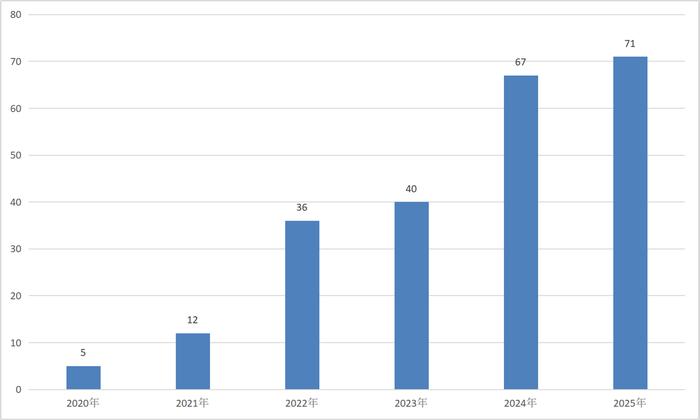
Group 1 - The core viewpoint of the article highlights the increasing popularity of inquiry transfer among A-share listed companies in 2023, with a significant rise in the number of announcements and transactions [1][2] - As of July 17, 2023, 67 listed companies have announced 71 inquiry transfers, marking a notable increase compared to previous years since the system's pilot launch in August 2020 [1][2] - The inquiry transfer system officially launched on the ChiNext board in May 2024, contributing to the surge in inquiry transfer cases this year [2] Group 2 - Inquiry transfers allow shareholders of listed companies to transfer shares before the initial public offering through market-based pricing, which helps mitigate the impact of large sell-offs on secondary market prices [2][7] - Private equity firms are significant participants in inquiry transfers, often acquiring shares at a discount compared to market prices, providing an efficient way to build large positions [2][4] - As of July 17, 2023, 12 private equity firms have participated in inquiry transfers at least 10 times this year, with many managing over 2 billion yuan [4][5] Group 3 - Lingding Investment is the most active private equity firm, appearing in the transfer lists of 47 companies, with notable transactions in companies like Guibao Pet and Jimi Technology [5][6] - Other prominent private equity firms include Shengquan Hengyuan and Jinde Private Equity, both managing over 10 billion yuan and frequently participating in inquiry transfers [6][7] - The inquiry transfer process requires a minimum transfer of 1% of the total shares, with a six-month lock-up period for the acquired shares, favoring larger private equity firms with sufficient capital [7]