证券私募

Search documents
投入数亿元 上海知名投资机构连同他人操纵股价 搞了1年多倒亏173万元 不服监管处罚起诉证监局!法院判了
Mei Ri Jing Ji Xin Wen· 2026-02-11 14:52
Core Viewpoint - The Shanghai Financial Court upheld the administrative penalty imposed by the Shanghai Securities Regulatory Bureau on Shanghai Certain Consulting Company and its executive Liu Mouyu for market manipulation, marking the first administrative case of its kind in Shanghai [1][3]. Group 1: Case Background - The Shanghai Securities Regulatory Bureau found that Shanghai Certain Consulting Company and a third party, Jin Mou Shun, colluded to manipulate the trading price and volume of K stock, violating Article 203 of the 2005 Securities Law [1][3]. - The penalties included a fine of 1.2 million yuan for both Shanghai Certain Consulting Company and Jin Mou Shun, and a warning with a fine of 500,000 yuan for Liu Mouyu [1][3]. Group 2: Court's Ruling - The court determined that there was clear evidence of a shared intent between Liu Mouyu and Jin Mou Shun to manipulate the market, supported by trading patterns and fund flows [3][4]. - The private fund accounts involved ranked first in trading volume for 43 trading days during the manipulation period, with K stock price increasing by 12.62%, deviating from the Shanghai Composite Index by 22.03% [3][12][13]. Group 3: Market Manipulation Details - The manipulation occurred from December 19, 2017, to April 8, 2019, with distinct phases including stock accumulation, price lifting, price maintenance, and eventual liquidation [9][10][11][15][16]. - During the second phase, the involved accounts held 4.05% of total shares and accounted for 33.80% of market trading volume, with significant trading activity indicating manipulation [11][12]. Group 4: Regulatory Perspective - The court emphasized that market manipulation undermines the normal price discovery mechanism and violates regulatory requirements, thus justifying the penalties imposed by the Shanghai Securities Regulatory Bureau [4][17].

【财闻联播】高德打车,被约谈!商务部召开汽车企业座谈会:优化实施汽车以旧换新
券商中国· 2026-02-09 12:13
Macro Dynamics - The Shanghai and Shenzhen Stock Exchanges announced a package of measures to optimize refinancing, aiming to enhance the efficiency of refinancing for quality listed companies and adapt to the needs of innovative enterprises [2] - The measures include revising rules for "light asset, high R&D investment" companies and allowing companies facing stock price declines to raise funds through private placements and convertible bonds [2] Automotive Industry - The Ministry of Commerce held a meeting with automotive enterprises to discuss the optimization of the vehicle trade-in policy and the implementation of pilot reforms in automotive circulation [3] - The automotive industry is recognized as a strategic and pillar industry for the national economy, with expectations for significant contributions to consumption and economic growth by 2025 [3][4] - The Ministry plans to implement various measures to expand and improve automotive consumption, including optimizing trade-in policies and enhancing industry management systems [4] Transportation and Ride-Hailing - The inter-ministerial joint meeting on the regulation of new transportation formats held a discussion with Gaode Dache, addressing issues such as inadequate management of partner ride-hailing platforms and price suppression [5] - The meeting emphasized the need for improved supervision of ride-hailing platforms, ensuring compliance, and protecting drivers' rights [5] Real Estate - Chongqing has introduced first-time homebuyer subsidies and talent homebuyer subsidies, providing a 0.5% subsidy on the total transaction amount for first-time home purchases in urban areas [6] Financial Institutions - The People's Bank of China authorized the London branch of the Bank of China to act as the RMB clearing bank in the UK, enhancing the internationalization of the RMB [7] Private Equity - The number of billion-level securities private equity firms in China reached 122, marking a historical high and an increase from 112 at the end of December 2025 [8] Market Data - The A-share market saw significant gains, with the ChiNext Index rising by 2.98% and a total market turnover exceeding 2.2 trillion yuan, an increase of over 100 billion yuan from the previous trading day [11] - The Hang Seng Index closed up 1.76%, with notable individual stock performances, including a 63% increase in Lanke Technology [12] - The financing balance in the two markets decreased by 170.1 billion yuan as of February 6, 2026 [13] Company Dynamics - Haiguang Information stated that its business layout does not currently involve TPU chips, focusing instead on core strategic products [14] - Meta received a warning from the EU for potentially hindering competition in the AI assistant market by restricting access to WhatsApp [15] - Perfect World announced that its stock price had deviated significantly, with no need for corrections in previously disclosed information [16] - Evert plans to acquire 100% of Shengpu shares, with its stock set to resume trading on February 10, 2026 [17]


上海领跑、广州难掩落寞,超200家头部私募分布有何特点?
Xin Lang Cai Jing· 2025-12-22 04:10
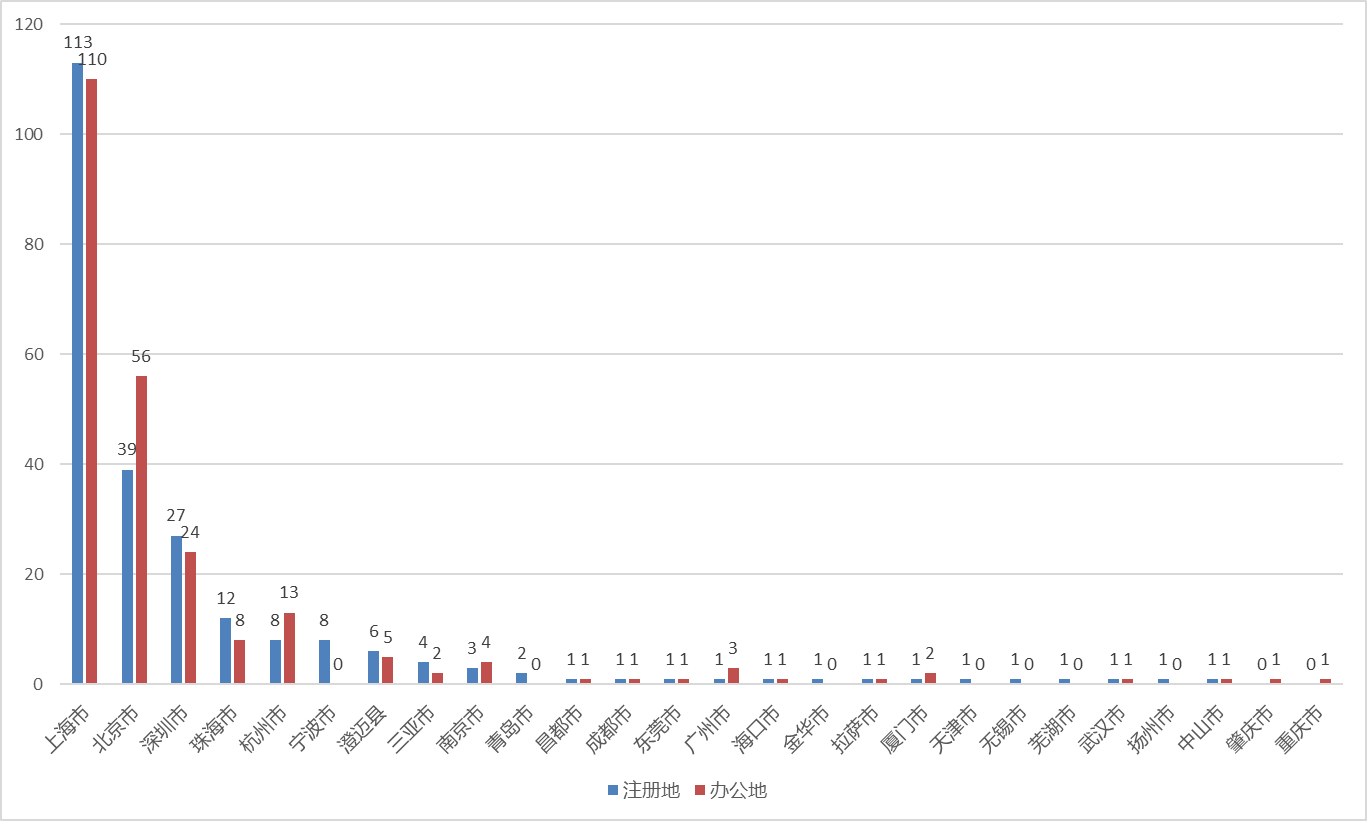
Core Insights - The article highlights the concentration of top private equity firms in major cities, particularly Shanghai, which leads with a significant number of firms compared to Beijing and Shenzhen [1][9][13]. Group 1: Distribution of Top Private Equity Firms - As of December 19, there are 236 top securities private equity firms managing over 5 billion yuan, with Shanghai hosting 113 firms, accounting for 47.88% of the total [1][9]. - Beijing and Shenzhen follow with 39 and 27 firms, representing 16.53% and 11.44% respectively [1][9]. - The distribution of firms by office location shows Shanghai again in the lead with 110 firms, while Beijing and Shenzhen have 56 and 24 firms respectively [1][9]. Group 2: Factors Influencing Registration and Office Location - Private equity managers consider factors such as policy support, registration efficiency, and brand influence when choosing registration locations [4][12]. - For office locations, the focus is on business expansion, with major cities offering a mature industry ecosystem and access to high-net-worth individuals [4][12]. Group 3: Financial Infrastructure and Talent Pool - Shanghai, Beijing, and Shenzhen possess advanced financial infrastructure, including exchanges and banks, and attract a diverse talent pool, enhancing the match with private equity needs [6][13]. - The majority of existing private equity firms were established around 2015, with Shanghai Free Trade Zone, Beijing's Fangshan Fund Town, and Shenzhen Qianhai being popular registration areas [6][13]. Group 4: Promotion Rates of Top Private Equity Firms - Shanghai has the highest promotion rate to top private equity status at 5.99%, followed by Beijing at 3.5% and Shenzhen at 1.99% [6][14]. - Cities with fewer registered firms can exhibit high promotion rates, such as Changdu with a 100% rate due to having only one firm [8][15].
年内50家通过备案,这些证券私募“新势力”是何来头?
Xin Lang Cai Jing· 2025-12-08 03:35
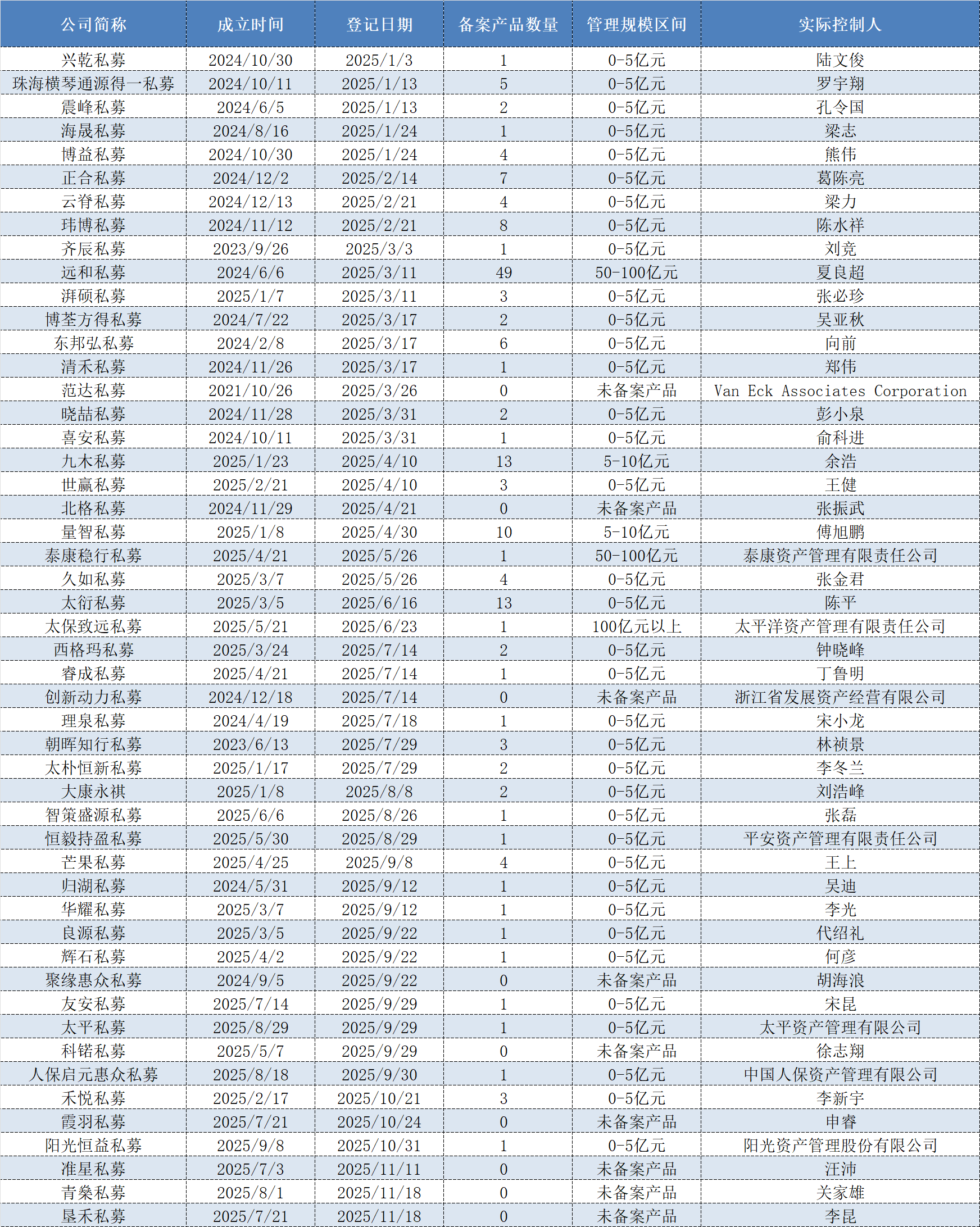
Core Insights - The private equity industry in securities has seen the emergence of 50 new registered managers in 2025, surpassing last year's total by two [1]. Group 1: Registration and Location - As of December 5, 2025, 50 new private equity managers have successfully completed registration, with Shanghai leading with 16 new firms, accounting for 32% of the total [3][4]. - Other cities like Shenzhen, Beijing, and Hangzhou follow, with 7, 6, and 5 new registrations respectively, while cities like Nanjing, Qingdao, Wuhan, and Zhuhai each have 2 [3]. Group 2: Operational Trends - A significant concentration of new private equity firms is observed in major cities, with 19 in Shanghai, 10 in Shenzhen, and 9 in Beijing, collectively representing 76% of the total [4]. - The trend indicates a preference for established financial hubs, as these cities offer a larger pool of high-net-worth individuals and financial talent [9]. Group 3: Management and Control - Among the 50 new registrants, 8 have corporate entities as their actual controllers, with 6 being insurance-related firms, such as 泰康稳行私募 and 太保致远私募, which have already achieved management scales of 50-100 billion and over 100 billion respectively [10][18]. - The majority, 42 firms, are controlled by individuals, with 26 being "private-to-private" transitions, often involving individuals with prior experience in well-known private equity firms [12]. Group 4: Challenges and Compliance - A notable 90% of the new registrants either have not yet registered products or have management scales between 0-5 billion, indicating a challenging environment for new entrants [16]. - The regulatory landscape has tightened since the implementation of the new registration rules on May 1, 2023, raising the bar for successful registrations [9].
股票私募仓位刷新年内新高
Shen Zhen Shang Bao· 2025-11-24 08:09
Group 1 - The stock private equity position index has reached a new high of 81.13% as of November 14, marking a significant increase of 1.05% from the previous week, and has maintained above 80% for three consecutive weeks, the highest level in nearly 112 weeks [1] - The increase in private equity positions is primarily driven by a rise in the willingness of medium-position private equity to increase their holdings, with full-position private equity now accounting for 65.90% and medium-position private equity dropping to 18.97% [1] - The distribution of stock private equity positions varies by scale, with over 100 billion yuan private equity reaching 87.07%, while those in the 50-100 billion yuan range are at 83.56% [1] Group 2 - Over 73.41% of large-scale private equity funds have moved to full positions, with a significant drop in medium-position funds to 18.47%, indicating a trend of increasing full positions among large private equity [2] - As of November 17, the total number of registered private equity securities investment funds this year has reached 10,608, a year-on-year increase of 100.76%, with stock strategies being the dominant approach, accounting for 65.55% of new registrations [2] - The recent decline in A-shares, with the Shanghai Composite Index dropping 2.45%, is attributed to liquidity concerns stemming from the Federal Reserve's expected interest rate policy, alongside worries about an AI bubble [2]
21独家|刘俏、曾毓群、王庆将牵头资本市场学会微观专委会工作
2 1 Shi Ji Jing Ji Bao Dao· 2025-09-18 05:29
Group 1 - The China Capital Market Society has established a clear structure for its Microstructure Professional Committee, led by Liu Qiao from Peking University's Guanghua School of Management, with Zeng Yuqun from CATL and Wang Qing from Shanghai Chongyang Investment Management as deputy chairs [1] - The main responsibilities of the Microstructure Professional Committee include researching investor structure and behavior, improving trading mechanisms, enhancing trading supervision, optimizing listed companies' market value management, and refining the price formation mechanism in the capital market to improve pricing efficiency [1] - Chongyang Investment, founded in 2009, is the only private securities management member of the China Capital Market Society, positioning itself as a leading subjective private equity firm in the market [1] Group 2 - The China Capital Market Society is aimed at creating a high-end think tank platform for theoretical research, academic exchange, and decision-making consultation in the capital market, uniting various industry institutions, listed companies, universities, research institutes, and government departments for research and communication on significant strategic and foundational topics [1] - The society's council is chaired by the Chairman of the China Securities Regulatory Commission, Wu Qing, with the Vice Chairman being Li Chao, the Vice Chairman of the CSRC [2] - The society's inaugural meeting established its organizational structure and announced the launch of the official academic journal "Capital Market Research," along with seven specialized committees covering various research areas, including macro and industry, market stability and risk prevention, innovative development, microstructure, futures and derivatives, international markets and openness, and legal protection for investors [2]

量化选股微盘股暴露大吗?风险大吗?
私募排排网· 2025-09-14 00:00
Core Viewpoint - The financing balance of the two markets has surpassed 2.3 trillion yuan, marking a historical high since 2015, indicating a significant increase in liquidity and investor risk appetite during the current bull market [2][3]. Group 1: Exposure of Micro-Cap Stocks - There is a noticeable differentiation in the exposure of quantitative long products to micro-cap stocks this year, with micro-cap indices significantly outperforming mid and large-cap stocks [4][5]. - The weighted discount rate of IC/IM stock index futures has remained high, suggesting an increased exposure of quantitative managers to micro-cap stocks [7]. - In the first quarter, the proportion of holdings in stocks below the 2000 index was about 20-40%, which may rise to over 50% in the third quarter [8]. Group 2: Reasons and Risks of Exposure to Micro-Cap Stocks - Historically, small-cap stocks have shown higher average annualized beta returns compared to large-cap stocks, attracting speculative interest from retail investors [9]. - The lower coverage of small micro-cap stocks by large institutional investors leads to higher mispricing probabilities, providing opportunities for quantitative models to identify undervalued targets [9]. - The current market liquidity favors micro-cap stocks, pushing their prices higher, especially during periods of weak economic data [9]. Group 3: Investor Strategies to Mitigate Risks - As long as micro-cap stocks maintain a strong market position, the likelihood of high exposure in quantitative long products remains significant [10]. - New investors may have concerns, but the current bull market is relatively rare, and any adjustments are expected to manifest as fluctuations rather than sharp declines [10]. - Quantitative long strategies differ from simple micro-cap strategies, focusing on identifying strong stocks and increasing exposure based on market conditions [10].
四大证券报精华摘要:9月4日
Zhong Guo Jin Rong Xin Xi Wang· 2025-09-04 00:09
Group 1 - The number of Qualified Foreign Institutional Investors (QFII) in China has reached 900, with 40 new additions this year, indicating increased foreign investment interest in Chinese assets [1] - The China Securities Regulatory Commission (CSRC) plans to introduce more reforms to optimize the QFII system, aiming to enhance cross-border investment convenience and attract more foreign capital [1] - The establishment of nearly 500 digital technology companies by central enterprises and over 100 data groups nationwide reflects the accelerated development of China's data factor market [1] Group 2 - Ping An Asset Management has registered a new private fund management company with an initial fund size of 30 billion yuan, bringing the total number of insurance capital-backed private funds to seven, with a combined trial amount of 222 billion yuan [2] - These long-term funds are favoring investments in leading companies in the energy and infrastructure sectors, such as China Petroleum and China Shenhua [2] Group 3 - The merger and acquisition (M&A) activities in the capital market have increased significantly, with over 200 major asset restructuring cases disclosed since the introduction of the "M&A Six Guidelines" [3] - The restructuring is leading to performance improvements for listed companies and is injecting new vitality into the high-quality development of the capital market [3] Group 4 - The home appliance industry has shown resilience, with 101 A-share listed companies reporting a total revenue of 867.06 billion yuan and a net profit of 70.08 billion yuan in the first half of the year, reflecting year-on-year growth of 8.32% and 12.85% respectively [4] - This growth is attributed to consumer promotion policies and the proactive transformation efforts of home appliance companies [4] Group 5 - The domestic paper industry is experiencing a new round of price increases, with major paper manufacturers implementing both price hikes and production halts, indicating a bullish market outlook [5] - The "Golden September and Silver October" period is expected to drive further price increases due to active inventory preparations in the downstream market [5] Group 6 - The solid-state battery production equipment sector is witnessing a surge in orders, with total new and existing orders exceeding 30 billion yuan, reflecting a year-on-year increase of 70% to 80% [7] - The industry is expected to accelerate its industrialization process as several automakers plan to adopt solid-state batteries around 2027 [7] Group 7 - The IFA 2025 in Berlin is set to showcase advancements in consumer electronics, with Chinese brands like Haier and Midea highlighting their latest AI technologies and products [8] - The port economy is thriving, with increased cargo and container throughput driven by the recovery of foreign trade and shipping, indicating a positive outlook for the sector [8]
量化私募靖奇投资两大创始人内斗 牵出招商证券被投诉举报
Jing Ji Guan Cha Wang· 2025-08-08 11:56
Core Viewpoint - A governance crisis within the quantitative private equity firm Shanghai Jingqi Investment Management Co., Ltd. has exposed underlying issues in the industry, leading to internal conflicts and regulatory complaints against its custodian, China Merchants Securities [2][4]. Group 1: Company Background - Jingqi Investment was established in 2015, managing assets between 1 billion and 2 billion yuan. The major shareholders include Fan Siqi (36.36%), Tang Jingren, and Mao Noping (27.27% each) [3]. - Fan Siqi serves multiple roles including legal representative, chairman, general manager, and fund manager, while Tang Jingren is the risk control officer [3]. Group 2: Recent Developments - On June 10, 2025, Fan Siqi announced his resignation as fund manager, citing significant stress and loss of passion due to management responsibilities [4]. - Following his resignation, a shareholder meeting led to his abrupt removal from all positions, which he described as a betrayal [4][6]. - On August 7, 2025, Jingqi Investment issued a risk warning, highlighting unauthorized actions by personnel and alleging that China Merchants Securities failed to fulfill its basic verification obligations [2][5]. Group 3: Financial Irregularities - Fan Siqi accused Tang Jingren of mismanaging company funds, including receiving commission income through a company owned by Tang, which was not properly accounted for [8]. - Allegations include using company funds for personal expenses and failing to report certain income, raising concerns about financial governance [8][9]. Group 4: Regulatory Context - The issue of commission rebates has been a longstanding concern in the industry, with regulations prohibiting such practices to maintain fair competition [11]. - Recent investigations into other firms, including allegations against senior personnel at China Merchants Securities, highlight ongoing scrutiny in the sector [10][12].


上市公司询价转让成私募套利新方向,这几家百亿私募现身了
Xin Lang Cai Jing· 2025-07-18 04:05
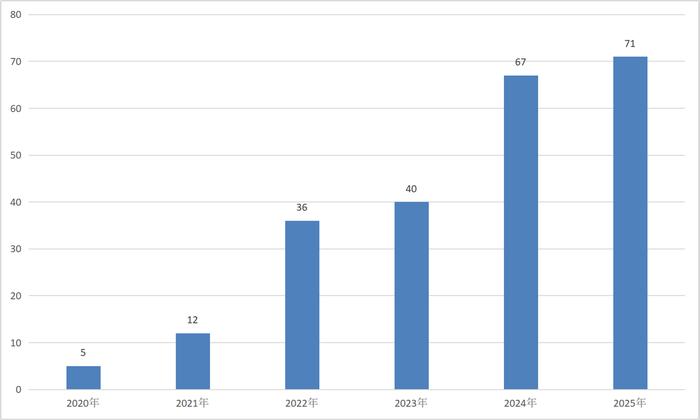
Group 1 - The core viewpoint of the article highlights the increasing popularity of inquiry transfer among A-share listed companies in 2023, with a significant rise in the number of announcements and transactions [1][2] - As of July 17, 2023, 67 listed companies have announced 71 inquiry transfers, marking a notable increase compared to previous years since the system's pilot launch in August 2020 [1][2] - The inquiry transfer system officially launched on the ChiNext board in May 2024, contributing to the surge in inquiry transfer cases this year [2] Group 2 - Inquiry transfers allow shareholders of listed companies to transfer shares before the initial public offering through market-based pricing, which helps mitigate the impact of large sell-offs on secondary market prices [2][7] - Private equity firms are significant participants in inquiry transfers, often acquiring shares at a discount compared to market prices, providing an efficient way to build large positions [2][4] - As of July 17, 2023, 12 private equity firms have participated in inquiry transfers at least 10 times this year, with many managing over 2 billion yuan [4][5] Group 3 - Lingding Investment is the most active private equity firm, appearing in the transfer lists of 47 companies, with notable transactions in companies like Guibao Pet and Jimi Technology [5][6] - Other prominent private equity firms include Shengquan Hengyuan and Jinde Private Equity, both managing over 10 billion yuan and frequently participating in inquiry transfers [6][7] - The inquiry transfer process requires a minimum transfer of 1% of the total shares, with a six-month lock-up period for the acquired shares, favoring larger private equity firms with sufficient capital [7]