量子可验证性

Search documents
真正“狂飙”:量子计算领域现新突破,离现实应用更近一步
第一财经· 2025-10-23 16:00
Core Viewpoint - Google's recent breakthrough in quantum computing, specifically the "Quantum Echoes" algorithm, marks a significant step towards practical applications of quantum technology, demonstrating a speed advantage of 13,000 times over classical supercomputers for certain algorithms [3][5][9]. Group 1: Quantum Computing Breakthrough - Google's quantum team, led by Nobel laureate Michel Devoret, has successfully demonstrated a verifiable algorithm on their quantum computer, which is considered a milestone in the field [3][5]. - The "Quantum Echoes" algorithm allows for repeatable verification of quantum computing results, addressing previous challenges in confirming quantum outcomes [7][9]. - This breakthrough is expected to enhance capabilities in fields such as medicine and materials science, potentially leading to significant discoveries [3][8]. Group 2: Market Impact - Following the announcement, shares of leading quantum computing companies D-Wave and Rigetti Computing experienced significant volatility, with pre-market gains exceeding 10% after a prior drop [5]. - The investment landscape for quantum technology is becoming increasingly active, with substantial capital inflows into quantum computing firms, evidenced by D-Wave's stock rising nearly 250% and Rigetti's by approximately 140% this year [12][13]. Group 3: Future Applications - The "Quantum Echoes" algorithm is anticipated to assist in measuring molecular structures, which could facilitate drug development and the identification of new materials [8][9]. - Google's collaboration with UC Berkeley to validate the algorithm's principles involved studying molecules with 15 and 28 atoms, yielding results consistent with traditional nuclear magnetic resonance techniques [8][9]. Group 4: Global Investment Trends - A new wave of investment in quantum technology is emerging globally, highlighted by the establishment of the 55 North fund by Novo Nordisk, which raised approximately €300 million [13]. - China's investment in quantum technology has reached a scale of around $10 billion, with significant funding initiatives aimed at advancing quantum information science [14].



真正“狂飙”:量子计算领域现新突破,离现实应用更近一步
Di Yi Cai Jing· 2025-10-23 14:05
Core Insights - Google's quantum computing breakthrough demonstrates the successful execution of a verifiable algorithm on hardware, marking a significant step towards practical applications of quantum computing [1][3] - The new "Quantum Echoes" algorithm shows clear application prospects, unlike previous tasks that lacked practical value [2][3] - The algorithm's ability to produce repeatable results addresses previous challenges in verifying quantum computing outcomes, enhancing its potential for real-world applications [3][4] Quantum Computing Breakthrough - Google's quantum computer achieved speeds 13,000 times faster than top supercomputers for similar tasks, indicating a major advancement in quantum computing capabilities [1] - The "Quantum Echoes" algorithm allows for precise measurement and analysis of molecular structures, which could significantly impact fields like drug development and materials science [4][5] Market Reaction - The announcement led to significant stock price fluctuations for leading quantum computing companies D-Wave and Rigetti Computing, with both experiencing over 10% gains following initial declines [1] Investment Landscape - Major tech companies, including Google, Microsoft, and IBM, are heavily investing in quantum computing, accelerating its transition from laboratory research to industrial applications [6] - The quantum technology sector has seen substantial capital inflow, with D-Wave's stock rising nearly 250% and Rigetti's by about 140% this year [6] Global Developments - The establishment of the 55 North quantum venture fund by Novo Nordisk, with approximately €300 million raised, highlights the growing interest and investment in quantum technology [7] - China has emerged as a leading force in quantum technology, with investments reaching around $10 billion, and ongoing government support for foundational research [8] Challenges Ahead - Despite the promising advancements, experts caution that many quantum technologies remain in experimental stages, and practical applications may take considerable time to develop [9] - The industry faces challenges in scaling quantum computing solutions for complex, real-world problems, necessitating continued investment in both hardware and algorithm development [9]
量子芯片,史上首次,谷歌造
半导体行业观察· 2025-10-23 01:01
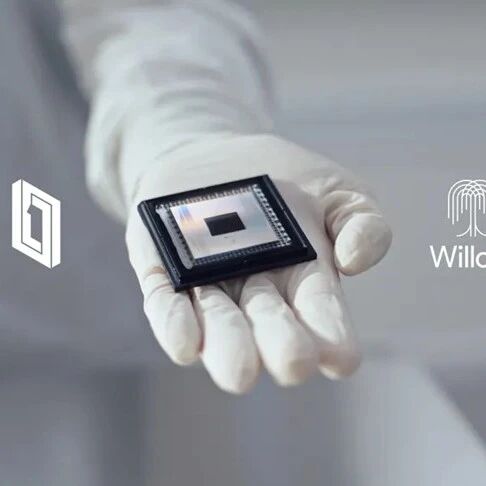
Core Insights - Google has achieved a historic milestone by successfully running a verifiable quantum algorithm that surpasses the capabilities of the fastest classical supercomputers, demonstrating a speed increase of 13,000 times [2][5] - The breakthrough is based on the Willow quantum chip, which significantly reduces error rates and enhances computational speed, paving the way for practical applications in fields like medicine and materials science [6][11] Quantum Echoes Algorithm - The Quantum Echoes algorithm represents the first verifiable quantum advantage, meaning results can be replicated on Google's quantum computer or any equivalent quantum system, confirming the outcomes [5][6] - This algorithm simulates physical experiments and tests both complexity and accuracy, making it a significant step towards practical quantum computing applications [6] Willow Quantum Chip - The Willow chip has achieved two major advancements: it reduces errors exponentially with an increase in qubit numbers and completes a standard benchmark calculation in five minutes, a task that would take the fastest classical supercomputer approximately 10^25 years [11][15] - The chip features 105 qubits and has shown impressive performance in quantum error correction and random circuit sampling benchmarks, indicating its potential for scalable quantum computing [18][19] Applications in Science - Quantum computing is expected to play a crucial role in modeling quantum mechanical phenomena, such as atomic interactions and molecular structures, which are foundational in chemistry, biology, and materials science [8][9] - Experiments conducted in collaboration with UC Berkeley using the Quantum Echoes algorithm on the Willow chip have validated the method against traditional nuclear magnetic resonance (NMR) results, revealing new insights [8] Future Prospects - Google aims to demonstrate practical, super-classical computations that are relevant to real-world applications, bridging the gap between quantum computing capabilities and commercial viability [19] - The advancements in quantum error correction and the performance of the Willow chip suggest that practical large-scale quantum computers are becoming increasingly feasible [13][17]