金属周期

Search documents
紫金矿业已经杀眼红了
Xin Lang Cai Jing· 2026-02-23 12:02
Core Viewpoint - Zijin Mining has set an ambitious target for lithium carbonate equivalent production, aiming for 270,000 to 320,000 tons by 2028, a nearly 11-fold increase from the less than 30,000 tons expected in 2025, indicating a significant shift towards the new energy sector [2][11]. Group 1: Company Strategy and Performance - The company is diversifying its operations beyond gold and copper, with a focus on lithium production as part of its strategy to become a top global mining group [3][12]. - In 2025, Zijin Mining achieved a net profit of approximately 51 to 52 billion yuan, a nearly 60% year-on-year increase, largely driven by its gold business, which benefited from a surge in international gold prices [3][12]. - The company’s gold production reached 90 tons in 2025, a 23.3% increase from the previous year, with a gross profit margin of 72.8% [3][12]. Group 2: Expansion and Acquisitions - Zijin Mining has accelerated its international expansion, completing eight major gold mine acquisitions since 2020, including recent purchases in Ghana and Kazakhstan, and plans to list its overseas gold assets [4][13]. - The acquisition of African United Gold Company for 28 billion yuan is expected to add approximately 12 tons of gold production in 2025, raising the company's 2026 gold production target to 105 tons, with aspirations to reach 130 to 140 tons by 2028 [4][13]. Group 3: Lithium Production and Cost Management - The company has established a low-cost lithium production base through its "Two Lakes and Two Mines" resource system, including projects in Argentina, Tibet, Hunan, and the Democratic Republic of Congo [5][14]. - The first phase of the 3Q salt lake project has commenced production with a cash operating cost of only 2,914 USD/ton, among the lowest globally [5][14]. - Zijin Mining's comprehensive cost for lithium carbonate remains between 40,000 to 70,000 yuan/ton, providing a buffer against price fluctuations [6][15]. Group 4: Risks and Challenges - As of September 2025, Zijin Mining's long-term debt and bonds exceeded 112.3 billion yuan, with significant capital expenditure pressures from ongoing projects [6][15]. - The company faces geopolitical risks in its overseas projects, particularly in Africa and South America, which could impact resource control [6][15]. - Despite favorable market forecasts for gold, copper, and lithium, the company must navigate potential macroeconomic disruptions that could affect demand and pricing [6][15]. Group 5: Future Outlook - By early 2026, Zijin Mining is positioned as a diversified global resource platform, spanning precious metals, industrial metals, and new energy materials [7][15]. - If the company can effectively manage its production capacity and debt risks over the next three years, it may achieve its long-term vision of becoming a leading international mining group by 2035 [7][15].



如何拥抱金属周期?一份真诚的有色金属ETF基金投资手记
Sou Hu Cai Jing· 2026-01-27 00:59
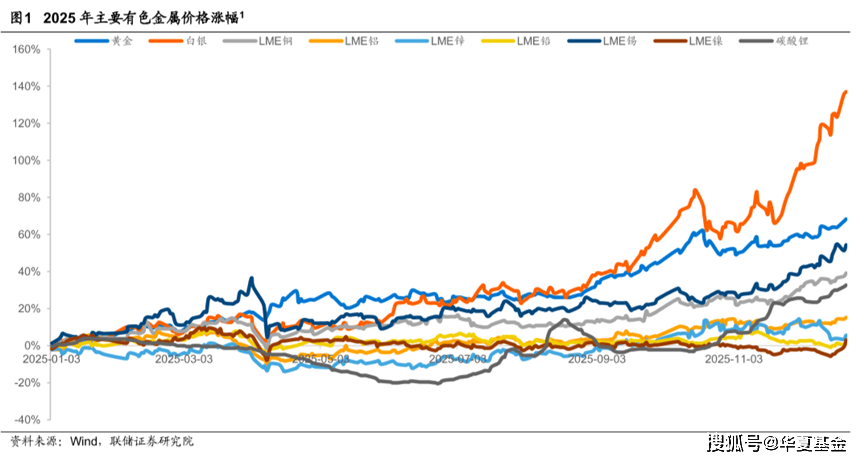
Core Insights - The article discusses the significant role of non-ferrous metals in modern society, highlighting their importance in various applications from electronics to renewable energy [1][3] - Recent price surges in metals like gold and copper indicate a unique phase in the economic cycle, driven by structural forces rather than traditional market dynamics [2][4] Group 1: Gold - Gold has seen a remarkable increase, starting from $1,614 per ounce in September 2022 to over $5,000, marking a more than 200% increase [4] - Factors such as geopolitical instability, the U.S. debt crisis, and the Federal Reserve's interest rate decisions are influencing gold prices, but the extent of the price increase suggests deeper structural changes [7][10] - The trend of "de-dollarization" and rising global uncertainties are leading to a renewed interest in gold as a non-sovereign store of value [7][10][13] Group 2: Copper and Aluminum - Copper prices have risen by 43% over the past year, currently hovering around 100,000 yuan per ton, driven by demand from energy transition, AI, and large-scale grid investments [14][17] - Supply constraints, including declining ore grades and limited new capacity, are exacerbating the supply-demand imbalance for copper [17][18] - Aluminum prices have reached a four-year high due to production caps and changing demand dynamics, particularly in high-end manufacturing sectors [19][21] Group 3: Strategic Resources - Rare earth metals are increasingly important in the context of U.S.-China trade tensions, with China holding a complete supply chain advantage [22][24] - Tungsten has seen a nearly 200% price increase, driven by its critical role in high-end manufacturing and defense industries [24][26] - Other metals like tin, lithium, and cobalt are also gaining attention due to their connections to AI, energy transitions, and national security considerations [26] Group 4: Investment Strategies - The article suggests that investors should consider diversified exposure to the non-ferrous metals sector through ETFs, rather than attempting to predict individual metal price movements [27][33] - The Zhongzheng Segmented Non-Ferrous Metal Industry Theme Index offers a systematic approach to investing in this sector, covering 50 listed companies related to non-ferrous metals [28][35] - This index allocates approximately 45% to industrial metals, 13% to gold, and the remainder to strategic resources, providing a balanced investment perspective [35][37]