金融向实

Search documents
东证期货实力斩获2025中国期货业君鼎奖三重荣誉
Zhong Jin Zai Xian· 2025-12-10 07:32
Core Viewpoint - The company, Dongzheng Futures, has been recognized for its comprehensive competitiveness and internationalization efforts, winning three prestigious awards at the "2025 China Futures Industry Jun Ding Award" [1][5] Group 1: Awards and Recognition - Dongzheng Futures won the "Leading Futures Company Jun Ding Award," "Internationalization Pioneer Futures Company Jun Ding Award," and "Excellent Service to the Real Economy Futures Company Jun Ding Award," making it one of the institutions with the most core awards in this selection [1][5] - The Jun Ding Award emphasizes "high-quality development," assessing institutions based on functional positioning, service effectiveness for the real economy, and innovative practices [1] Group 2: Internationalization Strategy - Since establishing its "internationalization" strategy in 2012, the company has focused on cross-border business, with its wholly-owned subsidiary, Dongzheng Futures International (Singapore), obtaining clearing qualifications from the three major international exchanges [2] - The company has developed a bilingual professional team to meet the growing cross-border hedging needs of domestic and foreign clients, providing a 24/7 customer service model [2] - Dongzheng Futures has integrated new open-ended products into its service list promptly, supporting Chinese enterprises in going global and attracting foreign capital [2] Group 3: Service to the Real Economy - The company has developed four financial technology platforms: "Dongzheng Fanwei," "Dongfang Yuyun," "Zhida Pro," and "Dazong Jingling," to create a differentiated competitive advantage [3] - Dongzheng Futures has invested nearly 12.5 million yuan in rural revitalization initiatives, providing risk protection for industries such as pig farming and agriculture, benefiting thousands of farmers and enterprises [3] - The "insurance + futures" model has shown significant results, with a compensation rate of 117.72% for the pig farming project in Guangxi and an increase of 9.37 million yuan for farmers in Guangdong [3] Group 4: Future Development Direction - The company aims to continue its development in digitalization, internationalization, group integration, and market-oriented strategies, aspiring to become a leading comprehensive service provider in derivatives with full-cycle risk management capabilities [4] - Dongzheng Futures is committed to making financial services more inclusive and precise, fulfilling its financial mission and contributing to the high-quality development of the futures industry and national strategies [4]


浙商银行深圳分行暖小微、绿产业,助力高质量发展
Nan Fang Du Shi Bao· 2025-11-24 23:11
Core Insights - The "Five Major Articles" strategic deployment from the Central Financial Work Conference provides a clear direction for financial services to support the real economy in the new era [2] - Shenzhen is leveraging technological innovation and green transformation to achieve high-quality development, creating a broad platform for financial institutions to empower urban development [2] Group 1: Financial Services for SMEs - Zheshang Bank's Shenzhen branch integrates the concept of "finance for good, finance for real" into urban development, focusing on serving the real economy [2] - The introduction of "Shu Ke Loan" has addressed the financing difficulties faced by small and micro enterprises, allowing them to secure loans quickly, as demonstrated by a technology company's experience of receiving 1 million yuan on the same day [3] - The bank has established a long-term mechanism that encourages lending to small and micro enterprises, with a higher tolerance for loan defaults compared to the average level [3] Group 2: Green Financing Initiatives - The bank is actively promoting green finance, exemplified by the "Photovoltaic Loan" which supports energy technology companies in financing their solar power projects, reducing their electricity costs by 30% [5] - The "Photovoltaic Loan" offers customized repayment plans and lowers overall financing costs, enhancing accessibility for companies expanding their renewable energy projects [5] - Zheshang Bank is committed to building a comprehensive green financial service system, aligning with the dual carbon goals and supporting more photovoltaic enterprises [5] Group 3: Future Directions - The bank aims to deepen its "finance for good, finance for real" philosophy, focusing on more scenario-based and digital products to enhance financial service accessibility [6] - The commitment to supporting Shenzhen's technological innovation, green low-carbon development, and the growth of small and micro enterprises will contribute to building a sustainable inclusive financial ecosystem [6] - The bank's efforts are positioned to inject continuous financial momentum into Shenzhen's high-quality development and serve as a model for modern urbanization in China [6]


构建适应“十五五”未来产业发展的现代化金融体制
Jin Rong Shi Bao· 2025-11-24 02:11
Core Viewpoint - The construction of a financial system that adapts to the development of future industries is a complex system engineering task, requiring a balance between effective markets and proactive government intervention, while breaking path dependence and institutional barriers [1][22]. Group 1: Future Industry Characteristics - Future industries are characterized by the deep integration of technological and industrial innovation, representing a shift towards disruptive innovation driven by cutting-edge technologies [4]. - These industries face fundamental differences in financing needs compared to traditional industries, primarily due to their inherent uncertainty and the lack of established market applications [4][3]. - The rise of future industries necessitates a profound structural reform of the financial supply side to create a modern financial ecosystem that effectively accommodates their unique risk-return characteristics [3][4]. Group 2: Financial System Requirements - The financial system must develop mechanisms for prudent management of uncertainty, flexible operational mechanisms, inclusive development mechanisms, and transparent regulatory mechanisms to adapt to the uncertainties of future industries [4]. - There is a need for a financial infrastructure that can price and manage innovation-related uncertainties, utilizing financial technology for real-time risk monitoring and developing diversified investment tools [9][10]. Group 3: Capital Market Development - The capital market must evolve to support a modern industrial system, focusing on maintaining a reasonable proportion of manufacturing and enhancing the service capabilities of various market segments [5][7]. - A multi-layered capital market system should be established to enhance the service capabilities for specialized small and medium enterprises, particularly those with high intangible asset ratios [7][12]. Group 4: Investment and Financing Coordination - A seamless and complementary financing ecosystem is required to support the growth trajectory of future industries, necessitating a diverse "toolbox" of financing options tailored to different stages of enterprise development [12]. - The financial system should transition from a focus on collateral-based lending to a value discovery approach, emphasizing the importance of intangible assets and future growth potential [6][13]. Group 5: Innovation in Financial Products - Financial products must be innovated to align with the characteristics of future industries, including the development of green finance, digital finance, and inclusive finance to support various sectors of the economy [17][20]. - The establishment of a comprehensive financial service standard system is essential to support the growth of future industries and ensure that financial resources are effectively allocated [18][19]. Group 6: Regulatory Framework - A modern regulatory framework is necessary to ensure that financial resources are effectively directed towards innovation while managing risks, requiring a shift towards functional and penetrating regulation [21]. - The financial system must be equipped to handle systemic risks while promoting a culture of investment in innovative sectors, ensuring that financial resources are available for long-term projects [21].
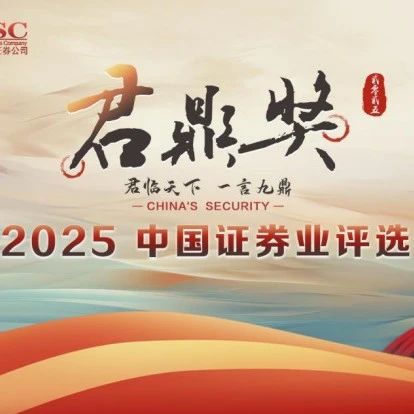
启动!2025中国证券业君鼎奖网络投票火热开启!快来Pick你心中的行业标杆!
Zheng Quan Shi Bao Wang· 2025-08-04 01:54
Core Viewpoint - The "2025 China Securities Industry Jun Ding Award" has officially launched its online voting phase, encouraging participation from the public to recognize outstanding institutions in the securities industry [1][2]. Group 1: Event Overview - The online voting period runs from August 4 to August 8, 2023, allowing participants to vote for their preferred institutions via the "Securities China" WeChat account [1][2]. - Over 80 securities firms, including foreign institutions, are competing for the awards, highlighting the market's vitality and the strength of the institutions [2]. Group 2: Voting Rules - The scoring system consists of 50% for hard indicators, 40% for expert evaluations, and 10% for online voting, emphasizing the importance of public participation [3]. - There are a total of 41 awards, with candidates self-nominating for each category [4]. - Voting is limited to 10 votes per ID each day, with only one vote allowed per award [7]. - The official voting channel is the Securities Times website [8].
启动!2025中国证券业君鼎奖网络投票火热开启!快来Pick你心中的行业标杆!
券商中国· 2025-08-04 01:40
Core Viewpoint - The "2025 China Securities Industry Jun Ding Award" event is a significant platform for recognizing outstanding institutions in the capital market, with a focus on aligning with national strategies and enhancing the service to the real economy [3]. Group 1: Event Overview - The event is organized by the Securities Times and features over 80 participating securities firms, including foreign institutions, highlighting the market's vitality and institutional strength [3]. - The voting period for the award is from August 4 to August 8, 2023, allowing participants to cast their votes for their preferred institutions [5]. Group 2: Voting Rules - The scoring system consists of 50% for hard indicators, 40% for expert reviews, and 10% for public voting, emphasizing the importance of public participation [4]. - Each voter can cast up to 10 votes per day, with a limit of one vote per award, ensuring a fair voting process [6].