金融结构转型

Search documents
我国新增20万颗卫星申请;黄奇帆最新发声|21早新闻
2 1 Shi Ji Jing Ji Bao Dao· 2026-01-10 23:24
Regulatory Developments - The National Internet Information Office has drafted the "Regulations on the Collection and Use of Personal Information by Internet Applications (Draft for Comments)," which prohibits frequent requests for personal information permissions that affect users' normal use of other functions [1] - The State Administration for Market Regulation has announced a revised "Complaint Handling Measures for Market Supervision," effective from April 15, which clarifies the jurisdiction of complaints for online stores and live broadcast platforms, and aims to regulate malicious claims [1] Economic Insights - The Ministry of Commerce has issued a task for comprehensive pilot projects to expand the opening of the service industry in Dalian and eight other cities [2] - The National Healthcare Security Administration has revised the coding rules for traditional Chinese medicine pieces, assigning a new "medical identity" to each piece [2] - China's chief economist forum indicates a historic shift in China's financial structure, with a decrease in the proportion of indirect financing and an increase in direct financing [2] - Predictions suggest that monetary policy will likely adopt a "small step" approach in the near term, with room for rate cuts [2] - A significant shift of funds from deposits to asset management products is expected as a large volume of fixed-term deposits matures this year [2] Investment Trends - Rising storage costs have begun to impact the consumer electronics sector, leading to price increases for smartphones and laptops, particularly among leading PC manufacturers [4] - Fund companies have been notified to utilize more QDII quotas for public offerings, which is seen as a measure to guide financial resources towards ordinary investors [4] - The Hong Kong stock market has seen a net subscription of over 10 billion in thematic ETFs within the first four trading days of the year, with several ETFs reaching new highs since their launch [4] - Gold prices have reached historical highs multiple times in 2025, with a cumulative increase of over 60%, while the US dollar index has dropped by 9.4% [4][5] Company Movements - Hangzhou Xinjian Electromechanical Transmission Co., Ltd. has initiated listing guidance with CITIC Securities as the advisory institution, noted for its close ties to Tesla's Optimus supply chain [6] - Xiaomi's CEO expressed pride in the SU7 model, which has reportedly outperformed the Tesla Model 3 in sales [6] - The new chief scientist at Tencent indicated that the potential for productivity improvements related to current models is just beginning to be realized [6] - BAIC New Energy and Beijing Mobility have launched a pilot operation for the BAIC Arcfox Alpha S (L3 version) on designated highways, with plans to gradually open to individual users by the second quarter of this year [6] - Changying Precision has stated that while it provides structural components for portable satellite communication stations, this business constitutes a very small portion of its revenue [6]
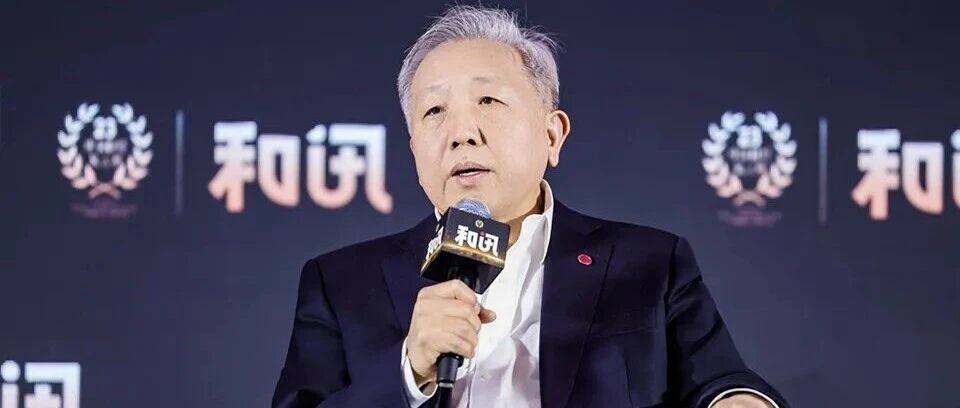
吴晓求谈“一股独大”:有责任大股东比股权分散更重要
和讯· 2025-12-12 09:36
Core Viewpoint - The core of China's capital market reform lies in establishing a highly transparent market environment and a fair rule system, as emphasized by Wu Xiaoqiu, a prominent financial expert [2]. Group 1: Capital Market Reform - The reform must ensure transparency at the legal, regulatory, and institutional levels to combat fraudulent activities such as false disclosures and insider trading [2]. - The current regulatory guidelines for listed companies are insufficient and need to be elevated to the level of law to effectively deter severe violations [2]. - Wu advocates for severe penalties for violators to build genuine market trust, suggesting that penalties should be so severe that they lead to significant financial ruin for offenders [2]. Group 2: Three-Pronged Reform Approach - The asset side of the reform should shift from being centered on financing entities to focusing on the protection of investor rights [3]. - The funding side of the reform emphasizes the cultivation of institutional investors to change the market structure dominated by individual investors, which Wu argues lacks growth potential [4]. - The institutional reform requires a comprehensive restructuring of the legal system, including both criminal and civil compensation laws, to enhance the regulatory framework [4]. Group 3: Views on Shareholding Structures - Wu argues that there is no evidence that companies with dispersed shareholding are inherently superior to those with a responsible controlling shareholder, suggesting that a stable major shareholder can lead to better company performance [5]. - He proposes a "1+3" rule system for major shareholder reductions, which includes a three-year lock-up period, transparency in financial disclosures, advance notice of reductions, and restrictions on loss-making companies from reducing their stakes [5]. Group 4: Financial Structure Transformation - The current financial structure in China, with capital market assets around 250 trillion yuan and bank assets at approximately 300 trillion yuan, indicates a need for a long-term transition towards balance, which may take 20 to 30 years [6]. - As financial disintermediation deepens, both investors and financing entities are expected to increasingly favor market mechanisms, enhancing the capital market's role in financing high-tech enterprises [6]. - Wu reiterates that the fundamental solution for China's capital market lies in systematic institutional reforms to ensure market transparency and fairness [6].