
金融聚集区

Search documents
陈林龙:构建金融聚集区需夯实金融设施、资本、人力等“六大支柱”
Sou Hu Cai Jing· 2025-12-28 15:24
Core Viewpoint - The "Sanya Financial International Forum and the Fifth Sanya Wealth Management Conference" emphasizes the need for a collaborative approach to build a financial hub in Sanya, leveraging international experiences from cities like Hong Kong, Dubai, and Singapore [1][3]. Group 1: Financial Infrastructure - Sanya's financial assets are approximately 20 trillion yuan, primarily dominated by traditional banking institutions [3][5]. - The establishment of a modern financial hub requires robust infrastructure, including data centers, disaster recovery centers, anti-money laundering systems, and credit systems [5][6]. - The development of professional intermediary services, such as accounting and legal services, is essential for a thriving financial environment [6][8]. Group 2: Capital Support - Recommendations for capital support include deepening the "Dual Q" (QDLP/QFII) mechanism to enhance wealth management channels [3][6]. - Optimizing EF accounts to facilitate limited onshore and offshore RMB transactions is crucial [7]. - Utilizing Hong Kong's financing market for bond issuance and syndicate loans in sectors like deep-sea, aerospace, and agriculture is advised [7][8]. Group 3: Human Capital - The need to break geographical and age restrictions in talent acquisition is highlighted, suggesting flexible hiring methods such as remote consulting and short-term project collaborations [7][8]. - The importance of a motivating mechanism to enhance workforce productivity is emphasized [8]. Group 4: Policy Framework - Transitioning from a "dual 15%" tax advantage to a stable, transparent, and predictable regulatory framework is recommended [8][9]. - Enhancing international commercial arbitration in Sanya is also suggested to improve the policy environment [8]. Group 5: Industry Development - Sanya's financial sector should align with the broader industrial development strategy, focusing on five key areas: agriculture, marine economy, aerospace, digital economy, and green economy [8][9]. - The integration of financial services with these industries is essential for sustainable growth [9]. Group 6: International Experience - Successful financial hubs like Dubai, Luxembourg, and Singapore provide valuable lessons in regulatory frameworks, infrastructure development, and industry integration [10][11]. - Sanya is encouraged to adopt bold institutional innovations and learn from the experiences of these international examples to accelerate its financial hub development [10][11].


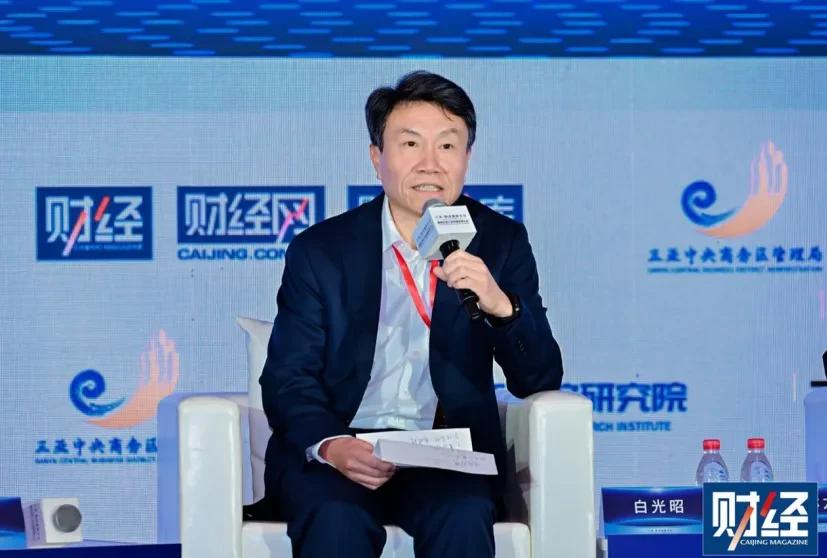
白光昭:发展“家族事务所”集群是海南自贸港建设特色金融聚集区的可行路径
Xin Lang Cai Jing· 2025-12-28 03:55
Core Viewpoint - The "Sanya Financial International Forum and the Fifth Sanya Wealth Management Conference" emphasizes the future positioning of Hainan Free Trade Port and new opportunities in Sanya, suggesting that Sanya can learn from Hong Kong's experience in financial wealth management and consider the practices of Qingdao as a national wealth management financial reform pilot zone [1][6]. Group 1: Development of Family Offices - The concept of "family offices" should extend beyond traditional financial services to encompass a wide range of family needs, including health, tourism, legal, education, and immigration services [3][9]. - Establishing a "family office industrial park" that gathers various professional service institutions can effectively stimulate domestic demand and promote consumption, becoming a significant form of future service industry development [3][10]. - The development of family offices relies on a collaborative approach rather than isolated efforts, suggesting that a concentration of different types of family offices can enhance service offerings and meet diverse client needs [10][11]. Group 2: Advantages of Hainan Free Trade Port - Hainan Free Trade Port benefits from national policy advantages, allowing for innovative models and providing a strong institutional guarantee for development [3][13]. - The region can serve as a "testing ground" for the development of family offices, with successful experiences potentially replicable across the country [3][13]. - Differentiated development strategies should be pursued, leveraging Hainan's unique natural endowments and free trade port policies to avoid homogenized competition with other cities [3][14]. Group 3: Economic Principles of Financial Clusters - The construction of financial clusters follows the economic principle of agglomeration, which can lead to reduced costs and enhanced resource exchange, creating a synergistic effect [7][8]. - The establishment of financial service institutions in clustered environments can lead to significant economic benefits, as the interaction among institutions can generate greater value than their individual contributions [7][8].
倪鹏飞:智能化时代将形成多极化、全域化和科技化的全球金融体系
Cai Jing Wang· 2025-11-14 03:13
Core Viewpoint - The forum emphasizes the development of financial hubs as areas that aggregate financial entities and play a pivotal role in capital flow, asset allocation, investment decision-making, and risk management [1][6]. Group 1: Financial Hub Development - Financial hubs are characterized as "financial platform + financial individuals" in the intelligent era, leading to a multi-polar, globalized, and technology-driven financial system [3][7]. - The evolution of financial hubs has transitioned from agricultural and industrial eras to a focus on technology in the intelligent era, where technology centers may become financial centers [6][9]. Group 2: Strategies for Hangzhou - To establish Hangzhou as a "financial platform + financial talent" hub, four strategies are proposed: 1. Focus on strengths by leveraging advantages in digital, platform, and private sectors to explore leading financial tools and products [4][10]. 2. Collaborate with existing trading venues in nearby cities like Shanghai and Shenzhen to compensate for trading center shortcomings [4][10]. 3. Build financial technology infrastructure to attract major financial resources and innovate financial systems [4][10]. 4. Create a conducive environment for financial development by fostering a stable, trustworthy business climate and a culture that embraces failure [4][10]. Group 3: Economic and Financial Interdependence - The relationship between economic and financial development is highlighted, indicating that as economies develop, financial systems also advance, and vice versa [5][11]. - The intelligent era is marked by both aggregation and dispersion in financial activities, necessitating a balanced approach to financial center spatial layout by the government [5][12].

倪鹏飞:智能化时代将形成多极化、全球化和科技化的全球金融体系
Cai Jing Wang· 2025-11-13 14:13
Core Insights - The forum emphasizes the development of financial hubs as areas that aggregate financial entities and play a pivotal role in capital flow, asset allocation, investment decision-making, and risk management [1][4] - The intelligent era will lead to a multi-polar, globalized, and technology-driven financial system, where each financial district possesses global functions [5][6] Financial Hub Development - The concept of a financial hub is evolving into a "financial platform + financial talent" model, highlighting the importance of both digital infrastructure and skilled professionals in the financial sector [2][8] - The development of financial hubs should focus on leveraging existing strengths, addressing weaknesses through collaboration, and establishing robust financial technology infrastructure [2][9] Trends in Financial Development - Financial hubs are experiencing a shift from concentrated aggregation to a model that allows for both gathering and dispersing resources, reflecting the dynamics of economic and financial development [3][10] - The relationship between economic development and financial advancement is reciprocal, with each influencing the other in a cycle of growth and resource allocation [3][10] Recommendations for Hangzhou - To transform Hangzhou into a "financial platform + financial talent" hub, it is recommended to enhance existing advantages, collaborate with nearby trading centers, and build financial technology infrastructure [2][9] - The city should create a conducive environment for financial development, focusing on commercial stability, a culture that tolerates failure, and high-quality living conditions to attract and nurture financial talent [2][9]