
钴供应链不确定性

Search documents
洛阳钼业下跌,据报刚果(金)出台最新钴出口规定加剧业内观望情绪
Zhi Tong Cai Jing· 2025-12-09 06:15
Core Viewpoint - The new cobalt export regulations introduced by the Democratic Republic of Congo (DRC), the world's largest cobalt supplier, are causing widespread concern in the global mining and lithium battery industries due to increased uncertainty in an already strained supply chain [3]. Group 1: Regulatory Changes - The DRC has replaced its export ban with a quota system since October, which has introduced temporary royalty fees and complex processes, further complicating the cobalt supply chain [3]. - The core controversy revolves around the calculation details of the export royalty fee, specifically the 10% prepayment requirement based on sales value [3]. Group 2: Industry Reactions - Industry executives are confused about whether the 10% royalty fee will be deducted from the last export transaction amount before the February export ban, which significantly impacts companies' capital costs [3]. - Since the implementation of the quota system on October 16, companies have been required to prepay 10% of the sales value as a royalty fee, but the latest regulations lack clarity on the calculation basis, increasing companies' hesitance to act [3].


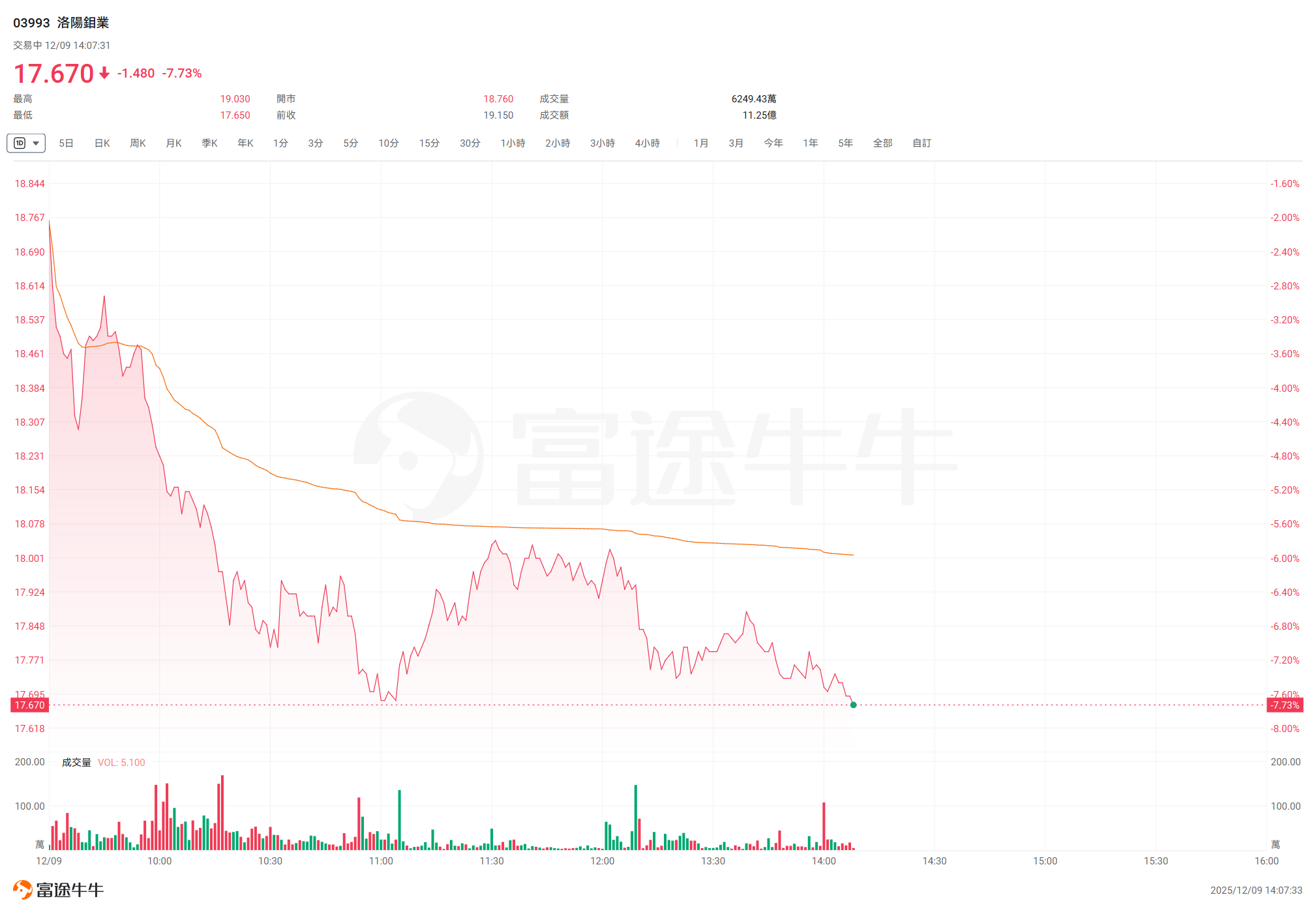
洛阳钼业午后跌超7% 据报刚果(金)出台最新钴出口规定加剧业内观望情绪
Zhi Tong Cai Jing· 2025-12-09 05:57
Core Viewpoint - The recent cobalt export regulations from the Democratic Republic of Congo (DRC), the world's largest cobalt supplier, have raised significant concerns within the global mining and lithium battery industries, particularly affecting companies like Luoyang Molybdenum (603993) [1] Group 1: Market Reaction - Luoyang Molybdenum's stock price fell over 7%, trading at 17.86 HKD with a transaction volume of 10.37 billion HKD as of the report [1] Group 2: Regulatory Changes - The DRC has replaced its export ban with a quota system since October, introducing new temporary royalty fees and complex processes that add uncertainty to the already strained cobalt supply chain [1] - The core controversy of the new regulations revolves around the calculation details of the export royalty fees, specifically the 10% prepayment requirement based on sales value [1] Group 3: Industry Concerns - Industry executives express confusion regarding whether the prepayment of the 10% royalty will be calculated based on the last export transaction amount before the February export ban, which directly impacts companies' capital costs [1] - The lack of clarity in the latest regulations has heightened the cautious sentiment among companies in the cobalt supply chain [1]
港股异动 | 洛阳钼业(03993)午后跌超7% 据报刚果(金)出台最新钴出口规定加剧业内观望情绪
智通财经网· 2025-12-09 05:54
Core Viewpoint - The recent cobalt export regulations from the Democratic Republic of Congo (DRC), the world's largest cobalt supplier, are causing widespread concern in the global mining and lithium battery industries, particularly affecting companies like Luoyang Molybdenum Co., Ltd. (03993) which saw its stock drop significantly [1] Group 1: Market Reaction - Luoyang Molybdenum's stock fell over 7% in the afternoon trading session, closing down 6.74% at HKD 17.86, with a trading volume of HKD 1.037 billion [1] Group 2: Regulatory Changes - The DRC has implemented a new cobalt export regulation that replaces the previous export ban with a quota system, introducing additional temporary fees and complex processes that add uncertainty to the already tight cobalt supply chain [1] - The core controversy of the new regulation revolves around the calculation details of the export permit fee, specifically the 10% prepayment requirement based on sales value, which has left the industry confused [1] Group 3: Industry Concerns - Industry executives are seeking clarity on whether the prepayment fee will be deducted from the last export transaction amount before the February export ban, as this directly impacts companies' capital costs [1] - Since the implementation of the cobalt export quota system on October 16, companies have been required to prepay 10% of the sales value as a permit fee, but the latest regulations have not clarified the calculation basis, increasing companies' cautious sentiment [1]
钴市迎 “强震”!刚果(金)新规再添变数
Xin Lang Cai Jing· 2025-12-09 01:13
Core Viewpoint - The new cobalt export regulations from the Democratic Republic of Congo (DRC), the world's largest cobalt supplier, are causing widespread concern in the global mining and lithium battery industries due to increased uncertainty in the already strained cobalt supply chain [1][2]. Group 1: Regulatory Changes - The DRC has replaced its export ban with a quota system since October, introducing a temporary 10% royalty fee on exports, which has added complexity to the export process [1]. - There is confusion among industry players regarding the calculation basis for the pre-paid 10% royalty fee, particularly whether it will be deducted from the last export transaction amount before the February export ban [1][2]. Group 2: Market Impact - The frequent adjustments to export rules in the DRC have created significant uncertainty, which is viewed as a major risk factor for the market [2]. - Cobalt prices have shown a dramatic increase, rising from a low of $10 per pound in February to $24 per pound (approximately $52,910 per ton) by December 8, marking a 140% increase over six months [2]. Group 3: Supply Chain Concerns - The DRC accounts for 76% of global cobalt production, with an expected output of 220,000 tons in 2024, meaning any fluctuations in its export processes will directly impact the global market [2]. - The ongoing supply uncertainty may suppress demand as battery manufacturers may accelerate the development of low-cobalt or cobalt-free technologies, potentially eroding traditional cobalt demand in the long term [3]. Group 4: Industry Response - Global mining companies are closely monitoring the DRC's regulatory interpretations, with some halting new order negotiations [3]. - If policy details remain unclear in the short term, cobalt prices may continue to fluctuate at high levels, prompting lithium battery supply chain companies to diversify their supply sources to mitigate risks associated with reliance on a single supplier [3].
