铁路发展

Search documents
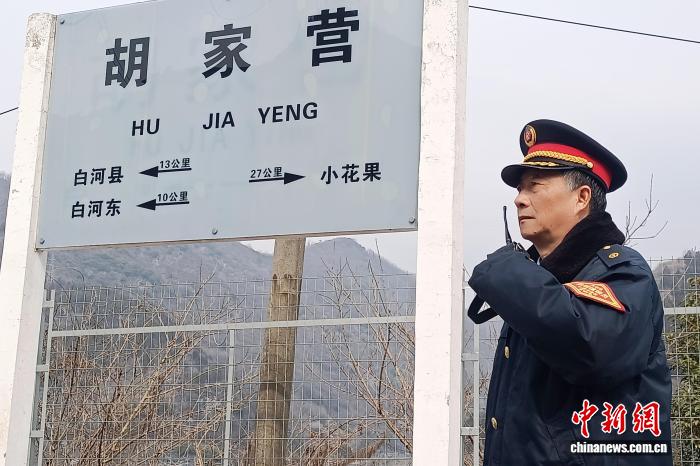
(新春走基层)湖北十堰“铁路老兵”的最后一个春运
Zhong Guo Xin Wen Wang· 2026-02-25 11:54
Core Viewpoint - The article highlights the final Spring Festival travel season for Wang Taiqi, a veteran railway worker at Hujiaying Station in Shiyan, Hubei, reflecting on his 36 years of service and the evolution of China's railway system [1]. Group 1: Railway Operations - During the Spring Festival travel peak, Hujiaying Station handles an average of 182 trains daily, an increase from the usual 162 trains [3]. - Wang Taiqi meticulously monitors train operations, ensuring safety by checking train wheels, doors, and overall conditions before departure [3][5]. - The station operates on a shift system, with Wang working from 9 AM to 6 PM, managing nearly 70 train departures and arrivals in a single day [3]. Group 2: Personal Experience and Industry Evolution - Wang Taiqi has witnessed significant changes in the railway industry, from the transition to high-speed trains and the introduction of paperless tickets to improved passenger conditions [5]. - He emphasizes the importance of passenger safety during the Spring Festival, aiming for every traveler to board safely and reach their destination without issues [5].

天路守护者的春运故事
Xin Lang Cai Jing· 2026-02-18 17:12
Core Insights - The article highlights the career of Li Yuqi, a seasoned train driver at the Golmud Locomotive Depot, as he approaches his final Spring Festival transportation season after 38 years of service [1][4] - It emphasizes the transformation of the Qinghai-Tibet Railway over the years, showcasing advancements in technology and infrastructure, as well as the emotional connection drivers have with the passengers and the landscape [2][4] Group 1: Career and Contributions - Li Yuqi has accumulated a total of 1.73 million kilometers of safe driving, equivalent to circling the Earth over 40 times, demonstrating his extensive experience and commitment to safety [4] - Throughout his career, he has faced numerous challenges, including navigating through severe weather conditions and managing emergencies, showcasing his leadership and expertise [4] - As a mentor, he is dedicated to passing on his knowledge and experience to younger drivers, emphasizing the importance of passenger safety and professional skills [4] Group 2: Historical Context and Impact - Li Yuqi's journey began in December 1994, influenced by his father's work in the railway sector, which instilled in him a passion for becoming a train driver [1][2] - He witnessed significant milestones in the development of the Qinghai-Tibet Railway, including the full line opening in July 2006 and the introduction of electric locomotives and the "Fuxing" high-speed trains [2][4] - The emotional connection with passengers is highlighted, as he recalls moments of joy shared with local communities during his journeys, reflecting the railway's role in connecting people and places [2][4]
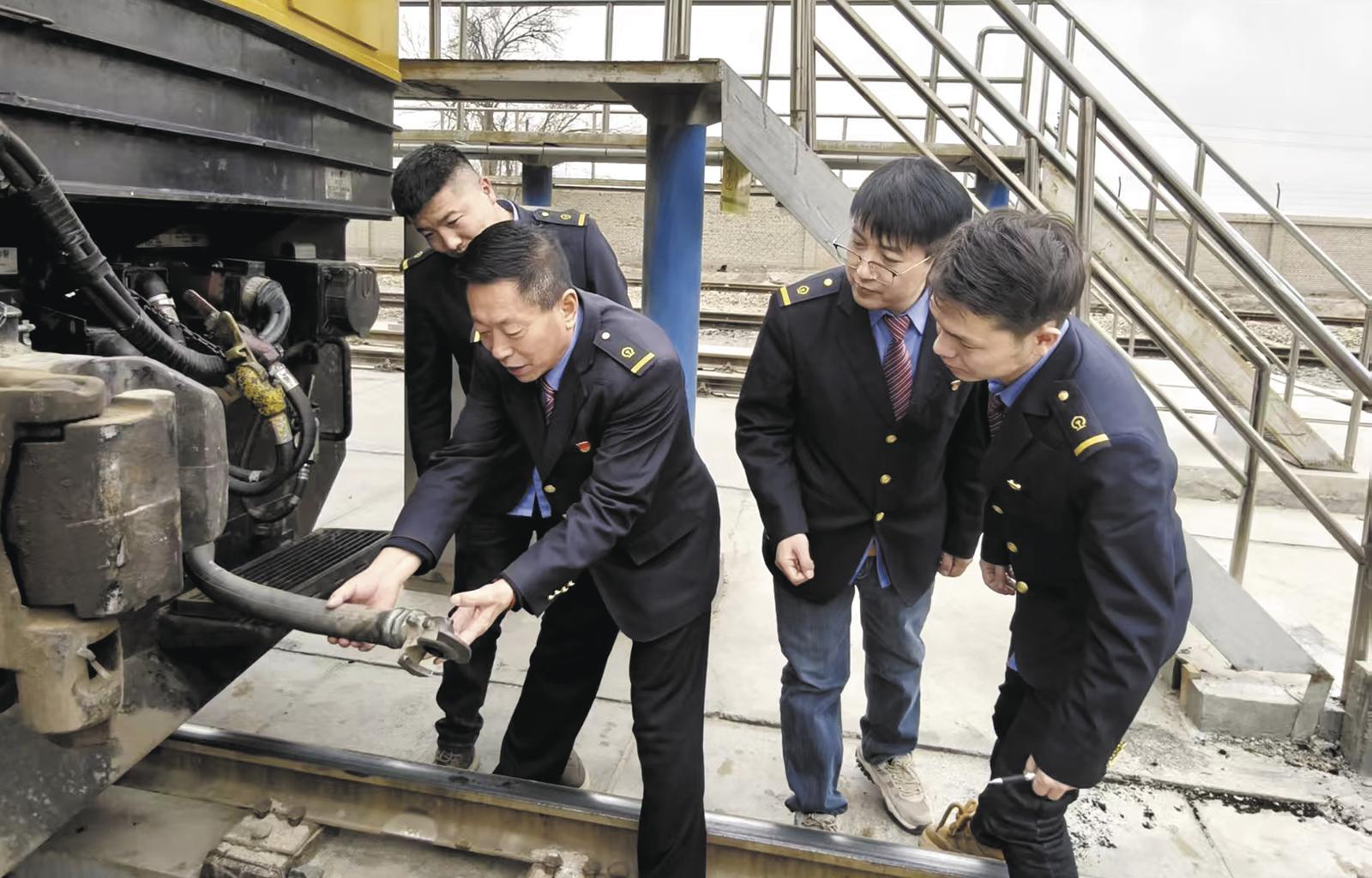
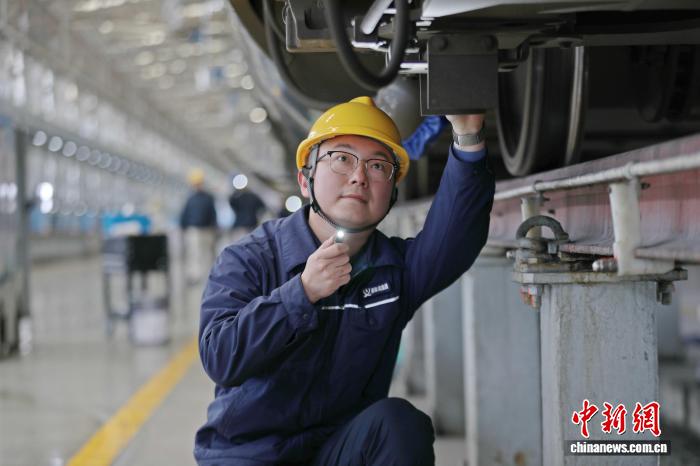
这个春运,他们要为400多辆火车“体检”
Zhong Guo Qing Nian Bao· 2026-02-15 02:12
Core Insights - The article highlights the critical role of train maintenance in ensuring safety and punctuality during the Spring Festival travel rush in China, focusing on the work of Gu Haitao, a skilled technician at the Qiqihar North Vehicle Depot [2][10] Group 1: Role and Responsibilities - Gu Haitao leads a team of 45, including 12 recent university graduates, responsible for inspecting and maintaining 430 passenger trains during the Spring Festival [2] - The maintenance process involves using tools like a long-handled inspection hammer to detect issues through sound, showcasing the importance of auditory skills in identifying potential hazards [3][4] Group 2: Training and Mentorship - Gu Haitao emphasizes hands-on training for new employees, allowing them to observe and participate in critical maintenance tasks to build their skills and knowledge [5][6] - He employs a systematic approach to task management, using color-coded electronic spreadsheets to prioritize maintenance tasks, ensuring that the entire team is aware of critical issues [3][5] Group 3: Challenges in Maintenance - The maintenance work is physically demanding, requiring technicians to work in confined spaces and under challenging conditions, which tests their endurance and attention to detail [4][5] - Technicians must be vigilant in identifying subtle signs of wear and tear, such as rust or loose bolts, which can lead to significant safety risks if overlooked [4][5] Group 4: Evolution of the Industry - The article reflects on the advancements in China's railway system, noting the shift towards domestic production of key components, which has improved operational efficiency and reduced reliance on foreign suppliers [10] - Gu Haitao's experience over decades illustrates the transformation of the railway industry, highlighting the progress made in technology and maintenance practices [10]

探访中越国际铁路通道上的应急值守站——马年马站马站长
Xin Lang Cai Jing· 2026-02-14 23:00
Core Viewpoint - The article highlights the significant role of the Ma Dubei Station as an emergency response station on the Kunming-Yuxi-River Railway, emphasizing its importance despite its remote location and limited staffing [1][3]. Group 1: Station Operations - Ma Dubei Station does not handle passenger services or cargo loading but is crucial for the safety of the Kunming-Yuxi-River Railway and the China-Vietnam international railway corridor [1]. - The station has transitioned from manual operations to an automated dispatch system, reducing the need for personnel from four to one, with Ma Zhengrong currently serving alone [4]. Group 2: Personal Commitment - Ma Zhengrong has dedicated over a decade to the station, often spending holidays there, with his family visiting him during the Chinese New Year [5]. - The station has become a second home for Ma Zhengrong, who has cultivated a vegetable garden and maintains a daily exercise routine [5]. Group 3: Growth and Development - The Kunming-Yuxi-River Railway has seen a substantial increase in both freight and passenger traffic over the past ten years, with freight volume expected to reach 5.1391 million tons and passenger volume 4.9145 million by 2025 [5]. - Compared to its initial operation in 2015, freight volume has increased by 2.1279 million tons and passenger volume by 2.698 million [5].
(新春走基层)旧车票里的乡愁与变迁
Zhong Guo Xin Wen Wang· 2026-02-10 06:57
Core Viewpoint - The article highlights the emotional connection and changes experienced by railway workers, particularly focusing on the journey of a railway employee named Qiang Nan, who reflects on the evolution of train travel in China over the past nine years, emphasizing the advancements in railway technology and the convenience it brings to travelers [1]. Group 1: Personal Experience and Reflection - Qiang Nan has been working in the railway sector for nine years, witnessing significant changes in train travel during the Spring Festival, a peak travel season in China [3]. - His first experience of Spring Festival travel in 2016 involved a long journey on a traditional green train, which took nearly seven hours, highlighting the challenges of travel during peak times [3]. - He keeps a collection of old train tickets as a personal memento, symbolizing his connection to his hometown and the changes in railway travel over the years [3][5]. Group 2: Advancements in Railway Infrastructure - The rapid expansion of China's high-speed rail network has significantly improved travel times, with new lines such as the Xicheng High-Speed Railway and the Yinxi High-Speed Railway enhancing connectivity between regions [4]. - By 2025, the Xiyang High-Speed Railway is expected to facilitate travel from Xi'an to Yulin in just two hours, further improving accessibility for residents [4]. - The transition from traditional paper tickets to electronic tickets reflects the modernization of the railway system, making travel more convenient for passengers [6].
老铁路人镜头里的春运记忆
Xin Lang Cai Jing· 2026-02-02 18:02
Core Viewpoint - The article highlights the significant changes and improvements in the railway system during the Spring Festival travel rush, as captured through the lens of a retired railway worker and photographer, Hao Baojun, who has documented the evolution of railway travel over the years [8][10][15]. Group 1: Railway Development and Changes - The Spring Festival travel rush (Chunyun) reflects the evolution of the railway system, showcasing advancements in comfort, convenience, and efficiency for travelers [10][15]. - The transition from long travel times, such as two days and two nights from Xining to Beijing, to a mere 12 hours demonstrates the significant improvements in railway services [9][15]. - The modernization of ticketing processes, allowing travelers to use mobile phones for ticket purchases and identity verification, marks a shift towards a more efficient travel experience [9][10]. Group 2: Personal Journey and Photography - Hao Baojun's journey into photography began in 1998 during a chance encounter with artists on a train, leading him to document railway life and its changes over the years [11][12]. - Over 25 years, he has captured more than 300,000 photographs, chronicling the transformation of the railway system, including the opening of the Qinghai-Tibet Railway [13][15]. - His photography emphasizes the warmth and humanity of railway travel, capturing moments of connection and care among passengers and staff [16]. Group 3: Community Engagement and Impact - During the Spring Festival, Hao offers free photography services to travelers, creating lasting memories for those who may not be able to celebrate with family [16]. - His work not only highlights the advancements in railway infrastructure but also the emotional experiences of travelers, showcasing the human side of railway operations [16].

告别最后一班“绿皮火车”广州站全面迈入高铁时代
Xin Lang Cai Jing· 2026-01-25 18:15
Core Viewpoint - The Guangzhou Railway Station, with a history of 115 years, officially transitions from conventional train operations to high-speed rail, marking a significant milestone in China's railway development [1] Group 1: Transition to High-Speed Rail - The operation of conventional trains at Guangzhou Railway Station has officially concluded, signaling a full shift to high-speed rail services [1] - From January 26, a new train operation schedule will be implemented nationwide, facilitating the integration of high-speed rail into urban areas while relocating conventional services [1] Group 2: Historical Significance - The transformation of Guangzhou Railway Station reflects not only the rapid development of China's railway system but also serves as a microcosm of broader societal changes over time [1]
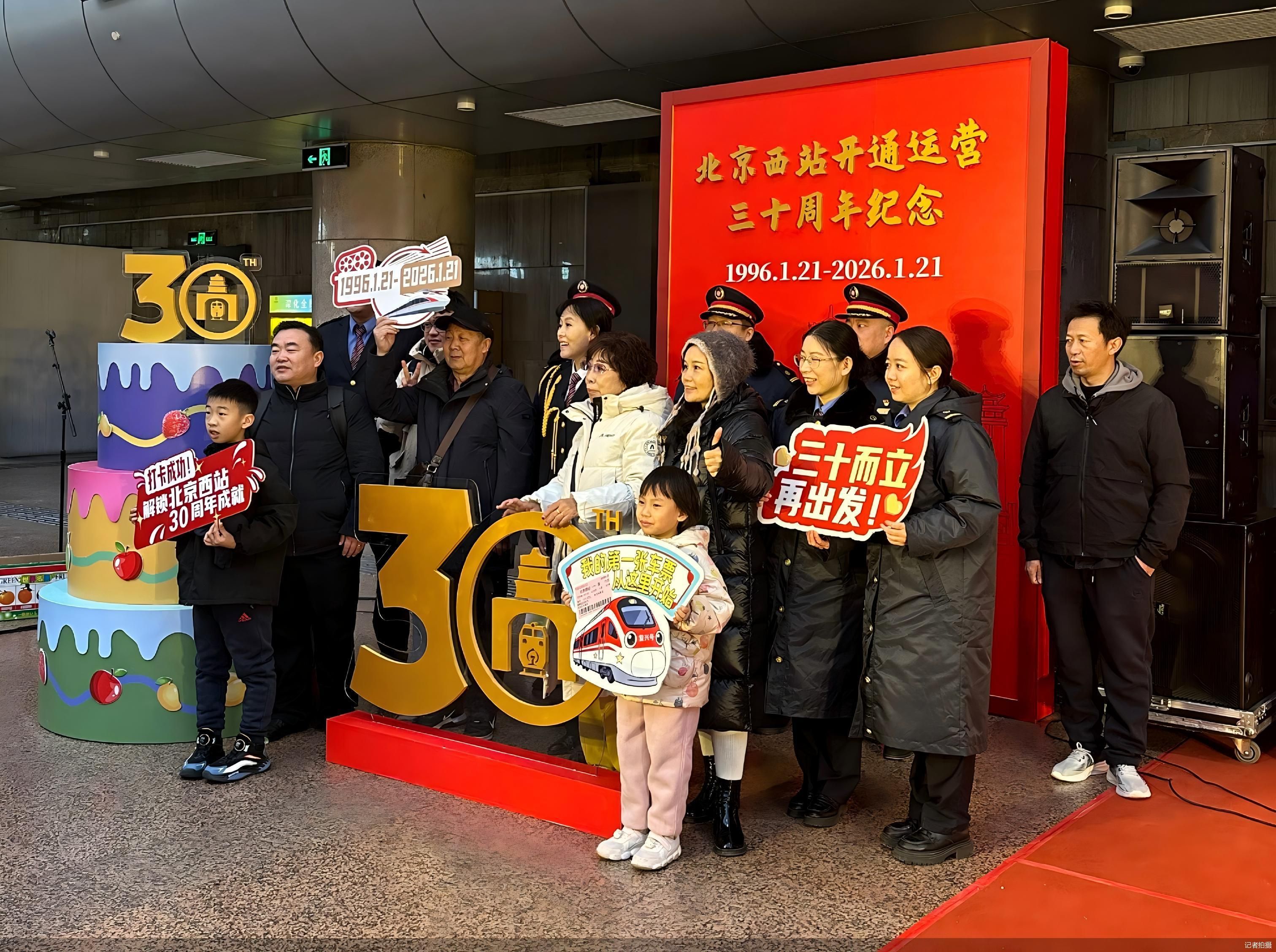
北京西站:30岁“老铁”的快与慢
Bei Jing Ri Bao Ke Hu Duan· 2026-01-21 22:18
Core Insights - Beijing West Railway Station celebrated its 30th anniversary, having officially opened on January 21, 1996, and has since served over 1.96 billion passengers [1][3] Group 1: Historical Development - The station has evolved from "two lines and one station" to "eleven lines and eight stations," reflecting significant growth in its operational capacity [3] - Passenger volume has increased from 8.26 million in 1996 to a projected 65.39 million by 2025, marking a growth of 57.13 million passengers [3][4] Group 2: Infrastructure and Services - Beijing West Station has become a comprehensive railway hub, integrating high-speed, regular, suburban, and intercity rail services [3][4] - The station's development is closely linked to the strategic significance of the Beijing-Kowloon Railway, which serves as a major economic artery [4] Group 3: Technological Advancements - The transition from manual ticketing to digital solutions has streamlined the ticket purchasing process, with the introduction of the 12306 online ticketing system [6][7] - The number of ticket windows has been reduced from five to two, while maintaining 20 service windows to enhance customer service [6] Group 4: Community Engagement - The station has implemented a "slow" ticket window specifically for elderly passengers, emphasizing the importance of personalized service and community support [6][7]

在火车站,看见行进的中国
Ren Min Ri Bao· 2026-01-21 07:29
Core Viewpoint - The article highlights the significant development and impact of Beijing West Railway Station over the past 30 years, showcasing its evolution and contribution to China's railway network and economic growth [4][5][6]. Group 1: Historical Development - Beijing West Railway Station opened on January 21, 1996, and has served nearly 2 billion passengers by January 20, 2026 [4]. - The station has expanded from two major railway hubs in Beijing to eight, including Beijing South, Beijing North, and others, connecting to 32 provincial-level administrative regions and 211 cities [4]. - The station's passenger volume is projected to reach 39 million by 2025 [4]. Group 2: Infrastructure and Services - The station has integrated 11 railway lines, increasing train services from 27 pairs at its inception to a projected 193 pairs by 2025 [6]. - Passenger traffic has grown from 8.26 million in 1996 to an expected 65.39 million in 2025 [6]. - The introduction of high-speed trains and advanced ticketing systems has marked significant milestones in the station's operational history [6][11]. Group 3: Economic Impact - The Beijing-Kowloon Railway, a key project, has facilitated economic growth across regions, benefiting approximately 200 million people [5]. - The railway network has expanded from 64,900 kilometers in 1996 to 165,000 kilometers today, with high-speed rail exceeding 50,000 kilometers [7]. Group 4: Commuter Experience - The introduction of the Beijing-Fengtai Station has improved commuter convenience, allowing for better access to the city and surrounding areas [9][10]. - Enhanced train schedules and services have made weekend travel more accessible for commuters, allowing families to spend more time together [9]. Group 5: Technological Advancements - The transition to online ticketing has drastically changed the purchasing process, with over 90% of tickets expected to be sold online by 2025 [11][12]. - The efficiency of the ticketing system has improved, with the ability to process up to 1,000 tickets per second during peak times [12].
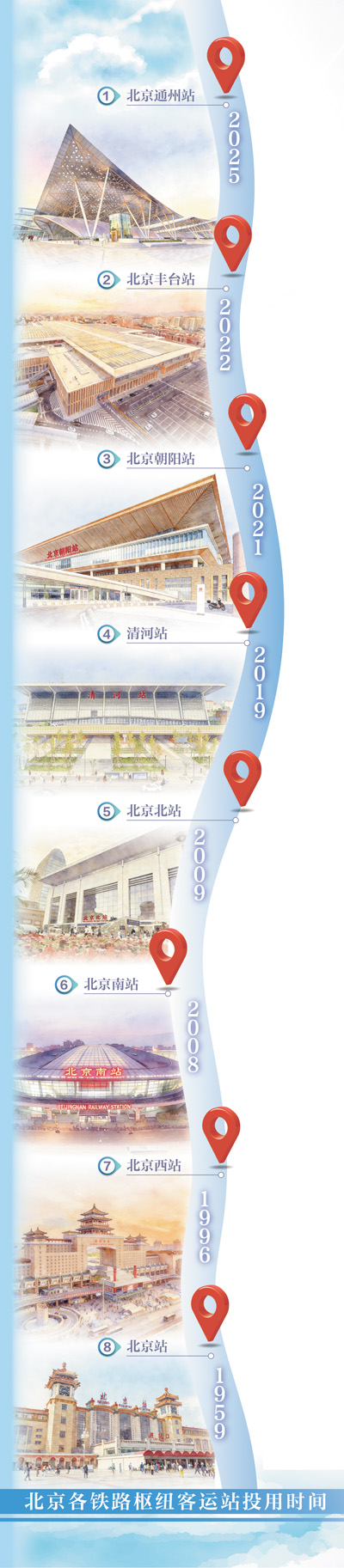
北京西站迎来开通运营三十周年
Bei Jing Shang Bao· 2026-01-21 02:49
Core Insights - Beijing West Railway Station has celebrated its 30th anniversary, marking its evolution into a leading modern railway hub in Asia since its opening in 1996 [1][4] - The station has witnessed significant growth in China's railway network, expanding from two lines at inception to eleven lines by 2025, reflecting the transition from "Four Verticals and Four Horizontals" to "Eight Verticals and Eight Horizontals" [1] - Passenger volume has surged from 8.26 million in 1996 to a projected 65.39 million by 2025, indicating a robust increase in railway usage [1] Summary by Sections - **Historical Development**: Beijing West Station has served over 1.96 billion passengers since its inception, evolving from a key point on the Jingjiu Railway to a major hub in the high-speed rail network [4] - **Service Commitment**: The station aims to maintain high service standards, emphasizing safety, convenience, and warmth in its operations, reflecting its commitment to serving the public [4] - **Economic Impact**: As a critical transportation node, Beijing West Station plays a vital role in regional economic development and serves as a gateway for international connectivity [4]