
银信合作

Search documents
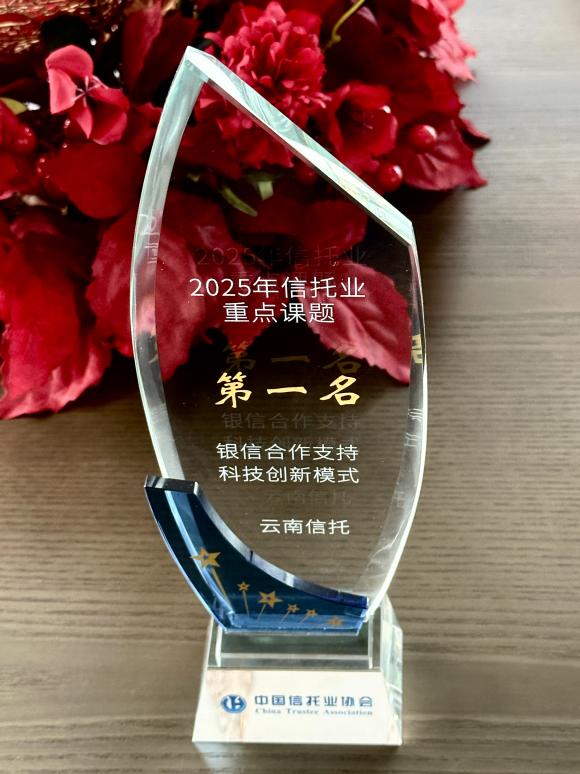
云南信托与信银理财联合牵头课题荣获中国信托业协会2025年专题课题评审第一名
Jin Rong Jie· 2026-02-12 02:29
Group 1 - The core viewpoint of the news is that Yunnan International Trust Co., Ltd. and Xinyin Wealth Management Co., Ltd. won first place in the "Bank-Trust Cooperation Supporting Technological Innovation Model" project, as announced by the China Trust Industry Association [1][3] Group 2 - Yunnan Trust has integrated rigorous research practices with business transformation, reflecting its commitment to regulatory policies and support for the real economy and regional development strategies [3][4] - The joint project team conducted extensive surveys and field visits to understand the financial needs of technology enterprises and the pain points of banking services, laying a solid research foundation [4] - The project proposed eight innovative cooperation models based on the strengths of both banks and trusts, creating a synergistic effect described as "1+1>2" [4] Group 3 - Yunnan Trust actively participates in the formulation of industry standards, particularly in ESG and green finance, contributing to the establishment of the first domestic ESG group standard [5] - The company is the first in the trust industry to join the expert working group supporting carbon peak and carbon neutrality goals, engaging in research on carbon financial products and green finance business models [5] - Yunnan Trust aims to deepen the collaboration between research and industry, focusing on key transformation topics and market trends in the trust sector [5]

用“已知价”申赎?定制信托产品背后藏“猫腻”
Zhong Guo Zheng Quan Bao· 2025-11-18 02:29
Core Viewpoint - The collaboration between wealth management subsidiaries and trust companies has formed a trillion-yuan market, with customized trust products gaining popularity among wealth management firms as they seek to optimize returns and mitigate risks during market fluctuations [1][2][4]. Group 1: Market Dynamics - As of the end of Q3 2025, the scale of trust products held by wealth management products reached 1.31 trillion yuan, showing an increase compared to the end of Q2 [2]. - The trust industry has seen the expansion of the "trillion club," with several trust companies managing assets exceeding one trillion yuan, such as Jianxin Trust at 1.69 trillion yuan and Ping An Trust at 1.05 trillion yuan [2]. - Customized trust products are favored by wealth management subsidiaries, which specify valuation methods and investment targets, indicating a shift towards tailored financial solutions [2][3]. Group 2: Regulatory Environment - The recently released draft of the "Asset Management Trust Management Measures" has sparked discussions regarding the concentration of investors, particularly the stipulation that a single institutional investor and its affiliates cannot invest more than 80% of the total trust product's actual trust scale [5][6]. - The definition of "affiliated parties" is crucial, as it may restrict a wealth management subsidiary from fully utilizing a trust plan if different products under the same subsidiary are considered affiliates [6]. - The regulatory changes aim to address systemic risks associated with the heavy reliance of trust companies on wealth management subsidiaries as major clients [5][6]. Group 3: Operational Insights - Wealth management subsidiaries face restrictions in accessing the interbank market, necessitating collaboration with trust companies for bond purchases [4]. - Trust companies have developed operational advantages, such as bankruptcy isolation and mature risk control mechanisms, making them attractive partners for wealth management firms [5]. - The industry is expected to undergo significant transformation, with a focus on enhancing research and investment capabilities within trust companies to adapt to evolving market conditions [6].
银信合作料被戴上“紧箍” 委外酝酿变局
Zhong Guo Zheng Quan Bao· 2025-11-17 22:06
Core Insights - The collaboration between wealth management companies and trust companies has become a significant business model in the asset management industry, particularly in the context of restrictions on bond investment accounts [1][4][5] - Customized trust products are favored by wealth management companies, allowing them to specify valuation methods and investment targets, which enhances their operational flexibility [2][3] - The recent draft of the "Asset Management Trust Management Measures" has sparked discussions about the future of bank-trust cooperation, emphasizing the need for regulatory compliance and the exploration of new collaboration opportunities [1][7] Group 1: Market Dynamics - As of Q3 2025, the scale of trust products held by wealth management companies reached 1.31 trillion yuan, indicating a growing reliance on trust channels [1] - Wealth management companies have seen a significant increase in their customized trust product scale, with reports of a 100 billion yuan increase compared to the previous year [2][5] - The trust industry has expanded its "trillion club," with several trust companies managing assets exceeding one trillion yuan as of June [1] Group 2: Operational Practices - Wealth management companies often utilize "T-1" valuation methods to lock in profits during market upswings and avoid losses during downturns, which has raised concerns about valuation manipulation [3][6] - Tail difference adjustments in trust product valuations can create "invisible profits," allowing larger products to support smaller ones, thereby influencing net asset values [3][6] - The operational model of customized trust products involves wealth management companies making investment decisions while trust companies handle clearing and trading [2][4] Group 3: Regulatory Environment - The draft regulations limit the investment amount of a single institutional investor in the same trust product to no more than 80% of the product's actual trust scale, aiming to mitigate concentration risks [5][7] - The regulatory framework encourages trust companies to shift from being mere financing intermediaries to investment management institutions, promoting a focus on active management capabilities [7][9] - The ongoing policy reforms, including the "1+N" system and the revised "Trust Company Management Measures," aim to guide the transformation of the trust industry and reduce reliance on channel-based operations [9] Group 4: Future Outlook - The trust industry is expected to return to its core functions, emphasizing the establishment of comprehensive research and investment systems to enhance active management capabilities [8][9] - Wealth management companies are urged to break away from scale obsession and focus on improving their research capabilities and risk management practices [8][9] - The competitive landscape is anticipated to intensify, with institutions relying on channels likely to be phased out in favor of those with robust investment research capabilities [9]
银信合作料被戴上“紧箍”委外酝酿变局
Zhong Guo Zheng Quan Bao· 2025-11-17 20:12
Core Insights - The collaboration between wealth management companies and trust companies has become a significant business model in the asset management industry, particularly in the context of restrictions on bond investment accounts [1][4][6] - Customized trust products are favored by wealth management companies, allowing them to specify valuation methods and investment targets, which enhances their operational efficiency [2][4] - The recent draft of the "Asset Management Trust Management Measures" has sparked discussions about the future of bank-trust cooperation, emphasizing the need for trust companies to focus on active management and risk control [6][7][8] Group 1: Market Dynamics - As of the end of Q3 2025, the scale of trust products held by wealth management companies reached 1.31 trillion yuan, indicating a growing reliance on trust channels [1] - Trust companies have seen an expansion in their asset management scale, with several surpassing 1 trillion yuan in managed assets by mid-2023 [1][5] - The regulatory environment is shifting, with new measures aimed at clarifying the boundaries of trust company operations and preventing systemic risks associated with concentrated investments [6][7] Group 2: Operational Strategies - Wealth management companies are increasingly using "T-1" valuation methods to lock in profits during market upswings and avoid losses during downturns, which has raised concerns about valuation manipulation [3][4] - Trust companies are adapting by offering customized products that allow wealth management firms to maintain control over investment decisions while outsourcing operational tasks [2][4] - The reliance on trust companies is driven by the limitations faced by wealth management firms in accessing the interbank market for bond investments [4][5] Group 3: Future Outlook - The industry is expected to see a transition towards more active management practices among trust companies, as they are encouraged to build comprehensive research and investment frameworks [7][8] - The ongoing regulatory changes are likely to enhance the focus on risk management and reduce the dependency on traditional channel-based revenue models [6][7] - The competitive landscape is shifting, with firms that lack research capabilities facing potential obsolescence, while those with strong investment management skills are likely to thrive [8]
苏州市31家银行选派骨干成立“出口信保支持工作小组”
Su Zhou Ri Bao· 2025-05-02 00:32
Group 1 - The People's Bank of China in Suzhou has mobilized 31 banks to form an "Export Credit Insurance Support Working Group" to enhance services for small and micro foreign trade enterprises [1] - The working group aims to provide precise export credit insurance services through a "policy outreach + service downscaling" model, assisting thousands of foreign trade enterprises in Suzhou [1] - The group consists of key employees from major banks such as Industrial and Commercial Bank of China, Agricultural Bank of China, Bank of China, and China Construction Bank, focusing on risk protection and financing arrangements for export enterprises [1] Group 2 - Industrial and Commercial Bank of China's Suzhou branch has collaborated with China Export & Credit Insurance Corporation to quickly relay policies to enterprises, implementing differentiated interest rate policies to support stability in export enterprises [2] - Suzhou Bank has introduced a "Five Dimensions and Ten Strategies" initiative to support foreign trade enterprises through various measures, including financing linkage and fee reductions [2] - The proactive outreach by Suzhou Bank's client managers has revealed that many textile enterprises are shifting to emerging markets due to external pressures, and the availability of export credit insurance has alleviated their concerns about risks [2]