
银团贷款

Search documents
安宁股份2026年2月25日涨停分析:限制性股票激励+银团贷款支持+业绩目标明确
Xin Lang Cai Jing· 2026-02-25 03:14
Group 1 - The core point of the article is that Anning Co., Ltd. (SZ002978) reached its daily limit with a price of 41.23 yuan, reflecting a 10.01% increase and a total market capitalization of 19.46 billion yuan [1] - The company launched a restricted stock incentive plan for 32-33 core employees, setting performance growth targets of 12%-35%, which aims to stabilize the team and enhance operational efficiency [2] - Anning Co., Ltd. secured a 3 billion yuan syndicated loan to support acquisition projects, enhancing its resource control capabilities and providing strong financial backing for business expansion [2] Group 2 - The vanadium-titanium industry has recently shown strong performance due to market demand and policy factors, benefiting Anning Co., Ltd. as a mining and sales enterprise of vanadium-titanium magnetite [2] - Significant capital inflow was observed on February 25, with major funds showing high interest in Anning Co., Ltd., indicating strong market attention [2] - The technical indicators for the stock, particularly the MACD, have formed a golden cross, suggesting a clear upward trend in the short term, attracting more investor interest [2]
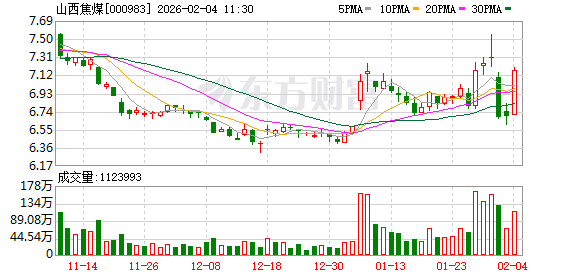
山西焦煤:公司购买兴县区探矿权支付的247.05亿竞购款,其中70%左右为银团贷款,期限不超过15年
Mei Ri Jing Ji Xin Wen· 2026-02-04 04:27
Group 1 - The core point of the article is that Shanxi Coking Coal (000983.SZ) announced the payment of 24.705 billion for exploration rights in Xingxian District, with approximately 70% financed through a syndicate loan [2] - The loan has a term of no more than 15 years, with interest paid quarterly and principal repayment starting in the fifth year [2]


山东太阳纸业股份有限公司关于2026年度日常关联交易预计的公告
Shang Hai Zheng Quan Bao· 2025-12-09 19:41
Core Viewpoint - The company, Shandong Sun Paper Industry Co., Ltd., has announced the expected daily related party transactions for the year 2026, estimating a total amount not exceeding RMB 649.2 million, which will be subject to approval at the upcoming shareholders' meeting [2][3]. Group 1: Daily Related Party Transactions Overview - The company aims to regulate its related party transactions to protect the rights of the company and its shareholders, in compliance with relevant regulations [1]. - The expected total amount of daily related party transactions for 2026 is RMB 649.2 million, based on the transaction data from January to November 2025 and the company's operational forecasts for 2026 [2]. Group 2: Related Parties and Transaction Amounts - The company has identified five related parties, all of which are wholly-owned subsidiaries of its controlling shareholder, Shandong Sun Holdings Group Co., Ltd. [3]. - The expected transaction amounts with each related party for 2026 are as follows: - Shandong Shengde International Hotel Co., Ltd.: RMB 14 million [9] - Wanguo Paper Sun White Card Paper Co., Ltd.: RMB 510 million [12] - Shandong International Paper Sun Paperboard Co., Ltd.: RMB 745 million [15] - Shandong Wanguo Sun Food Packaging Materials Co., Ltd.: RMB 2,773 million [18] - Guangxi Sun Paperboard Co., Ltd.: RMB 2,450 million [22] Group 3: Transaction Policies and Impact - The pricing policy for related party transactions will be based on fair market prices, agreed upon by both parties [22]. - The purpose of these transactions is to meet the company's operational needs and will not adversely affect the company's financial status or independence [24][27].


安徽出台推进县域特色产业集群发展十二条政策措施
Zhong Guo Chan Ye Jing Ji Xin Xi Wang· 2025-08-07 23:20
Core Viewpoint - The development of county-level characteristic industrial clusters in Anhui, particularly in Qianshan and Taihu counties, is driving high-quality economic growth, with a goal of establishing "China's Membrane Capital" and achieving a scale of "100 billion enterprises, 1 trillion industries" [1] Group 1: Industry Development - Anhui has established 72 county-level characteristic industrial clusters, achieving full coverage across counties, with revenue surpassing 1 trillion yuan and over 4,000 enterprises above designated size [1] - The province's county-level clusters are still in the early stages compared to developed regions like Jiangsu and Zhejiang, with many small and medium enterprises needing support in transformation, technology empowerment, talent cultivation, and financing [1] Group 2: Policy Support - A joint initiative by four provincial departments has introduced comprehensive measures to support the development of county-level characteristic industrial clusters, focusing on the entire lifecycle and supply chain [2][3] - The "One Group One Policy" diagnostic mechanism will be established to provide tailored support for clusters facing transformation challenges, ensuring systematic guidance for their development [3] Group 3: Digital Transformation - The measures emphasize the importance of digital transformation, promoting the application of digital solutions and supporting the establishment of smart factories within clusters [4] - Specific support is directed towards the photovoltaic and energy storage industries, encouraging green development and the expansion of application scenarios [4] Group 4: Brand Development - The Taihu functional membrane new materials cluster exemplifies the successful cultivation of a new industrial cluster through a focus on specialization and innovation [5] - The province aims to establish around 30 innovation research institutes by 2027 to enhance technological innovation and brand building within these clusters [6] Group 5: Financial Support - The measures include financial incentives and policies to attract talent and funding, with a focus on integrating various funding sources to support cluster development [7][8] - "Syndicated loans" will be promoted to meet the long-term funding needs of characteristic industrial clusters, allowing multiple banks to collaborate on financing [8]