
功能膜新材料

Search documents
63名“科技副总”在安庆企业挂职
Xin Lang Cai Jing· 2026-01-13 02:14
Core Viewpoint - The Anhui Provincial Science and Technology Department has announced the fourth batch of "Technology Vice Presidents," with 11 individuals appointed to technology-oriented enterprises in Anqing, covering various fields such as biomedicine, functional membrane materials, and ecological agriculture [1] Group 1 - The "Technology Vice President" initiative is a flexible talent introduction policy aimed at injecting innovation into enterprises by assigning research talents from universities and research institutions to serve as technical vice presidents [1] - This program has resulted in a total of 63 provincial-level "Technology Vice Presidents" currently serving in enterprises within Anqing [1] - The initiative aims to bridge the gap between industry, academia, and research, enhancing regional innovation efficiency and overall competitiveness, thus contributing to high-quality local development [1] Group 2 - Since the implementation of this policy, Anqing has established a regular selection process for provincial-level technology vice presidents, facilitating a green channel for technology personnel from universities to enter enterprises [1] - A dynamic scheduling mechanism has been set up to monitor the service status of "Technology Vice Presidents," including service duration, joint talent cultivation, platform construction, technical cooperation, and technology achievement transformation [1] - The program emphasizes proactive communication and service support to effectively leverage the innovative leadership role of "Technology Vice Presidents," accelerating the integration of innovation chains, industrial chains, and talent chains [1]
广惠两市协同发力 深入推进环南昆山—罗浮山引领区建设
Nan Fang Ri Bao Wang Luo Ban· 2025-12-22 07:45
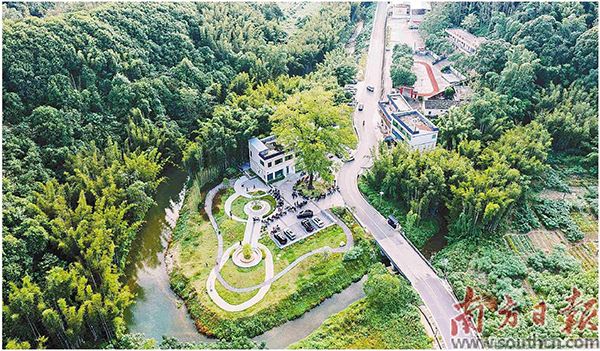
Core Viewpoint - The integration of culture and tourism along the "most beautiful tourist road" between Nankun Mountain and Luofu Mountain is driving high-quality development in Guangdong, aiming to reduce urban-rural disparities and promote coordinated regional development [1][2]. Group 1: Cultural and Tourism Development - The "most beautiful tourist road" connects 9 towns and 54 villages, enhancing urban-rural coordination and tourism resource integration [2]. - The introduction of 16 themed rest stations and 5 art installations along the road is improving functional support for tourism [2]. - Major domestic rural homestay brands are establishing operations along the route, transforming transient visitors into overnight guests [2]. - In Guangzhou, the revitalization of idle resources is leading to the upgrade of cultural tourism, with a former mining site transformed into a 144-hectare nature resort attracting 1.6 million visitors and generating over 300 million yuan in revenue [2]. Group 2: Sports and Events - A national cycling event held in December attracted over 10,000 participants, boosting local tourism and generating over 5 million yuan in consumption along the route [3][4]. - The establishment of an outdoor sports town in Huizhou offers 39 outdoor activities, contributing to the region's appeal as a sports tourism destination [3]. Group 3: Economic Development and Industry - Guangzhou is developing a unique industrial system focused on ecological health, modern green agriculture, and high-tech manufacturing, with over 3.6 billion yuan invested in a rehabilitation hospital [5]. - Huizhou is leveraging its natural resources to create diverse tourism experiences, enhancing the value of local specialties and promoting the "Winter Health in Luofu" brand [5]. - The region is seeing the formation of six billion-yuan industrial clusters in Huizhou, focusing on electronics and intelligent equipment [5]. Group 4: Social Infrastructure and Community Development - The enhancement of public services in Huizhou is improving educational and healthcare access, with partnerships between local schools and hospitals [7]. - The "Beautiful Countryside Corridor" initiative is revitalizing rural areas, with over 28,000 rural houses upgraded since 2024 [7]. - The collaborative model in villages is revitalizing previously abandoned areas, leading to stable income for villagers and deep integration of primary, secondary, and tertiary industries [8].

安徽出台推进县域特色产业集群发展十二条政策措施
Zhong Guo Chan Ye Jing Ji Xin Xi Wang· 2025-08-07 23:20
Core Viewpoint - The development of county-level characteristic industrial clusters in Anhui, particularly in Qianshan and Taihu counties, is driving high-quality economic growth, with a goal of establishing "China's Membrane Capital" and achieving a scale of "100 billion enterprises, 1 trillion industries" [1] Group 1: Industry Development - Anhui has established 72 county-level characteristic industrial clusters, achieving full coverage across counties, with revenue surpassing 1 trillion yuan and over 4,000 enterprises above designated size [1] - The province's county-level clusters are still in the early stages compared to developed regions like Jiangsu and Zhejiang, with many small and medium enterprises needing support in transformation, technology empowerment, talent cultivation, and financing [1] Group 2: Policy Support - A joint initiative by four provincial departments has introduced comprehensive measures to support the development of county-level characteristic industrial clusters, focusing on the entire lifecycle and supply chain [2][3] - The "One Group One Policy" diagnostic mechanism will be established to provide tailored support for clusters facing transformation challenges, ensuring systematic guidance for their development [3] Group 3: Digital Transformation - The measures emphasize the importance of digital transformation, promoting the application of digital solutions and supporting the establishment of smart factories within clusters [4] - Specific support is directed towards the photovoltaic and energy storage industries, encouraging green development and the expansion of application scenarios [4] Group 4: Brand Development - The Taihu functional membrane new materials cluster exemplifies the successful cultivation of a new industrial cluster through a focus on specialization and innovation [5] - The province aims to establish around 30 innovation research institutes by 2027 to enhance technological innovation and brand building within these clusters [6] Group 5: Financial Support - The measures include financial incentives and policies to attract talent and funding, with a focus on integrating various funding sources to support cluster development [7][8] - "Syndicated loans" will be promoted to meet the long-term funding needs of characteristic industrial clusters, allowing multiple banks to collaborate on financing [8]
宝藏小城的超级产业(神州看点)
Ren Min Ri Bao· 2025-07-30 22:06
Group 1: Toothbrush Industry in Jiangsu - The smart factory in Yangzhou, Jiangsu, produces 7.5 billion toothbrushes annually, utilizing nearly 200 robots for automated processes [1] - The town of Hangji has become the largest toothbrush production base globally, accounting for over 80% of China's market share and exporting to over 80 countries [2] - Leading companies in Hangji are transitioning to provide comprehensive oral care solutions, expanding product lines to include dental floss, mouthwash, and irrigators [2] Group 2: Functional Film Industry in Anhui - Taihu County has developed a functional film new materials industry cluster, with 100 enterprises, where the output value of regulated industrial enterprises exceeds 50% of the county's total industrial output [3][4] - The industry has evolved from low-end to mid-high end, with companies like Jinzhan Technology expanding their product range significantly since relocating to Taihu County [4] Group 3: Fitness Equipment Industry in Shandong - Ningjin County hosts 2,986 fitness equipment companies, with an annual output value exceeding 13.9 billion yuan, exporting to over 170 countries [6] - The county has achieved over 95% local supply rate for raw materials and components, significantly reducing production costs and time [8] - Investment in smart upgrades has reached nearly 1.8 billion yuan, with an average production efficiency increase of 200% [8]