银行合规治理

Search documents
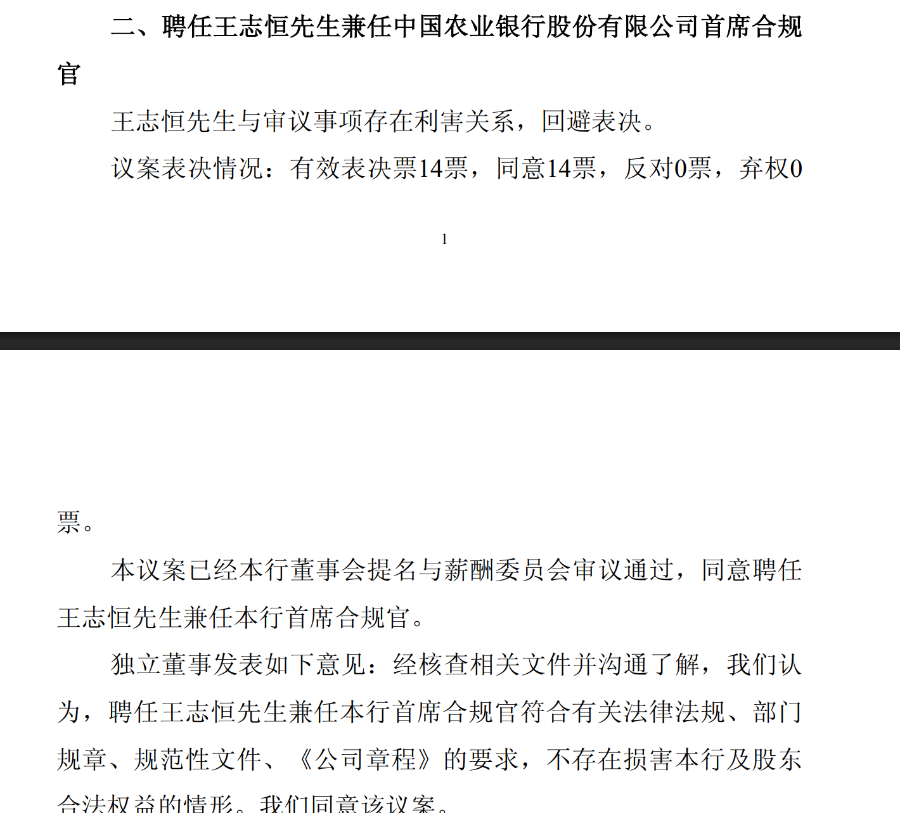
凸显合规治理 农行、中行“高配”首席合规官
2 1 Shi Ji Jing Ji Bao Dao· 2026-02-27 09:12
Group 1 - The core viewpoint of the articles is the establishment of the Chief Compliance Officer (CCO) position by major Chinese banks, reflecting a heightened emphasis on compliance and internal control within the banking sector [1][2][6] - Agricultural Bank of China and Bank of China have appointed their respective presidents as CCOs, marking the first time these banks have created this position [1][2] - The appointments are in response to the regulatory requirements set forth by the National Financial Regulatory Administration's "Compliance Management Measures for Financial Institutions," which mandates the establishment of a CCO at the headquarters of financial institutions [2][6] Group 2 - The "Compliance Measures" came into effect on March 1, 2025, with a one-year transition period, leading to a wave of CCO appointments across various banking institutions [2][6] - Other banks, such as Industrial Bank and Ping An Bank, have also appointed CCOs, indicating a broader trend in the industry [2] - The role of the CCO is distinct from that of the Chief Risk Officer (CRO), with the CCO focusing on compliance with laws and regulations, while the CRO manages substantive risks [4][5] Group 3 - The CCO position is expected to enhance compliance governance and integrate compliance requirements into business processes and decision-making, thereby influencing the corporate culture and sustainable development of the banking industry [6] - The qualifications for the CCO include a bachelor's degree and significant experience in finance and compliance, reflecting the importance of expertise in this role [5][6] - The establishment of the CCO role is seen as a significant restructuring of internal governance and risk management within banks, driven by regulatory changes and the evolving risk environment [6]



上市辅导报告集中更新 银行治理难题悬而未决
Zhong Guo Jing Ying Bao· 2026-01-17 03:45
Core Viewpoint - The recent disclosures from the China Securities Regulatory Commission (CSRC) highlight ongoing issues faced by several banks in their listing guidance reports, including legal disputes, capital adequacy ratios, and ownership structure concerns, amidst a decline in the number of bank listings in recent years [1][2]. Group 1: Listing Guidance Reports - Multiple banks, including Fujian Haixia Bank, Chengdu Rural Commercial Bank, and others, are currently in the listing guidance phase, with a generally prolonged guidance period [1]. - The reports indicate that issues such as unverified property rights and the need for improved corporate governance and internal control systems are prevalent among the banks undergoing guidance [2]. - Historical issues, such as capital adequacy pressures and ownership structure complications, have been repeatedly mentioned in various banks' guidance reports, indicating persistent challenges [3]. Group 2: Challenges in the Listing Process - The core challenges in resolving these long-standing issues stem from historical legacies involving shareholding complexities, such as pledged shares and frozen assets, which require coordination among multiple stakeholders and judicial processes [4]. - Factors influencing the bank listing process include macroeconomic conditions, market environments, regulatory policies, and internal governance, with macroeconomic and market fluctuations being the most significant [4]. - To advance the listing process, banks are encouraged to not only focus on internal governance but also to enhance their ownership structure, asset verification, and decision-making mechanisms while actively engaging with regulatory bodies to adapt to policy changes [4].
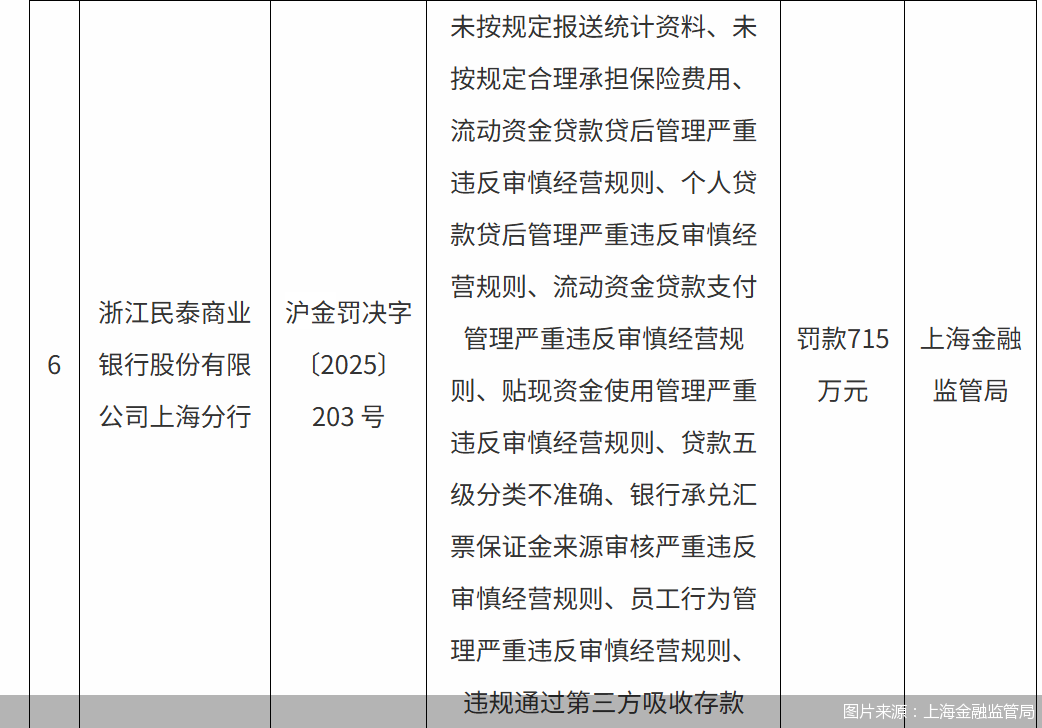
股权优化难掩内控缺陷,715万重罚考问民泰银行合规治理
Bei Jing Shang Bao· 2026-01-13 13:44
Core Viewpoint - Zhejiang Mintai Commercial Bank faces significant compliance issues highlighted by a recent fine of 7.15 million yuan due to multiple violations across its core business operations, raising concerns about its internal control systems and overall governance [1][2][4]. Compliance Issues - The Shanghai Financial Regulatory Bureau imposed a fine of 7.15 million yuan on Mintai Bank's Shanghai branch for ten violations, indicating serious lapses in its business operations [2][3]. - Specific violations include improper deposit collection through third parties, inadequate post-loan management for working capital loans, and inaccurate classification of loans, reflecting systemic weaknesses in compliance and risk management [3][4]. Financial Performance - Despite maintaining revenue growth, Mintai Bank's net profit has declined, with a year-on-year drop of over 14% expected in 2024. Revenue figures for 2022, 2023, and 2024 were 6.22 billion yuan, 6.70 billion yuan, and 7.21 billion yuan respectively, while net profits were 1.23 billion yuan, 1.34 billion yuan, and 1.15 billion yuan [8]. - As of the end of Q3 2025, the bank's total assets reached 321.45 billion yuan, showing growth from 312.78 billion yuan at the end of 2024 [8]. Governance and Capital Structure - The introduction of state-owned capital is seen as a potential solution to Mintai Bank's governance and compliance challenges, with recent capital increases aimed at enhancing its capital adequacy ratio and supporting its small and micro-financial services [5][6]. - The bank's registered capital increased from 4.607 billion yuan to 5.697 billion yuan, with significant stakes acquired by local state-owned enterprises [5][6]. Strategic Recommendations - Experts suggest that Mintai Bank should align its risk control capabilities with its growth strategies, incorporating compliance costs into its budget and enhancing internal governance mechanisms [9]. - The bank is encouraged to accelerate its digital transformation, focusing on local small and micro-business needs, and diversifying its income sources through supply chain finance and other light-capital businesses [9]. Industry Context - The banking sector is experiencing a "Matthew Effect," where larger banks and innovative institutions thrive while smaller regional banks face significant operational pressures due to limited capital and technological capabilities [9].
原董事长获刑、支行行长遭终身禁业,贵州银行内控再受拷问
Nan Fang Du Shi Bao· 2025-12-11 11:16
Core Viewpoint - The recent corruption scandals and regulatory violations at Guizhou Bank, including the sentencing of its former chairman and the imposition of fines on its branches, raise concerns about the bank's compliance and operational integrity in the financial sector [2][6][9]. Group 1: Regulatory Violations - Guizhou Bank's Zunyi Bozhou branch was fined 300,000 yuan for illegal lending practices, specifically for linking deposit requirements to loan approvals, which is prohibited by regulations [3][4]. - The bank has faced multiple penalties for similar violations, including over 1.5 million yuan in fines for improper loan management and other regulatory breaches in 2024 [4][5]. - The former chairman, Li Zhiming, was sentenced to 16 years and 6 months in prison for accepting bribes totaling over 43.1 million yuan and illegally issuing loans exceeding 304 million yuan [6][7]. Group 2: Leadership Changes and Impact - The bank has experienced significant leadership turnover, with four senior executives, including the former chairman, being implicated in corruption since October 2023 [7]. - A new leadership team has been appointed, including Wu Fan as the first female president, who has extensive experience in the banking sector and is expected to address compliance issues [10][11]. - The effectiveness of the new leadership in balancing growth and compliance will be crucial for the bank's future [11]. Group 3: Financial Performance and Challenges - Guizhou Bank's financial performance has deteriorated, with a revenue of 11.3 billion yuan and a net profit of 3.65 billion yuan in 2023, reflecting declines of 5.38% and 4.60% year-on-year, respectively [9]. - The bank's non-performing loan (NPL) ratio in the real estate sector reached 40.39%, the highest in the industry, although it improved to 11.58% in 2024 [9]. - As of mid-2025, the overall NPL ratio was 1.69%, indicating slight improvement, but the bank still faces challenges in optimizing loan structures and managing asset quality [9].

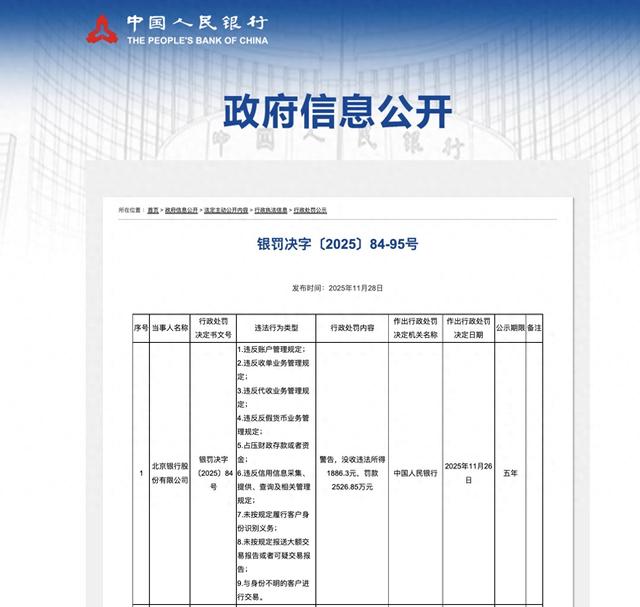
北京银行再遭罚没超4000万元,合规治理困境持续加深
Guan Cha Zhe Wang· 2025-11-29 03:14
Core Viewpoint - The People's Bank of China has imposed significant penalties on Beijing Bank for multiple violations, totaling over 40 million yuan, highlighting serious compliance issues within the bank's operations [1][2][3]. Summary by Category Regulatory Actions - Beijing Bank was penalized for nine violations, including breaches of account management, anti-money laundering regulations, and customer identity verification [2][3]. - The total fines included the confiscation of illegal gains amounting to 1,886.3 yuan and a fine of 25.2685 million yuan [1][2]. Compliance Issues - The violations indicate systemic weaknesses in key areas such as payment settlement, anti-money laundering, and credit information management [2][3]. - A total of 11 responsible personnel from various core departments were also fined, reflecting the widespread nature of the compliance failures [1][2]. Financial Performance - In Q1 2025, Beijing Bank reported a revenue of 17.127 billion yuan, a year-on-year decrease of 3.18%, marking the first quarterly negative growth in 12 years [3][5]. - The bank's total assets reached 4.75 trillion yuan, but growth has slowed, with a revenue decline of 1.08% in the first three quarters of 2025 [3][5]. Competitive Position - As of June 2025, Beijing Bank's asset scale of 4.75 trillion yuan was surpassed by Jiangsu Bank's 4.79 trillion yuan, indicating increasing competitive pressure [5]. - The bank's core Tier 1 capital adequacy ratio has been declining, from 9.54% in 2022 to 8.95% in 2024 [5].