
首席合规官制度

Search documents
凸显合规治理 农行、中行“高配”首席合规官
2 1 Shi Ji Jing Ji Bao Dao· 2026-02-27 09:12
Group 1 - The core viewpoint of the articles is the establishment of the Chief Compliance Officer (CCO) position by major Chinese banks, reflecting a heightened emphasis on compliance and internal control within the banking sector [1][2][6] - Agricultural Bank of China and Bank of China have appointed their respective presidents as CCOs, marking the first time these banks have created this position [1][2] - The appointments are in response to the regulatory requirements set forth by the National Financial Regulatory Administration's "Compliance Management Measures for Financial Institutions," which mandates the establishment of a CCO at the headquarters of financial institutions [2][6] Group 2 - The "Compliance Measures" came into effect on March 1, 2025, with a one-year transition period, leading to a wave of CCO appointments across various banking institutions [2][6] - Other banks, such as Industrial Bank and Ping An Bank, have also appointed CCOs, indicating a broader trend in the industry [2] - The role of the CCO is distinct from that of the Chief Risk Officer (CRO), with the CCO focusing on compliance with laws and regulations, while the CRO manages substantive risks [4][5] Group 3 - The CCO position is expected to enhance compliance governance and integrate compliance requirements into business processes and decision-making, thereby influencing the corporate culture and sustainable development of the banking industry [6] - The qualifications for the CCO include a bachelor's degree and significant experience in finance and compliance, reflecting the importance of expertise in this role [5][6] - The establishment of the CCO role is seen as a significant restructuring of internal governance and risk management within banks, driven by regulatory changes and the evolving risk environment [6]



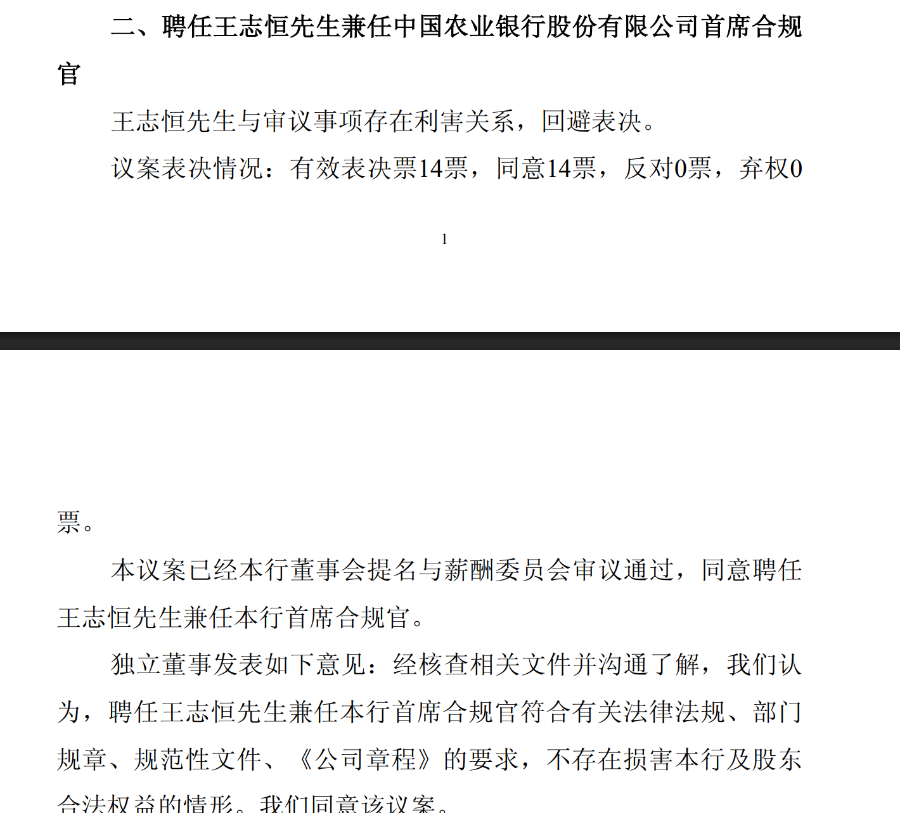
银行治理结构20年大变革:首席合规官接棒监事会,“硬制衡”取代“软监督”
Xin Lang Cai Jing· 2026-01-15 14:14
Core Viewpoint - The governance structure of Chinese commercial banks, which has been in place for over 20 years, is undergoing significant changes as the supervisory board is being replaced by Chief Compliance Officers (CCOs) in response to regulatory requirements [3][32][57] Group 1: Regulatory Changes - The "Compliance Management Measures for Financial Institutions" was released on December 25, 2024, mandating the establishment of CCO positions at financial institutions [4][32] - By March 1, 2025, all financial institutions must complete the appointment of CCOs and related compliance structures, marking the end of the supervisory board's role [4][32] - As of early 2026, at least 56 financial institutions have had their CCO qualifications approved by regulators, with over 20 banks and branches already in compliance [3][6][35] Group 2: Transition from Supervisory Board to CCO - The supervisory board, which has been in place for over 20 years, is officially being phased out, leaving only the board of shareholders and the board of directors [3][32] - The transition signifies a shift from "soft supervision" to "hard checks and balances" within the governance framework of Chinese commercial banks [3][32][57] - The responsibilities of the supervisory board will now be taken over by the CCO, who will have enhanced authority and independence [4][32] Group 3: CCO Responsibilities and Powers - CCOs are tasked with compliance risk monitoring, internal audits, and ensuring compliance with new products and business strategies [4][32] - The CCOs will have significant independence, with the authority to access all internal documents and data necessary for compliance assessments [21][25] - CCOs will also have the power to halt operations on projects that pose compliance risks and will be involved in the performance evaluations of business line leaders [23][25] Group 4: Historical Context and Need for Change - The effectiveness of the supervisory board has been questioned, as it has not met the expectations of policymakers regarding compliance oversight [8][39] - Regulatory scrutiny has intensified since 2018, with a shift in focus from growth to compliance, leading to increased penalties for violations [10][39] - The transition to CCOs is seen as a necessary evolution to address the shortcomings of the previous governance structure [8][39][48]

过渡期收官在即,银行业首席合规官密集就位, 如何推进从“被动遵循”到“主动治理”?
Mei Ri Jing Ji Xin Wen· 2026-01-09 10:52
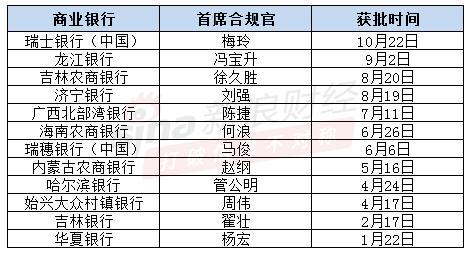
Core Insights - The banking industry is undergoing a restructuring wave in risk and compliance systems due to tightening regulatory rules and a complex risk environment [1] - A surge in appointments of Chief Risk Officers (CROs) and Chief Compliance Officers (CCOs) is expected by the end of 2025 and early 2026, with over 20 banks and branches already approved for related positions since early 2025 [1] - The implementation of the "Compliance Management Measures for Financial Institutions" mandates the establishment of CCOs at the headquarters level, who will be senior management personnel directly reporting to the board [1] Group 1: Appointment Trends - Nearly 10 banks have intensified their hiring for compliance roles in the past month, with institutions like Ping An Bank and Minsheng Bank announcing relevant appointments [1] - The first approved CCO in the banking sector post-implementation of the new measures is Yang Hong from Huaxia Bank, while Zhou Wei from Shixing Dazhong Village Bank is the first CCO for a rural bank [2] Group 2: Governance Models - Two governance models are emerging: "one person holding multiple roles" and "independent separation" for CCOs and CROs [2][3] - The "one person holding multiple roles" model is prevalent among smaller banks, allowing for unified decision-making in risk and compliance management [3] - The "independent separation" model is more suitable for larger banks, enhancing professional checks and balances within risk management and compliance [3] Group 3: Talent and Recruitment - The establishment of CCO and CRO positions presents new challenges in talent acquisition, with a preference for candidates possessing a combination of frontline business experience, cross-regional vision, and professional qualifications [4] - Some banks are adopting market-based recruitment strategies for CCOs, requiring candidates to have over eight years of experience in finance or legal compliance [5] - Salary levels for CCO positions are rising, with some banks offering monthly salaries between 100,000 to 130,000 yuan [5] Group 4: Compliance Management Evolution - The number and amount of penalties in the banking sector remain high, with 6,521 penalties totaling 2.641 billion yuan in 2025, a 44.95% increase from 2024 [5] - Effective compliance management is evolving from a "cost center" to a "value protection center," crucial for mitigating credit, market, and liquidity risks [5] - Future compliance governance is expected to become more institutionalized and refined, with a focus on clear responsibilities and the need for composite compliance talents [6] Group 5: Role of Chief Compliance Officers - The role of CCOs is pivotal in the compliance system, requiring capabilities in business insight, regulatory interpretation, execution, and cross-departmental collaboration [6] - As the transition period for CCO appointments concludes, the emphasis will be on ensuring these compliance leaders effectively facilitate a shift from passive regulatory adherence to proactive compliance governance [6]
过渡期收官在即,银行业首席合规官密集就位,如何推进从“被动遵循”到“主动治理”?
Mei Ri Jing Ji Xin Wen· 2026-01-09 10:51
Core Viewpoint - The tightening of regulatory rules and the complexity of the risk environment are driving a restructuring wave in the banking industry's risk and compliance systems [1][7]. Group 1: Appointment Trends - A surge in appointments for Chief Risk Officers (CROs) and Chief Compliance Officers (CCOs) is expected from late 2025 to early 2026, with nearly 10 banks increasing related personnel configurations in the past month [1][7]. - Since the beginning of 2025, over 20 banks and branches have had relevant qualifications approved by regulators [1][7]. - The trend is influenced by the impending expiration of a one-year transition period set by the "Financial Institutions Compliance Management Measures," which requires financial institutions to establish a CCO at their headquarters [1][7]. Group 2: Governance Models - The banking sector exhibits two governance models for CCOs and CROs: "one person holding both positions" and "independent separation" [2][9]. - The "one person holding both positions" model is prevalent, particularly in smaller banks, allowing for unified decision-making in risk and compliance management [2][9]. - Conversely, the "independent separation" model is more common in larger banks, enhancing professional checks and balances within the risk control system [3][10]. Group 3: Talent Acquisition and Challenges - The demand for composite talents is rising, with banks favoring candidates with extensive experience in finance or legal compliance [11][12]. - Some banks are adopting market-based recruitment methods for CCOs, breaking traditional selection models [11]. - Salary levels for CCO positions are increasing, with some banks offering monthly salaries between 100,000 to 130,000 yuan [11]. Group 4: Compliance Management Evolution - Effective compliance management is evolving from a "cost center" to a "value guardian," playing a crucial role in mitigating credit, market, and liquidity risks [12][13]. - The future of compliance governance in the banking industry is expected to become more institutionalized and refined, with clearer responsibilities and a focus on composite compliance talents [12][13]. - The core competencies for CCOs are expected to include deep business insight, precise regulatory interpretation, efficient execution, and strong cross-departmental collaboration [13].





过渡期临近 险企首席合规官加速上岗
Bei Jing Shang Bao· 2026-01-08 02:48
Core Viewpoint - The recent appointment of chief compliance officers (CCOs) in various insurance companies, including China Insurance, reflects a significant shift in the industry towards proactive governance and compliance management in response to regulatory requirements [1][2]. Group 1: Regulatory Changes - The Financial Regulatory Bureau issued the "Compliance Management Measures for Financial Institutions," which will take effect on March 1, 2025, mandating the establishment of CCOs at the headquarters of financial institutions [2][4]. - The CCO is considered a senior management position, directly reporting to the chairman and CEO, and is responsible to the board of directors [2][4]. Group 2: Industry Trends - Multiple insurance companies have recently appointed CCOs, indicating a trend where compliance roles are becoming a focal point in corporate governance [1][2]. - The qualifications for CCOs are stringent, requiring extensive experience in both financial and legal fields, ensuring that appointees possess the necessary expertise [2][5]. Group 3: Implementation Challenges - The establishment of CCOs is not only a response to regulatory demands but also a restructuring of internal governance and risk management systems within insurance companies [4][5]. - Challenges in implementing the CCO role include potential resistance from business departments, the need for clear authority and resource allocation, and the complexity of compliance risks across various operational areas [4][5]. Group 4: Talent Development - There is a notable shortage of qualified professionals who can fulfill the multifaceted requirements of the CCO role, particularly in smaller insurance companies [5][6]. - Recommendations for overcoming these challenges include establishing direct communication between the board and CCOs, integrating compliance performance into executive assessments, and fostering a culture of compliance throughout the organization [5][6].

过渡期临近,险企首席合规官加速“上岗”
Bei Jing Shang Bao· 2026-01-07 12:24
Core Viewpoint - The recent appointment of compliance officers in various insurance companies, including Bai Feipeng at China Insurance, reflects a response to regulatory requirements and signifies a shift from "passive compliance" to "active governance" in the insurance industry, aiming to strengthen risk management for high-quality development [1][3]. Group 1: Regulatory Changes - The Financial Regulatory Bureau issued the "Compliance Management Measures" which will take effect on March 1, 2025, mandating financial institutions to establish a Chief Compliance Officer (CCO) at their headquarters [3][5]. - The CCO is a senior management position directly reporting to the board and is responsible for compliance management, with a one-year transition period provided for implementation [3][5]. Group 2: Appointment Trends - Several insurance companies have recently appointed CCOs, including Bai Feipeng at China Insurance, Wang Zhu at Guobao Life, and Miao Lianguang at Guohua Xingyi Insurance Asset Management [1][4]. - Some companies have chosen to appoint existing senior management as CCOs, while others have recruited new executives for the role [4]. Group 3: Compliance Management Evolution - The establishment of CCO positions is seen as a restructuring of internal governance and risk management systems within insurance companies [5]. - The CCO role is expected to enhance compliance management by creating a vertical compliance management system, clarifying compliance responsibilities, and embedding compliance throughout business processes [5][6]. Group 4: Challenges in Implementation - Despite the potential benefits, the implementation of the CCO role faces challenges, including resistance from business departments and the need for clear authority and resource allocation [5][6]. - The insurance sector's diverse operations create numerous compliance risk points, complicating the effective coverage of compliance management [5][6]. Group 5: Talent and Development Needs - There is a shortage of qualified professionals who possess the necessary expertise in finance, law, and risk management, particularly in smaller insurance companies [6]. - To address these challenges, insurance companies need to develop a comprehensive approach involving institutional support, talent cultivation, technological empowerment, and cultural integration to ensure the effective implementation of the CCO role [6].

吴雷鸣兼任平安银行首席合规官,年内12位银行高管获相关核准
Xin Lang Cai Jing· 2025-12-19 11:28
Core Viewpoint - Ping An Bank has appointed Wu Leiming as the Chief Compliance Officer, pending approval from the National Financial Supervision Administration, marking a trend of banks appointing compliance officers in response to regulatory requirements [1][3][12]. Group 1: Appointment Details - Wu Leiming, a veteran of Ping An Bank, has held various key positions since joining the bank during its time as Shenzhen Development Bank [4]. - The appointment of Wu Leiming as Chief Compliance Officer is part of a broader trend, with 12 banks having their compliance officer qualifications approved this year, including Huaxia Bank and Harbin Bank [1][6][8]. Group 2: Regulatory Context - The regulatory framework for compliance officers was strengthened with the release of the "Compliance Management Measures for Financial Institutions" in December last year, which mandates the establishment of Chief Compliance Officer positions at the headquarters of financial institutions [1][12][13]. - The measures emphasize the independence of compliance management and outline the responsibilities of Chief Compliance Officers, including overseeing compliance management systems and reporting to regulatory authorities [13][14]. Group 3: Industry Trends - The trend of appointing compliance officers is characterized by internal promotions or current executives taking on dual roles, reflecting a shift towards more integrated compliance management within banks [8][10]. - Several banks have opted for a diverse appointment model, with some appointing their Chief Compliance Officers from existing senior management, while others are conducting open recruitment for the position [11][12].
信托公司管理办法时隔18年大修!涉最低注册资本、首席合规官等
Xin Lang Cai Jing· 2025-09-17 01:04
Core Viewpoint - The revised "Trust Company Management Measures" will take effect on January 1, 2026, marking the first comprehensive update since its implementation in 2007, aimed at enhancing risk prevention, transformation, and effective regulation of trust companies [1][3]. Group 1: Key Revisions - The revised measures focus on four main areas: emphasizing the core responsibilities of trust companies, strengthening corporate governance, enhancing risk prevention, and reinforcing regulatory requirements [3][4]. - Trust companies are now required to establish a Chief Compliance Officer as per regulatory guidelines, a move that aligns with earlier regulations introduced in March 2023 [6][7]. Group 2: Business Scope Adjustments - The business scope of trust companies has been adjusted to include three main categories: trust business, proprietary asset liability business, and other services [4][11]. - The trust business has been refined to consist of asset service trusts, asset management trusts, and charitable trusts, while proprietary asset liability business now allows for liquidity loans from shareholders and related parties [4][5]. Group 3: Risk Management and Compliance - Trust companies must enhance their risk management frameworks, focusing on compliance and operational risks, and are required to establish a risk reserve management mechanism [10][11]. - The measures prohibit trust companies from promising asset safety or guaranteed minimum returns, and they must ensure that investment products align with investors' risk tolerance [10][11]. Group 4: Governance and Accountability - The revised measures emphasize the importance of corporate governance, requiring independent directors to lead key committees related to audit, nomination, and remuneration [12]. - Trust companies are mandated to manage shareholder behavior and related transactions rigorously, ensuring fair market practices and preventing regulatory arbitrage [12].