
银行贵金属业务风控

Search documents
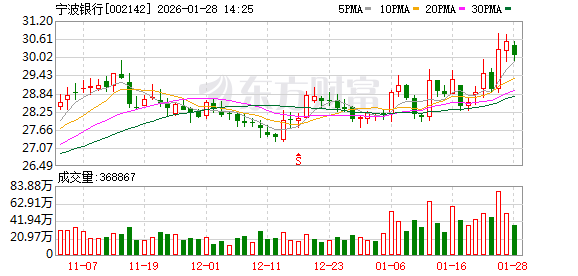
宁波银行再次下调定存金利率 活期利率降至0
Zhong Guo Jing Ying Bao· 2026-01-28 06:25
这一判断也得到了浙江大学城市学院副教授、中国城市专家智库委员会常务副秘书长林先平的呼应。他 分析指出, 2025年以来国际金价累计涨幅超60%,近期沪金期货单日涨跌额最高达41.84元/克,银行需 要对冲价格波动风险。 除了市场波动这一直接诱因外,银行自身的经营与监管压力亦是关键推手。苏商银行特约研究员武泽伟 强调,在整体净息差承压的背景下,下调此类业务利率有助于节省资金成本。同时,这也响应了金融监 管强化投资者适当性管理的导向。通过提高隐性门槛,可以引导风险承受能力较弱的投资者更审慎决 策,履行"卖者有责"的职责。 林先平进一步强调,商业银行净息差已降至1.42%的20年新低,定存金的黄金持有、对冲成本进一步压 缩盈利空间;且监管要求也在升级,2025年8月实施的反洗钱新规要求大额现金购金需上报,叠加投资 者适当性管理强化,推动银行收紧相关业务。 宁波银行发布公告称,自2026年1月28日(周三)起调整定存金产品定存利率。调整后的定存金产品定 存利率分别为:活期0%,1个月0.3%,3个月0.3%,6个月0.4%,12个月0.5%。 同时,宁波银行在公告中提醒,由于近期贵金属价格波动加剧,请投资者增强贵金属 ...


金价逼近前高
第一财经· 2025-12-18 11:46
Core Viewpoint - The article discusses the tightening of banks' precious metals business, particularly in response to rising gold prices and increased risk management measures [3][10]. Group 1: Price Trends - London gold spot prices recently peaked at $4,350 per ounce, nearing the historical high of $4,381 per ounce [3]. - Since the beginning of 2025, gold prices have surged approximately 65% due to geopolitical conflicts and expectations of interest rate cuts by the Federal Reserve [10]. - Silver and platinum have experienced even greater price increases, with silver reaching $66.8 per ounce (up 128% year-to-date) and platinum futures surpassing $1,995 per ounce (up 118% year-to-date) [10][11]. Group 2: Bank Policy Changes - Banks are increasingly tightening their precious metals business, including the closure of long-standing inactive accounts and restrictions on new account openings [6][9]. - Major banks like Industrial and Commercial Bank of China and China Construction Bank have announced the closure of accounts with no positions, inventory, or debts, effective December 19 [6]. - The tightening measures began in March 2020 following the "oil treasure" incident, leading to a gradual withdrawal from leveraged products and stricter risk management protocols [9]. Group 3: Risk Management - Banks are enhancing risk management in their precious metals business by raising the risk ratings of certain products and increasing the minimum investment amounts [9]. - The adjustments also include a higher threshold for customer risk tolerance assessments, particularly for accumulation gold products, which will see changes implemented by the end of 2024 [7].

工行金条钢印号问题引质疑,贵金属业务信任危机待解
Guan Cha Zhe Wang· 2025-05-14 10:09
Core Viewpoint - The recent controversy surrounding the gold bars sold by ICBC's Nanxiang branch in Shanghai has raised significant public concern, primarily due to allegations of impurities and discrepancies in the identification numbers of the gold bars [1][2][3] Group 1: Incident Overview - A customer reported finding black-gray impurities in gold bars purchased from ICBC, leading to widespread discussion on social media [1] - ICBC responded by stating that the gold bars had a gold content of 99.99% and that the impurities were external attachments, which was accepted by the customer [1] - A subsequent video surfaced, showing discrepancies between the steel stamp numbers and the delivery notes for gold bars, further intensifying public scrutiny [2][3] Group 2: Quality Control and Management Issues - The discrepancies in steel stamp numbers raised concerns about the traceability of the gold products, which could affect future transactions such as pledges and repurchases [7] - Industry insiders noted that banks typically rely on third-party manufacturers for gold production and quality control, which can lead to issues if the inspection processes are insufficient [9][10] - The incident highlighted a lapse in information management rather than a question of the gold's material authenticity, emphasizing the need for stricter verification processes [7][10] Group 3: Market Implications - The gold business of commercial banks has seen significant growth, with ICBC reporting a rise in precious metal assets to 208.24 billion yuan in 2024, up from 139.42 billion yuan in 2023 [9] - Despite this growth, the risk management measures in some banks have not kept pace, potentially allowing problematic products to enter the market [9][10] - The incident serves as a reminder for investors to verify the consistency between the gold bars and their certificates, particularly focusing on the steel stamp numbers and the issuing bank's repurchase policies [8][10]

