
如意积存金

Search documents
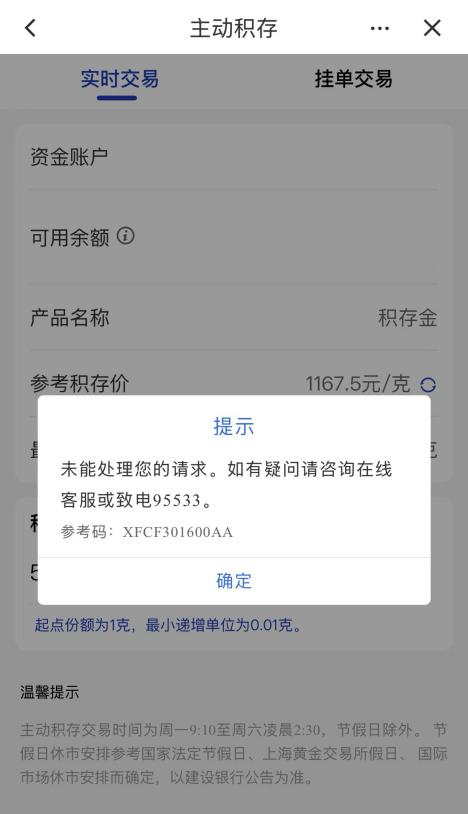
根本买不进去!金价回调,积存金业务火爆,有银行系统一度崩溃
Zhong Guo Zheng Quan Bao· 2026-01-30 09:10
Core Viewpoint - The recent surge in gold prices has led to increased demand for gold accumulation products, causing significant strain on banking systems and prompting banks to adjust their policies to manage risks associated with market volatility [2][6]. Group 1: Market Dynamics - Gold prices have risen from 1150 CNY/gram to 1170 CNY/gram, leading to a rush among investors to purchase gold accumulation products [1]. - Many investors are attempting to capitalize on the price drop, viewing it as an opportunity to lower their average purchase price [2][5]. - The trading volume for gold accumulation products has surged, resulting in system overloads at various banks, including China Construction Bank and Industrial and Commercial Bank of China [2][5]. Group 2: Bank Responses - China Construction Bank announced an increase in the minimum investment amount for gold accumulation products to 1500 CNY, effective February 2, to manage risks associated with market fluctuations [6][8]. - Other banks, such as China Merchants Bank and Ningbo Bank, have also adjusted their policies regarding gold investment, reflecting a cautious approach in light of recent price volatility [6][9]. - Banks are advising customers to enhance their risk awareness and manage their investments prudently, considering their financial situation and risk tolerance [8][9].




“根本买不进去”!金价回调,积存金业务火爆,有银行系统一度崩溃
Zhong Guo Zheng Quan Bao· 2026-01-30 08:53
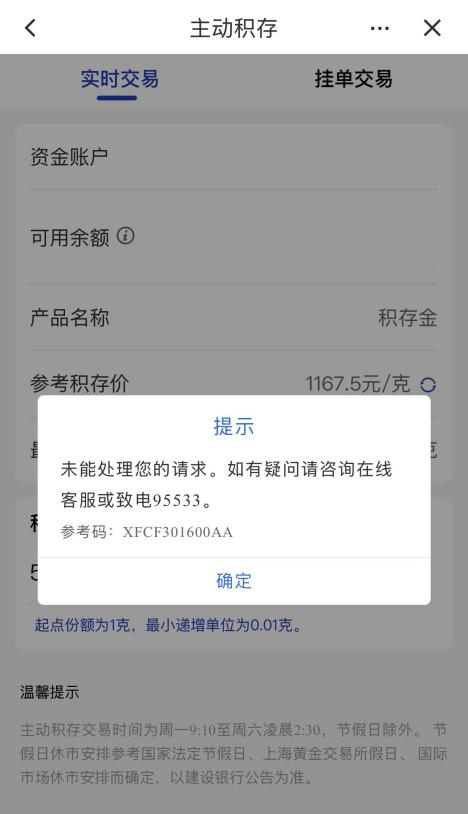
Core Viewpoint - The surge in gold prices has led to increased demand for gold accumulation products, causing banking systems to experience overload and transaction failures [1][3][6]. Group 1: Market Dynamics - Gold prices have risen from 1150 CNY/gram to 1170 CNY/gram, prompting investors to seek opportunities to buy [1]. - Many investors are attempting to capitalize on the recent price drop, viewing it as a chance to increase their holdings in gold accumulation products [3][6]. Group 2: Banking System Response - Construction Bank reported that transaction failures were due to high traffic on their system, advising customers to refresh or retry later [3]. - Other banks, including Zhejiang Commercial Bank and Industrial and Commercial Bank of China, also faced similar issues with transaction overload [6]. Group 3: Adjustments in Banking Policies - Construction Bank announced an increase in the minimum amount for personal gold accumulation business to 1500 CNY, effective February 2 [7]. - Other banks, such as Ningbo Bank and China Merchants Bank, have also adjusted their gold product offerings and minimum investment amounts in response to market volatility [9][10].


“有流量、无留量”,银行短期营销困局待解
Zhong Guo Zheng Quan Bao· 2026-01-13 12:55
Group 1 - The core activity of banks in early 2023 involves launching asset enhancement marketing campaigns to attract customers by offering rewards for increasing their financial assets [1][2] - Major banks such as Industrial and Commercial Bank of China, Agricultural Bank of China, and Bank of China have initiated these campaigns, which include various incentives for customers to deposit funds [1][4] - The marketing activities are a response to the ongoing pressure on net interest margins, prompting banks to shift focus from traditional deposit assessments to a wealth management competition centered on Assets Under Management (AUM) [1][7] Group 2 - The asset enhancement marketing activities allow customers to earn high points by increasing their average financial assets, which can be redeemed for various gifts and services [2][5] - Agricultural Bank of China's campaign runs until March 31, 2026, offering rewards based on specific asset increase thresholds, ranging from 100,000 to over 600,000 yuan [4] - The trend of banks offering rewards has led to a phenomenon where customers frequently switch banks for better incentives, creating a challenge for banks in retaining these customers long-term [7][8] Group 3 - To address the issue of customer retention, banks are encouraged to develop a layered customer tagging system to differentiate between arbitrage customers and potential long-term clients [8] - The industry is advised to create a comprehensive wealth management system that includes savings, investments, insurance, and trust services to diversify income sources and enhance customer loyalty [8]




黄金又崩了,有人上周刚买10克就亏了,业内人士:还要继续调整
Sou Hu Cai Jing· 2025-10-28 03:08
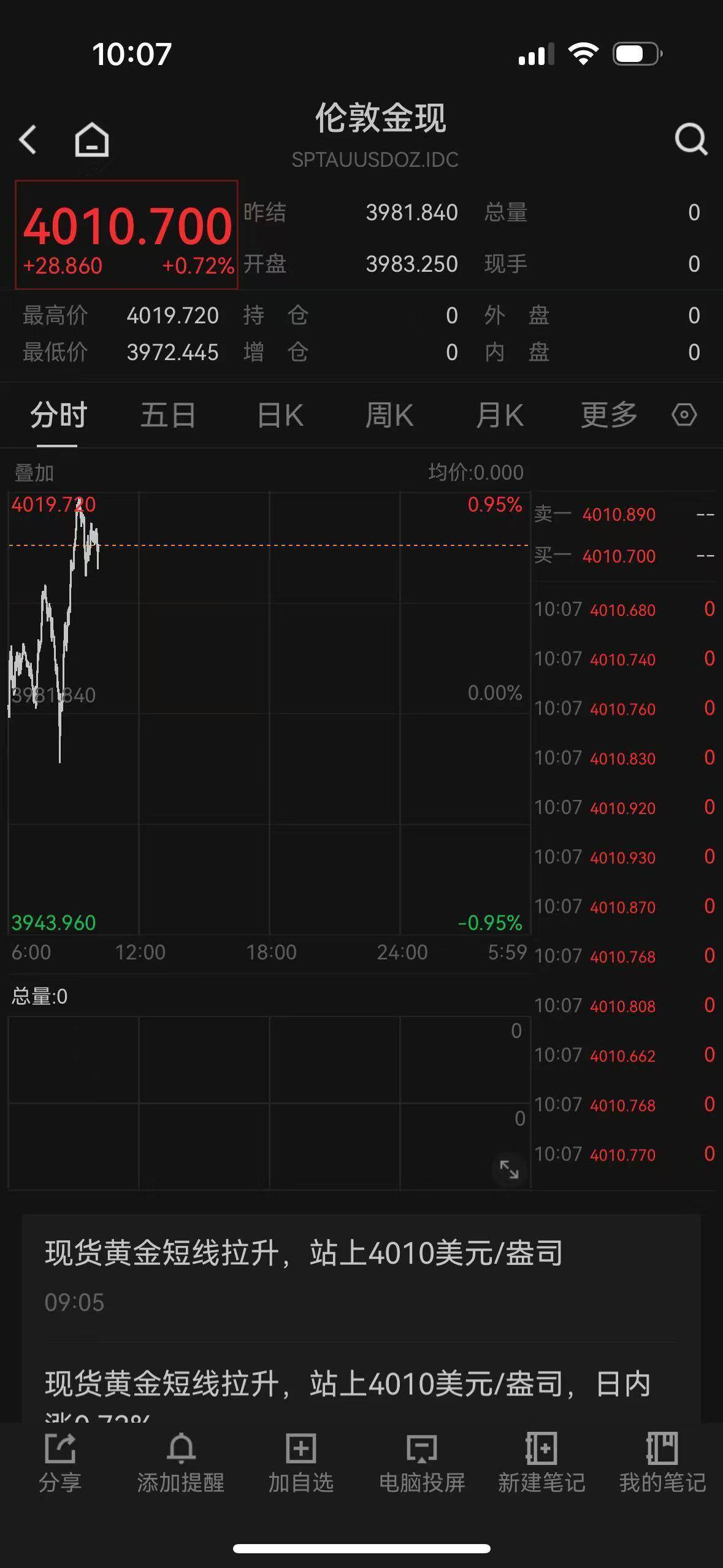
Core Viewpoint - The recent fluctuations in gold and silver prices have raised concerns among investors, particularly following a significant drop after a period of rapid price increases. Price Movements - On October 27, spot gold fell by 3.15%, dropping below $4000 per ounce to close at $3981.84, while spot silver decreased by 3.4% to $46.968 per ounce [1] - As of October 28, spot gold rebounded by 0.7%, surpassing $4010 per ounce, and spot silver increased by 0.5%, temporarily recovering the $47 per ounce mark [4] Market Analysis - Year-to-date, spot gold has risen over 53% due to factors such as geopolitical risks, expectations of loose monetary policy, and central bank purchases. However, after reaching a historical high above $4380 per ounce on October 20, the market has entered a correction phase due to overbought signals and a recovery in market risk appetite [8] - John Reade, a strategist from the World Gold Council, noted that the demand from central banks is not as strong as before, and a deeper correction could be welcomed by professional traders. He suggested that a price level of $3500 per ounce would be healthy for the gold market [8] - Paul Fisher, the outgoing chairman of the London Bullion Market Association, stated that the recent adjustments are a result of "squeezing speculative bubbles," indicating that the rapid price increases were unsustainable [8] - Analysts predict that spot gold may test the $3800 to $3850 per ounce range, while the support level for spot silver is expected around $46 per ounce [8] Investor Sentiment - A senior manager from a state-owned bank expressed that after spot gold fell below $4000 per ounce, the focus should shift to the $3800 level, suggesting that a period of consolidation between $3500 and $3800 would be beneficial for long-term price stability [9]
黄金投资市场调查:购买热情不减,普遍预期上涨
Hua Xia Shi Bao· 2025-09-26 12:24
Core Viewpoint - The gold market has recently experienced a volatile pattern, with prices reaching historical highs before retreating slightly, indicating ongoing investor interest despite potential risks [2][3][8]. Group 1: Gold Price Trends - On September 23, spot gold prices peaked at $3,790.97 per ounce, while COMEX gold futures reached $3,824.6 per ounce, both marking historical highs [2][8]. - Following these peaks, gold prices have seen a slight decline but remain within a high range, suggesting a potential for further fluctuations [2][3]. Group 2: Investor Sentiment - Investor enthusiasm for gold remains strong, with reports of customers actively purchasing physical gold, such as 20-gram and 100-gram gold bars [3]. - A Beijing investor reported a 28% return on her gold investment over three years, highlighting the attractive returns associated with gold [4]. - Many investors view gold as a stabilizing asset in their portfolios, with some expressing a long-term commitment to gold investments despite market volatility [6][7]. Group 3: Market Analysis and Predictions - Analysts suggest that while gold prices are currently high, the long-term outlook remains positive due to factors such as the anticipated Federal Reserve interest rate cuts, ongoing global uncertainties, and persistent inflation pressures [7][9]. - Historical trends indicate that gold prices typically rise following the initiation of a rate-cutting cycle, with an average increase of 6% within 60 days [8]. - The demand for gold is expected to continue, driven by geopolitical risks and the potential for increased investment from asset management firms incorporating gold into their portfolios [9][10].

工行金条钢印号问题引质疑,贵金属业务信任危机待解
Guan Cha Zhe Wang· 2025-05-14 10:09
Core Viewpoint - The recent controversy surrounding the gold bars sold by ICBC's Nanxiang branch in Shanghai has raised significant public concern, primarily due to allegations of impurities and discrepancies in the identification numbers of the gold bars [1][2][3] Group 1: Incident Overview - A customer reported finding black-gray impurities in gold bars purchased from ICBC, leading to widespread discussion on social media [1] - ICBC responded by stating that the gold bars had a gold content of 99.99% and that the impurities were external attachments, which was accepted by the customer [1] - A subsequent video surfaced, showing discrepancies between the steel stamp numbers and the delivery notes for gold bars, further intensifying public scrutiny [2][3] Group 2: Quality Control and Management Issues - The discrepancies in steel stamp numbers raised concerns about the traceability of the gold products, which could affect future transactions such as pledges and repurchases [7] - Industry insiders noted that banks typically rely on third-party manufacturers for gold production and quality control, which can lead to issues if the inspection processes are insufficient [9][10] - The incident highlighted a lapse in information management rather than a question of the gold's material authenticity, emphasizing the need for stricter verification processes [7][10] Group 3: Market Implications - The gold business of commercial banks has seen significant growth, with ICBC reporting a rise in precious metal assets to 208.24 billion yuan in 2024, up from 139.42 billion yuan in 2023 [9] - Despite this growth, the risk management measures in some banks have not kept pace, potentially allowing problematic products to enter the market [9][10] - The incident serves as a reminder for investors to verify the consistency between the gold bars and their certificates, particularly focusing on the steel stamp numbers and the issuing bank's repurchase policies [8][10]
