芜湖铁画

Search documents
人文经济激活消费新动能丨文脉掌舵 业态为帆——芜湖古城为城市消费注入新动能
Xin Hua Wang· 2026-01-15 08:29
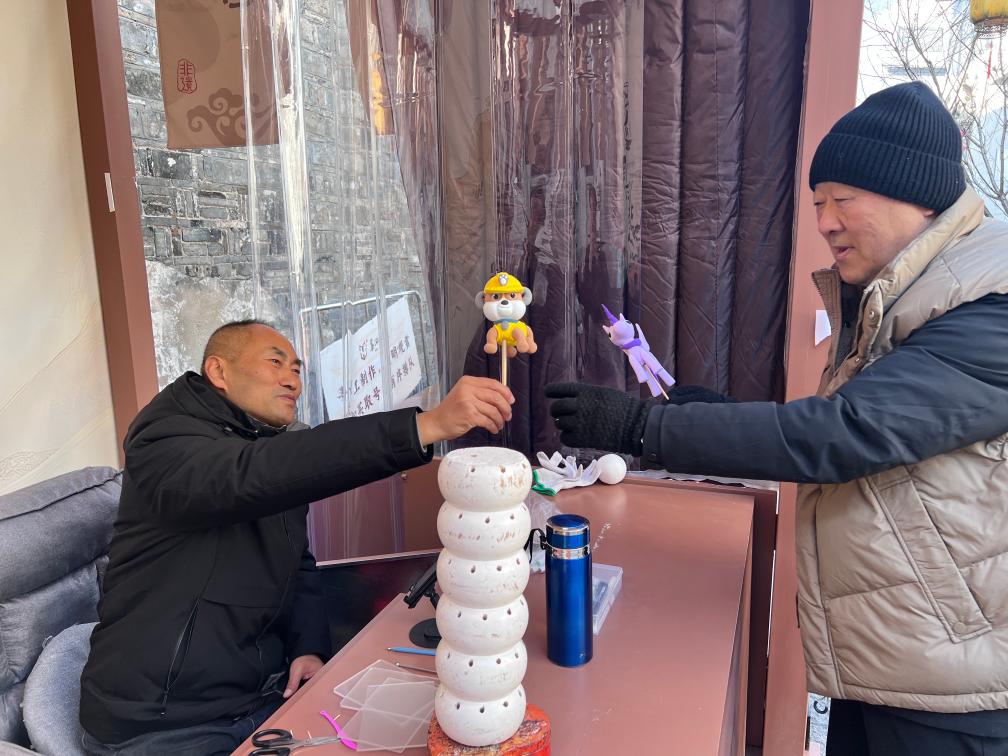
Core Viewpoint - The revitalization of Wuhu Ancient City through cultural heritage is driving urban consumption and tourism, transforming it into a vibrant destination that blends traditional crafts with modern consumer experiences [1][5][7]. Group 1: Cultural and Historical Significance - Wuhu Ancient City retains the architectural layout from the Ming and Qing dynasties, featuring over 70 historical buildings and traditional streets that create a rich cultural scene [3][7]. - Traditional crafts such as dough figurines, sugar blowing, and iron painting are being revitalized, attracting both locals and tourists [3][7]. Group 2: Tourism and Consumer Experience - The city has been recognized as a national-level tourism and leisure street, as well as a night-time cultural and tourism consumption hub, becoming a new landmark for cultural tourism in Wuhu [7]. - Visitor numbers are projected to reach 12 million by 2025, driven by the renovation of key cultural heritage sites [7]. Group 3: Economic Impact and Business Opportunities - The integration of cultural heritage with diverse business operations has created a thriving ecosystem for consumption, moving beyond static tourism to a dynamic experience [7][8]. - The city is focusing on enhancing its cultural offerings and aligning with consumer trends to create differentiated consumption scenarios and intellectual properties [8].

焦点访谈|以文化为纽带 长江经济带书写高质量发展新篇章
Yang Shi Wang· 2026-01-07 13:14
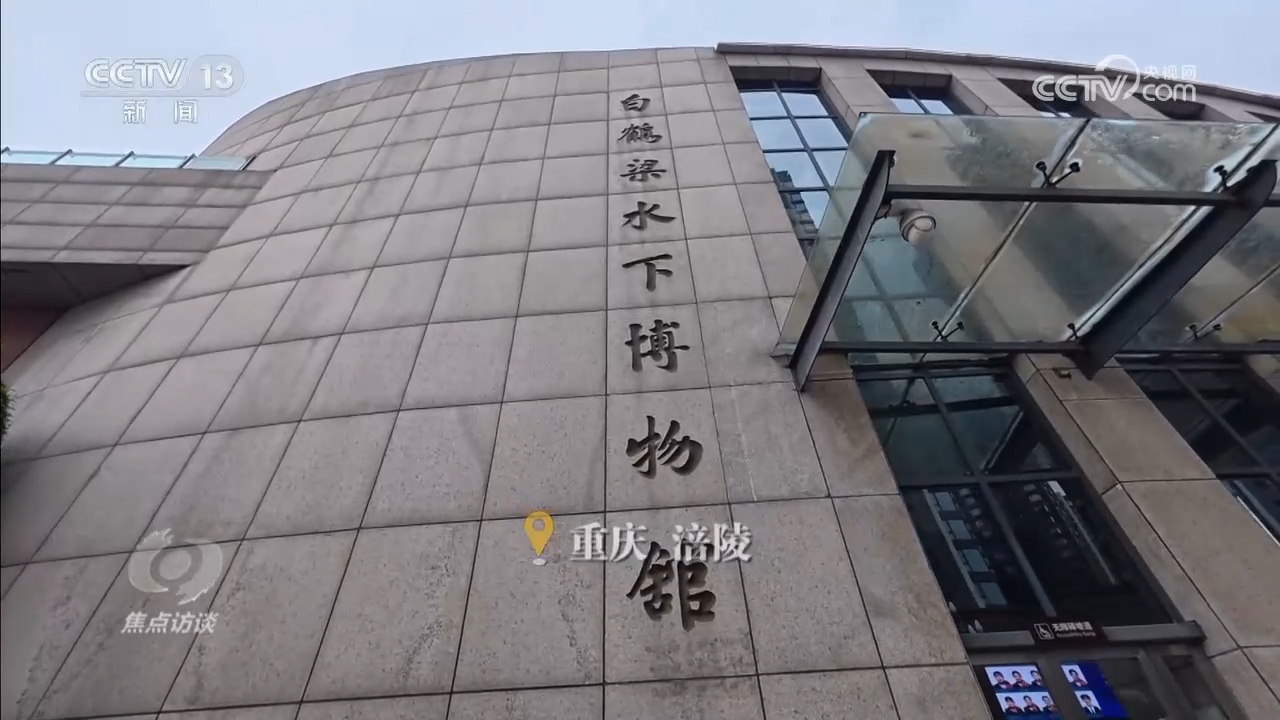
Core Viewpoint - The development of the Yangtze River Economic Belt over the past decade has been significantly influenced by cultural protection and transmission, showcasing a transformation that integrates historical heritage with modern technology and tourism [1][12]. Group 1: Cultural Heritage Protection - The Baidong Liang underwater museum has implemented innovative protection methods for ancient inscriptions, utilizing a "pressure-free container" principle to preserve cultural artifacts in situ [3][5]. - Over the past ten years, 1,335 cultural heritage protection projects have been completed in the Three Gorges area, with over 200,000 artifacts unearthed and 34 museums established [5][9]. - The integration of technology has enhanced the visibility and clarity of cultural relics, allowing for better public engagement and understanding of historical significance [5][12]. Group 2: Cultural Tourism Development - The Yangtze River cruise industry has evolved, with larger vessels and a more international tourist demographic, emphasizing cultural exploration along the river [7][9]. - The establishment of the "Beautiful Yangtze River Three Gorges Cultural Tourism Industry Alliance" aims to connect various districts along the river, promoting cultural tourism and enhancing visitor experiences [7][9]. - The construction of the Yangtze National Cultural Park has begun, integrating natural landscapes with historical narratives, particularly in cities like Jiujiang [9][10]. Group 3: Innovation in Traditional Crafts - The traditional craft of iron painting in Wuhu has seen a revival, with modern design techniques being introduced by younger artisans, leading to increased tourist interest and economic growth [10][12]. - The past decade has seen a shift from traditional apprenticeship to institutional training for crafts, with nearly 700 students trained in iron painting techniques [12][14]. - Various regions have explored innovative paths for intangible cultural heritage, integrating traditional crafts with modern market demands, thus ensuring their sustainability and relevance [14]. Group 4: Cultural Integration and Future Prospects - The Yangtze River culture reflects a blend of diverse traditions, showcasing the continuous evolution and innovation of Chinese civilization over the past 5,000 years [14]. - The ongoing cultural initiatives aim to create a vibrant cultural landscape that resonates with both historical significance and contemporary relevance, fostering a shared national identity [14].
安徽元素精彩亮相2025中国国际旅游交易会
Xin Lang Cai Jing· 2025-12-22 17:14
Core Viewpoint - The 2025 China International Tourism Trade Fair is being held in Hainan, showcasing the new cultural and tourism image of Anhui province to global travel merchants and representatives from 101 countries and regions [1] Group 1: Event Overview - The event takes place from December 19 to 21 at the Hainan International Convention and Exhibition Center, attracting over a thousand overseas travel merchants and representatives [1] - Anhui's exhibition area features distinct cultural branding and innovative technological expressions, promoting the "Beautiful Anhui" tourism image [1] Group 2: Cultural and Technological Integration - The Anhui pavilion incorporates Hui-style architectural aesthetics to create an immersive exhibition experience [1] - Traditional craftsmanship such as the production of rice paper and the creation of "thousand-year longevity paper" are showcased, alongside cultural products like Huizhou fish lanterns and Wuhu iron paintings [1] - The integration of technology is highlighted by the presence of an AI calligraphy robot and a smart translation device, which received praise from the Secretary-General of the United Nations World Tourism Organization [1] Group 3: Business Development and Collaboration - The Anhui tourism promotion event features presentations from various cities and tourism groups within the province, showcasing high-quality resources [1] - An international travel merchant matchmaking event attracted nearly a hundred travel merchants from 17 countries and regions, facilitating one-on-one discussions with Anhui enterprises to establish collaborations on product customization and customer source exchange [1]
华东地区消费活力强劲
Jing Ji Ri Bao· 2025-09-08 00:01
Group 1 - The core viewpoint highlights the strong resilience and potential of the consumption market in the East China region, driven by unique resource endowments, innovative development models, and vibrant consumer activity [1][2] - East China boasts rich tourism resources, with four main attractions for consumers: beautiful natural scenery, abundant specialty foods, convenient transportation, and deep cultural heritage [1] - The top three cities attracting consumers in East China are Hangzhou, Shanghai, and Xiamen, while popular small city destinations include Jingdezhen, Weihai, and Huangshan [1] Group 2 - Specialty products and unique foods from East China are widely favored by consumers nationwide, with significant growth in search volumes for intangible cultural heritage products like Shoushan stone carvings and Wuhu iron paintings, all showing over 100% year-on-year growth [1] - The second quarter of the year saw strong consumer vitality in East China, with Jiangsu, Shanghai, Shandong, and Zhejiang ranking among the top ten in national purchasing power [2] - The cities of Shanghai, Suzhou, Hangzhou, Nanjing, and Hefei recorded the highest consumption amounts, while cities like Wuhu and Xuancheng showed particularly significant year-on-year growth in consumption [2]
芜湖铁画,从古镇街巷走向国际展台(新国潮)
Ren Min Ri Bao Hai Wai Ban· 2025-06-12 01:33
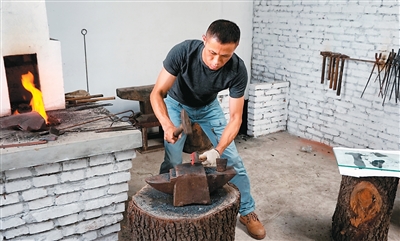
Core Viewpoint - The article highlights the unique art form of Wuhu Iron Painting, which combines traditional Chinese painting techniques with metalwork, showcasing its cultural significance and modern adaptations to reach broader audiences [4][6][11]. Group 1: Art Form and Techniques - Wuhu Iron Painting is characterized by its intricate techniques, including forging, welding, and engraving, which create a three-dimensional effect, resembling a relief sculpture [5][6]. - The art form has roots dating back to the Kangxi period of the Qing Dynasty and has evolved by integrating elements from various traditional Chinese art forms [4][5]. - The primary materials used in iron painting are black, gray, and silver iron, which provide a unique aesthetic and structural integrity to the artworks [6]. Group 2: Cultural Heritage and Recognition - In 2006, Wuhu Iron Painting was recognized as a national intangible cultural heritage, highlighting its importance in preserving traditional craftsmanship [5]. - The art form is being actively promoted through exhibitions and international showcases, including participation in events in France, Hungary, and Saudi Arabia [9][10]. Group 3: Modern Adaptations and Education - Artists like Chu Tieyi are leveraging social media platforms to raise awareness and appreciation for Wuhu Iron Painting, successfully engaging younger audiences [7][9]. - Educational initiatives are being implemented, such as integrating iron painting techniques into vocational training programs, fostering a new generation of artists [9][10]. - The collaboration between traditional artisans and modern designers is leading to innovative creations that blend cultural heritage with contemporary artistic expressions [10][11].
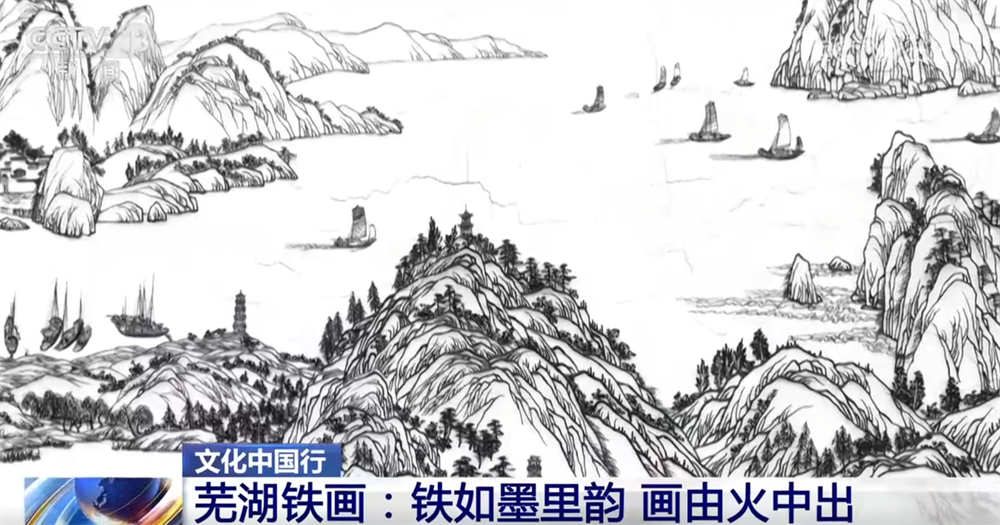
文化中国行|芜湖铁画:铁如墨里韵 画由火中出
Yang Shi Wang· 2025-04-24 02:58
Core Viewpoint - Wuhu Iron Painting is a national intangible cultural heritage with a history of over 300 years, combining the strength of iron craftsmanship with the elegance of traditional Chinese painting [1]. Group 1: Historical Background - Wuhu Iron Painting has been passed down for more than three centuries, originating from the founder Tang Tianchi, a blacksmith who collaborated with the painter Xiao Yuncong [1]. - The art form was established through the interaction between Tang Tianchi and Xiao Yuncong, leading to the unique technique of expressing traditional Chinese painting through iron [1]. Group 2: Artistic Characteristics - The artwork appears as an ink painting from a distance, but reveals intricate relief details upon closer inspection, showcasing the skillful interplay between black iron and white backgrounds [3]. - The artistic process involves a series of precise hammer strikes, transforming iron into vivid representations akin to brush strokes in traditional painting [5][7]. Group 3: Contemporary Relevance - The traditional method of passing down skills from master to apprentice has evolved, with iron painting techniques now being taught in universities, ensuring the continuation of this ancient craft [7]. - The essence of iron painting, referred to as "red forging," emphasizes the precision and artistry involved in the creation process [7].