长隧短打

Search documents
建设者啃下“硬骨头”书写新的世界第一 打通天山为南疆北疆经济发展插上腾飞“翅膀”
Yang Shi Wang· 2025-12-26 05:21
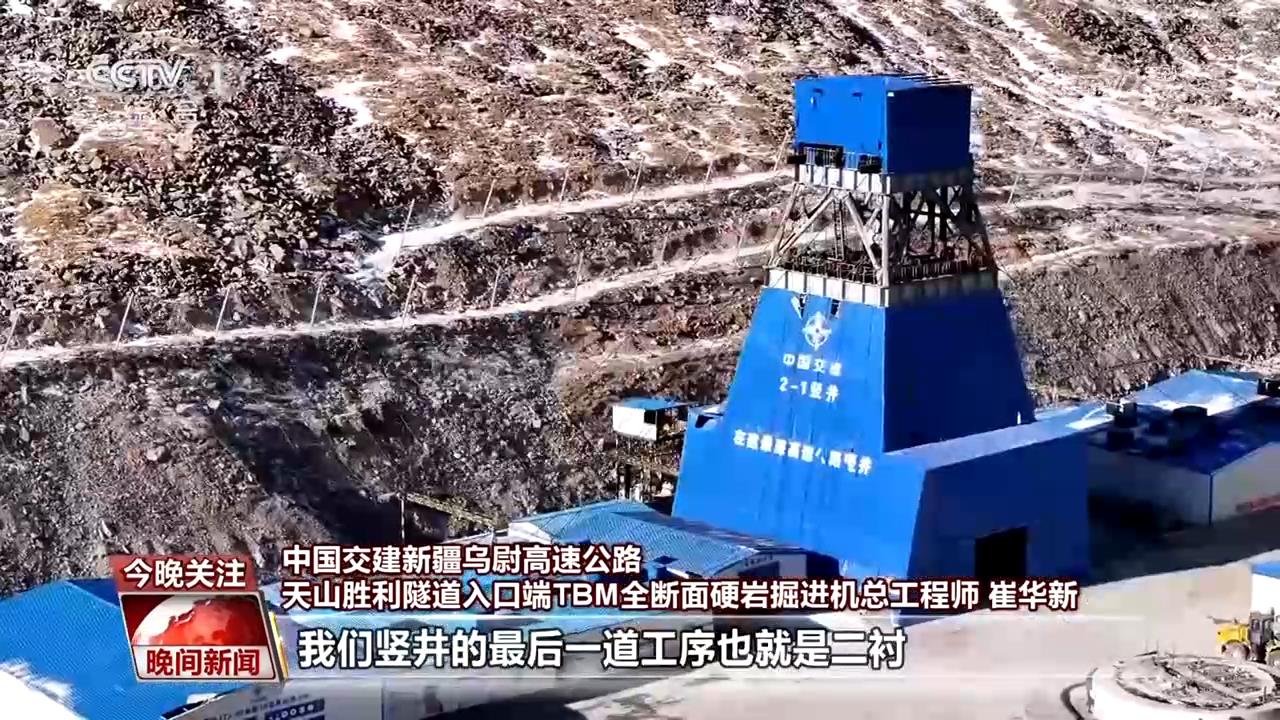
Core Insights - The Tianshan Victory Tunnel, measuring 22.13 kilometers, has set a new world record for highway tunnel length, showcasing the capabilities of Chinese builders in overcoming challenging geological conditions and extreme environments [1][3]. Group 1: Construction Challenges and Innovations - The tunnel is located at an altitude of nearly 3000 meters in the Tianshan Mountains, characterized by harsh weather conditions, including temperatures as low as -42 degrees Celsius and a maximum burial depth of 1112 meters [3]. - Traditional excavation methods would require at least 10 years to complete the tunnel, but a new "three-tunnel" approach was developed, which includes a service tunnel to facilitate faster progress [5][7]. - The use of advanced technology and equipment, such as a hard rock tunneling machine (TBM), was crucial for the project's success, especially when encountering difficult geological formations [8][10]. Group 2: Project Timeline and Impact - The Tianshan Victory Tunnel is expected to be completed by the end of 2024, significantly reducing travel time across the Tianshan Mountains and altering the development landscape between southern and northern Xinjiang [15]. - The tunnel is a key component of the G0711 Urumqi to Ruoqiang National Highway, enhancing connectivity with multiple highways and contributing to the establishment of the Eurasian Golden Passage [15][19]. - The Urumqi to Ruoqiang Highway will facilitate efficient transportation between major economic zones, lowering logistics costs and promoting resource exchange between northern and southern Xinjiang [17][22].

视频丨一隧通南北 天堑变通途 乌尉高速壮举的背后是无数人的坚守
Yang Shi Xin Wen Ke Hu Duan· 2025-12-26 02:48
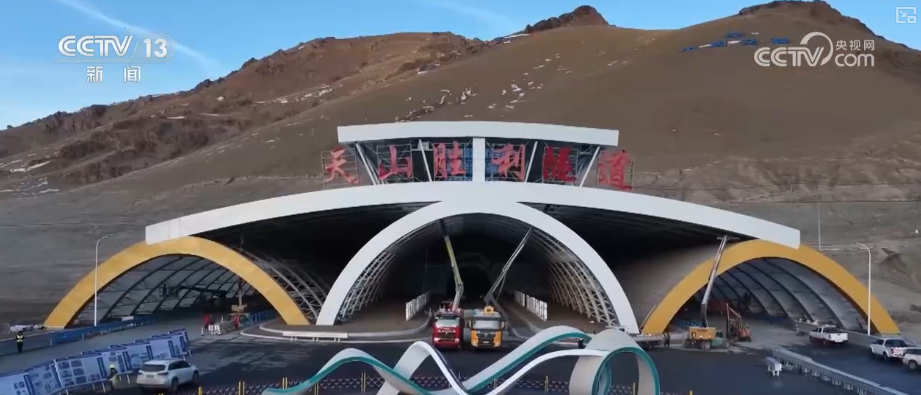
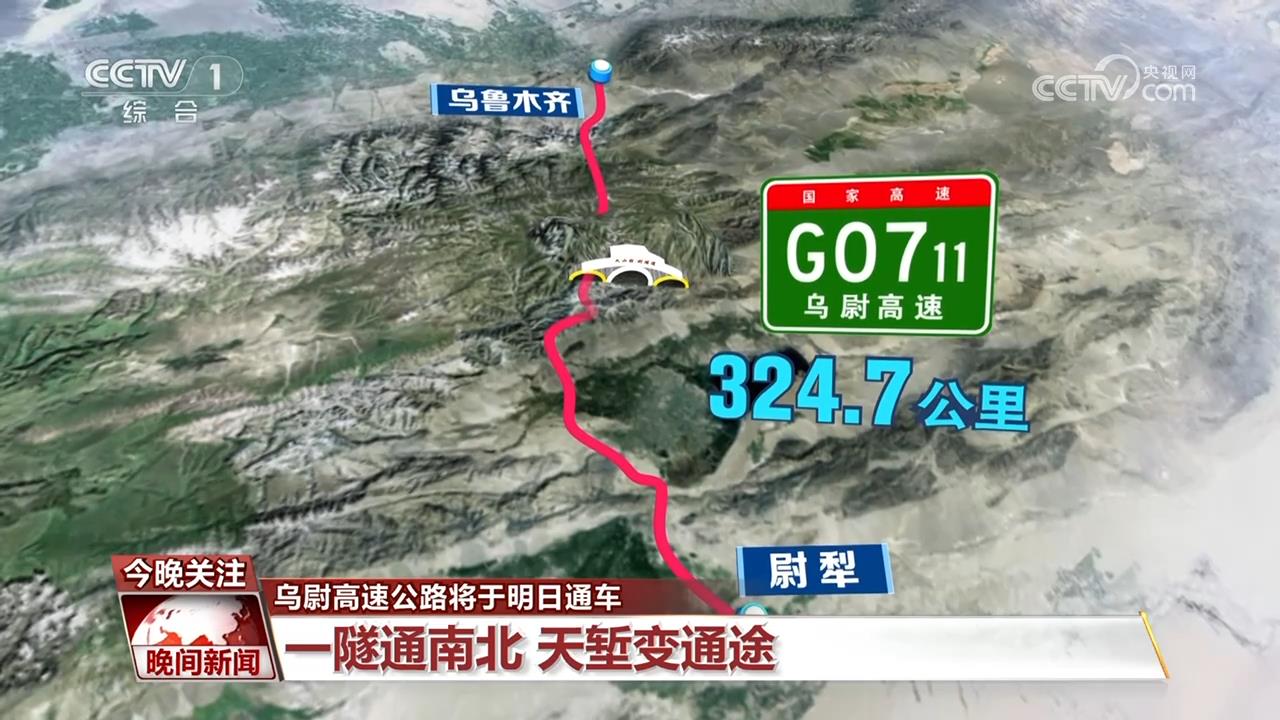
Core Viewpoint - The Urumqi to Bayingolin Mongol Autonomous Prefecture Weili County expressway, known as the Wuyi Expressway, will officially open on December 26, 2025, significantly improving transportation between northern and southern Xinjiang [1][4]. Group 1: Project Overview - The Wuyi Expressway spans a total length of 324.7 kilometers, featuring the challenging 22.13-kilometer Victory Tunnel that cuts through the Tianshan Mountains [4][20]. - The construction of the expressway began in April 2020 and took 5 years and 8 months to complete [1][4]. Group 2: Engineering Innovations - The Victory Tunnel was constructed using a unique "three-tunnel and four-shaft" method, which differs from traditional dual-tunnel excavation techniques [7][9]. - Two specialized hard rock tunnel boring machines (TBMs), named "Tianshan" and "Victory," were utilized, each with a cutter head diameter of 8.43 meters [12][32]. Group 3: Construction Achievements - The construction period for the tunnel was reduced from 72 months to 52 months, setting a new record for similar highway tunnel projects [15][43]. - The deepest vertical shaft of the Victory Tunnel reaches 707 meters, making it the world's deepest highway vertical shaft [27][29]. Group 4: Economic and Social Impact - The Wuyi Expressway will reduce travel time from Urumqi to Korla from 7 hours to 3.5 hours, enhancing the efficiency of agricultural product transportation and tourism [20][22]. - The expressway is expected to facilitate the rapid delivery of fresh produce to urban markets and improve access to diverse regional experiences for tourists [20][22].
乌尉高速公路通车 | 一隧通南北 天堑变通途
Yang Shi Wang· 2025-12-25 17:34
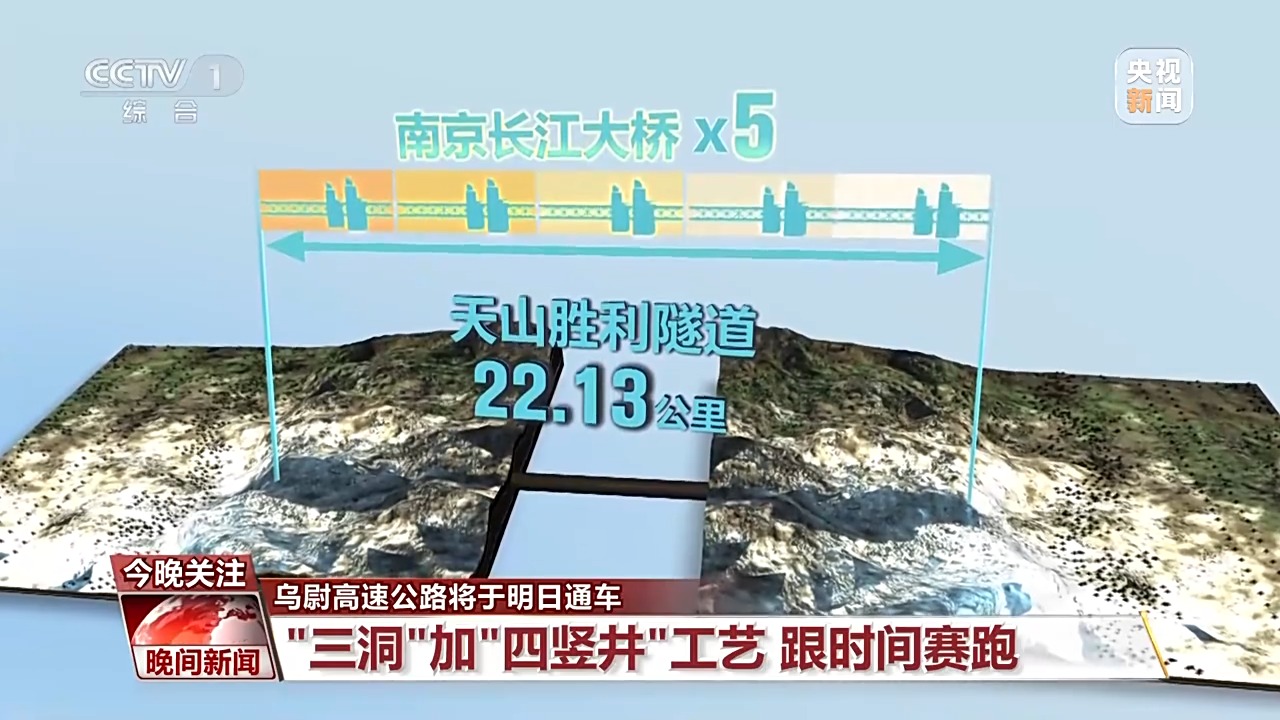
Core Viewpoint - The completion of the Urumqi-Weili Highway (G0711) represents a significant engineering achievement, breaking through the natural barrier of the Tianshan Mountains and greatly improving transportation between northern and southern Xinjiang [1][4][16] Group 1: Project Overview - The Urumqi-Weili Highway spans a total length of 324.7 kilometers, with the most challenging section being the 22.13-kilometer Victory Tunnel [4][6] - The construction of the tunnel reduces travel time from 3 hours to just 20 minutes, significantly enhancing connectivity [2][4] Group 2: Construction Techniques - The project utilized a "three-tunnel and four-shaft" method, which involved creating three parallel tunnels and four auxiliary shafts for ventilation and other services [6][11] - Two custom-built hard rock tunnel boring machines, named "Tianshan" and "Victory," were employed, each with a cutter head diameter of 8.43 meters [8][11] Group 3: Efficiency and Innovation - The construction adopted a "long tunnel short strike" strategy, allowing for simultaneous excavation of multiple sections, which reduced the construction period from 72 months to 52 months, setting a new record for similar projects [11][12] - The project also incorporated scenic viewpoints along the route to enhance the travel experience, transforming a 20-minute drive into a visual journey through diverse landscapes [11][12] Group 4: Economic and Cultural Impact - Once operational, the highway will cut travel time between Urumqi and Korla from 7 hours to 3.5 hours, facilitating faster transportation of agricultural products and boosting local tourism [14][16] - The improved connectivity will allow for a more efficient distribution of fresh produce, enhancing the overall economic landscape of the region [14][16]
乌尉高速公路通车 | 崔华新:我在天山“打”隧道
Yang Shi Wang· 2025-12-25 17:00
Core Viewpoint - The completion of the Uwei Expressway, which includes the world's longest highway tunnel, represents a significant achievement in overcoming geographical challenges and showcases the dedication of the construction team [1][16]. Group 1: Project Overview - The Uwei Expressway is set to break the geographical barrier of the Tianshan Mountains, fulfilling a long-held aspiration [1]. - The project has involved extensive efforts from builders who have faced extreme cold and high altitudes, successfully addressing complex geological conditions [1]. Group 2: Engineering Achievements - The team led by engineer Cui Huaxin has spent over five years in a high-altitude, uninhabited area, achieving a world record with the construction of the deepest highway shaft, which reaches a depth of 707 meters, equivalent to 236 stories [4][6]. - The use of a TBM (Tunnel Boring Machine) has been pivotal in the project, allowing for efficient excavation in hard rock conditions, which is essential for mountain tunnel construction [9]. Group 3: Challenges and Solutions - The construction faced significant challenges, including 16 geological fault zones, with the F-6 Bo'a fault being a major obstacle that could potentially halt progress [10][14]. - The team implemented a single shield steel pipe support excavation method to quickly seal collapses and ensure safety, completing the passage through the F-6 fault in 80 days, half the originally planned time [14][16]. Group 4: Innovations and Efficiency - The project marked the first application of TBM technology in highway tunnel construction, leading to a 40% increase in efficiency in broken strata excavation and reducing the planned construction period from 10 years to just over 4 years [16]. - The cumulative progress in tunnel excavation is measured in millimeters, demonstrating the meticulous and persistent efforts of the construction team [18].