
防范化解重大风险

Search documents
立足经济监督定位依法全面履行职责 市委审计委员会会议举行
Jie Fang Ri Bao· 2026-02-11 01:42
Core Viewpoint - The meeting emphasized the importance of implementing Xi Jinping's directives on audit work, focusing on economic supervision and high-quality audit oversight to support Shanghai's development goals during the 14th Five-Year Plan period [1][3]. Group 1: Audit Work Focus - The audit work for this year will center on serving the overall situation, enhancing political awareness, and focusing on key areas to improve the precision and effectiveness of audit supervision [3]. - There will be a strong emphasis on financial regulation, tracking fund operations, and assessing usage efficiency to maximize policy effects [3]. - Continuous monitoring of cost budget performance management reforms and the establishment of long-term mechanisms will be prioritized to optimize fiscal expenditure standards and structure [3]. Group 2: Risk Management and Supervision - The meeting highlighted the need for targeted audits to identify early signs of potential issues, aiding in the prevention and resolution of major risks [3]. - Strengthening the supervision of power operations and enhancing cooperation with various oversight bodies, including disciplinary inspection and personnel management, is crucial [3]. - The establishment of external supervision mechanisms for state-owned assets and the reinforcement of oversight on key individuals were also discussed [3]. Group 3: Audit Results and Technology - There is a call to effectively utilize audit results to develop systematic solutions, moving from addressing individual issues to resolving broader categories of problems [3]. - The meeting underscored the importance of advancing audit intelligence construction to provide technical support for in-depth information analysis and risk assessment [3].
国务院国资委召开地方国资委负责人会议
Zheng Quan Shi Bao Wang· 2026-01-15 23:21
Core Viewpoint - The State-owned Assets Supervision and Administration Commission (SASAC) emphasizes the importance of solidifying key tasks for state-owned enterprises (SOEs) in 2026 to ensure a strong start for the 14th Five-Year Plan [1] Group 1: Economic Growth and Innovation - Focus on improving quality and efficiency to stabilize growth, enhancing target guidance, and exploring growth potential while ensuring smooth economic circulation [1] - Strengthening the role of SOEs in technological innovation, fostering leading tech enterprises, accelerating the application of research outcomes, and cultivating a favorable innovation ecosystem [1] Group 2: Structural Optimization and Reform - Promoting optimization of the state-owned economy's layout and structural adjustments, concentrating on the "three concentrations" of state capital, enhancing traditional industries, and developing emerging pillar industries [1] - Implementing further deepening of the reform plan for state-owned assets and enterprises, improving the modern enterprise system with Chinese characteristics, and establishing a market-oriented operational mechanism [1] Group 3: Regulatory and Risk Management - Advancing specialized, systematic, legal, and efficient regulation, improving the state-owned assets regulatory system, and strengthening oversight of overseas state-owned assets [1] - Preventing and mitigating major risks by adhering to bottom-line and extreme thinking, effectively controlling risks in key areas, and establishing long-term mechanisms to ensure no systemic risks occur [1]
新华社评论员:守牢安全底线 稳妥化解风险——九论学习贯彻中央经济工作会议精神
Xin Hua She· 2025-12-20 15:08
Group 1 - The core viewpoint emphasizes the importance of balancing development and security, with a focus on risk management as a key task for the upcoming economic work [1][2] - The article highlights the need for a systematic approach to prevent and mitigate major risks, reinforcing the idea that safety is a prerequisite for development [1][3] - It discusses the transition of urbanization in China from rapid growth to stable development, particularly in the real estate sector, which requires adapting to new market conditions [2] Group 2 - The article stresses the importance of addressing local government debt risks through optimized restructuring and management practices [3] - It calls for a comprehensive approach to debt management that aligns with high-quality development, ensuring that new hidden debts are not incurred [3] - The need for a long-term mechanism for risk prevention in the real estate sector is emphasized, advocating for reforms in housing policies and the promotion of affordable housing [2][3]
荣成市审计局“三线”发力 护航经济社会高质量发展
Qi Lu Wan Bao· 2025-12-17 10:35
Group 1 - The article emphasizes the importance of comprehensive audit supervision to ensure stable economic operation, improve social welfare, and regulate power exercise, thereby providing solid audit support for high-quality development [1][2] - The focus is on enhancing government investment audits, particularly in key areas such as project bidding, major design changes, project settlement, and completion acceptance, to improve fiscal fund performance and ensure efficient implementation of major projects [1] - The article highlights the need to address key risk areas in economic operations and to promote the rectification of issues identified in audits, transforming these corrections into strong momentum for driving high-quality development [1] Group 2 - The article discusses the implementation of economic responsibility audits for three departments and certain towns, focusing on the execution of major economic decisions, adherence to the "three major and one large" system, and management of special funds [2] - It underscores the role of audits in reinforcing the awareness of power regulation among leadership and promoting integrity in governance, thereby playing a significant role in anti-corruption efforts [2]
坚决打好攻坚战持久战——习近平经济思想引领新时代经济工作述评之三
Xin Hua She· 2025-10-15 22:05
Core Viewpoint - The article emphasizes the importance of Xi Jinping's economic thought in guiding China's economic work in the new era, highlighting the need for resilience and strategic action in the face of challenges and risks [1][5][20]. Group 1: Economic Resilience and Strategy - The Chinese economy has grown stronger through challenges, including poverty alleviation, supply-side structural reforms, and risk prevention [1][4]. - Xi Jinping's economic thought advocates for maintaining strategic determination and patience, avoiding short-termism in long-term goals [5][17]. - The call for open cooperation and win-win outcomes reflects China's role as a leader in promoting trade and investment liberalization [5][16]. Group 2: Innovation and Technology - China has made significant strides in innovation, recently ranking in the top ten of the Global Innovation Index [12][13]. - The development of high-end chips and core technologies is crucial for maintaining competitive advantages in the global market [14][20]. - The emphasis on mastering core technologies underlines the strategic importance of self-reliance in technological advancement [13][14]. Group 3: Risk Management and Economic Stability - The article discusses the importance of proactive risk management, highlighting successful measures taken to mitigate financial risks and stabilize the economy [21][22]. - The need for a comprehensive approach to economic stability is underscored, focusing on enhancing domestic demand and supply chain resilience [22][30]. - The government's efforts to address real estate financing and other systemic risks demonstrate a commitment to maintaining economic health [21][30]. Group 4: Infrastructure and Development - The completion of significant infrastructure projects, such as the world's tallest bridge, illustrates the ongoing commitment to improving connectivity and economic development [23][24]. - The focus on rural revitalization and poverty alleviation reflects a long-term strategy for achieving common prosperity [25][26]. - The construction of a unified national market is seen as a key strategy for enhancing economic resilience and competitiveness [30][31].
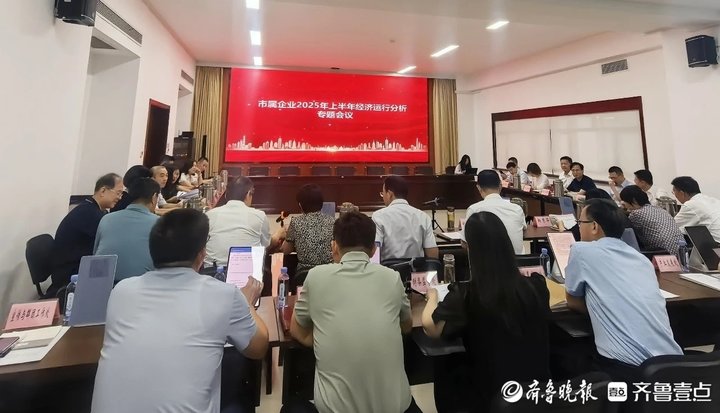
济南市国资委召开市属企业2025年上半年经济运行分析会议
Qi Lu Wan Bao Wang· 2025-07-17 04:39
Core Viewpoint - The economic performance of state-owned enterprises in Jinan has remained stable in the first half of 2023, providing strong support for the city's overall development [1] Group 1: Economic Performance - Jinan's state-owned enterprises maintained a generally stable economic operation in the first half of the year [1] Group 2: Strategic Focus for the Second Half - State-owned enterprises are required to focus on key areas and implement multiple measures to achieve breakthroughs [3] - Specific strategies include targeted policies for each enterprise, enhancing cost reduction and efficiency, and promoting both traditional and emerging industries [3] - The transformation of enterprises is emphasized, with specific roles outlined for different types of companies, such as public service, urban operation, industrial investment, capital operation, and technology innovation [3] Group 3: Risk Management - There is a strong emphasis on risk prevention and management, particularly in controlling debt risks and enhancing safety production measures [3] - The need for a dual mechanism for risk control and hidden danger investigation is highlighted to prevent major accidents [3] Group 4: Accountability and Performance Management - The meeting stressed the importance of accountability, with enterprise leaders expected to take on the role of "first responsible person" and actively manage key issues [4] - There is a call for enhanced pressure transmission and responsibility awareness, along with strict performance assessments and accountability for poor implementation [4]

省防范化解重大风险工作领导小组召开会议
Shan Xi Ri Bao· 2025-07-11 00:22
Core Viewpoint - The meeting emphasized the importance of preventing and mitigating major risks, aligning with Xi Jinping's significant discussions on the topic, and highlighted the need for a comprehensive approach to ensure national security and stability [1][2]. Group 1: Political and Economic Security - The meeting underscored the priority of safeguarding national political security, with a focus on preventing and combating hostile forces' infiltration and sabotage activities [2]. - There is a strong emphasis on monitoring and addressing economic risks, particularly through dynamic debt risk monitoring and legal actions against illegal financial activities [2]. Group 2: Social Stability and Governance - The meeting highlighted the importance of addressing social risks by promoting the "Fengqiao Experience" and enhancing legal governance in petition work [2]. - Efforts will be made to strengthen grassroots governance and maintain social order through ongoing anti-crime initiatives [2]. Group 3: Safety and Disaster Preparedness - The meeting called for proactive measures to prevent safety production and natural disaster risks, including comprehensive inspections in various high-risk sectors [2]. - There is a specific focus on flood prevention and disaster response preparations to ensure the safety of people's lives and property [2]. Group 4: Responsibility and Coordination - The meeting stressed the need for strict implementation of responsibilities at all levels, including party and government leaders, to ensure effective risk management and resolution [2]. - A call was made to enhance monitoring, rapid response, and collaborative mechanisms to improve risk perception and management capabilities [2].