阿姆达尔定律

Search documents
一个“没学历”的人戳破「AI神话」:“没有10x工程师,大多数人只想朝九晚五、用AI摸鱼”
AI科技大本营· 2026-02-23 12:25
Core Insights - The article discusses the impact of AI on software development teams, highlighting that while AI tools are widely adopted, they often lead to decreased productivity and increased technical debt rather than the expected efficiency gains [4][35]. Group 1: AI's Impact on Productivity - Many employees use AI tools not to enhance productivity but to reduce effort, leading to a "satisficing" behavior where they settle for "good enough" solutions [16][20]. - A study showed that developers using AI were 19% slower than those who did not use AI, contradicting the belief that AI would speed up development [18][21]. - The perception of increased speed among developers using AI is skewed by cognitive biases, with a reported 43% discrepancy between perceived and actual productivity [19][21]. Group 2: Quality of Output - The quality of code generated with AI assistance has significantly declined, with AI-generated pull requests showing 1.7 times more issues than those written by humans [22][25]. - A study indicated that while the volume of code produced increased, the quality deteriorated, leading to a rise in bugs and technical debt [24][26]. - The term "workslop" has been coined to describe the low-quality output from AI tools, which can cost large organizations millions in lost productivity [25][26]. Group 3: Employee Engagement and Motivation - A Gallup report indicated that only 21% of employees are engaged at work, with a significant portion of the workforce exhibiting low motivation and productivity [15][16]. - The introduction of AI tools has not improved engagement levels; instead, it has allowed disengaged employees to perform tasks with minimal effort [15][16]. - High-performing employees are increasingly leaving organizations due to the overwhelming presence of low-quality AI-generated work, which diminishes their productivity [26][27]. Group 4: Financial Implications - The financial burden of AI tools is significant, with estimates suggesting that teams may spend around $2,000 per month per employee on AI-related expenses [31][32]. - Despite the high costs, many organizations report low returns on AI investments, with a median ROI of only 10% [31][32]. - A substantial percentage of companies are expected to abandon AI projects due to the lack of measurable benefits, with predictions indicating a 42% abandonment rate [32][33].


一位资深CPU架构师的观察
半导体行业观察· 2026-01-05 01:49
Core Insights - The article emphasizes the need for a collaborative design approach between microarchitecture and process technology to address the increasing challenges of thermal density, power consumption, and performance demands in semiconductor technology [1][3][34] Group 1: Thermal Density - Higher integration leads to increased thermal density, defined as power per unit area, which is exacerbated by shrinking feature sizes and higher integration levels [5] - Current silicon chips can reach critical temperatures rapidly, necessitating the consideration of thermal sensors and cooling measures from the outset [9] - Traditional cooling methods like heat sinks and fans are becoming inadequate, prompting a shift towards microarchitecture and chip layout as primary tools for thermal management [10] Group 2: Efficient Energy Performance - The relationship between performance and power consumption is critical, with voltage scaling showing that while performance increases with voltage, power consumption rises exponentially, highlighting the need for technologies that reduce leakage and capacitance [13][16] - Advances in process technology enable higher performance at constant power and lower power at constant performance, but aggressive size reductions may increase thermal density, requiring architectural responses [16] - Simplifying microarchitecture can reduce area, thereby lowering target frequency, capacitance, and leakage, which is essential for optimizing overall system power consumption [20] Group 3: System-Level Scalability - Amdahl's Law illustrates the limitations of performance scalability in parallel processing, indicating that performance is ultimately constrained by the serial portions of programs [23] - The utilization of active cores varies significantly under typical workloads, affecting power and bandwidth sharing among cores [27] - Key research directions in process technology must align with architectural needs, focusing on low leakage and low capacitance materials, thermal-aware 3D integration, and fine-grained power gating [31][32] Conclusion - Advanced semiconductor process technologies can deliver exceptional performance, but without architectural awareness, their advantages will be limited by power and thermal constraints. A new collaborative design paradigm between architecture and process technology is essential for sustainable, high-performance computing [34]
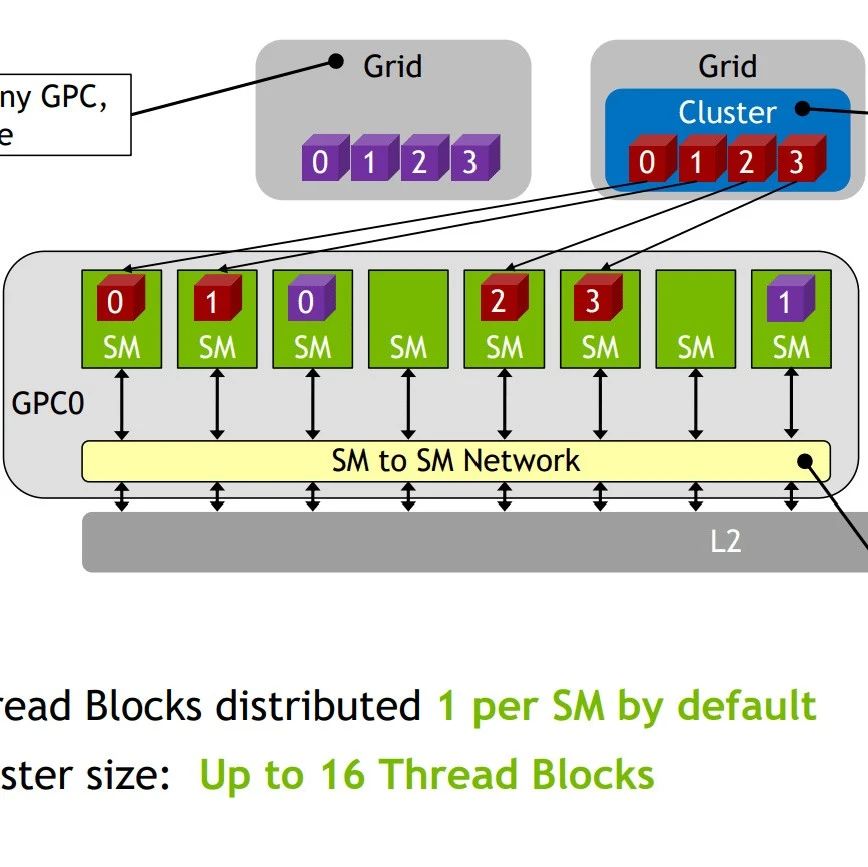
NVIDIA Tensor Core 的演变:从 Volta 到 Blackwell
半导体行业观察· 2025-06-24 01:24
Core Insights - The article emphasizes the rapid evolution of GPU computing capabilities in artificial intelligence and deep learning, driven by Tensor Core technology, which significantly outpaces Moore's Law [1][3] - It highlights the importance of understanding the architecture and programming models of Nvidia's GPUs to grasp the advancements in Tensor Core technology [3] Group 1: Performance Principles - Amdahl's Law defines the maximum speedup achievable through parallelization, emphasizing that performance gains are limited by the serial portion of a task [5] - Strong and weak scaling are discussed, where strong scaling refers to improving performance on a fixed problem size, while weak scaling addresses solving larger problems in constant time [6][8] Group 2: Data Movement and Efficiency - Data movement is identified as a significant performance bottleneck, with the cost of moving data being much higher than computation, leading to the concept of the "memory wall" [10] - Efficient data handling is crucial for maximizing GPU performance, particularly in the context of Tensor Core operations [10] Group 3: Tensor Core Architecture Evolution - The article outlines the evolution of Nvidia's Tensor Core architecture, including Tesla V100, A100, H100, and Blackwell GPUs, detailing the enhancements in each generation [11] - The introduction of specialized instructions like HMMA for half-precision matrix multiplication is highlighted as a key development in Tensor Core technology [18][19] Group 4: Tensor Core Generations - The first generation of Tensor Core in the Volta architecture supports FP16 input and FP32 accumulation, optimizing for mixed-precision training [22][27] - The Turing architecture introduced the second generation of Tensor Core with support for INT8 and INT4 precision, enhancing capabilities for deep learning applications [27] - The Ampere architecture further improved performance with asynchronous data copying and introduced new MMA instructions that reduce register pressure [29][30] - The Hopper architecture introduced Warpgroup-level MMA, allowing for more flexible and efficient operations [39] Group 5: Memory and Data Management - The introduction of Tensor Memory (TMEM) in the Blackwell architecture aims to alleviate register pressure and improve data access efficiency [43] - The article discusses the importance of structured sparsity in enhancing Tensor Core throughput, particularly in the context of the Ampere and Hopper architectures [54][57] Group 6: Performance Metrics - The article provides comparative metrics for Tensor Core performance across different architectures, showing significant improvements in FLOP/cycle and memory bandwidth [59]