
集成式改革

Search documents
点赞!2025广东“百千万工程”集成式改革基层典型案例公布
Nan Fang Nong Cun Bao· 2025-12-24 10:02
Core Viewpoint - The Guangdong Provincial Reform Office and the "Hundred Counties, Thousand Towns, and Ten Thousand Villages" Command Office have published a compilation of 36 typical grassroots cases of integrated reform aimed at promoting high-quality development in the province by 2025 [2][3][4]. Group 1: County Industry Development Mechanisms - Meizhou Meixian has innovated a development model for characteristic advantageous industrial clusters [8]. - Dongguan and Jieyang have created a mechanism for a full-chain "reverse flying land" to explore new models for regional coordinated development [9]. - Yangjiang and Yangxi have established a distributed photovoltaic development mechanism to achieve economic benefits and enhance urban-rural aesthetics [10]. Group 2: New Urbanization Construction Mechanisms - Guangzhou Huadu has innovated a new model for urban renewal to inject "new vitality" into old cities [18]. - Maoming Xinyi is striving to build an education city, health city, and ecological city [19]. - Shenzhen Longgang has integrated online and offline governance to enhance the modernization of grassroots governance [20]. Group 3: New Rural Collective Economy Development Mechanisms - Guangzhou Tianhe is exploring a "modern enterprise" governance model for rural collective economies [22]. - Zhuhai has innovated a new model for the management and operation of idle rural housing to transform "sleeping resources" [23]. - Shantou Chaoyang is exploring a new model of "community-village" cooperation to find new paths for enriching the people and revitalizing villages [24]. Group 4: Resource Factor Guarantee Mechanisms - Guangzhou Nansha is conducting comprehensive land management reforms to create new mechanisms for industrial space supply [29]. - Shenzhen Futian has innovated "seven models" to empower enterprises in supporting the "Hundred Counties, Thousand Towns, and Ten Thousand Villages" project [30]. - Zhuhai Jinwan is focusing on "land-sea coordination" to explore new models for comprehensive land remediation [31].


AI员工几分钟响应 跨镇街建十大万亩级园区
Nan Fang Du Shi Bao· 2025-11-27 23:11
Core Viewpoint - The modernization of urban governance in Zhongshan is being driven by technology empowerment, institutional innovation, and ecological prioritization, aiming to create a livable, resilient, and smart city that enhances operational efficiency and reduces management costs [2]. Group 1: Technology Empowerment - Zhongshan has implemented an "AI employee" in its government services, achieving an average response time of 0.8 seconds and an accuracy rate of over 80% for inquiries related to public housing [3]. - The AI service integrates with 12 departmental business systems, maintaining over 800 high-frequency service items, thus facilitating a shift from fragmented responses to systematic optimization of government services [3][4]. - A domestic government big data center has been established, aggregating over 60 billion data entries from more than 300 government systems, which supports AI model training and enables intelligent approval processes, reducing processing times to under 2 minutes for 14 high-frequency business items [4]. Group 2: Institutional Reform - Zhongshan is actively pursuing integrated reforms across various sectors, including industrial, water, land, and urban reforms, to break down barriers and enhance governance efficiency [5]. - The city has decentralized 107 permissions to town streets and has implemented a pilot program for 43 major and 77 minor permissions in specific districts, addressing the challenges faced by local governance [5]. Group 3: Land and Urban Development - Comprehensive land reform initiatives have been launched, recovering 23,600 acres of farmland and promoting a new land utilization model that emphasizes ecological preservation and efficient agricultural practices [6]. - Zhongshan is developing ten large-scale modern industrial parks across town streets to foster regional collaboration and economic integration, enhancing the overall development landscape [6]. Group 4: Environmental Governance - The city is committed to rigorous water pollution control, having laid 6,638 kilometers of pipelines and constructed 17 wastewater treatment plants, effectively eliminating black and odorous water bodies in urban areas [8]. - Zhongshan is also enhancing its urban landscape through various beautification projects, including the improvement of highway aesthetics and the establishment of a comprehensive park system that ensures green spaces are accessible to residents [9].
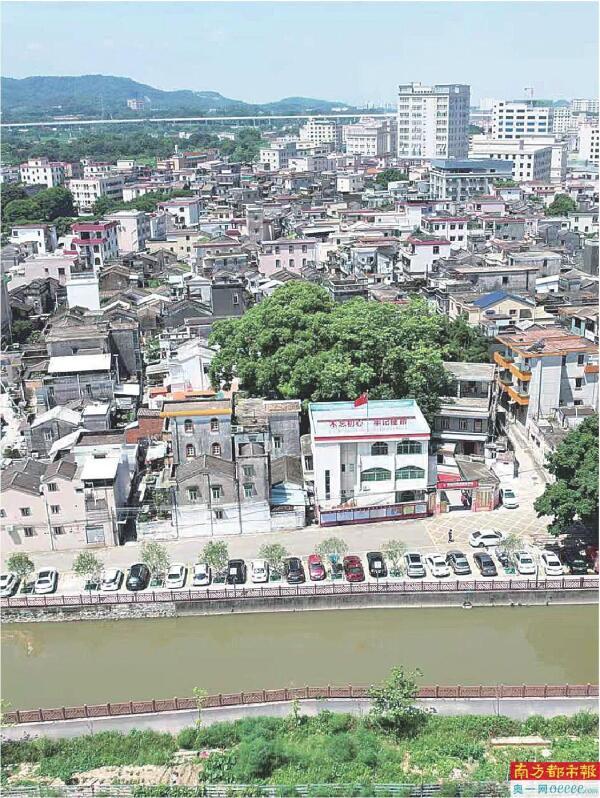
“百千万”何以再造一个新广东?从这份成绩单,读懂背后密码
Nan Fang Du Shi Bao· 2025-05-30 07:12
Core Points - The "Hundred Counties, Thousand Towns, and Ten Thousand Villages High-Quality Development Project" has been emphasized as a key initiative to enhance rural development and promote coordinated urban-rural growth in Guangdong [1] - The project aims to achieve significant results by 2025, marking a critical year for its implementation [1] County Industry - The project has led to differentiated and specialized development of county industries, with 57 counties experiencing economic growth rates surpassing the provincial average in 2024 [2] - Notable achievements include the establishment of leading enterprises and specialized industrial parks, with the automotive and electronic information sectors showing significant growth [2] Agricultural Development - Guangdong has developed 22 national modern agricultural industrial parks and 84 strong agricultural towns, focusing on promoting local specialties and enhancing brand recognition [3] - Collaboration with major retail companies has facilitated the entry of local agricultural products into markets in Hong Kong and Macau [3] New Urbanization - The project has successfully reversed population outflow trends, with 57 counties experiencing net population inflows and 124 towns recognized as national strong towns [5] - Infrastructure improvements and the establishment of quality medical and educational institutions in county towns have contributed to attracting and retaining residents [6] Landscape Improvement - The project has significantly enhanced the rural landscape, with various towns implementing successful beautification initiatives [9] - Examples include the creation of tourism corridors and the transformation of abandoned properties into community resources [9] Integrated Reform - The project has driven systemic reforms across various sectors, including county management and agricultural development, leading to the establishment of over 300 "strong village companies" [11] - Innovative land use reforms have been implemented to address housing needs and optimize land allocation [13]
鼓励自有用地建低空起降设施
Guang Zhou Ri Bao· 2025-05-07 20:25
Core Points - The article discusses the recent issuance of the "Notice on Further Optimizing Approval Service Mechanisms to Benefit Enterprises and Citizens and Promote Economic and Social Development (Seventh Batch)" by the Guangzhou Municipal Planning and Natural Resources Bureau, which includes 27 new measures aimed at enhancing government functions and promoting high-quality development [1][2]. Group 1: New Measures - The new measures encourage the use of self-owned land for the construction of non-profit low-altitude take-off and landing infrastructure, eliminating the need for separate planning condition applications and not counting towards the original land plot's planning conditions [1]. - The measures simplify the natural resource approval procedures for constructing take-off facilities on self-owned land, thereby activating existing land resources and facilitating the establishment of these facilities [1]. Group 2: Registration and Financing - Prior to the new measures, land supply documents required that construction projects be registered as a whole, limiting the issuance of property certificates to one per project, which delayed the registration of completed buildings until the entire project was finished [2]. - After the new measures, with district government approval, enterprises can now register completed buildings in phases based on verified planning conditions, allowing for more flexible property registration and financing options, thereby improving capital utilization for enterprises [2].