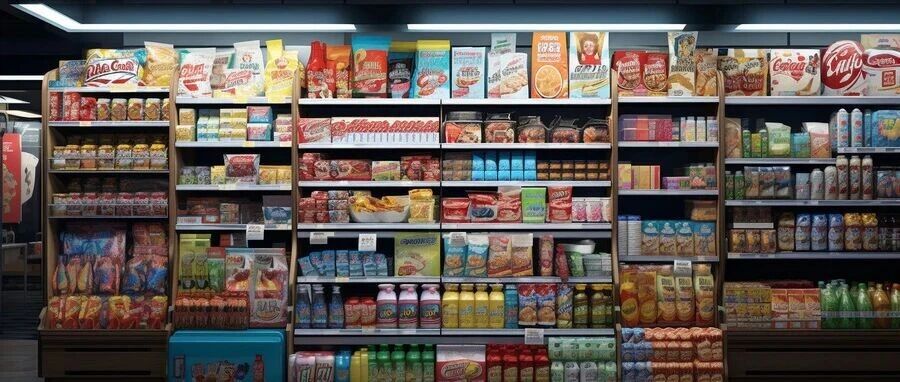
零食量贩3.0时代

Search documents
万辰集团:门店模型持续优化,Q1业绩增长有望超预期-20260224
China Post Securities· 2026-02-24 01:25
Investment Rating - The report maintains a "Buy" rating for the company [8][48] Core Insights - The company is expected to experience significant growth in Q1 2026 due to a combination of factors including the stabilization of existing stores, the ramp-up of new stores, and the impact of the delayed Spring Festival leading to concentrated consumer spending [7][48] - The company has successfully optimized its store model, with the introduction of upgraded store types contributing positively to single-store GMV [6][47] - The overall market for snack retail is evolving, with a competitive landscape featuring national giants and regional brands coexisting [4][18] Summary by Relevant Sections Company Overview - The latest closing price is 208.00 yuan, with a total market capitalization of 39.8 billion yuan and a total share capital of 1.91 billion shares [3] Performance Drivers - The company has seen a steady performance from older stores and successful ramp-up of new stores, particularly in key markets [6][44] - The timing of the Spring Festival in 2026 is expected to enhance consumer spending, contributing to significant sales growth in January and February [6][45] - The ongoing upgrade of store types (3.0, 4.0, and flagship stores) is expected to further boost single-store performance [6][46] Financial Projections - Revenue forecasts for 2025, 2026, and 2027 are 52.579 billion, 67.365 billion, and 80.873 billion yuan respectively, with year-on-year growth rates of 62.64%, 28.12%, and 20.05% [8][48] - Projected net profits for the same years are 1.366 billion, 2.196 billion, and 2.765 billion yuan, reflecting substantial growth rates of 365.39%, 60.75%, and 25.9% [8][48] - Earnings per share (EPS) are expected to be 7.14, 11.48, and 14.45 yuan for 2025, 2026, and 2027 respectively, with corresponding price-to-earnings ratios of 29, 18, and 14 [8][48]
中金:零食量贩3.0时代:从“规模竞速”到“质效深耕”
中金· 2026-01-27 03:12
Investment Rating - The report maintains a positive outlook on the leisure snack industry, indicating a transition to the 3.0 phase characterized by "quality and efficiency cultivation" [2][28]. Core Insights - The leisure snack retail model is highly efficient and continues to expand, with an estimated 55,000 to 60,000 stores by the end of 2025, projecting a long-term potential of 80,000 to 100,000 stores [2][19]. - The competitive landscape of the leisure snack industry has become clearer, with leading brands entering a phase of quality and efficiency improvement, which is expected to enhance profitability in the future [2][28]. - The industry has evolved through three phases: 1.0 (rapid growth), 2.0 (market consolidation), and now 3.0 (operational optimization and supply chain efficiency) [27][28]. Summary by Sections Industry Development - The leisure snack retail sector has seen significant growth, with the number of stores increasing from approximately 2,500 in 2021 to an estimated 25,000 by the end of 2023, and further growth to 35,000 to 40,000 by the end of 2024 [3][6]. - The market share of the leisure snack retail channel has risen from 0.23% in 2019 to an expected 3.21% by 2024, with a compound annual growth rate of 77.9% from 2019 to 2024 [11][12]. Competitive Landscape - The report highlights a dual-strong competitive structure emerging in the 3.0 phase, with major players like Mingming Hen Mang and Wancheng Group expected to have over 22,000 and 19,000 stores respectively by the end of 2025 [2][28]. - The industry is witnessing a trend of brands expanding their product categories, including the introduction of discount supermarket models and private label products to enhance competitiveness [31][42]. Supply Chain and Product Development - Leading companies are focusing on supply chain efficiency, with improvements in inventory turnover days and operating cycles, indicating better management of resources [39][42]. - The introduction of private label products is seen as a strategy to enhance profit margins and control over the supply chain, with notable examples including various beverage and snack products launched by Mingming Hen Mang [42][43].
中金 | 零食量贩3.0时代:从“规模竞速”到“质效深耕”
中金点睛· 2026-01-25 23:51
Core Viewpoint - The snack wholesale industry has entered its 3.0 phase, transitioning from "scale racing" to "quality and efficiency cultivation" [1] Industry Overview - The snack wholesale industry model is highly efficient and continues to expand, with an estimated 55,000 to 60,000 stores by the end of 2025, projecting a retail sales exceeding 250 billion yuan [4][7] - The industry has evolved through three phases: - Phase 1.0 (explosive growth) characterized by regional fragmentation - Phase 2.0 (competitive consolidation) from 2022 to 2024, where leading brands accelerated market consolidation - Phase 3.0 (establishment of a dual-strong pattern) focusing on optimizing store operations and enhancing supply chain efficiency [4][21] Market Dynamics - The snack wholesale channel's market share is steadily increasing, with GMV rising from 7.3 billion yuan in 2019 to an estimated 129.7 billion yuan in 2024, reflecting a compound annual growth rate of 77.9% [9] - The contribution of the snack wholesale channel to the overall snack and beverage retail market is projected to reach 3.21% by 2024, up from 0.23% in 2019 [9] Store Expansion and Distribution - The expansion of snack wholesale stores is primarily focused on lower-tier cities, which have become the core areas for growth, contributing 62% of GMV from 2019 to 2024 [10] - By the end of 2025, major brands like Mingming Hen Mang and Wancheng Group are expected to have over 22,000 and 19,000 stores respectively [4][21] Competitive Landscape - The competitive landscape in the snack wholesale industry is becoming clearer, with leading brands focusing on quality and efficiency improvements as subsidies decrease [20][24] - The industry is witnessing significant mergers and acquisitions, such as the strategic merger between "Mingming Hen Mang" and "Zhao Yiming" in November 2023 [22][23] Product and Supply Chain Innovations - Brands are actively expanding their product categories, including introducing private label products to enhance competitiveness and profit margins [5][27] - The introduction of self-owned brands aims to control the entire profit chain from production to sales, improving gross margins [27][28] Future Outlook - The industry is expected to see a shift towards discount supermarket models, with brands exploring dual business models of snack wholesale and discount supermarkets to reduce costs through shared logistics and procurement [25][26] - The potential for long-term store expansion is estimated at 80,000 to 100,000 stores nationwide, based on existing market densities and purchasing power [17][18]