韩妆

Search documents
二线城市将难见韩妆雪花秀
Xin Lang Cai Jing· 2025-12-10 08:04
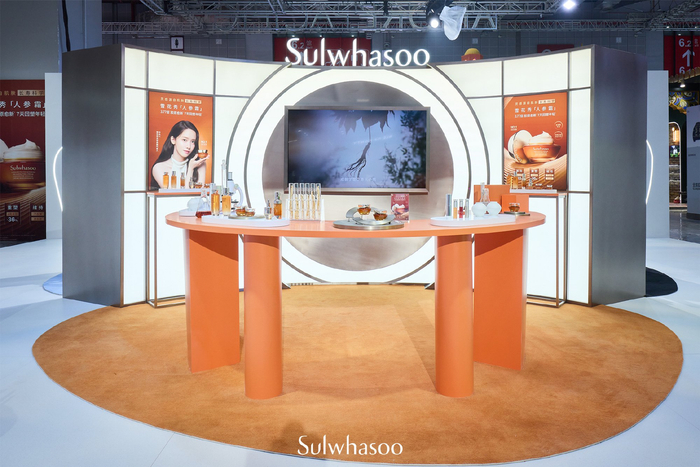
Core Viewpoint - The recent rumors regarding Sulwhasoo's large-scale store closures and potential exit from the Chinese market have been denied by its parent company, Amorepacific China, which emphasizes that China remains a crucial strategic market for the brand [1] Group 1: Store Closures and Market Presence - Amorepacific China has confirmed that approximately 30 stores are expected to close in China, primarily in second-tier cities, aligning with data from their official website and review platforms [1] - Currently, Sulwhasoo has around 180 stores in the Chinese market, but there has been a noticeable reduction in store numbers, particularly in cities like Changsha and Nanning [1] - In first-tier cities like Shanghai, Sulwhasoo has also reduced its store presence, with a notable closure of a 14-year-old store in a major department store [1] Group 2: Strategic Adjustments - Amorepacific has stated that the adjustments in its channels are not a retreat but rather a restructuring focused on inventory reduction, cutting inefficient channels, and enhancing the presence of e-commerce [3] - The company reported an 8.5% year-on-year revenue growth in the Greater China region for Q3 2025, with its revenue share in the group rising to 10.4% [3] - Despite this growth, the revenue share is still recovering from a peak of 18.5% in Q4 2023, indicating ongoing challenges in the market [4] Group 3: Market Trends and Competition - The overall Korean beauty market in China is experiencing a downturn, with Sulwhasoo's market share in the skincare segment declining significantly since its peak in 2021 [8] - Local brands have begun to dominate the Chinese beauty market, surpassing international brands for the first time in 2023, as consumers shift towards established domestic brands due to price sensitivity and changing preferences [5] - The competitive landscape has shifted, with local mid-range brands gaining traction and directly competing with international brands, including Sulwhasoo [5] Group 4: Product Strategy and Innovation - Sulwhasoo's strategy has evolved to focus on "stabilizing online presence, reducing offline channels, and deepening high-end offerings," with an emphasis on its ginseng product line [8] - The brand's online business has seen growth due to low base effects from previous inventory reductions, while offline channels continue to contract [8] - There is a noted lack of local innovation and adaptation in Sulwhasoo's product offerings compared to competitors like L'Oréal and Estée Lauder, which have established local R&D centers and tailored products for Chinese consumers [9]

Goodai融资;联合利华冰淇淋业务将上市;香奈儿投资建设香水基地
Sou Hu Cai Jing· 2025-12-09 03:31
Investment Dynamics - Iris Ventures led a $15 million investment in skincare brand Innerskin, which will be used to expand its clinic network in Europe and launch new skincare products [3] - Goodai Global Inc, a South Korean beauty unicorn, completed a funding round of 800 billion KRW (approximately $600 million), with a valuation of 4 trillion KRW (approximately $3.1 billion), to acquire two independent cosmetic brands [6] - Chanel is investing approximately €150 million to build a new perfume production facility in northern France, expected to create around 300 jobs [9][10] Listing Dynamics - Unilever's ice cream business, now named Magnum Ice Cream Company N.V., is set to complete its IPO on the Amsterdam, London, and New York stock exchanges, marking a record for global ice cream IPOs [11][13] Acquisition Dynamics - BasicNet Group announced the acquisition of beachwear brand Sundek, enhancing its brand portfolio in the beachwear segment [16] - Sequoia China is in talks to acquire Italian luxury sneaker manufacturer Golden Goose for €2.5 billion (approximately 20.6 billion RMB), aiming to finalize the deal before Christmas [19] - Firmenich completed the acquisition of fragrance manufacturer Belle Aire Creations, reinforcing its commitment to the North American market [22] Franchise and Expansion Dynamics - The fresh beer brand "Xianpi Fulu Jia" announced a new franchise policy, aiming to open over 1,000 locations by December 2025 [25] - Zhou Hei Ya opened its first overseas store in Malaysia, employing a dual strategy of "store + channel" for market expansion [28]


市值超爱茉莉,美妆界Labubu登顶韩妆第一
3 6 Ke· 2025-08-08 00:53
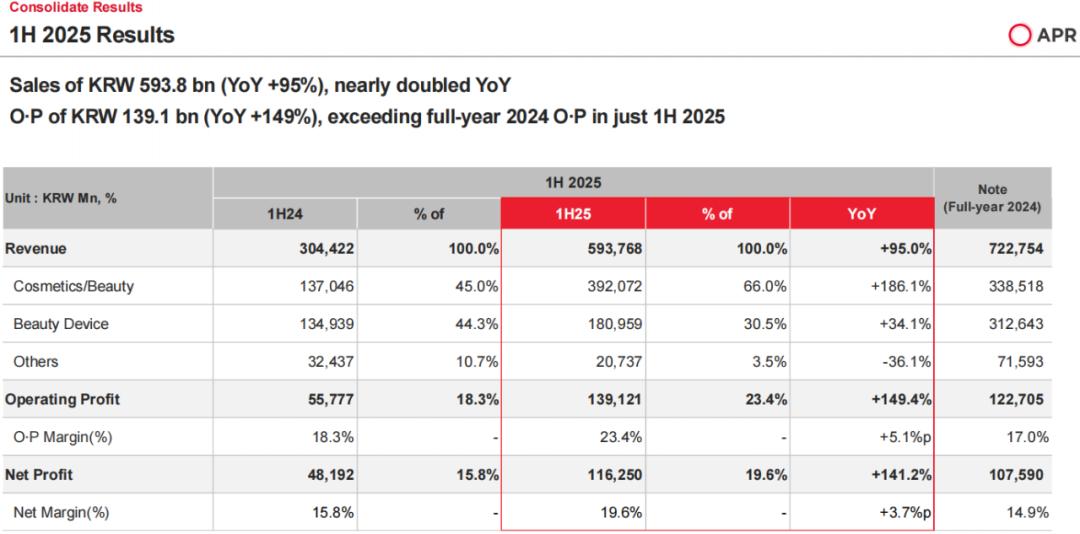
Core Viewpoint - Despite the ongoing downturn in the Korean cosmetics market, APR, a beauty technology company, has reported significant growth in its financial performance for the first half of 2025, surpassing its entire 2024 results in both revenue and profit [1][4]. Financial Performance Summary - For the first half of 2025, APR's revenue reached 593.8 billion KRW (approximately 30.7 million RMB), marking a 95% year-on-year increase [3][4]. - Operating profit surged by 149.4% to 139.1 billion KRW (approximately 7.2 million RMB), while net profit increased by 141.2% to 116.3 billion KRW (approximately 6 million RMB) [4][10]. - In Q2 2025, revenue was 327.7 billion KRW (approximately 17 million RMB), a 110.8% increase from the previous year, with operating profit rising by 201.9% to 84.6 billion KRW (approximately 4.4 million RMB) [6][7]. Segment Performance - The cosmetics/beauty segment saw a remarkable growth of 216.9% in Q2, contributing 69.3% to total revenue, while the beauty device segment grew by 32.1% [10][11]. - The "others" segment experienced a decline of 36.1% in revenue, attributed to adjustments in the apparel business [11]. Market Performance - APR's overseas market performance was robust, with international sales accounting for 78% of total revenue in Q2, while domestic sales in Korea fell by 6.5% [8][17]. - The U.S. market saw a staggering growth of 285.8%, driven by partnerships that enhanced brand recognition [16][19]. Company Growth Trajectory - APR has demonstrated consistent growth, with revenue increasing from 174.3 billion KRW (approximately 9 million RMB) in H1 2022 to 593.8 billion KRW (approximately 30.7 million RMB) in H1 2025, representing a threefold increase [22][24]. - The company's valuation has reached approximately 40 billion USD (about 287 billion RMB), surpassing major competitors in the Korean beauty industry [24][32]. Brand Portfolio - APR's brand portfolio includes three main brands: FORMENT, MEDICUBE, and APRILSKIN, indicating potential for expansion compared to competitors with more extensive brand matrices [30][28].
这个15亿级美妆公司又卖了
3 6 Ke· 2025-07-23 10:40
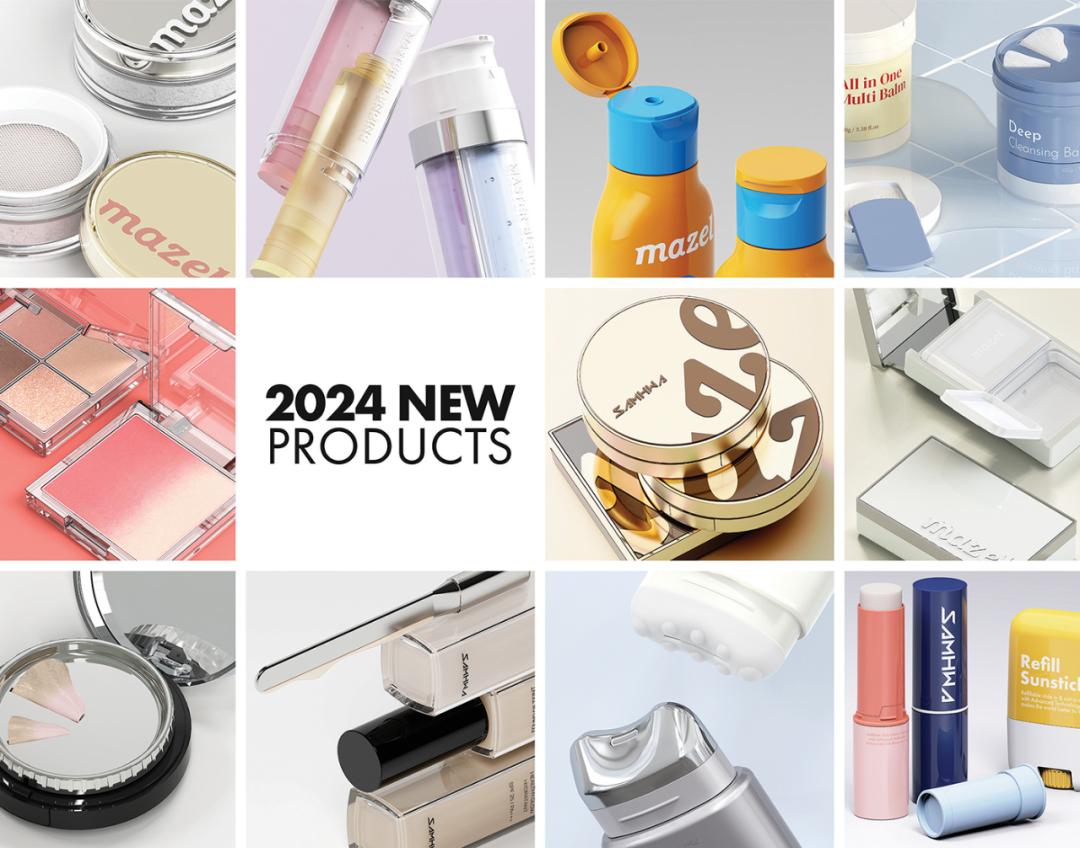
Core Insights - KKR plans to acquire South Korean cosmetics packaging company Samhwa for 4.136 billion RMB, marking the largest deal in the South Korean beauty supply chain this year [1][3] - Samhwa's sales are projected to approach 1 billion RMB in 2024, with expectations to reach 1.5 billion RMB this year, serving major clients like L'Oréal and Chanel [1][6] - The acquisition reflects a growing trend of private equity firms investing in the beauty supply chain, with increased M&A activity in the South Korean beauty market [1][9] Company Overview - Samhwa, established in 1977, is one of South Korea's top three manufacturers of cosmetic containers and pumps, producing a wide range of beauty packaging products [1][3] - The company has a strong international presence, having established a subsidiary in the U.S. in 2017 and a factory in Shanghai in 2018 [3] - Samhwa's overseas sales account for nearly 70% of its revenue, highlighting its global market reach [6] Financial Performance - In 2024, Samhwa's sales are expected to be 186.8 billion KRW (approximately 9.7 billion RMB) with a net profit of 29.6 billion KRW (approximately 1.5 billion RMB) [6] - Forecasts suggest that Samhwa's sales will reach 280 billion KRW (approximately 14.5 billion RMB) this year, with a pre-tax profit of 62 billion KRW (approximately 3.2 billion RMB) [7] Investment Dynamics - KKR's acquisition of Samhwa is part of a broader strategy to strengthen its position in the beauty industry, following previous investments in companies like Coty and Juno Hair [4][5] - TPG, the previous owner, is expected to gain approximately 900 billion KRW (around 46.53 billion RMB) from the sale, realizing a profit of over 3 billion RMB [3] Market Trends - The South Korean beauty industry has seen a resurgence in M&A activity, with at least seven disclosed transactions in the first half of the year [9] - The market for South Korean beauty products is projected to reach 11.56 billion USD in 2024, with a compound annual growth rate of 8.1% [9][11] - South Korea has become the second-largest cosmetics exporter globally, surpassing the U.S. in early 2024 [9] Cultural Influence - The rise of K-Beauty is attributed to the global popularity of K-Pop and Korean dramas, which have facilitated brand internationalization [9][11] - Social media marketing, particularly through platforms like TikTok and Instagram, has amplified the appeal of Korean beauty products among young consumers [10][11]